

The internet is usually a place of purpose. People open a browser to find an answer, check a fact, or solve a problem. Yet every so often, something unexpected interrupts that routine and reminds users that the web can still be playful. Google Block Breaker is one of those interruptions. It appears quietly inside Google Search, offering a fully playable arcade-style game where most people expect nothing more than text links.
At first glance, Google Block Breaker looks like a simple distraction. In reality, it represents a fascinating mix of nostalgia, product design, and modern search strategy. This article explores Google Block Breaker in complete detail, from what it is and how it works to why Google created it and why millions of users find it so compelling.
What Google Block Breaker Is and Why It Exists
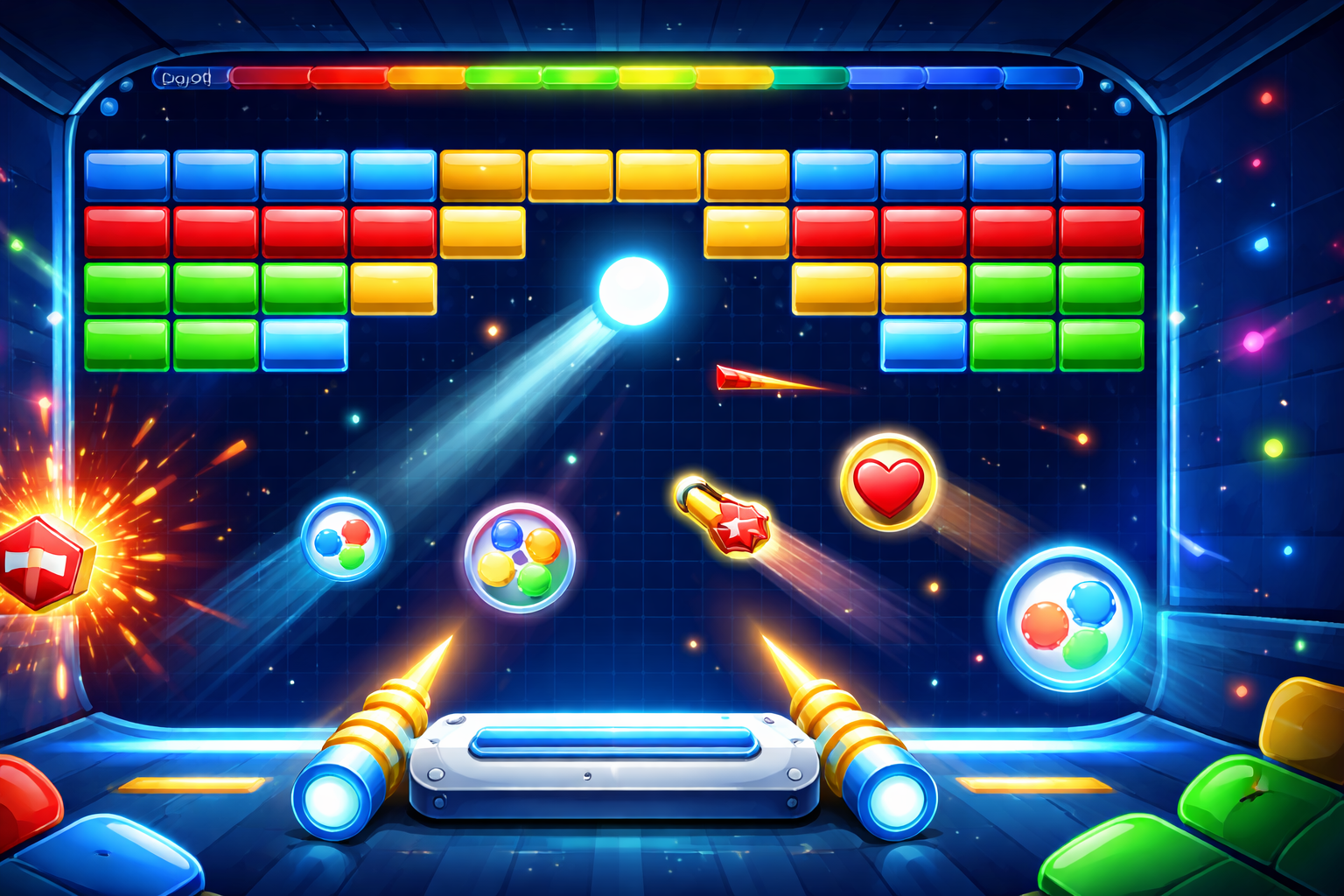
Google Block Breaker is a free browser-based mini-game that can be launched directly from Google Search. It is inspired by classic brick-breaking arcade games, particularly Atari’s Breakout from the 1970s. The player controls a horizontal paddle at the bottom of the screen, bouncing a ball upward to destroy rows of colored blocks. If the ball falls past the paddle, the player loses a life.
What makes Google Block Breaker special is not the mechanics, which are familiar to anyone who has played arcade or mobile games, but the context in which it appears. It lives inside Google Search itself. There is no download, no separate website, and no account required. One search query is enough to transform a utilitarian search engine into a small arcade.
Google has a long history of hiding playful experiences inside its products. From interactive doodles to secret commands and mini-games, these Easter eggs serve multiple purposes. They humanize the brand, reward curiosity, and encourage users to spend more time interacting with Google’s ecosystem. Google Block Breaker fits perfectly into this tradition, but it also reflects a more modern idea of search as an interactive platform rather than a static list of results.
How to Access Google Block Breaker
Accessing Google Block Breaker is intentionally simple. Users only need to search for the phrase “Block Breaker” on Google. When the feature is available, Google displays a game card at the top of the results page with a prominent Play button. Clicking or tapping this button launches the game instantly.
The game works on desktop browsers, mobile browsers, and within the Google app on Android and iOS. On desktop, players typically use the arrow keys to move the paddle and start the ball. On mobile devices, touch controls allow players to drag the paddle or tap to control gameplay. The experience is designed to feel natural on any screen size, reinforcing Google’s focus on accessibility and ease of use.
It is worth noting that Google sometimes rolls out features gradually or tests them in specific regions. This means that some users may not see the game immediately even when searching the correct phrase. In those cases, trying a different device, browser, or the official Google app often resolves the issue.
Core Gameplay Mechanics Explained
The heart of Google Block Breaker is its gameplay loop, which is simple but carefully tuned. The player begins with a limited number of lives, usually three. A single ball starts on the paddle, and once launched, it bounces around the screen, breaking blocks on contact.
Each block disappears after being hit, though some blocks are stronger and require multiple hits. As the ball ricochets off walls, blocks, and the paddle, the player must constantly reposition to keep it in play. Clearing all visible blocks triggers the next wave, which introduces new rows and increased difficulty.
Scoring is based on the number of blocks destroyed, and the score counter remains visible throughout the session. The longer the player survives and the more efficiently they clear blocks, the higher the score climbs. This simple scoring system taps into a universal competitive instinct, even when there is no official leaderboard.
Power-Ups and Their Impact on Gameplay
One of the reasons Google Block Breaker feels modern rather than retro is its use of power-ups. Certain special blocks release enhancements when destroyed. These enhancements fall downward, and if the player catches them with the paddle, they temporarily change how the game behaves.
Some power-ups add extra balls, turning the game into a chaotic but rewarding multi-ball experience. Others extend the paddle, making it easier to keep balls in play. There are also power-ups that introduce offensive abilities, such as blasters that allow the paddle to shoot upward and destroy blocks directly. Additional effects can slow down the ball or provide temporary safety nets that prevent immediate life loss.
These power-ups fundamentally alter the rhythm of the game. A calm, controlled session can instantly become intense when multiple balls are bouncing simultaneously. Mastering Google Block Breaker is not just about reflexes but about adapting to sudden changes and regaining control after moments of chaos.
The Influence of Classic Arcade Games
Google Block Breaker is deeply rooted in gaming history. Its most obvious inspiration, Breakout, was released in 1976 and became one of the foundational arcade games of its era. The basic concept of breaking bricks with a bouncing ball has been reinterpreted countless times over the decades, appearing on home consoles, early PCs, and mobile devices.
Google itself has paid homage to this history before. In 2013, searching for “Atari Breakout” in Google Images transformed the image results into a playable version of the game, where images served as the bricks. That Easter egg became legendary and is still remembered as one of Google’s most creative surprises.
Google Block Breaker can be seen as a spiritual successor to that earlier experiment. Instead of hiding in image search, it lives directly in the main search experience. Instead of relying on a one-time visual trick, it offers a fully realized game with progression and power-ups. This evolution reflects both advances in browser technology and changing expectations around interactivity on the web.
Why Google Keeps Adding Games to Search
At a strategic level, Google Block Breaker is more than a fun diversion. It is part of a broader trend in which Google integrates tools, utilities, and entertainment directly into search results. Calculators, translators, weather widgets, games, and even simple simulations now appear instantly, reducing the need for users to click away.
This approach keeps users within Google’s ecosystem longer, increasing engagement and satisfaction. It also reinforces Google’s identity as a company that values creativity and user delight, not just efficiency. In an increasingly competitive digital landscape, where attention is fragmented across countless platforms, even small moments of joy can strengthen brand loyalty.
Nostalgia plays a crucial role here. Many users instantly recognize the mechanics of a block-breaking game, even if they cannot name its inspiration. That familiarity lowers the barrier to entry and creates an emotional connection. People do not need instructions because their hands already know what to do.
Tips for Improving Performance and Scores
While Google Block Breaker is easy to pick up, achieving high scores requires focus and practice. Successful players learn to control the angle of the ball by striking it with different parts of the paddle. Center hits produce safer, more vertical bounces, while edge hits send the ball at sharper angles that can clear blocks more quickly.
Power-ups should be approached strategically. Extra balls increase scoring potential but also raise the risk of losing track of the game. Extending the paddle or slowing the ball can help stabilize intense moments. The key is not to panic when the screen becomes crowded with movement. Regaining control is often more important than aggressively chasing the last remaining block.
Most importantly, players must accept that chaos is part of the experience. High scores often emerge from recovering well after mistakes rather than maintaining perfect control throughout a session.
Safety, Clones, and Imitations
Because Google Block Breaker has gained attention, many unofficial versions and imitations have appeared online. Some websites use similar names or Google branding to attract clicks. While not all of these are harmful, they are unnecessary if the goal is simply to play the original game.
The safest way to enjoy Google Block Breaker is to play it directly through Google Search, where no downloads or permissions are required. Any version that asks for installation, browser extensions, or excessive access should be approached with caution. The simplicity of the official experience is part of its appeal, and anything more complicated is a red flag.
What Google Block Breaker Says About Modern Search
Google Block Breaker highlights a shift in how people interact with search engines. Search is no longer just about retrieving information. It has become a space where users can calculate, learn, watch, listen, and play without leaving the page.
This transformation aligns with broader trends in digital behavior. Users increasingly expect instant gratification and seamless experiences. They want tools and entertainment to appear exactly when needed, without friction. By embedding a game into search results, Google demonstrates how flexible and multifaceted its platform has become.
At the same time, features like Block Breaker remind users that technology does not always have to be serious. Even in a world driven by productivity and optimization, there is room for play.
Also Read: BigXthaPlug Height, Age, Biography & Career Breakdown
Conclusion
Google Block Breaker is a small game with surprisingly big implications. On the surface, it is a simple arcade-style distraction that can fill a spare minute or two. Beneath that surface, it reflects decades of gaming history, thoughtful product design, and a strategic vision of search as an interactive environment.
By placing a playable game inside Google Search, Google blurs the line between utility and entertainment. It taps into nostalgia while embracing modern expectations for accessibility and instant interaction. For players, it offers a moment of joy and challenge. For observers, it offers insight into how digital platforms evolve to keep users engaged.
In the end, Google Block Breaker succeeds because it understands something fundamental about human behavior. People do not just want answers. They also want moments of surprise. Sometimes, in the middle of searching for something entirely unrelated, bouncing a ball against a wall of colorful blocks is exactly what makes the internet feel fun again.