

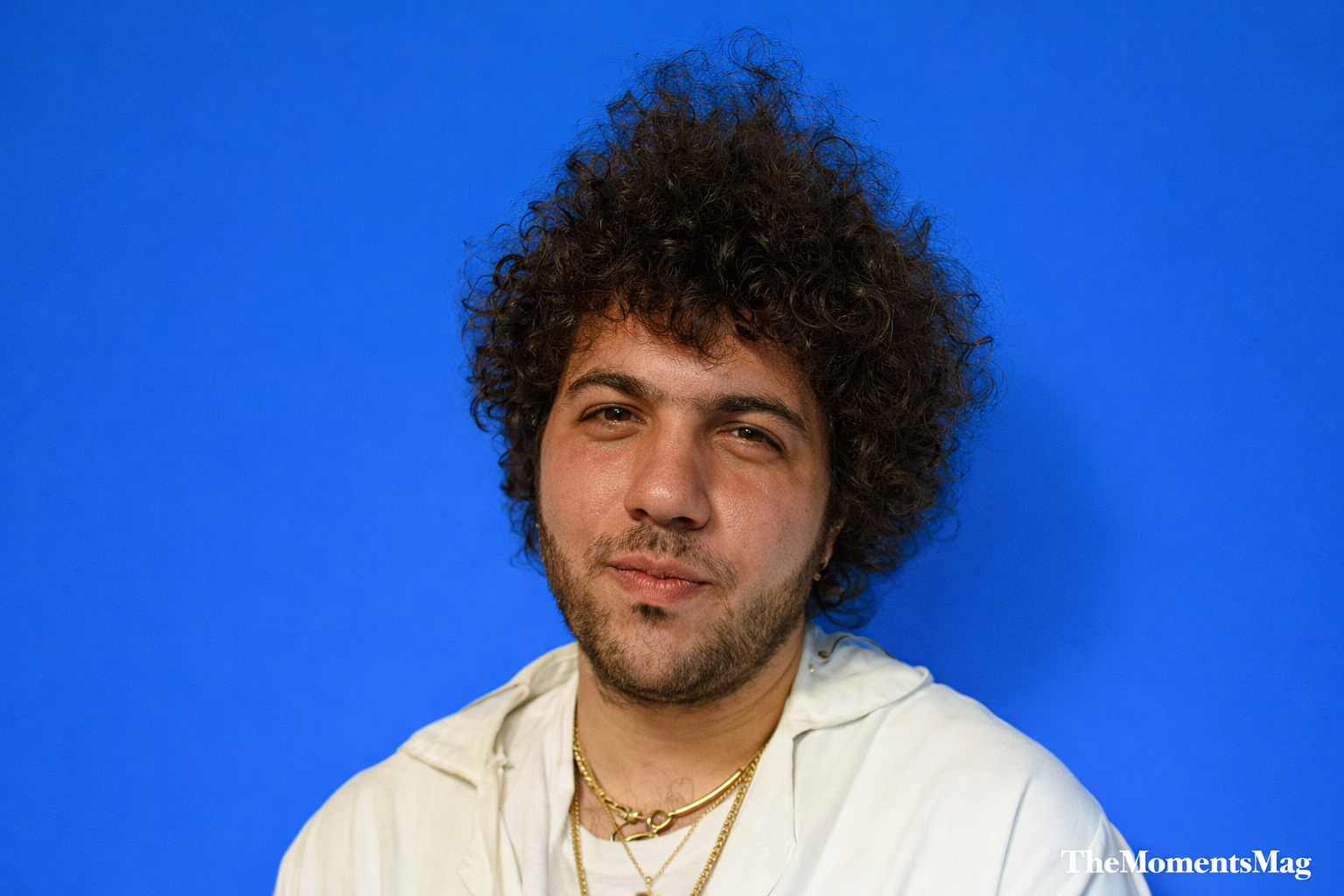
Benny Blanco is one of those rare figures in modern pop culture whose influence far outweighs his visibility. His name appears in the credits of chart-topping hits by some of the world’s biggest artists, yet he has managed to keep an almost everyman quality—approachable, self-deprecating, and refreshingly candid. As his public profile has grown, so has curiosity about his personal background. One of the most searched questions about him today is deceptively simple: what is Benny Blanco’s ethnicity?
The answer, however, requires more than a single label. It involves understanding his family background, cultural upbringing, and the way he has spoken about identity in his own words. Like many Americans, Benny Blanco’s story reflects how ethnicity, culture, and self-definition often overlap rather than fit neatly into one category.
Table of Contents
ToggleEarly Life and Family Background
Benny Blanco was born as Benjamin Joseph Levin on March 8, 1988, in Reston, Virginia. He grew up in a suburban environment far removed from the music industry hubs of Los Angeles or New York. His parents, Sandra and Andrew Levin, supported his early fascination with music, even when it meant tolerating loud beats and makeshift home studios in his bedroom.
From an early age, Blanco has described himself as a Jewish kid growing up on the East Coast. In multiple interviews over the years, he has casually referenced his Jewish upbringing, often with humor, framing it as a core part of who he was long before fame entered the picture. These remarks weren’t polished identity statements or branding exercises. They were offhand, personal reflections that aligned consistently across different outlets.
This consistency matters. In biographical terms, ethnicity is best understood through what someone claims, practices, and lives, not what others assume. In Blanco’s case, reputable publications such as People and GQ have explicitly described him as Jewish, and those descriptions match how he talks about himself.
Understanding Benny Blanco’s Ethnicity
When people ask about Benny Blanco’s ethnicity, they are usually trying to reconcile a few things at once: his last name, his appearance, and his cultural references. “Blanco” is a Spanish word meaning “white,” which has led some to assume he might be Latino or Hispanic. However, that assumption does not align with credible biographical information.
Benny Blanco’s birth name, Benjamin Joseph Levin, points clearly toward Jewish ancestry, and that is supported by his own statements and by journalistic profiles. He has spoken specifically about having Ashkenazi Jewish heritage, a term that refers to Jewish communities historically rooted in Central and Eastern Europe. Ashkenazi identity is not simply religious; it encompasses shared traditions, foods, languages, and family histories passed down through generations.
In the United States, Jewish identity is often misunderstood as only a religion. In reality, it can also function as an ethnic and cultural identity, even for those who are not strictly religious. Blanco’s story fits squarely within that framework. He has never positioned his Jewishness as a performance or a brand, but as an inherited and lived aspect of his life.
Cultural Identity Beyond Labels
What makes Benny Blanco’s biography particularly interesting is how casually he embodies his background. He rarely discusses ethnicity in abstract terms. Instead, he talks about food, family gatherings, and shared memories. These details, while small, offer the clearest insight into how he understands his own identity.
One of the most revealing moments came not through a music interview, but through conversations surrounding his cookbook, Open Wide. In discussing the book, Blanco spoke openly about Jewish food traditions, delis, and family recipes, explaining how cooking connects him to his roots. He described hosting Jewish holidays and bringing people together around food, emphasizing community rather than doctrine.
This approach aligns with how many second- and third-generation American Jews describe their identity. It’s less about strict observance and more about continuity, belonging, and shared cultural touchstones. In that sense, Benny Blanco’s ethnicity is not something he performs for public approval. It is something that quietly informs how he lives.
Why His Ethnicity Draws Attention
The heightened interest in Benny Blanco’s ethnicity says as much about the current cultural moment as it does about him. Today’s audiences are deeply invested in origin stories. Fans want to know where artists come from, what shaped them, and how their backgrounds influence their work.
There is also a broader shift happening in how ethnicity is discussed online. Search engines reward specificity, and social media thrives on categorization. As a result, complex identities are often flattened into single-word answers. But real lives resist that simplicity.
Blanco’s career further complicates expectations. As a producer who works across genres and collaborates with artists of many backgrounds, he doesn’t fit into a narrowly defined cultural box. His sound is eclectic, his humor self-aware, and his public persona intentionally unpolished. That ambiguity invites questions, even when the answers are already available.
Ethnicity, Race, and the American Context
To understand why “Benny Blanco ethnicity” is such a persistent query, it helps to look at how Americans talk about identity more broadly. In the U.S., race, ethnicity, religion, and nationality are often used interchangeably, even though they describe different things. Jewish identity, in particular, has long existed at the intersection of these categories.
Federal standards themselves struggle with this complexity. The U.S. Census treats race as self-identified, while ethnicity has traditionally been reduced to a Hispanic or non-Hispanic distinction. These limitations mean that many people, including Jews, do not see themselves fully reflected in official categories.
Against that backdrop, it’s not surprising that a public figure like Benny Blanco generates confusion. His ethnicity cannot be accurately summarized without acknowledging how Jewish identity functions as both cultural heritage and lived experience.
How Benny Blanco Sees Himself
Perhaps the most reliable guide to Benny Blanco’s ethnicity is not speculation, but his own voice. In interviews, he has referred to himself plainly as Jewish. He has spoken about growing up with Jewish cultural references, about food being a bridge to his past, and about family traditions that remain important to him.
What stands out is the lack of defensiveness or over-explanation. Blanco doesn’t appear concerned with correcting every misconception or fitting into an externally imposed category. That confidence suggests comfort with who he is and where he comes from.
From a biographical standpoint, that comfort is telling. People who feel disconnected from their background often overcompensate or avoid the subject altogether. Blanco does neither. He mentions his heritage naturally, as one fact among many in a life defined more by creativity than by labels.
The Role of Name and Persona
Stage names have always shaped public perception. In Benny Blanco’s case, the contrast between “Blanco” and “Levin” fuels ongoing curiosity. Yet stage names are rarely intended as literal signifiers of ethnicity. They are tools for memorability, branding, and sometimes irony.
Blanco has never suggested that his stage name reflects a different cultural background than his own. Instead, it functions as part of a playful, self-aware persona that resists taking itself too seriously. Interpreting it as evidence of Latino heritage is understandable, but unsupported by credible sources.
A Grounded Conclusion on Benny Blanco’s Ethnicity
So, what is the most accurate, responsible way to answer the question?
Benny Blanco is an American music producer and songwriter of Jewish heritage, specifically Ashkenazi Jewish. He was born Benjamin Joseph Levin in Virginia, raised in a Jewish household, and has spoken openly about how Jewish culture, food, and family traditions shape his identity.
Anything beyond that enters the realm of speculation. And in an era when misinformation spreads quickly, restraint is part of accuracy.
Also Read: Gianetta Fluent Biography: Life, Family, and Background
Conclusion
Benny Blanco’s ethnicity is not a mystery once the noise is stripped away. It is well-documented, self-identified, and consistently reported. Yet the persistence of the question reveals something deeper about how audiences engage with public figures today. We want to know not just what artists create, but who they are and where they come from.
In Blanco’s case, the answer is neither exotic nor elusive. It is human, layered, and quietly lived. His Jewish identity, rooted in Ashkenazi heritage, informs his sense of community and belonging without defining the limits of his creativity. That balance may be one reason his work resonates so widely.
Understanding Benny Blanco’s ethnicity, then, isn’t about checking a box. It’s about recognizing how culture and identity shape a life, even when they are not the loudest part of the story.