

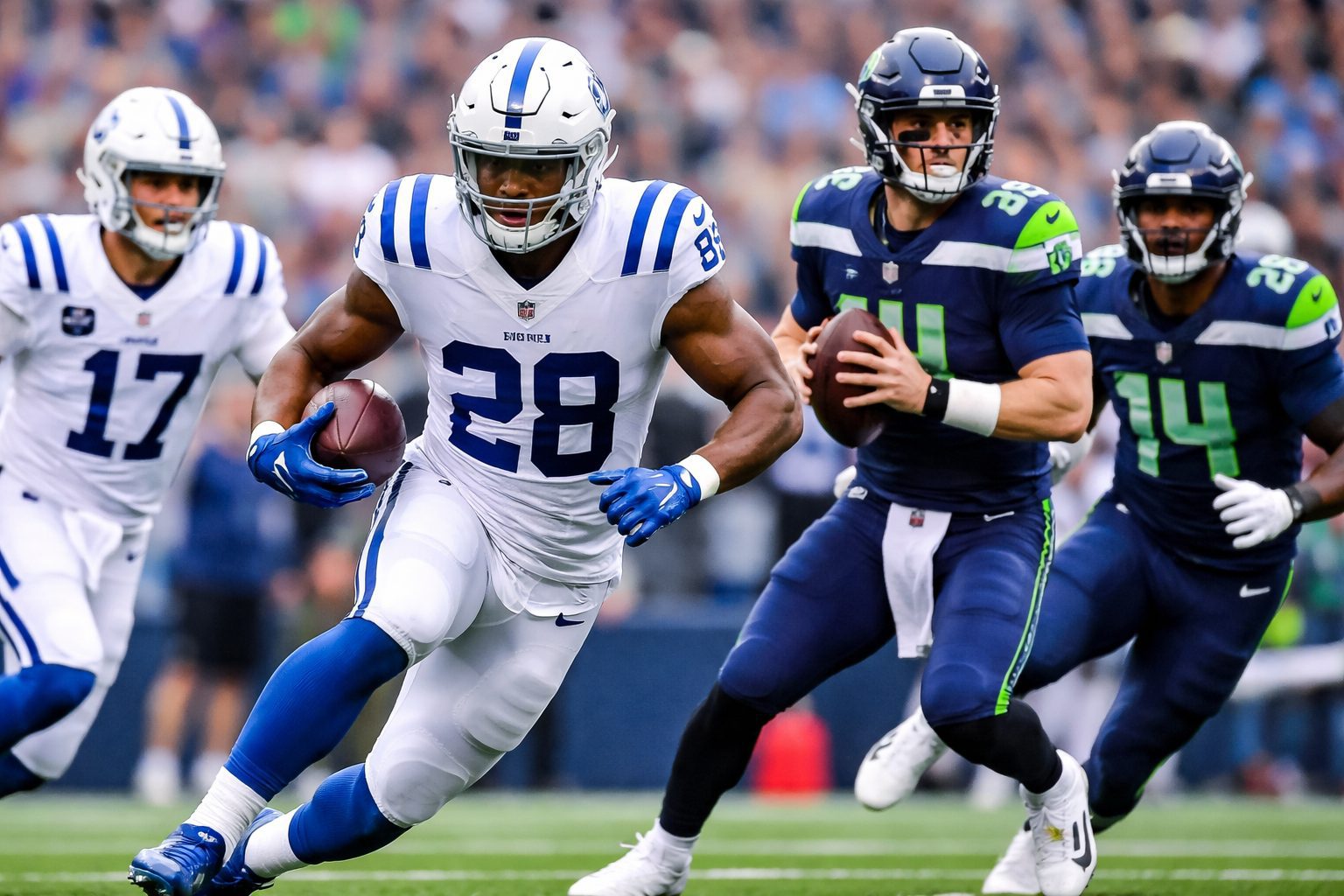
Some NFL games are remembered for touchdowns and highlight reels. This one wasn’t. The Colts vs Seahawks matchup turned into something far stranger: a tight defensive contest where kickers dominated the scoreboard and one veteran quarterback nearly wrote a comeback story nobody expected.
Seattle escaped with an 18–16 win, and the box score tells a fascinating story. Six field goals from Jason Myers powered the Seahawks, while the Colts leaned on a mix of short passing and Jonathan Taylor’s steady rushing. If you searched for colts vs seahawks match player stats, you’re probably trying to understand what really happened beyond the final score. The numbers reveal far more than the scoreboard.
Game Overview and Final Score Breakdown
Seattle’s victory came in a game that looked more like something from the early 2000s than modern NFL football. The Seahawks scored every point through Jason Myers’ right leg, hitting six field goals that kept the offense afloat when drives stalled near the red zone.
Indianapolis came close to stealing the game late. Blake Grupe drilled a massive 60-yard field goal with less than a minute left, briefly pushing the Colts ahead. The moment felt dramatic inside the stadium. But Seattle responded quickly, moving the ball just enough to let Myers kick the game-winner from 56 yards.
Statistically, Seattle finished with 314 total yards compared to Indianapolis’ 220. That gap matters because both teams ran almost the same number of plays. When two teams have similar possession counts, the one generating bigger plays usually wins.
But here’s the thing. The Colts actually controlled the clock slightly longer. They also converted more third downs. Those details normally favor the road team, yet Seattle’s passing production and flawless kicking changed the outcome.
Quarterback Player Stats and Passing Analysis
Quarterback play shaped the rhythm of this matchup, even though neither passer produced a flashy touchdown total.
Sam Darnold handled the job for Seattle and finished with 22 completions on 36 attempts for 271 yards. He didn’t throw a touchdown, but he also avoided interceptions and pushed the ball downfield far more than Indianapolis did. His average gain per completion kept Seattle in scoring range even when drives stalled.
Darnold’s performance worked because Seattle leaned heavily on explosive plays. Several passes traveled more than twenty yards downfield, stretching Indianapolis’ defense and flipping field position quickly. That ability mattered in a game where every scoring chance ended in a field-goal attempt.
Philip Rivers’ Unlikely Return
The Colts’ quarterback storyline surprised nearly everyone watching. Philip Rivers, at 44 years old, stepped into the starting role and delivered a gritty performance. His final line showed 18 completions on 27 attempts for 120 yards with one touchdown and one interception.
On paper those numbers look modest. But they reflect the style Indianapolis needed to play. Rivers relied on short routes, quick reads, and safe throws that kept the offense moving without exposing the ball to turnovers.
And there was a moment when it almost worked perfectly. Late in the fourth quarter Rivers engineered a drive that set up Grupe’s long field goal. For a brief stretch the Colts looked ready to steal the game on the road.
Passing Yardage Comparison
Seattle’s passing game produced more than double the net yardage of Indianapolis. That difference shaped nearly every drive.
The Seahawks finished with 264 net passing yards while the Colts recorded just 118. Those numbers highlight the contrast in offensive strategy. Seattle aimed for chunk plays, while Indianapolis tried to grind down the field through controlled possessions.
The contrast is easy to see if you examine yards per attempt. Darnold averaged significantly more yardage each time he threw the ball, which meant Seattle needed fewer plays to reach scoring range.
Rushing Performance and Ground Game Stats
Running backs typically decide games like this one. Surprisingly, neither team dominated on the ground.
Indianapolis relied heavily on Jonathan Taylor. He carried the ball 25 times for 87 yards, averaging roughly 3.5 yards per rush. Those numbers don’t look explosive, but they kept the offense balanced and allowed Rivers to operate comfortably in play-action situations.
Taylor’s workload showed how much the Colts trusted their running game. Even when Seattle’s defense stacked the line, Indianapolis continued feeding him carries. The approach helped control the pace of the game and limited risky throws.
Seattle’s Struggling Run Game
Seattle’s rushing attack never really found its rhythm. Zach Charbonnet led the team with just 31 yards on eight carries. Kenneth Walker III added 17 yards on nine attempts.
When you combine those numbers, the Seahawks managed only 50 rushing yards. That’s a low total for any NFL team. Normally a performance like that creates serious problems for offensive balance.
But Seattle compensated with its passing attack. Darnold’s ability to connect on intermediate and deep routes allowed the Seahawks to reach field-goal range without needing consistent rushing production.
What the Ground Game Reveals
Here’s where the numbers tell a deeper story. Indianapolis ran the ball effectively enough to maintain drives, yet it never broke a long run. Taylor’s longest carry reached only 11 yards.
Seattle, meanwhile, struggled to establish the run but produced explosive gains through the air. Over the course of sixty minutes, those explosive plays mattered more than steady rushing.
In modern NFL analytics, explosive plays often correlate strongly with winning. Coaches and analysts from organizations like Pro Football Focus frequently emphasize gains of 20 yards or more as drive-changing moments. Seattle created several of those.
Receiving Leaders and Offensive Targets
Wide receivers shaped the passing game more than any other position in this matchup.
Jaxon Smith-Njigba emerged as Seattle’s most dangerous offensive weapon. He caught seven passes for 113 yards and consistently stretched the Colts’ defense. His ability to gain separation downfield gave Darnold a reliable target whenever Seattle needed momentum.
Rashid Shaheed also contributed heavily. He finished with five catches for 74 yards and several critical first downs. Cooper Kupp added another five receptions for 46 yards, giving Seattle a trio of dependable receiving options.
Together those three players accounted for most of the Seahawks’ offensive production through the air. Their chemistry with Darnold helped offset the lack of rushing success.
Indianapolis Receiving Stats
The Colts’ receiving numbers looked very different. No player topped 35 yards receiving, which tells you exactly how conservative the offense remained throughout the game.
Ameer Abdullah led the team with five receptions for 32 yards. Michael Pittman Jr. recorded three catches for 26 yards, while rookie tight end Tyler Warren added three for 19. Josh Downs caught the only touchdown pass on an 8-yard route.
That spread-out stat sheet reflects a short passing strategy. Rivers distributed the ball to several targets rather than relying on one dominant receiver. The approach helped maintain possession but limited the team’s ability to create big gains.
Why Explosive Plays Matter
When you compare receiving totals, one number jumps off the page. Smith-Njigba alone gained 113 yards. The Colts’ leading receiver managed just 32.
That difference isn’t small. It explains why Seattle could stall near the end zone repeatedly yet still remain in scoring range. Big plays compress the field and shorten drives.
Defensive Player Stats and Key Performances
Defensive units carried large portions of this game, especially in the red zone where touchdowns were scarce.
For Indianapolis, linebacker Zaire Franklin led the defense with 10 total tackles. Germaine Pratt matched him with another 10, while safety Cam Bynum added eight tackles from the secondary.
One defender who stood out on film was Laiatu Latu. The edge rusher recorded the Colts’ only sack and finished with three tackles for loss. His pressure forced Seattle’s offense to settle for several long field-goal attempts.
Seattle’s defense didn’t produce massive sack totals either, but it delivered key plays at the right moments.
Seattle Defensive Standouts
Linebacker Ernest Jones IV finished with 10 tackles and helped anchor the middle of the defense. Rookie defensive back Nick Emmanwori contributed seven tackles, one sack, and two passes defended.
Cornerback Devon Witherspoon also played a strong game in coverage. He recorded six tackles and disrupted several passing attempts aimed at Indianapolis’ outside receivers.
But the most decisive defensive play came in the final moments. Safety Coby Bryant intercepted Rivers’ last pass attempt, sealing the victory and preventing one more Colts comeback drive.
Turnovers and Defensive Discipline
Turnovers often decide close games, and this matchup followed that pattern.
Seattle forced the only turnover of the game with Bryant’s interception. Indianapolis finished the contest without forcing a takeaway.
That single difference might sound small. Yet when two teams are separated by just two points, even one turnover can swing the entire result.
Special Teams Impact and Kicking Records
Special teams rarely dominate headlines, but this game belonged to the kickers.
Jason Myers delivered one of the best kicking performances in Seahawks history. He converted six field goals from distances ranging between 30 and 56 yards. The total set a franchise record for most field goals in a single game.
Each kick came at a critical moment. Several drives stalled inside Indianapolis territory, yet Myers ensured Seattle walked away with points every time.
Blake Grupe’s Huge Kick
Indianapolis kicker Blake Grupe also had an impressive day. He made three field goals, including a remarkable 60-yard attempt late in the fourth quarter.
Inside the stadium, the kick briefly shifted momentum toward the Colts. For a few seconds the visiting sideline believed the upset might happen.
But Myers answered moments later with his own long kick. That sequence of back-to-back long field goals became the defining moment of the game.
Return Game Contributions
Field position played a subtle role as well. Seattle’s Rashid Shaheed returned five kickoffs for 131 yards, averaging more than 26 yards per return.
Indianapolis countered with Ameer Abdullah, who returned two kickoffs for 71 yards including a 44-yard return. Both teams gained valuable field position through special teams, which helped set up several scoring drives.
Team Statistics That Explain the Outcome
If you step back and examine the entire stat sheet, the explanation for Seattle’s victory becomes clearer.
The Seahawks produced more total yards and significantly more passing yardage. Their offense generated explosive plays that shortened drives and placed the kicker in scoring position repeatedly.
Indianapolis controlled time of possession and ran the ball more effectively, but the offense lacked big gains. Without those explosive plays, drives required many short completions and rushing attempts.
That approach left little margin for mistakes. When Rivers threw the late interception, the Colts lost their final chance to answer.
Seattle’s efficiency also mattered. The Seahawks committed no turnovers and converted every scoring opportunity into points through Myers’ kicking.
In a two-point game, those details become decisive.
Frequently Asked Questions
Who led the Colts vs Seahawks game in passing yards?
Sam Darnold led all passers with 271 yards for Seattle. Philip Rivers threw for 120 yards for Indianapolis while completing 18 of 27 passes.
Which player had the most rushing yards in the game?
Jonathan Taylor recorded the highest rushing total with 87 yards on 25 carries. Seattle’s leading rusher, Zach Charbonnet, finished with only 31 yards.
Who was the top receiver during the matchup?
Jaxon Smith-Njigba led all receivers with seven catches for 113 yards. No Indianapolis receiver exceeded 32 yards.
How did the Seahawks win without scoring a touchdown?
Seattle won because Jason Myers converted six field goals. His kicking accounted for all 18 Seahawks points.
Did Philip Rivers perform well for the Colts?
Rivers delivered a steady performance considering the circumstances. He threw one touchdown and guided the late drive that set up a 60-yard field goal attempt.
What defensive play decided the game?
Safety Coby Bryant intercepted Rivers during the Colts’ final possession. That turnover secured Seattle’s victory.
Also Read: Serinda Swan Partner: Relationships, Career & Life (2026)
Conclusion
Some games showcase explosive offenses and highlight-reel touchdowns. This matchup offered something different. The colts vs seahawks match player stats reveal a contest defined by defense, field position, and exceptional kicking.
Seattle’s passing game created the most dangerous plays, especially through Jaxon Smith-Njigba. Sam Darnold’s steady performance gave the Seahawks enough offensive momentum to keep drives alive.
Indianapolis nearly pulled off a dramatic upset thanks to Jonathan Taylor’s rushing and Philip Rivers’ calm leadership. Yet the offense struggled to produce big gains, and that limitation showed up clearly in the final yardage totals.
Football often turns on small details. In this case, the difference was one interception, a few explosive passes, and a kicker who simply didn’t miss. Those factors carried Seattle to victory and turned a low-scoring game into one of the season’s most unusual statistical stories.
Looking ahead, both teams will study this box score closely. Coaches understand that games like this highlight the importance of efficiency, discipline, and special teams execution. And sometimes, the player who decides everything isn’t the quarterback or running back at all. Sometimes it’s the kicker walking calmly onto the field with the game resting on his foot.