

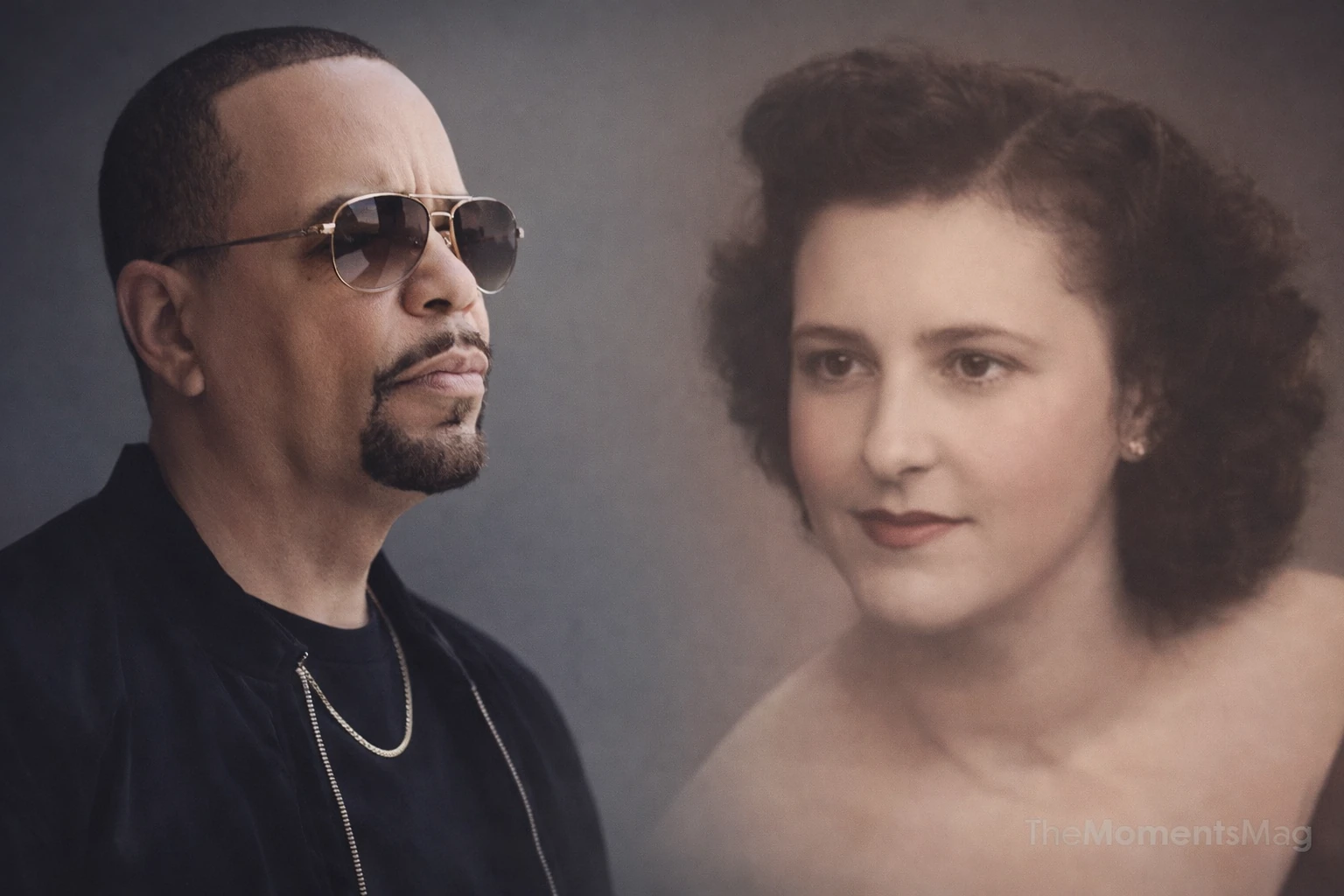
There are people whose lives are recorded in headlines, and others whose influence is measured in memory. Alice Marrow belongs to the second group. She is not widely known for a career, public achievements, or media appearances, yet her name continues to surface for one clear reason: she was the mother of Tracy Lauren Marrow, the artist and actor the world knows as Ice-T. What makes her story compelling is not the volume of information available, but how much of her presence is felt through the life her son went on to build.
For readers searching her name, the expectation is often a detailed biography filled with dates, milestones, and personal anecdotes. The truth is more restrained. Alice Marrow lived largely outside the public record, and most of what is known about her comes through the recollections of her son and the broader context of his early life. Still, even in fragments, her story carries weight. It offers insight into the formative years of one of hip-hop’s most enduring figures and reveals how early family influences can echo across decades.
Early Life and Family Background
Alice Marrow was part of a mid-20th-century Black American family whose roots, according to widely cited biographical accounts of Ice-T, trace back to Louisiana. While some modern online profiles claim detailed specifics about her birthplace and ancestry, those details are not consistently supported by strong primary sources. What can be said with greater confidence is that she later lived in New Jersey, where she raised her son during his early childhood.
She was married to Solomon Marrow, and together they built a life that, by most accounts, reflected the aspirations of many working- and middle-class Black families of the time. Their household provided a degree of stability during Ice-T’s earliest years, before tragedy disrupted it. The family eventually settled in Summit, New Jersey, a suburban environment that exposed their son to a different social landscape than the urban centers he would later become associated with.
Not many people know this, but Ice-T’s early environment was not the hardened Los Angeles setting often linked to his music. Instead, his childhood began in a quieter, more structured community, shaped by the values and presence of both parents. In that setting, Alice Marrow’s role was central, even if the specifics of her daily life remain largely undocumented.
A Mother’s Influence in a Formative Childhood
The clearest glimpses of Alice Marrow’s personality come through her son’s recollections. One of the most widely cited moments involves a conversation about race that took place when Ice-T was still a child. After noticing differences in how Black and white children were treated, he went to his mother for an explanation. Her response, remembered in various accounts, was direct and unadorned: “Honey, people are stupid.”
That brief statement has endured because of what it reveals. It suggests a parent who approached difficult realities with clarity rather than abstraction, offering her child a way to understand prejudice without internalizing it. It also hints at a broader parenting style grounded in honesty, resilience, and emotional steadiness.
What’s surprising is how much that single remembered exchange has come to define public understanding of Alice Marrow. There are no widely available interviews or personal writings to draw from, yet that moment alone has been cited repeatedly in biographical profiles of Ice-T. It functions almost as a shorthand for the kind of guidance she provided during the limited time she had with her son.
In addition to her outlook, Ice-T has described his mother’s appearance in ways that add another layer to her identity. He recalled her as a fair-skinned Black woman, drawing comparisons to classic Hollywood figures like Dorothy Dandridge and Lena Horne. That detail, while personal, also reflects the complexities of race and identity that would later inform his worldview.
Tragedy and Its Lasting Impact
Alice Marrow’s life, as far as the public record shows, ended abruptly. She died of a heart attack when her son was in the third grade. The exact date is not consistently documented in widely cited sources, but the timing is clear: her death came during a crucial stage of her child’s development.
For a young boy, the loss of a parent is a defining event. For Ice-T, it was the first of two devastating losses. His father, Solomon Marrow, died of a heart attack four years later, leaving him effectively orphaned before reaching adolescence. These events are central to understanding the trajectory of his life, and by extension, the enduring interest in his mother.
But here’s the thing. Alice Marrow’s influence did not end with her death. In many ways, it became more pronounced. The lessons she imparted, however few they may seem on paper, were carried forward into a life that would become anything but ordinary. Ice-T has often been described as pragmatic, unsentimental, and sharply observant—traits that align closely with the tone of that remembered childhood conversation.
Life After Loss: A Son Carries the Story Forward
After losing both parents, Ice-T moved to Los Angeles to live with relatives. It was there that his life took a turn toward the environment and experiences that would later shape his music. Yet even as his surroundings changed, the early imprint of his upbringing remained visible.
The truth is, Alice Marrow’s role in his story is less about duration and more about depth. She was present during the years when foundational ideas take shape, when a child begins to interpret the world and their place within it. Those early impressions can carry surprising weight, especially when reinforced by later experience.
As Ice-T transitioned into adulthood, first serving in the U.S. Army and then entering the world of music, his perspective remained grounded in a kind of clear-eyed realism. That tone would become a defining feature of his work, from his early hip-hop recordings to his later acting roles. While it would be an oversimplification to attribute that entirely to one parent, the connection is difficult to ignore.
The Limits of the Public Record
One of the most challenging aspects of writing about Alice Marrow is the scarcity of verifiable information. Unlike public figures with extensive documentation, her life is known primarily through secondary accounts. This has led to a proliferation of online biographies that often present detailed timelines and personal facts without clear sourcing.
That said, a careful approach requires distinguishing between what is broadly supported and what remains uncertain. Core details—her identity as Ice-T’s mother, her life in New Jersey, and her early death—are consistent across reliable sources. More specific claims, such as exact birth dates or detailed career histories, are harder to verify and should be treated with caution.
This imbalance has created a curious dynamic. On one hand, Alice Marrow is widely searched and discussed. On the other, her story resists the kind of expansion often expected in digital biography. It serves as a reminder that not every influential life leaves behind a detailed public archive.
Personal Life and Family Context
Alice Marrow’s personal life, beyond her role as a mother, is not extensively documented. There is no widely available record of her professional career, hobbies, or social circle. What can be inferred is that she was part of a stable family unit during her son’s early years, sharing responsibilities with her husband in raising their only child.
Her marriage to Solomon Marrow appears to have been central to that early stability. Together, they created an environment that allowed their son to grow up with both structure and exposure to broader social dynamics. The sudden loss of that structure after both parents’ deaths underscores how much they had provided during their lifetimes.
In this sense, Alice Marrow’s story is not unique, but it is deeply representative. She was one of countless parents whose influence is felt most strongly through the lives of their children. The difference here is that her child became a public figure, bringing her name into wider awareness.
Public Image and Cultural Presence
Alice Marrow does not have a public image in the conventional sense. There are no widely circulated photographs, interviews, or public appearances that define her in the way they would for a celebrity. Instead, her presence exists almost entirely through narrative—through the stories told about her and the memories preserved by her son.
That absence has not prevented her from becoming a subject of interest. In fact, it may have contributed to it. The lack of concrete detail invites curiosity, prompting readers to search for more information and, in some cases, to fill in the gaps themselves.
What’s interesting is how her story intersects with broader themes in American culture. It touches on family, loss, resilience, and the ways in which early experiences shape identity. These are universal themes, and they help explain why Alice Marrow’s name continues to resonate, even in the absence of a traditional public profile.
Net Worth and Financial Context
There is no credible public information regarding Alice Marrow’s net worth or financial status. As a private individual who lived outside the public eye, she was not the subject of financial reporting or estimation. Any claims about her wealth that appear online should be treated with skepticism unless supported by verifiable evidence.
In contrast, her son Ice-T has built a substantial career in music, television, and film, with widely reported estimates of his net worth in the tens of millions of dollars. That financial success, however, belongs to his own life and career, not to the circumstances of his upbringing.
The absence of financial detail in Alice Marrow’s story is not a gap so much as a reflection of her status. She was not a public figure, and her life was not documented in the way that would produce such records.
Where Alice Marrow Is Now
Alice Marrow passed away during her son’s childhood, and there are no current developments related to her as an individual. Her legacy exists through memory, biography, and the continued public presence of her son.
In a broader sense, she remains part of an ongoing story. Every time Ice-T speaks about his early life, every time a new generation discovers his work, her influence is indirectly revisited. She is not present in the public sphere, but she is not absent from it either.
That distinction matters. It highlights the difference between visibility and impact, and it explains why her name continues to appear in searches and discussions long after her lifetime.
Frequently Asked Questions
Who was Alice Marrow?
Alice Marrow was the mother of rapper and actor Ice-T, whose birth name is Tracy Lauren Marrow. She lived in New Jersey during his early childhood and is remembered primarily through her influence on his formative years. Her life was largely private, and most information about her comes from biographical accounts of her son.
How did Alice Marrow die?
Alice Marrow died of a heart attack when Ice-T was in the third grade. This detail is consistently reported in reliable biographical sources and is a key part of his early life story. Her death marked the beginning of a series of losses that shaped his upbringing.
Was Alice Marrow a public figure?
No, Alice Marrow was not a public figure. She did not have a documented career in the public eye and is known mainly because of her relationship to Ice-T. Her story is preserved through family memory and secondary sources rather than direct public records.
Where was Alice Marrow from?
Available accounts suggest that her family had roots in Louisiana, though the exact details of her birthplace are not consistently documented. She later lived in New Jersey, where she raised her son during his early childhood.
What influence did Alice Marrow have on Ice-T?
Alice Marrow influenced her son through the values and perspective she shared during his early years. One of the most cited examples is her straightforward explanation of racial prejudice, which has been linked to his later outlook on life. Her early death also had a lasting emotional impact on his development.
Why is Alice Marrow still searched online?
Her name continues to be searched because of interest in Ice-T’s background and family history. As a long-standing public figure, his life draws attention to the people who shaped him, including his parents. The limited information available about her also contributes to ongoing curiosity.
Conclusion
Alice Marrow’s life does not unfold in the way most biographies do. There are no long timelines of achievements, no catalog of public appearances, no detailed records to assemble into a conventional narrative. Yet her story remains meaningful because of where it intersects with a larger one.
She was a mother who provided guidance during the earliest years of her son’s life, offering clarity in moments that might have otherwise been confusing or painful. Her presence was brief in the timeline of his childhood, but it left a mark that endured.
The search for Alice Marrow is, in many ways, a search for origin. It reflects a desire to understand how a public figure came to be who they are, and what influences shaped that path. While the answers are limited, they are not empty.
Her legacy is quiet, but it is not invisible. It lives in memory, in storytelling, and in the continuing curiosity of those who want to understand the human roots behind public success.


