

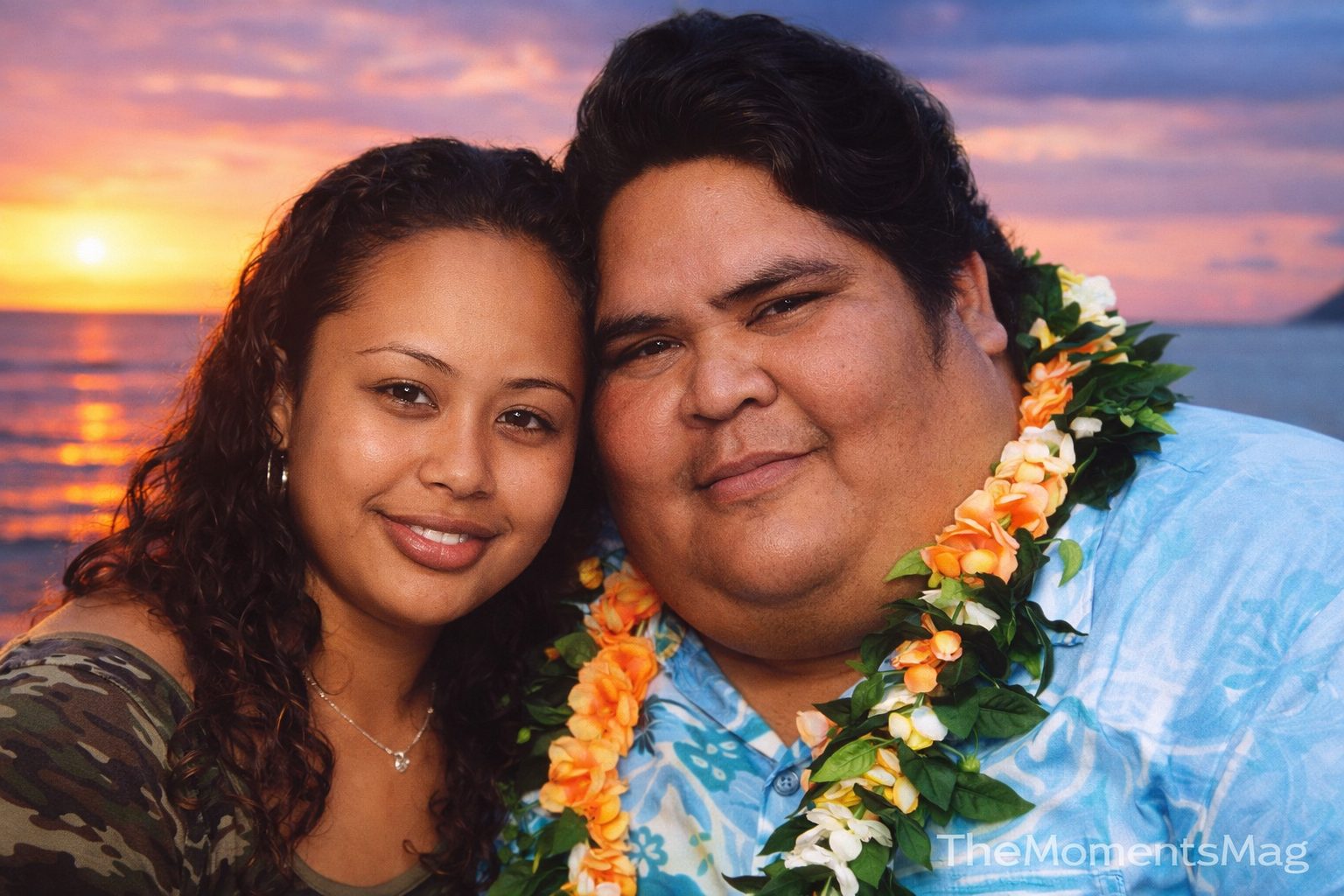
The name Kamakawiwo’ole carries a unique emotional weight, especially in Hawaiʻi. It evokes the gentle voice of Israel “IZ” Kamakawiwo’ole, whose music traveled far beyond the islands and became a global symbol of peace, longing, and cultural pride. When people encounter the name Ceslie-Ann Kamakawiwo’ole, curiosity naturally follows. Who is she? What became of the daughter of one of Hawaiʻi’s most beloved artists? Why does so little verified information exist?
This biography-style article explores what is known about Ceslie-Ann Kamakawiwo’ole, often called Wehi, while respecting the limits of public knowledge. Her story is inseparable from her father’s legacy, yet it also stands apart as the life of a private individual shaped by extraordinary circumstances. Rather than speculation, this account focuses on context, culture, and the realities of growing up in the shadow of an enduring icon.
Early Life and Family Background
Ceslie-Ann Kamakawiwo’ole was born into a family deeply rooted in Hawaiian music and identity. Her father, Israel Kaʻanoʻi Kamakawiwo’ole, emerged in the late twentieth century as a defining voice of modern Hawaiian music. His work blended traditional Hawaiian sounds with contemporary influences, while his lyrics carried messages of love for the land, the people, and Hawaiian sovereignty.
From the outset, Ceslie-Ann’s childhood was shaped by both intimacy and exposure. Within her family, Israel was not an international star but a father, partner, and community member. Outside that circle, he was increasingly recognized as a cultural figure whose music resonated far beyond Hawaiʻi. This dual reality created a complex environment for any child, especially one growing up during the height of her parent’s fame.
Publicly available sources indicate that Ceslie-Ann was still very young when her father’s health began to decline. Israel Kamakawiwo’ole struggled for years with obesity-related health issues, and his passing in 1997 marked a profound moment of collective mourning in Hawaiʻi. Ceslie-Ann was reported to be around fourteen years old at the time of his death, an age when identity and stability are still forming.
Growing Up After a Cultural Loss
The death of Israel Kamakawiwo’ole was not only a family tragedy but also a cultural event. His funeral procession drew tens of thousands of people, and his ashes were scattered at sea in a ceremony watched by many across the islands. For Hawaiʻi, it was the loss of a voice that articulated shared values and collective memory.
For Ceslie-Ann, however, this moment represented the loss of a parent rather than a symbol. Growing up after such a public goodbye meant navigating grief under the gaze of a community that felt a deep connection to her father. While many children of famous artists face this challenge, the Hawaiian context adds another layer. In Hawaiʻi, family lineage, or ʻohana, is central to identity, and the memory of ancestors is actively carried forward in daily life.
Despite this, Ceslie-Ann did not step into the public eye as a spokesperson or performer. Unlike some children of celebrated musicians, she did not pursue a visible career in entertainment or cultural leadership. This absence is significant. It suggests a deliberate choice, whether personal or circumstantial, to remain outside the spotlight that followed the Kamakawiwo’ole name.
The Meaning of Privacy in Hawaiʻi
Understanding Ceslie-Ann Kamakawiwo’ole’s biography requires an understanding of Hawaiian attitudes toward privacy. Hawaiʻi is often misunderstood as simply a tourist destination or a cultural brand. In reality, it is a place where community memory is long and personal boundaries are deeply respected, particularly within Native Hawaiian and local families.
In many Hawaiian households, stories are shared orally and selectively. Not every experience is meant for public consumption, and not every family member is expected to represent a public legacy. Choosing privacy is not an act of secrecy but one of self-preservation and respect.
This cultural framework helps explain why verified information about Ceslie-Ann’s adult life is limited. While her father’s music continues to circulate globally, her own life has largely remained local and private, defined more by personal circumstances than public roles.
Public Attention and Media Exposure
Interest in Ceslie-Ann Kamakawiwo’ole increased years after her father’s death, not because of artistic endeavors, but due to brief media exposure connected to law enforcement coverage in Hawaiʻi. A local television segment identified a person named Ceslieanne Kamakawiwoole in relation to a “most wanted” notice. The clip circulated online and quickly became detached from its original context.
This moment illustrates how modern media can compress complex realities into searchable fragments. A short broadcast, intended for local awareness, can become a permanent digital footprint. For individuals who are not public figures by choice, this kind of exposure can be especially disruptive.
It is important to note that publicly accessible information about the resolution or broader context of this coverage is limited. Without authoritative follow-up reports or official records available to the general public, drawing conclusions would be irresponsible. What can be said is that this moment significantly shaped online perceptions of Ceslie-Ann, often overshadowing her identity as a private individual and as a daughter who lost her father at a young age.
Life Under a Famous Name
Living under a famous surname can be both a privilege and a burden. In the case of Ceslie-Ann Kamakawiwo’ole, the burden appears to outweigh the benefits. Her father’s music has only grown in popularity since his death, fueled by streaming platforms, film placements, and global nostalgia for authenticity and calm.
As Israel Kamakawiwo’ole’s songs continue to generate attention and revenue, curiosity about his family naturally persists. Yet fame by association does not come with the same protections or platforms as fame earned through public work. Family members are often subject to scrutiny without the means to shape their own narrative.
For Ceslie-Ann, this has meant being known largely through absence. She is recognized not for what she has done publicly, but for what she has not chosen to share. In a digital era that rewards constant visibility, such restraint stands out.
Cultural Legacy and Responsibility
The Kamakawiwo’ole legacy occupies a unique place in Hawaiian culture. Israel’s music is frequently described as a bridge between generations, connecting traditional Hawaiian values with modern expression. His image and voice have been used in educational contexts, tourism narratives, and international media.
However, cultural legacy does not automatically transfer as responsibility to descendants. In Hawaiian culture, each individual carries their own kuleana, or responsibility, shaped by personal capacity and circumstance. Ceslie-Ann’s life path, whatever its details, does not diminish her father’s contributions, nor does his legacy define her worth.
This distinction is often lost in online discourse, where descendants of famous figures are expected to embody or continue a public narrative. In reality, legacies live through communities as much as through bloodlines.
The Impact of the Internet Age
Ceslie-Ann Kamakawiwo’ole’s story also reflects a broader truth about the internet age. Search engines do not differentiate between public figures and private individuals when it comes to visibility. A name linked to a famous person becomes searchable, indexed, and monetized through attention.
This dynamic raises ethical questions about how biographies are written and consumed. When information is scarce, speculation fills the gaps. When context is missing, narratives become distorted. Responsible biography, especially of living individuals, requires restraint as much as curiosity.
In this sense, the limited public record surrounding Ceslie-Ann is not a failure of information but a boundary that deserves acknowledgment.
Where Her Story Stands Today
As of now, there is no comprehensive public record detailing Ceslie-Ann Kamakawiwo’ole’s current life. She has not given interviews, released public statements, or participated in media projects related to her father’s legacy. This silence is itself a statement, one that suggests a preference for life outside public scrutiny.
What remains visible is the enduring impact of her father’s music and the way it continues to shape perceptions of the Kamakawiwo’ole name. Ceslie-Ann’s biography, as it can be responsibly told, is therefore incomplete by design. It reflects not a lack of significance, but a conscious separation between public myth and private reality.
Also Read: Lupita Karisma Biography: Life, Career, and Public Rise
Conclusion
Ceslie-Ann Kamakawiwo’ole’s life cannot be reduced to headlines, search queries, or associations. She is best understood as a person shaped by loss, legacy, and a cultural environment that values humility and privacy. While her father’s voice continues to echo across generations, her own story unfolds largely beyond public view.
In a world that often demands access to every narrative, her biography offers a quiet counterpoint. It reminds us that not every legacy is meant to be performed, and not every life connected to fame is obligated to explain itself. Sometimes, the most respectful biography is one that acknowledges what is known, recognizes what is not, and leaves space for dignity to exist unexamined.

