

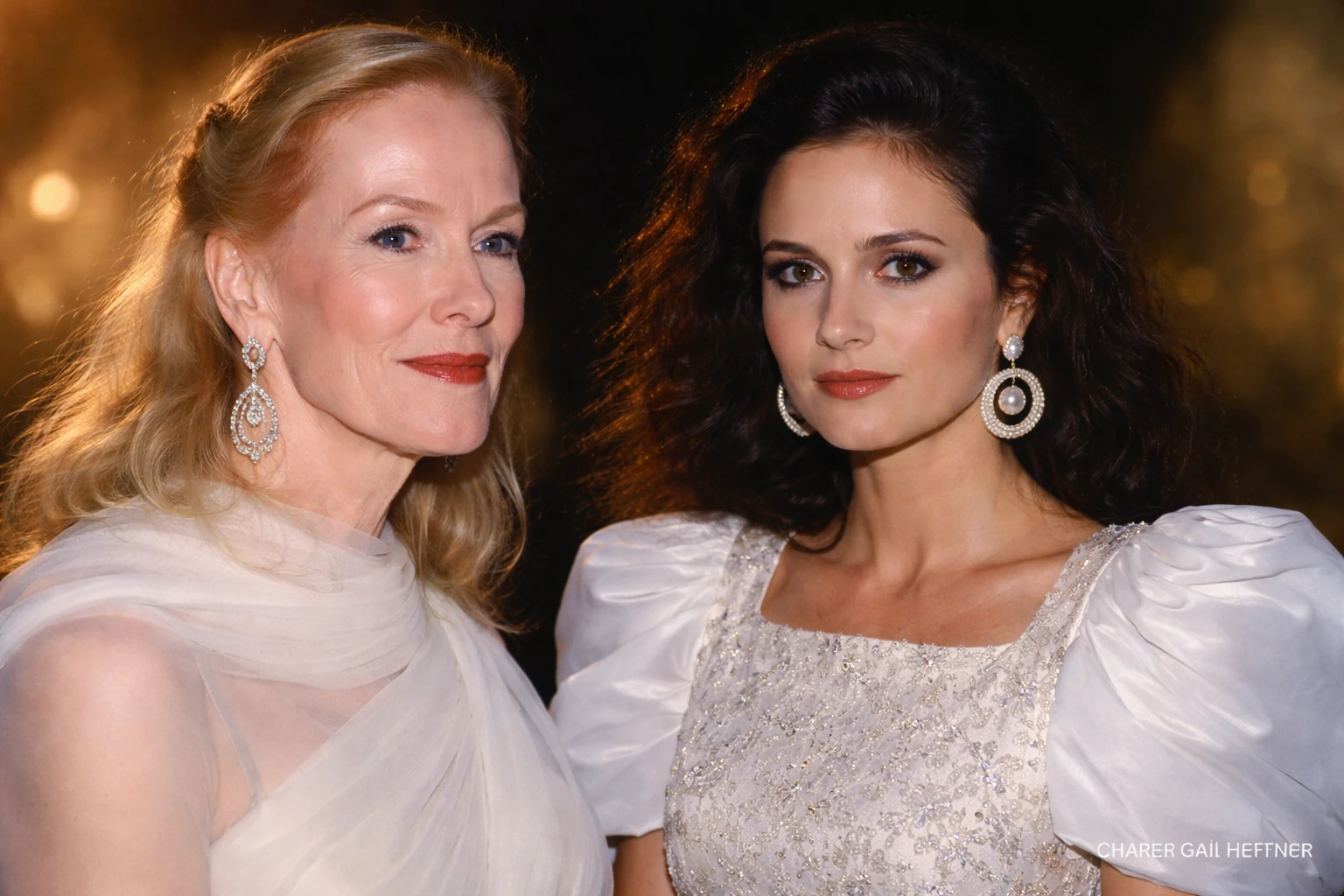
That headline version sounds simple, almost cinematic. But anyone who looks closely discovers something more complicated. Charlene Gail Heffner was not born into wealth or the tight social circles of East Coast dynasties. She came from an entirely different world, one shaped by spiritual searching, travel, and unconventional choices. When she entered Doris Duke’s life in the late 1980s, few people expected the relationship to reshape one of America’s most famous fortunes.
More than three decades have passed since the drama surrounding Duke’s estate filled courtrooms and magazines. Yet Heffner’s name still appears in biographies, legal casebooks, and the occasional society column. Part of that persistence comes from curiosity about the Duke fortune itself. Another part comes from the simple fact that Charlene Gail Heffner’s life doesn’t follow the path people expect from someone who briefly stood so close to a billion-dollar inheritance.
| Attribute | Details |
|---|---|
| Full Name | Charlene Gail Heffner (also known as Chandi Duke Heffner) |
| Date of Birth | 1953 (exact date not widely documented) |
| Age | 73 years old (as of 2026, approximate) |
| Place of Birth | United States |
| Nationality | American |
| Profession | Philanthropist, foundation trustee |
| Famous For | Being the adopted daughter of billionaire heiress Doris Duke |
| Marital Status | Private / not publicly confirmed |
| Children | Not publicly documented |
| Estimated Net Worth | $65–80 million (as of 2026, estimates based on settlement and investments) |
Early Life and Family Background
Reliable details about Charlene Gail Heffner’s childhood remain limited, largely because she lived most of her early life outside the spotlight. Public records and contemporary reporting suggest she was born in the United States in the early 1950s, growing up during a period when cultural experimentation and spiritual exploration shaped many young Americans. Friends and acquaintances from those years described her as curious about religion and philosophy, someone who preferred travel and learning to a traditional corporate career.
During the 1970s and early 1980s, Heffner moved through communities connected to Eastern spirituality. Some magazine profiles from the 1990s reported that she spent time among devotees of the Hare Krishna movement. Those accounts portrayed her as someone drawn to meditation, devotional music, and the spiritual teachings that attracted many Western seekers during that era. Whether she considered herself a formal member or simply a participant in those circles remains unclear, but the influence of spiritual life appears throughout descriptions of her younger years.
People who knew her then often described a woman who valued independence and experience over stability. By all accounts she lived in several places, including Hawaii and California, regions known for alternative communities during that period. Those environments exposed her to artists, spiritual teachers, travelers, and philanthropists, a mixture that would later shape her interests in charity and humanitarian work.
Her life during those years rarely appeared in mainstream newspapers, and that anonymity shaped the shock that followed later. When Charlene Gail Heffner eventually entered the orbit of one of the wealthiest women in America, reporters rushed to reconstruct her past. They found someone whose life looked nothing like the old-money lineage surrounding Doris Duke.
The Woman Who Changed Everything: Meeting Doris Duke
By the late 1980s, Doris Duke had already lived several remarkable lives. Born in 1912 as the daughter of tobacco magnate James B. Duke, she inherited a vast fortune after his death when she was only twelve. Over the following decades she became known for philanthropy, travel, and patronage of the arts, supporting projects that ranged from Islamic architecture studies to environmental causes.
Yet Duke’s personal life often appeared lonely. She had married and divorced twice, and her only child, Arden, died shortly after birth in 1940. Friends later said that loss lingered with her for decades. By the time she met Charlene Gail Heffner, Duke was in her seventies and living much of the year in Beverly Hills and New Jersey.
Accounts differ slightly about how the two women first met, though most reporting places the encounter during the late 1980s. Several sources say Heffner worked briefly in a role connected to Duke’s household or traveled within social circles that eventually led to an introduction. What happened next surprised nearly everyone around Duke.
In November 1988, Doris Duke legally adopted Charlene Gail Heffner under New Jersey’s adult adoption statute. Heffner was 35 years old at the time, while Duke was 75. Adult adoption is legal in many states but rarely attracts attention. In this case the enormous wealth behind the Duke name ensured the decision immediately drew scrutiny.
Friends of Duke later suggested she believed Heffner shared a spiritual bond with her, possibly tied to the memory of her lost child. Others believed Duke simply wanted companionship during her later years. Whatever the deeper motivation, the legal result was unmistakable. Charlene Gail Heffner became Chandi Duke Heffner, the adopted daughter of one of the richest women in America.
Life as Doris Duke’s Adopted Daughter
For a brief period after the adoption, Heffner appeared to occupy a central place in Duke’s personal life. Society reporters occasionally mentioned her alongside the heiress during events and travels. Those appearances fueled speculation that Duke had found the daughter she never had the chance to raise.
Inside Duke’s circle, reactions were mixed. Some longtime friends welcomed the idea that Duke had formed a family bond late in life. Others remained cautious, uncertain about how the relationship might affect the enormous estate Duke controlled.
Observers in high society understood the implications immediately. If the relationship continued, Charlene Gail Heffner might one day inherit or influence a fortune estimated at more than a billion dollars. Even if Duke intended most of the money for charity, being her adopted daughter placed Heffner closer to power than almost anyone outside the Duke family.
But relationships formed late in life can change quickly. Within a few years tensions reportedly developed between the two women. Details remain private, though friends suggested disagreements over lifestyle, finances, and personal boundaries strained the connection. What once looked like a new beginning gradually turned into distance.
The Break and the Controversial Will
Doris Duke died on October 28, 1993, at the age of eighty. When her will became public, the shock rippled through both society circles and national media. Charlene Gail Heffner, the woman Duke had adopted five years earlier, was not included among the main beneficiaries.
Instead, Duke’s estate placed major control in the hands of her longtime butler, Bernard Lafferty, who served as executor. Newspapers quickly seized on the unusual arrangement. Vanity Fair and other magazines examined the circumstances surrounding Duke’s final years, raising questions about influence, loyalty, and the decisions made during the heiress’s declining health.
The estate itself was immense. Contemporary reporting estimated Duke’s wealth at roughly $1.2 billion, much of it eventually directed toward charitable foundations. For Charlene Gail Heffner, the will represented both a personal rupture and a legal challenge.
Within months she filed claims contesting her exclusion. Court documents indicated she believed Doris Duke had promised to provide for her financially for the rest of her life. The legal battle that followed stretched across multiple proceedings and attracted intense press attention.
By December 1995, the dispute reached a settlement. Heffner agreed to drop her claims to the broader estate in exchange for $65 million. Though a fraction of the total fortune, the settlement remained one of the largest payments ever associated with an inheritance dispute involving a non-biological heir.
Legal Battles and the Question of Lineage
The settlement with the Duke estate did not end every legal question connected to Charlene Gail Heffner. Another case centered on the interpretation of trusts established decades earlier by James B. Duke, Doris Duke’s father. These trusts used language referring to “lineal descendants,” a phrase common in estate planning documents from the early twentieth century.
Heffner argued that as Doris Duke’s legally adopted daughter she should qualify under that definition. Courts examined the question carefully, considering both adoption law and the intentions behind the original trust structure. Judges ultimately ruled that adult adoption did not automatically grant access to those trust benefits.
That decision illustrated a complicated truth about family law. Adoption creates a legally recognized parent-child relationship, but older trust agreements sometimes define heirs differently. Charlene Gail Heffner’s case became a reference point for attorneys discussing the limits of adult adoption in inheritance disputes.
The legal battles gradually faded from headlines as settlements concluded and charities began administering Duke’s philanthropic legacy. Yet the case remained a fascinating example of how personal relationships intersect with massive wealth.
Life After the Duke Estate
Many people assumed Charlene Gail Heffner would disappear into private life after the estate disputes ended. Instead she moved in a quieter direction that reflected interests from her earlier years. Over time she became associated with humanitarian and animal welfare efforts, particularly in South Asia.
One of the organizations linked to her work is the CDH International Foundation, a charity focused on medical care and veterinary support in rural India. According to the foundation’s published information, its programs include clinics providing medicine, mobile medical units visiting interior villages, and services for livestock and working animals that rural families depend upon.
The foundation also describes efforts providing wells, food supplies, and aid for communities facing poverty. Trustees connected to the group say they receive no compensation for their work, a structure meant to emphasize charitable service over financial benefit. Through these programs Heffner’s name appears less frequently in gossip columns and more often in reports about nonprofit projects.
People involved with the foundation often describe a philosophy centered on compassion for both humans and animals. That approach echoes the spiritual interests that shaped Heffner’s earlier life. Anyone who studies her biography closely notices that the themes of service and spirituality appear long before the Duke adoption changed her public identity.
Personal Life and Relationships
Charlene Gail Heffner has maintained a remarkably private personal life since the mid-1990s. Unlike many figures connected to wealth or celebrity, she rarely appears in interviews and seldom speaks publicly about the events surrounding Doris Duke’s estate.
Friends and associates occasionally describe her as someone who prefers spiritual study and travel to the attention of society pages. That choice may explain why reliable information about her marriages or romantic relationships remains scarce. Some internet biographies claim multiple marriages, but most of those claims trace back to gossip sources rather than confirmed records.
What can be said with confidence is that the experience of becoming Doris Duke’s adopted daughter and later confronting the estate dispute shaped how Heffner approached publicity. Anyone who has watched the media cycle surrounding inheritance battles understands why she might choose privacy over explanation.
Observers who encountered her through philanthropic work often mention a calm demeanor and a focus on practical aid rather than prestige. By all accounts she appears comfortable living outside the spotlight that once surrounded her name.
Net Worth and Financial Standing in 2026
Estimating Charlene Gail Heffner’s wealth requires caution because she does not publish financial statements. The most concrete figure connected to her finances remains the $65 million settlement reached in 1995 following the dispute over Doris Duke’s estate.
If that sum had been invested conservatively over three decades, financial analysts suggest it could have grown substantially. Investment growth, charitable donations, and private expenditures all affect the final figure, making precise calculations difficult. Many modern estimates place her personal wealth somewhere between $65 million and $80 million as of 2026.
That financial position places her among affluent private citizens but far below the billion-dollar fortune once associated with the Duke family. For someone who briefly stood near one of America’s largest estates, the outcome represents a dramatic shift from public expectations.
Still, wealth alone never defined Charlene Gail Heffner’s life. Her later activities suggest a focus on humanitarian work rather than expansion of personal fortune. That perspective echoes the charitable impulses that shaped Doris Duke’s legacy as well.
Lesser-Known Details About Charlene Gail Heffner
Not many people know this, but the adoption between Doris Duke and Charlene Gail Heffner remains one of the most widely cited examples of adult adoption in American legal discussions. Law professors sometimes reference the case when teaching inheritance law because it shows how adoption interacts with older trust documents.
Another surprising detail involves how briefly Heffner lived within Duke’s household after the adoption. Although public perception suggested a long period of closeness, the relationship lasted only a few years before tensions developed. That short timeline helps explain why the dispute erupted so quickly after Duke’s death.
There is also a quieter side to the story that rarely appears in headlines. People connected with Heffner’s charitable work say she spends extended periods in India overseeing or supporting humanitarian programs. Those visits reflect the same spiritual curiosity that influenced her earlier life.
Finally, her story reveals how quickly identity can change when wealth enters the picture. Before 1988, Charlene Gail Heffner lived largely outside the public eye. Within a few years she became the focus of one of the most talked-about inheritance cases of the decade.
Frequently Asked Questions
Who is Charlene Gail Heffner?
Charlene Gail Heffner, often known as Chandi Duke Heffner, is an American philanthropist best known as the adult adopted daughter of billionaire heiress Doris Duke. Duke adopted her in 1988 under New Jersey’s adult adoption law. The relationship later drew national attention when Duke died in 1993 and left her out of the will.
Why did Doris Duke adopt Charlene Gail Heffner?
Reports from friends and journalists suggest Doris Duke believed she shared a strong emotional and spiritual connection with Heffner. Duke had lost her only child decades earlier, and some observers felt she hoped the adoption would create a family bond late in life. The exact motivation remains private because Duke never fully explained the decision publicly.
Did Charlene Gail Heffner inherit Doris Duke’s fortune?
Charlene Gail Heffner did not inherit the main portion of Doris Duke’s estate. After Duke’s death she challenged the will in court and eventually reached a settlement worth about $65 million in 1995. Most of Duke’s wealth ultimately moved into charitable foundations.
What is Charlene Gail Heffner doing today?
Recent information links Heffner to humanitarian work through the CDH International Foundation. The organization provides medical care, veterinary services, and community aid programs in rural India. She appears to focus on charitable activities rather than public appearances.
How much is Charlene Gail Heffner worth in 2026?
Precise figures are not publicly confirmed, but estimates generally place her wealth between $65 million and $80 million. That estimate is based largely on the 1995 settlement and potential investment growth over time.
Also Read: Ernestine Harvin Biography: Little Richard’s Former Wife
Conclusion
Charlene Gail Heffner’s life reads like a story pulled from a novel about wealth and family. A woman from outside elite society suddenly becomes the adopted daughter of a billionaire. Within a few years the relationship fractures, and the dispute unfolds in courtrooms watched by the entire country.
But that headline version only tells part of the story. Behind the legal battles stood two individuals searching for connection during very different stages of life. Doris Duke carried the loneliness of losing her child decades earlier, while Heffner carried the curiosity of someone drawn toward spiritual and humanitarian work.
The truth is that Charlene Gail Heffner’s biography cannot be reduced to a single inheritance dispute. After the settlement she moved into quieter work supporting medical and animal welfare programs, far from the estate drama that once defined her public image. Anyone who studies her life closely discovers a person shaped as much by compassion and spiritual interest as by the extraordinary wealth that briefly surrounded her.
History often remembers people through the loudest moments of their lives. For Charlene Gail Heffner, that moment arrived when she stood at the center of one of America’s most unusual inheritance battles. Yet the years that followed show a different picture, one where philanthropy and privacy replaced the glare of headlines. The story continues quietly, written far from courtrooms and society pages, in the everyday work of helping others.

