

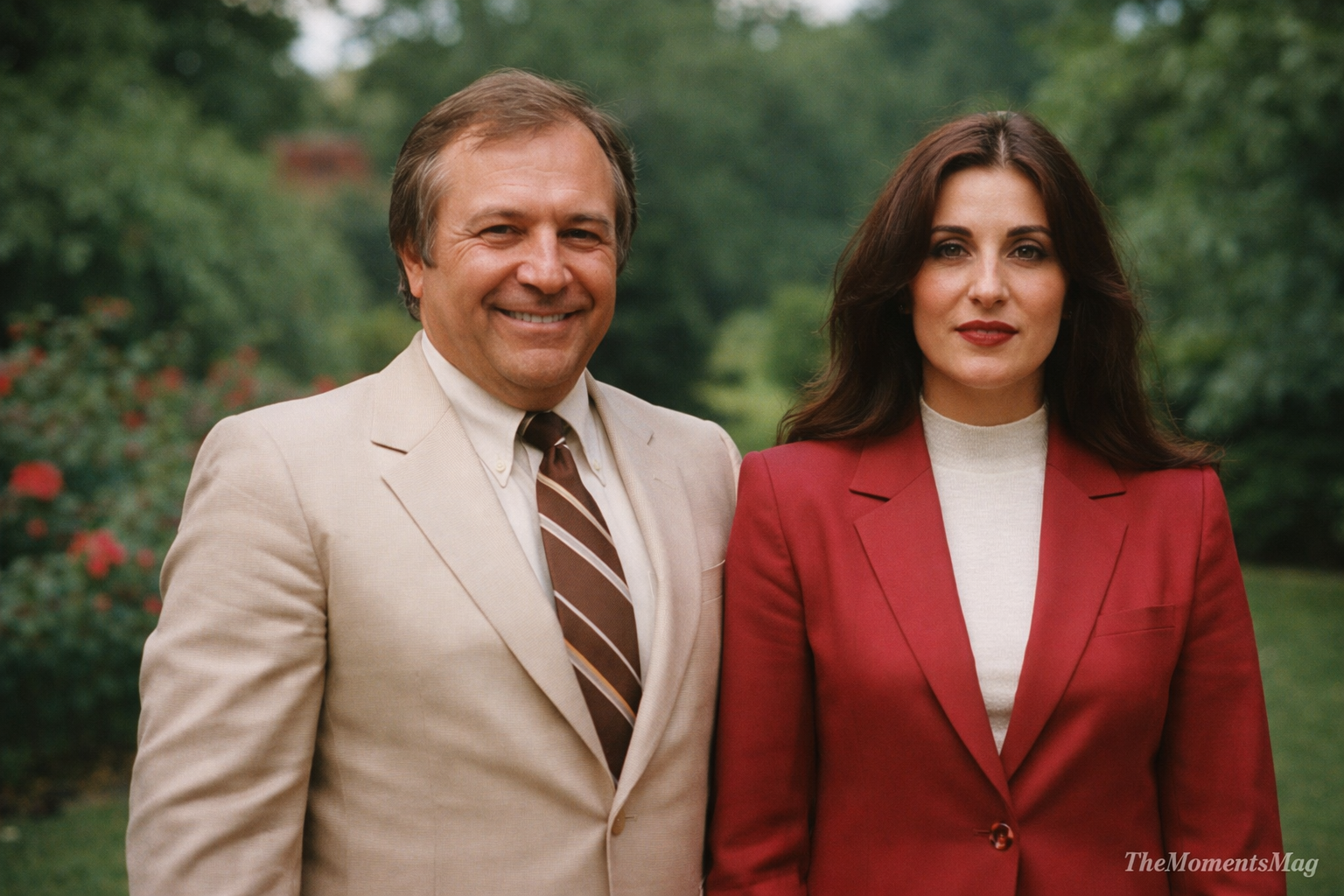
Deborah Dubois is best known to the public as the wife of Barry Seal, the infamous American pilot whose life intersected with drug trafficking, U.S. intelligence operations, and organized crime during the late twentieth century. While Barry Seal’s name has become deeply embedded in popular culture through books, documentaries, and the Hollywood film American Made, Deborah Dubois has remained largely out of the spotlight. Her life is less about notoriety and more about survival, privacy, and resilience in the shadow of extraordinary events.
This biography focuses on Deborah Dubois as a real person rather than a fictionalized character. It explores her role as a spouse and mother, the years she spent alongside Barry Seal, and the lasting impact of a life shaped by danger, secrecy, and public fascination.
Table of Contents
ToggleEarly life and personal background
Publicly available information about Deborah Dubois’s early life is limited. Unlike her husband, whose activities attracted law enforcement and media attention, Deborah lived largely outside public documentation before her marriage. What is known comes primarily from biographical accounts of Barry Seal and from legal records tied to his life and death.
Deborah Dubois married Barry Seal in 1973, becoming his third wife. At the time, Seal was already an experienced pilot with a background in commercial aviation. His deeper involvement in smuggling operations would escalate in the years that followed, eventually drawing Deborah into a world defined by secrecy and constant risk.
Their marriage produced three children. Deborah also became a stepmother to children from Barry Seal’s previous marriages, bringing the total number of Seal’s children to six. From the outside, the family appeared to live a relatively conventional life in Louisiana, particularly in Baton Rouge. However, beneath that appearance was a reality marked by unusual income sources, frequent travel, and mounting legal danger.
Marriage to Barry Seal and life during the smuggling years
During the 1970s and early 1980s, Barry Seal became one of the most prolific drug smugglers in U.S. history, working primarily with Colombian cartels. At the same time, he was periodically cooperating with U.S. law enforcement agencies after his arrest in 1983. This double life placed extraordinary pressure on his family, especially Deborah Dubois.
While accounts differ regarding how much Deborah knew about the full extent of Barry Seal’s activities at any given time, it is clear that she lived within an environment of uncertainty. Large sums of money flowed through the household. Properties, aircraft, and luxury items appeared and disappeared. Meanwhile, Seal’s legal troubles became increasingly difficult to hide.
Friends and later commentators have suggested that Deborah, like many spouses in similar situations, faced impossible choices. Questioning too much could destabilize the family, while knowing too much could place her in legal or physical danger. As a result, Deborah’s role during these years is often described as one of reluctant endurance rather than active participation.
The DEA cooperation period and rising danger
In the mid-1980s, Barry Seal’s life took a dramatic turn when he became an informant for the U.S. Drug Enforcement Administration. He participated in covert operations that exposed links between drug cartels and international figures, including activities in Central America. These operations significantly increased the threat to his life.
For Deborah Dubois, this period was particularly perilous. Seal was openly cooperating with authorities while continuing to live at home with his family. Despite repeated warnings from law enforcement that his life was in danger, protective measures were inconsistent. Deborah and her children remained in Louisiana, where Seal’s identity and cooperation were increasingly known.
This era placed Deborah in a state of constant anxiety. She was raising young children while aware that her husband was being targeted by violent criminal organizations. The tension between normal family routines and the looming threat of assassination defined the final years of their marriage.
Barry Seal’s murder and its immediate aftermath
On February 19, 1986, Barry Seal was murdered in Baton Rouge, Louisiana. He was shot multiple times while sitting in his car outside a halfway house where he was required to check in as part of his legal obligations. The killing was later linked to Colombian cartel hitmen.
Deborah Dubois was suddenly widowed, left to raise her children in the aftermath of a highly publicized murder. The media attention surrounding Seal’s death was intense. News coverage often focused on his criminal career, his cooperation with authorities, and the failures that allowed his murder to occur despite known threats.
For Deborah, the aftermath was marked by grief and upheaval. She faced not only the emotional trauma of losing her husband but also legal complexities involving his estate, assets, and lingering investigations. Much of Barry Seal’s wealth was seized or contested, leaving Deborah in a far less secure financial position than public perception might suggest.
Legal disputes and legacy battles
In the years following Barry Seal’s death, Deborah Dubois became involved in legal disputes related to his life story and estate. These disputes gained renewed attention decades later when Hollywood revisited Seal’s story.
When American Made was released in 2017, it reignited public interest in Barry Seal and, by extension, his family. Legal filings and reporting revealed disagreements over who had the authority to approve the use of Seal’s life story and whether proper consent had been obtained. Deborah’s name appeared in connection with these disputes, highlighting the ongoing struggle for control over a narrative that had never fully belonged to her.
These legal battles underscore a broader issue faced by families of notorious figures. The public often treats a life story as communal property once it becomes famous, while spouses and children are left navigating emotional and legal consequences long after public attention fades.
Representation in popular culture
Deborah Dubois has frequently been conflated with fictional portrayals inspired by her role as Barry Seal’s wife. In American Made, the character loosely based on her is renamed and reshaped for narrative convenience. The film emphasizes humor, bravado, and spectacle, leaving little room for the quieter realities of fear, compromise, and loss.
This gap between representation and reality has contributed to confusion about Deborah Dubois’s true life. Many online articles and social media discussions blur the line between fact and fiction, attributing traits or actions to her that are not supported by reliable evidence.
In reality, Deborah did not seek fame or recognition. Her story is largely one of adaptation to circumstances beyond her control, rather than of deliberate involvement in criminal enterprises.
Life after the spotlight
Following the resurgence of interest triggered by film and media projects, Deborah Dubois has remained private. There is little verified public information about her later life, residence, or professional pursuits. This absence is not accidental. For many individuals connected to organized crime cases, privacy is both a personal choice and a safety measure.
Her decision to stay out of the public eye contrasts sharply with the enduring fascination surrounding Barry Seal. It also reflects a broader pattern among spouses of notorious figures, who often prioritize stability and anonymity over public storytelling.
Understanding Deborah Dubois beyond notoriety
It is easy to view Deborah Dubois solely through the lens of Barry Seal’s actions. However, doing so risks reducing her to a supporting character in a story defined by male ambition and criminal excess. A more accurate understanding recognizes her as someone who navigated extraordinary circumstances with limited agency.
She was a wife during years of escalating danger, a mother responsible for protecting children in an unstable environment, and a widow forced to rebuild life after public tragedy. Her experiences highlight the often-overlooked human cost of crime and covert operations, particularly for families who neither design nor control those worlds.
Also Read: Yulanda Simon: Biography of Miguel A. Núñez Jr.’s Wife
Conclusion
Deborah Dubois’s life cannot be separated from Barry Seal’s legacy, but it should not be consumed by it either. Her biography is not a tale of crime or espionage, but one of endurance in the face of forces far larger than any individual. While Barry Seal’s story continues to attract attention for its drama and contradictions, Deborah Dubois represents the quieter, more personal consequences of that history.
By understanding her life with restraint and accuracy, it becomes possible to move beyond sensationalism and acknowledge the reality faced by those who live alongside notoriety without ever seeking it.

