

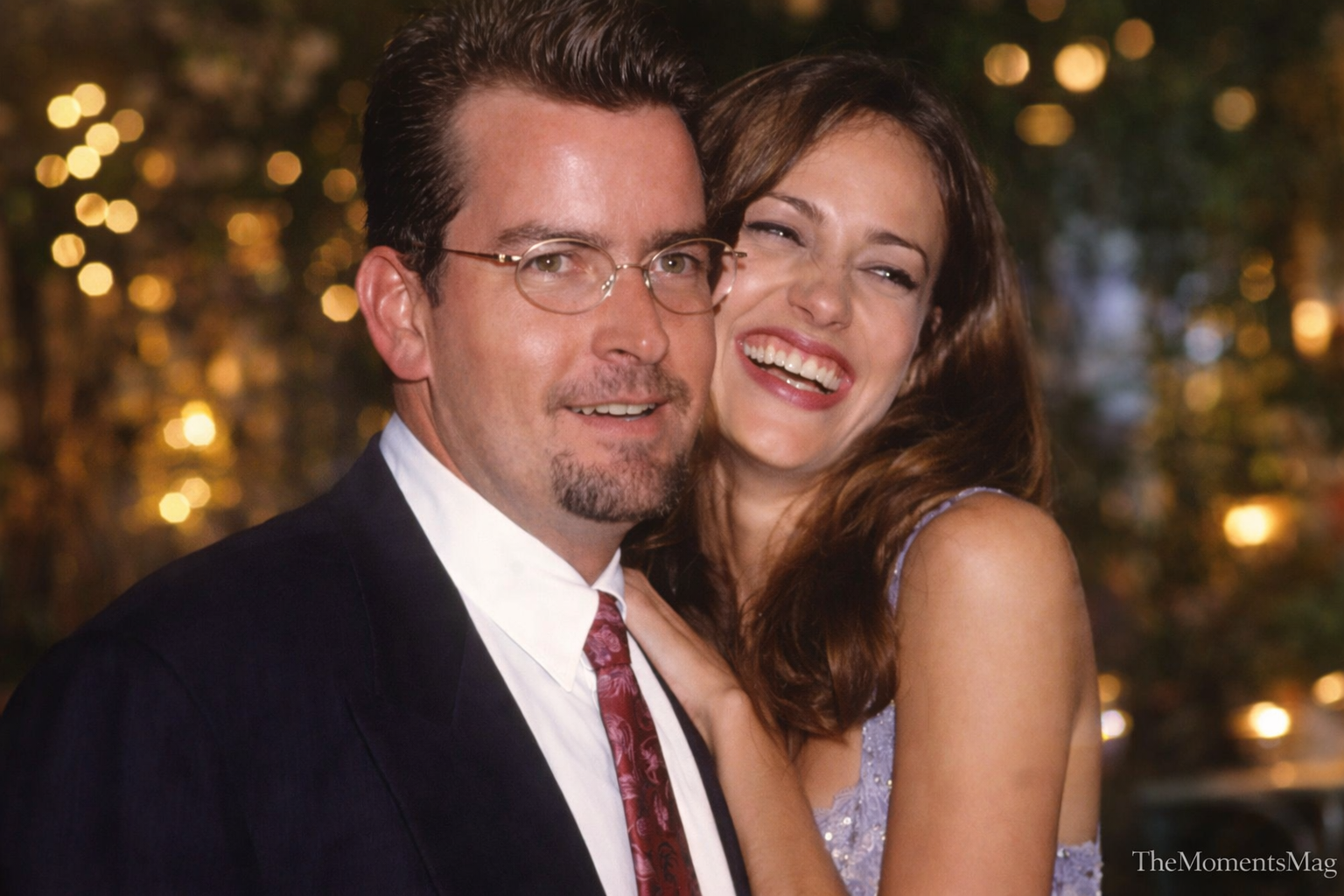
In the long history of Hollywood, there are people whose names become famous not because they sought celebrity, but because they briefly intersected with it. Donna Peele belongs to that rare group. Her public story is short, tightly framed in time, and largely defined by one relationship. Yet decades later, her name still carries curiosity, precisely because she stepped away when the spotlight was brightest.
Unlike many figures associated with celebrity culture, Donna Peele did not turn notoriety into a public career. She did not write a memoir, pursue reality television, or cultivate a media presence. Instead, she disappeared from public view, leaving behind a biography that is incomplete by design. That absence is what makes her story both unusual and quietly compelling.
This article traces what is responsibly known about Donna Peele’s life, focusing on verified reporting and historical context, while respecting the boundaries she appears to have drawn for herself.
Early Life and Modeling Career
Very little verifiable information exists about Donna Peele’s early life, including her birthplace, upbringing, or family background. This lack of detail is not unusual for people who were not public figures before their association with fame. What is known is that by the early 1990s, she was working as a fashion model, a profession that often operates at the edges of visibility—highly present in commercial work, yet rarely attached to personal biography.
Modeling in that era was a transient career for many women. Some crossed into acting or television, while others moved on quietly to private lives. Donna Peele appears to have belonged to the latter category. There is no extensive public record of runway shows, major campaigns, or agency representation tied to her name, suggesting she worked professionally but without celebrity-level recognition.
Her life might have continued in relative anonymity if not for a single event in 1995 that permanently linked her name to one of Hollywood’s most recognizable actors.
Meeting Charlie Sheen
Donna Peele met Charlie Sheen in the summer of 1995 while working on a commercial shoot in New York City. At the time, Sheen was already a major star, known for films such as Platoon, Wall Street, and Hot Shots!, as well as for a reputation that mixed charisma with controversy.
According to widely cited reporting, their relationship progressed at extraordinary speed. Within approximately six weeks of meeting, the two decided to marry. Such rapid courtships were not unheard of in Hollywood, but they almost always drew attention, especially when one partner was already a household name.
For Donna Peele, this marked a sudden shift in how the world saw her. Overnight, she went from being a working model with limited public exposure to a woman whose name appeared in entertainment columns, tabloids, and national newspapers.
A Malibu Wedding and Sudden Visibility
Donna Peele and Charlie Sheen were married on September 3, 1995, in Malibu, California. The wedding itself was a news event, not because of its size or extravagance, but because of the speed with which it occurred. Media coverage emphasized the whirlwind nature of the romance and framed the marriage as a potential turning point in Sheen’s personal life.
At the time, the dominant narrative portrayed Peele as a stabilizing influence. Sheen spoke publicly about happiness, friendship, and the idea that he had found a life partner. For the press, this was a familiar storyline: the famous man whose past excesses might finally be tamed by love.
What was largely missing from that narrative was Donna Peele’s own voice. While she was photographed and named, she was rarely quoted at length. Her public identity was constructed around her role as a wife, not as an individual with independent ambitions or perspectives.
This imbalance would later shape how the marriage was remembered.
The Marriage and Its End
The marriage lasted less than six months. By February 1996, Charlie Sheen publicly confirmed that the relationship was ending. In interviews, he described the marriage as “suffocating” and said he felt he needed to “come up for air.” Those words were widely reported and became the dominant explanation attached to the divorce.
As is often the case in celebrity separations, the public account largely reflected the perspective of the more famous spouse. Donna Peele did not engage in a competing media narrative. There were no tell-all interviews, no public rebuttals, and no attempts to reshape the story in her favor.
The divorce itself was finalized quietly, and with that, Donna Peele’s brief period of intense public attention effectively ended.
Life After the Spotlight
After 1996, Donna Peele all but vanished from public record. There are no verified interviews, no confirmed professional projects, and no reliable public appearances tied to her name. In an age before social media, disappearing from public view was easier, but even by the standards of the time, her withdrawal was notable.
This absence has led to speculation online, but credible biographies draw a clear line between documented fact and rumor. What can be responsibly said is that Donna Peele chose not to remain a public figure. Whether she continued working in modeling, pursued a different career, or focused on a private family life has not been confirmed by reputable sources.
In many ways, her post-divorce life represents a path rarely highlighted in celebrity culture: the decision to return to anonymity rather than leverage notoriety.
Public Perception and Cultural Context
Donna Peele’s enduring recognition says less about her actions and more about how fame functions. She became famous not for something she created, but for a relationship that fit neatly into a media narrative. When that narrative ended, public interest lingered, even as she herself withdrew.
Her story unfolded during a transitional period in celebrity journalism. The mid-1990s were dominated by tabloids, print magazines, and television entertainment shows. The internet existed, but it had not yet developed the permanent memory it has today. As a result, many details from that era remain fragmented, repeated without expansion, or stripped of nuance.
In the modern digital environment, Donna Peele’s biography might have unfolded very differently. Social media would have amplified her visibility, and stepping away would have required far greater effort. Seen through that lens, her disappearance from public life can be understood as both intentional and unusually successful.
Why Donna Peele Still Draws Interest
Interest in Donna Peele persists because her story is unresolved in the way celebrity stories usually are. There was no redemption arc, no downfall, no reinvention. There was simply an ending, followed by silence.
For readers and researchers, that silence invites questions. Yet it also serves as a reminder that not every person connected to fame owes the public continued access. In an era where personal boundaries are increasingly difficult to maintain, Donna Peele’s biography stands as an example of restraint.
She is remembered primarily as Charlie Sheen’s first wife, but that label captures only a brief moment in her life. Everything before and after remains largely private, and perhaps that is the most accurate way to understand her.
Donna Peele’s Place in Hollywood History
Donna Peele occupies a small but distinct place in Hollywood history. She is part of a broader pattern of individuals who briefly intersect with celebrity culture and then choose a different path. Unlike actors, musicians, or public figures whose careers depend on attention, her life did not require an audience.
Her story highlights the asymmetry of fame: how one person’s identity can become publicly defined by a relationship, even when that relationship is short-lived. It also underscores how rare it is for someone to step away without leaving a trail of public reinvention.
In that sense, Donna Peele’s biography is less about what happened during her marriage and more about what did not happen afterward.
Also Read: Husband Yasmine Bleeth Net Worth, Marriage & Life Today
Conclusion
Donna Peele’s life, as far as the public can responsibly know it, is defined by contrast. She experienced sudden visibility through a high-profile marriage, then chose a path of privacy that has endured for decades. In a culture that often rewards exposure and self-promotion, her decision to remain largely unknown is striking.
Her biography does not offer dramatic plot twists or ongoing chapters. Instead, it offers something quieter: a reminder that stepping out of the spotlight is still possible, and that not every story connected to fame needs to be endlessly retold.
In the end, Donna Peele is remembered not for what she revealed, but for what she kept to herself. That choice, intentional or not, has become the most lasting part of her legacy.

