

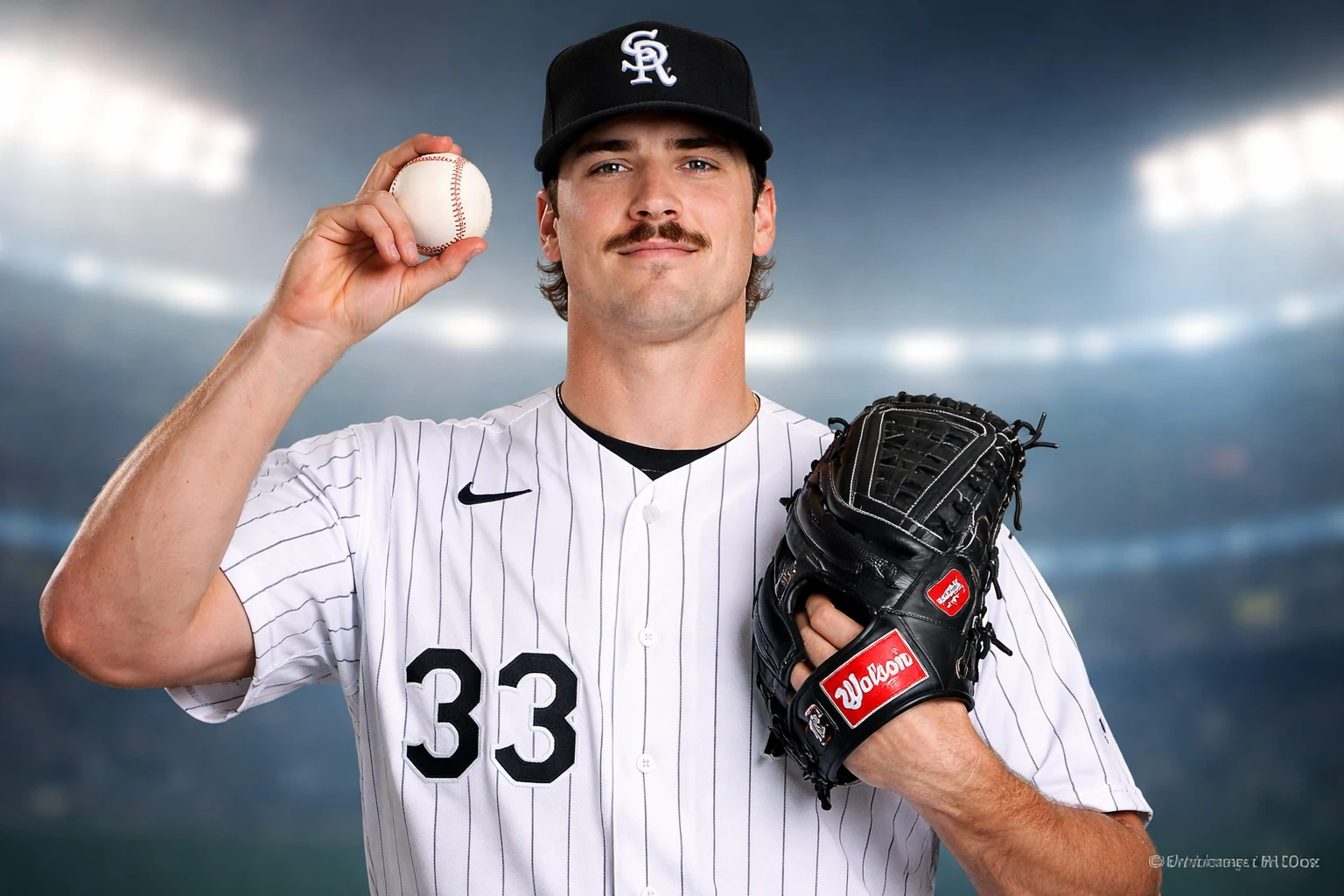
There’s a certain kind of baseball story that unfolds quickly, almost too quickly, as if the game is trying to fast-track a player before he’s fully settled into it. Drew Thorpe’s rise fits that pattern. In just a few years, he went from a standout college pitcher to one of the most talked-about young arms in professional baseball, then found himself navigating trades, expectations, and injury setbacks before his career had fully taken shape.
But here’s the thing: Thorpe’s story isn’t defined by one moment or even one season. It’s built on a series of sharp turns—dominant college outings, a meteoric climb through the minors, a debut that came sooner than expected, and a pause brought on by surgery. For fans trying to understand who he is now, the answer lies in tracing how all those pieces fit together.
Early Life and Family
Andrew Robert Thorpe was born on October 1, 2000, in Washington, Utah, a small city tucked in the southwestern corner of the state. Growing up in a region where baseball competes with other sports for attention, Thorpe found his footing early on the mound. His youth years were shaped by the rhythms of local leagues, long summer practices, and a steady focus on refining his mechanics.
From a young age, Thorpe showed the kind of control that coaches notice quickly. While many young pitchers rely on raw velocity, he developed an understanding of placement and timing that would later define his game. That attention to detail became a recurring theme, one that separated him from peers as he advanced through amateur levels.
His family background has largely remained private, and Thorpe has not built a public persona around personal storytelling. Still, those close to his early career have often pointed to his disciplined approach as something rooted in his upbringing. He wasn’t just playing the game; he was studying it.
Education and the Road to Cal Poly
Thorpe’s path to professional baseball ran through California Polytechnic State University, better known as Cal Poly. The program has produced major league talent before, but Thorpe’s arrival brought a different kind of attention. He didn’t come in as a finished product, and that worked in his favor.
During his early college years, Thorpe focused on refining his pitch mix, especially his changeup, which would later become one of his defining weapons. College baseball gave him the space to experiment, fail occasionally, and then adjust. That process helped him develop a style built less on overpowering hitters and more on outthinking them.
By his junior year, everything came together. In 2022, Thorpe posted a 10–1 record with a 2.32 ERA and struck out 149 batters over 104.2 innings. Those numbers didn’t just catch attention—they forced scouts to take a closer look. He was named Big West Pitcher of the Year, and suddenly, he was no longer just a solid college arm. He was a serious draft prospect.
Draft Day and Entry into Professional Baseball
The New York Yankees selected Drew Thorpe in the second round of the 2022 MLB Draft, picking him 61st overall. For a pitcher who had steadily climbed the ranks rather than arriving with early hype, it marked a major validation of his development. The Yankees, known for valuing pitching depth and projection, saw something in Thorpe’s approach that fit their long-term plans.
His transition into professional baseball began with the usual adjustments—facing more advanced hitters, adapting to a new schedule, and learning how to maintain consistency over a longer season. That said, Thorpe didn’t take long to make an impression. His control translated well, and his ability to mix pitches kept hitters off balance.
What stood out most was how quickly he adapted. Some prospects take years to find their footing, but Thorpe’s progression felt accelerated. The truth is, his college experience had already prepared him for the mental side of the game, and that gave him a head start.
A Breakout Minor League Season
If 2022 was about proving he belonged, 2023 was about proving how far he could go. Thorpe’s first full professional season turned into a breakout year, one that elevated his profile across the league. Pitching across multiple levels, he showed a level of consistency that’s rare for young arms.
His command became his calling card. He wasn’t the hardest thrower on the mound, but he didn’t need to be. His changeup, often described as one of the best in the minors, paired with his fastball and breaking pitches to create a difficult combination for hitters. By the end of the season, he had established himself as one of the top pitching prospects in baseball.
That performance earned him recognition as Minor League Pitching Prospect of the Year. Awards can sometimes overstate a player’s trajectory, but in Thorpe’s case, the numbers supported the praise. He wasn’t just good for stretches; he was consistently effective.
Two Trades That Changed Everything
Here’s where it gets interesting. In December 2023, Thorpe became part of a major trade package when the Yankees sent him to the San Diego Padres in the deal that brought Juan Soto to New York. Being included in a trade of that magnitude signals a player’s perceived value, and Thorpe’s name carried weight in those negotiations.
But his time with the Padres was brief. Just a few months later, in March 2024, he was traded again, this time to the Chicago White Sox in exchange for ace pitcher Dylan Cease. Two major trades in such a short span placed Thorpe in a unique position. He wasn’t just a prospect anymore; he was a central piece in high-profile roster moves.
That kind of movement can be unsettling for a young player. New organizations mean new coaches, new expectations, and new development plans. Yet Thorpe’s adaptability once again came into play. He didn’t resist the changes; he adjusted to them.
Fast Track to the Major Leagues
Thorpe began the 2024 season in Double-A Birmingham, and his performance quickly demanded attention. Over 11 starts, he posted a 7–1 record with a 1.35 ERA and 56 strikeouts. Those numbers didn’t leave much room for debate. The White Sox were rebuilding, and they needed to see what they had.
In June 2024, Thorpe made his MLB debut. It came sooner than many expected, but it also felt earned. For a pitcher who had spent years refining his craft, the call-up wasn’t a surprise—it was a continuation.
His first major league season was a mix of promise and adjustment. Over nine starts, he went 3–3 with a 5.48 ERA. That stat line doesn’t tell the full story. Pitchers often face a learning curve at the highest level, and Thorpe was no exception. He showed flashes of what made him successful in the minors, but consistency remained a challenge.
Injury Setback and Surgery
Just as Thorpe was beginning to settle into the major leagues, his momentum slowed. Toward the end of the 2024 season, he underwent surgery to address a bone spur in his elbow. While not uncommon for pitchers, it raised concerns about durability.
The bigger setback came in March 2025, when it was announced that Thorpe would require Tommy John surgery. For pitchers, this procedure is both routine and career-altering. Recovery timelines can stretch well beyond a year, and the process demands patience.
Thorpe’s surgery effectively sidelined him for the 2025 season and cast uncertainty over his role in 2026. The White Sox, however, remained publicly supportive, framing his absence as a temporary interruption rather than a derailment. That said, recovery from Tommy John surgery is rarely straightforward, and every case unfolds differently.
Pitching Style and Strengths
To understand why Thorpe has been valued so highly, it helps to look at how he pitches. He isn’t defined by overpowering velocity. Instead, his game is built on command, deception, and a standout changeup that disrupts hitters’ timing.
His ability to locate pitches consistently allows him to control at-bats. He works ahead in counts and forces hitters into uncomfortable decisions. That approach, while effective, requires precision. There’s less margin for error compared to pitchers who rely on pure speed.
What’s surprising is how mature his approach has been from a young age. Thorpe doesn’t pitch like someone trying to impress; he pitches like someone trying to solve a problem. That mindset has been one of his biggest assets.
Life Off the Field
Thorpe has kept a relatively low profile outside of baseball. Unlike some athletes who build large public followings, he has focused more on his development as a player. His public appearances and interviews tend to center on performance, recovery, and team goals rather than personal branding.
This quieter presence has shaped how fans perceive him. He’s seen less as a personality and more as a player in progress. That can change over time, especially if he establishes himself more firmly at the major league level.
Still, there’s a sense that Thorpe prefers letting his work speak for itself. In a sport where consistency matters more than flash, that approach fits.
Net Worth in 2026
Drew Thorpe’s net worth has not been publicly disclosed, and estimates vary widely depending on contract details and signing bonuses. As a relatively new major league player, much of his earnings come from his initial signing bonus and early career salary.
Players in Thorpe’s position typically see significant financial growth once they establish themselves in the majors. That hasn’t fully happened yet, largely due to the timing of his debut and subsequent injury. His financial trajectory will likely depend on how he returns from surgery and whether he secures a stable role in the White Sox rotation.
Recent Developments and Current Status
As of 2026, Thorpe remains in recovery following Tommy John surgery. Reports indicate that there is no fixed timeline for his return, which is not unusual for this type of procedure. Rehabilitation is gradual, and teams often prioritize long-term health over short-term gains.
The White Sox continue to view him as part of their future. In a rebuilding phase, the organization has invested in young talent, and Thorpe represents a key piece of that strategy. His absence, while significant, hasn’t changed how the team values his potential.
For Thorpe, the focus now is on recovery and rebuilding strength. The next chapter of his career will depend less on past performance and more on how he returns to the mound.
Frequently Asked Questions
Who is Drew Thorpe?
Drew Thorpe is an American professional baseball pitcher who plays for the Chicago White Sox organization. He gained attention as a top pitching prospect after a strong college career at Cal Poly and a breakout minor league season. Thorpe has been involved in major trades, including deals connected to Juan Soto and Dylan Cease. His career has been shaped by rapid progression and recent injury setbacks.
What team does Drew Thorpe play for?
As of 2026, Drew Thorpe is part of the Chicago White Sox organization. He was acquired by the team in March 2024 as part of a trade involving pitcher Dylan Cease. While he has already made his MLB debut with the White Sox, he is currently recovering from surgery. His future role with the team will depend on his recovery and performance upon return.
What is Drew Thorpe known for?
Thorpe is known for his strong command on the mound and his effective changeup, which has been considered one of his best pitches. He gained recognition during his minor league career, where he consistently delivered strong performances. His involvement in multiple high-profile trades also contributed to his visibility. These factors combined have made him a notable young pitcher in professional baseball.
Did Drew Thorpe have Tommy John surgery?
Yes, Drew Thorpe underwent Tommy John surgery in March 2025. The procedure was necessary following elbow issues that developed after his initial MLB season. Recovery from this surgery typically takes more than a year and requires careful rehabilitation. As of 2026, he is still in the recovery process.
When will Drew Thorpe return to MLB?
There is no confirmed return date for Drew Thorpe as of 2026. Recovery timelines for Tommy John surgery can vary depending on the individual. The White Sox have indicated that they are taking a cautious approach to his rehabilitation. His return will depend on his progress and overall readiness to compete at the major league level.
Conclusion
Drew Thorpe’s career so far has been shaped by both rapid ascent and unexpected interruption. Few players move through the system as quickly as he did, and even fewer become central figures in multiple major trades before fully establishing themselves. That early momentum created expectations that now sit alongside the reality of recovery.
What stands out is how much of his story is still unwritten. His strengths as a pitcher remain clear, and his ability to adapt has already been tested in meaningful ways. The question isn’t whether he has talent; it’s how that talent will translate after time away from the game.
There’s also a broader context to consider. The White Sox are rebuilding, and players like Thorpe represent more than individual potential. They’re part of a larger effort to reshape a team’s future. His return, whenever it comes, will carry significance beyond personal milestones.
For now, the focus is on patience. Thorpe’s journey has already taken unexpected turns, and there’s no guarantee the next phase will follow a straight path. But if his early career is any indication, he’s shown an ability to adjust, learn, and keep moving forward—even when the timeline changes.


