

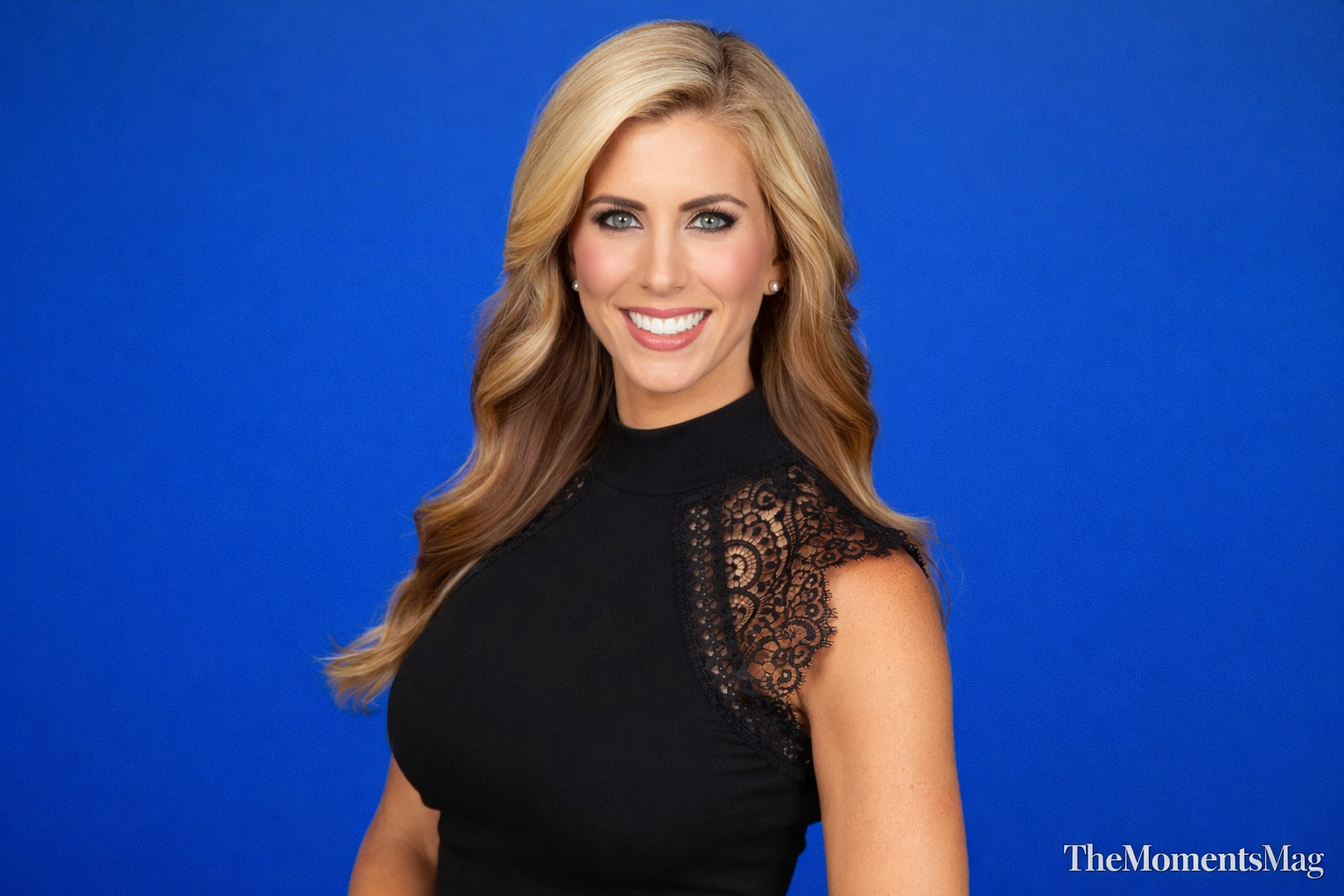
In an era when politics, media, and law increasingly overlap, a new kind of public figure has emerged. These individuals are not traditional politicians, nor are they purely academics or journalists. Instead, they move fluidly between courtrooms, advocacy organizations, and television studios, shaping how issues are framed and understood. Katie Zacharia belongs to this generation.
Known publicly as a lawyer, political strategist, and media commentator, Katie Zacharia has built a profile that reflects the changing nature of influence in American public life. Her career connects legal expertise with political advocacy, particularly in California, while her media presence places her arguments before a national audience. Understanding who she is requires looking beyond titles and appearances to the institutions, experiences, and historical moment that have shaped her work.
Early life and academic foundation
Katie Zacharia’s professional identity is closely tied to her education. She is an alumna of Pepperdine University, where she completed her undergraduate studies before continuing on to the Caruso School of Law. Pepperdine’s reputation for blending legal education with ethical and civic perspectives has influenced many graduates who later pursue careers in public service, policy, and advocacy.
At law school, Zacharia distinguished herself academically and remained connected to the institution beyond graduation. Her later involvement with the Caruso School of Law Dean’s Council reflects both professional success and a continuing relationship with her alma mater. This kind of institutional loyalty is common among lawyers who see education not simply as a credential, but as part of a broader intellectual and civic formation.
Her academic path laid the groundwork for a career that would eventually extend well beyond conventional legal practice.
Legal career and international experience
Before becoming widely known in political and media circles, Zacharia developed experience in international corporate law. Public profiles describe her work as including time in Beijing, where she served as an associate at a major international law firm and acted as outside counsel connected to the World Bank and the International Finance Corporation.
This period of her career is significant for two reasons. First, it situates her legal training within a global context, exposing her to regulatory systems and governance challenges outside the United States. Second, it distinguishes her from many political commentators whose professional experience is limited to domestic policy or partisan organizations.
International legal work often demands a high tolerance for complexity. Lawyers operating in that space must navigate multiple legal regimes, cultural expectations, and institutional frameworks simultaneously. For Zacharia, this background helped shape a professional persona grounded in rules, procedures, and systems rather than rhetoric alone. That emphasis on structure and legality would later become a defining feature of her public commentary.
Transition into advocacy and politics
After returning to the United States, Zacharia’s career moved increasingly toward political advocacy. She became publicly associated with Fix California, an organization focused on voter engagement, election integrity, and conservative policy goals within the state.
Fix California operates as a 501(c)(4) advocacy organization, a structure designed for issue-based political activity rather than traditional charitable work. Within this environment, legal expertise is not a background function but a central asset. Election law, campaign regulations, and nonprofit compliance all demand careful interpretation and strategic planning.
Zacharia has been described in various public sources as serving in a legal and advisory capacity for the organization, including the role of general counsel. While titles may evolve over time, the consistent element is her position as a legal strategist within an advocacy framework. Her responsibilities in this role place her at the intersection of law and political messaging, where legal arguments are translated into public-facing narratives.
Media presence and public commentary
Katie Zacharia’s national visibility increased through her work as a media commentator. She has appeared on cable news networks and digital platforms discussing topics that range from election policy to broader cultural and political debates. These appearances reflect a broader trend in modern media, where legal professionals are increasingly sought out as on-air analysts.
Television and digital media favor clarity and confidence. For lawyers, this can be a challenging transition, as legal reasoning often relies on nuance and conditional language. Zacharia’s style, however, tends to emphasize firm conclusions and accessible explanations. This approach resonates with audiences seeking clear positions in a fragmented information environment.
Her media work does not exist separately from her advocacy. Instead, it reinforces and amplifies the same themes: institutional accountability, the rule of law, and skepticism toward political systems perceived as unresponsive or opaque. In this sense, her commentary functions as an extension of her legal and strategic work rather than a departure from it.
Writing and opinion work
In addition to television appearances, Zacharia has contributed written opinion pieces to political publications. These articles allow for a more extended presentation of arguments than broadcast segments typically permit. Her writing style reflects her legal background, emphasizing logical progression, statutory interpretation, and precedent, while still adopting the persuasive tone characteristic of opinion journalism.
Opinion writing serves a dual purpose for figures like Zacharia. It establishes intellectual credibility and creates a permanent record of positions that can be cited, shared, and debated. In an age when social media clips are fleeting, written commentary offers durability and depth, reinforcing her role as both advocate and analyst.
Public perception and controversy
As with many figures operating in high-conflict political spaces, Zacharia’s work attracts both support and criticism. Supporters often view her as a knowledgeable legal voice willing to challenge dominant narratives, particularly in California politics. They emphasize her credentials and her willingness to engage publicly on contentious issues.
Critics, on the other hand, see her as a partisan actor whose legal arguments are shaped by ideological commitments. This tension is not unusual. Advocacy-based law and media commentary rarely aim for neutrality, and public audiences increasingly interpret expertise through political alignment.
What is notable is that Zacharia’s critics and supporters alike tend to focus on the same attributes: her confidence, her legal framing of political questions, and her visibility. These qualities make her influential, but they also make her a focal point in polarized debates.
The broader context of her rise
Katie Zacharia’s career trajectory reflects structural changes in American public life. Trust in government institutions has declined, media consumption has become fragmented, and audiences increasingly seek interpreters rather than neutral reporters. In this environment, individuals who can explain policy through a legal lens while also advocating for a clear position hold a strategic advantage.
Her path from international law to domestic advocacy illustrates how professional expertise can be repurposed in response to political opportunity. It also highlights how nonprofit organizations and media platforms function together as parallel channels of influence.
Zacharia is not unique in this respect, but her prominence makes her a useful case study in how modern advocacy careers are built.
Personal style and professional identity
Despite her public visibility, much of Zacharia’s personal life remains private, a choice that aligns with her professional focus. Her public identity is defined less by biography in the traditional sense and more by institutional affiliations and arguments advanced.
This approach reinforces her image as a professional rather than a celebrity. Even as she appears frequently in media, her emphasis remains on issues and legal frameworks rather than personal narrative. In a media environment that often rewards oversharing, this restraint distinguishes her from many contemporaries.
Also Read: Christian Stracke Net Worth: Career, Wealth, and Life Story
Conclusion
Katie Zacharia’s biography is best understood not as a linear ascent, but as a convergence of law, advocacy, and media at a particular moment in American politics. Her education at Pepperdine University, her international legal experience, and her role within Fix California collectively shaped a career built on interpreting and contesting political systems.
As a public figure, she represents a broader shift toward lawyer-advocates who operate simultaneously inside institutions and in front of cameras. Whether viewed as a principled defender of legal standards or as a partisan strategist, her influence stems from her ability to translate complex legal issues into accessible public arguments.
In a time defined by institutional skepticism and media saturation, Katie Zacharia stands as an example of how professional expertise can evolve into public authority. Her career continues to reflect the tensions and transformations of modern political life, making her a figure likely to remain part of the national conversation for years to come.

