

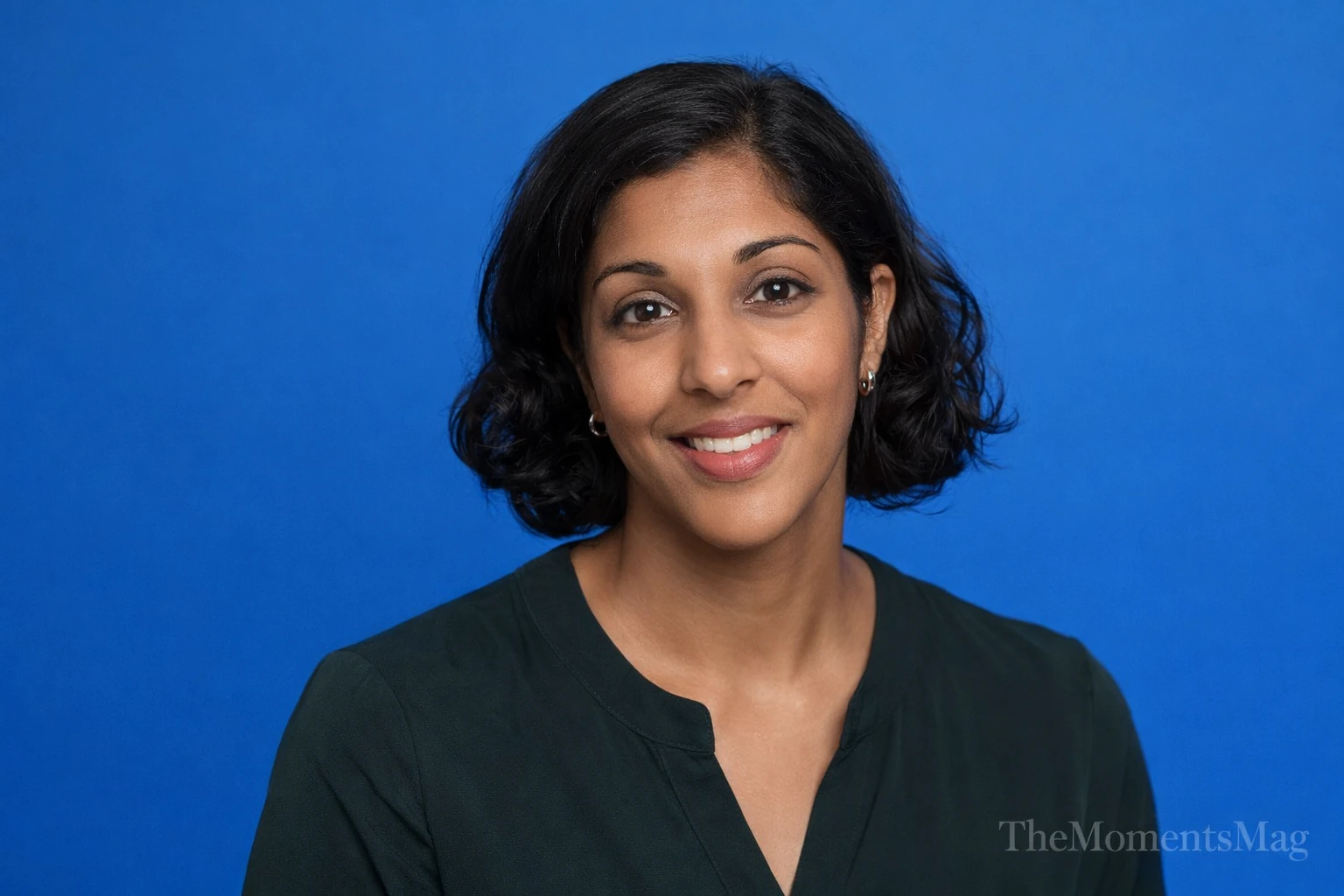
That steadiness isn’t accidental. It’s the product of years inside some of the BBC’s most demanding newsrooms, covering UK politics through one of its most volatile decades. By the time she was announced in December 2025 as a new presenter on the BBC World Service’s flagship programme Newshour, she had already built a reputation as a political correspondent who could make Westminster’s complexity sound understandable without dumbing it down.
Her career tells a story about discipline, range, and trust. It also tells you something about how modern journalism still works when it works well: steady beats, long stretches of listening, and a refusal to chase every shouting match.
| Attribute | Details |
|---|---|
| Full Name | Leila Nathoo |
| Date of Birth | Not publicly disclosed |
| Age | Not publicly disclosed (as of 2026) |
| Place of Birth | Not publicly disclosed |
| Nationality | British |
| Profession | Journalist, Political Correspondent, Radio Presenter |
| Famous For | BBC Political Correspondent and presenter on BBC World Service Newshour |
| Marital Status | Not publicly disclosed |
| Children | Not publicly disclosed |
| Estimated Net Worth | Not publicly disclosed (as of 2026) |
Early Life and Family
Publicly available information about Leila Nathoo’s early life is limited, which in some ways fits her profile. She has built her career on reporting other people’s stories rather than placing her own biography front and center. Her date of birth and place of birth have not been widely disclosed, and she has not cultivated a celebrity-style public persona around her upbringing.
That relative privacy doesn’t mean there wasn’t a foundation. Anyone who has worked in political journalism will tell you that curiosity tends to start young. You don’t wake up at 25 and suddenly decide you want to read parliamentary procedure for fun. By all accounts from colleagues who have spoken about her professionalism, Nathoo came into the newsroom already equipped with a serious interest in how power operates and how decisions ripple outward.
Her British nationality is clear from her long-standing work with the BBC, and her voice carries the cadence of someone comfortable moving between formal and conversational registers. That flexibility often points to an education that valued both analysis and expression, even if the specific institutions she attended haven’t been widely detailed in public records.
A Career Shaped by Westminster
Leila Nathoo’s most visible professional chapter began in 2017, when she started working as a political correspondent based at BBC Westminster. That timing could not have been more dramatic. The UK was navigating the aftermath of the 2016 Brexit referendum, and political life had become a rolling negotiation with history.
From 2017 onward, Westminster rarely slept. Theresa May’s government wrestled with Brexit deals and parliamentary defeats. Boris Johnson’s tenure brought its own confrontations and controversies. The Covid-19 pandemic then forced government into extraordinary measures, expanding state authority in ways that would have been hard to imagine just months earlier. Through all of it, Nathoo reported from the heart of British politics.
Colleagues describe the Westminster beat as relentless. You’re expected to grasp policy details in real time, track factional tensions within parties, and understand how a procedural move in the Commons might reshape the week’s narrative. Nathoo became a familiar presence across BBC platforms, appearing on television and radio to interpret what was happening and, just as importantly, what it meant.
Her work wasn’t limited to studio commentary. Portfolio listings and media tracking services show her credited on reported political stories in late 2025 and early 2026, including coverage related to parliamentary scheduling and government strategies. That suggests a journalist still grounded in reporting, not just analysis, even after years on the beat.
Reporting Beyond the UK
Long before her move to Newshour, Nathoo had already demonstrated that her journalism extended beyond Westminster corridors. Industry reporting in December 2025 highlighted that she previously served as Africa Correspondent in Nairobi and had also reported from Delhi for the BBC.
That international experience matters more than it might first appear. Reporting from Nairobi means covering stories where political decisions can have immediate, tangible consequences for communities facing economic pressure, climate stress, or electoral tension. Filing from Delhi requires a sensitivity to scale, given India’s vast population and complex political climate.
Those postings tend to sharpen a reporter’s instincts. You learn to ask sharper questions because the stakes are often clearer. You also learn to listen differently, especially when working across cultures and languages. For Nathoo, those experiences likely informed the way she approached UK politics, aware that domestic debates don’t exist in isolation from global realities.
By the time she returned to Westminster as a correspondent, she had seen political power operate in more than one setting. That perspective would later align naturally with the BBC World Service, whose audience spans continents.
Becoming a Familiar Voice on Radio
Over the past two years leading up to her Newshour appointment, Nathoo became increasingly visible—and audible—across BBC radio. She presented on flagship Radio 4 programmes such as Today, PM, and Westminster Hour, and also appeared on BBC Radio 5 Live. Those aren’t casual assignments. They’re trust exercises.
Presenting live radio is a different discipline from writing a reported piece. There’s no time to rewrite a clumsy question or clarify a half-heard answer. You’re juggling producers’ cues, live interviews, and breaking developments while trying to keep the audience with you. That kind of environment can reveal a journalist’s true instincts.
One example of her range came in November 2025, when she sat in for Naga Munchetty on a BBC Radio 5 Live special titled That Time of the Month: Ovarian cancer. The episode, first broadcast on 18 November 2025, addressed a deeply personal and medical topic rather than party politics. Taking that seat signaled confidence in her ability to handle sensitive conversations without slipping into either cold detachment or excessive sentiment.
Listeners often describe her presenting style as clear and steady. She doesn’t dominate interviews, yet she doesn’t retreat either. Instead, she guides conversations with a firm, almost understated authority. That balance is difficult to achieve, and it rarely happens by accident.
The Move to BBC World Service Newshour
In December 2025, industry outlets reported that Leila Nathoo would join the presenting team of BBC World Service’s Newshour in the new year. She was announced alongside Rajini Vaidyanathan, another experienced journalist. For those who follow the BBC closely, the move was significant.
Newshour is one of the corporation’s global flagships, broadcast to audiences far beyond the UK. The programme demands a presenter who can move between stories in Africa, Asia, Europe, and the Americas without losing clarity or control. You might interview a diplomat in one segment and a local activist in the next, then pivot to breaking news minutes later.
For Nathoo, the appointment represented both recognition and challenge. After years focused heavily on UK politics, she was stepping into a role that required constant global awareness. Yet her earlier work in Nairobi and Delhi suggested she wasn’t starting from scratch.
What’s surprising is how naturally the move fits her trajectory. A journalist who understands both Westminster procedure and international reporting has a broad toolkit. The World Service demands exactly that: depth without parochialism, authority without arrogance.
Personal Life and Privacy
In an era when many public figures share intimate details online, Leila Nathoo has kept her personal life largely private. Information about her marital status, spouse, children, and immediate family has not been widely published. That choice seems deliberate.
Privacy, especially for journalists covering politics, can be a form of self-preservation. Political reporting can attract intense scrutiny and online hostility. Keeping family details out of the public domain creates a protective boundary between professional visibility and personal safety.
Anyone who has observed seasoned correspondents will tell you that the job already demands emotional stamina. Long hours, sudden travel, and the constant churn of news cycles leave little room for public self-exposure. Nathoo’s low-key approach suggests a focus on craft over celebrity.
By all accounts, colleagues describe her as collegial and thoughtful within professional settings. That reputation doesn’t come from social media oversharing; it comes from years of shared deadlines and newsroom pressure.
Net Worth and Professional Standing in 2026
As of 2026, Leila Nathoo’s exact net worth has not been publicly disclosed. BBC salaries vary widely depending on role, seniority, and length of service, and while some high-profile presenters’ earnings are published annually, not all correspondents’ figures are detailed in the same way.
What can be said with confidence is that her progression—from political correspondent to presenter on major radio programmes and then to Newshour—places her within the BBC’s senior journalistic ranks. That level of responsibility typically reflects years of experience and strong editorial trust.
Unlike celebrities whose wealth is built on endorsements or side ventures, Nathoo’s professional standing appears rooted in journalism itself. There’s no public record of commercial partnerships or media spin-offs. Her currency is credibility.
That steady career path may not generate splashy financial headlines, but it does signal something else: institutional confidence. In a newsroom culture where mistakes can be amplified globally, being entrusted with a flagship international programme is a form of capital in its own right.
Lesser-Known Details That Reveal Character
Not many people know this, but Nathoo’s portfolio includes collaborative bylines, indicating a willingness to share credit in stories that require team reporting. In political journalism, ego can be a powerful force. Sharing a byline signals a focus on the work rather than the spotlight.
Her transition between domestic and international roles also suggests adaptability. Some journalists become tightly associated with a single beat and struggle to pivot. Nathoo’s background in Nairobi and Delhi, followed by years at Westminster and then a global presenting role, tells a different story.
Another subtle detail lies in the topics she’s covered. Listings show her involved in stories about government strategy documents and parliamentary procedure. Those aren’t glamorous headlines, yet they often determine real-world outcomes. Choosing to focus on those areas reflects an understanding that power often moves quietly.
What’s surprising is how consistently she appears in environments that require restraint. From Radio 4’s early-morning seriousness to the World Service’s global audience, Nathoo has operated in spaces that reward careful language over viral theatrics. That consistency hints at a professional temperament built for endurance rather than flash.
What She Is Doing Now
As 2026 unfolds, Leila Nathoo’s focus is on her new role as a presenter on BBC World Service Newshour. That position places her at the center of international coverage, guiding conversations that span continents and time zones.
The move doesn’t erase her Westminster experience; it expands it. UK political stories often intersect with global issues, from trade agreements to climate commitments. Nathoo now has a platform where those intersections can be explored for a worldwide audience.
Listeners tuning in to Newshour will likely notice the same qualities that defined her earlier work: measured delivery, firm but fair questioning, and a refusal to inflate drama. In a media environment crowded with noise, that steadiness can feel almost radical.
Frequently Asked Questions
Who is Leila Nathoo?
Leila Nathoo is a British journalist known for her work as a BBC political correspondent based at Westminster since 2017. She has reported on major UK political developments and has presented on BBC Radio 4 and BBC Radio 5 Live. In December 2025, she was announced as joining BBC World Service’s Newshour as a presenter.
What is Leila Nathoo famous for?
She is best known for her political reporting with the BBC, particularly her coverage of Westminster during a turbulent period that included Brexit and the Covid-19 pandemic. Her calm and clear on-air style has made her a recognizable voice across BBC platforms. Her appointment to Newshour further raised her profile internationally.
Has Leila Nathoo worked outside the UK?
Yes, industry reporting has stated that she previously served as Africa Correspondent in Nairobi and also reported from Delhi for the BBC. Those international assignments broadened her experience beyond domestic UK politics. They likely contributed to her suitability for a global programme like Newshour.
Is Leila Nathoo married?
There is no publicly confirmed information about her marital status or family life. Nathoo has kept her personal relationships private. That discretion is common among journalists covering high-profile political stories.
What is Leila Nathoo’s net worth?
Her exact net worth has not been publicly disclosed as of 2026. As a senior BBC journalist and presenter, she holds a respected professional position, but detailed salary figures specific to her role are not widely available. Her career appears centered on journalism rather than commercial ventures.
Also Read: Zooey Deschanel Net Worth, Career, Life and Fortune
Conclusion
Leila Nathoo’s biography is not the story of a media personality chasing fame. It is the story of a reporter who stayed with her beat long enough to understand it deeply. From Westminster’s procedural battles to international reporting in Nairobi and Delhi, her path reflects patience and range.
Her move to BBC World Service Newshour in 2026 marks a new chapter, but it feels like a natural progression rather than a reinvention. The truth is, journalism still depends on people who can ask clear questions and explain complex events without theatrics. Nathoo has built a career on exactly that.
There are louder figures in media. There are flashier careers. Yet for audiences who value steadiness and clarity, Leila Nathoo represents something quietly powerful: a journalist who treats the story as more important than herself. As global news grows ever more tangled and urgent, that approach may prove more valuable than ever.

