

Luxury is one of those words that has been stretched to cover too many things. In watch advertising, it tends to mean brand prestige, precious metal, or stone count — often all three simultaneously, applied to pieces that spend most of their lives in a box. The definition that actually matters for daily wear is different: a piece that’s good enough to want to put on every morning and durable enough to handle what that morning involves.
Women’s diamond watches sit at an interesting intersection. The category has historically leaned toward occasion wear — pieces too delicate or too ornate for practical daily use. The more useful question is whether a diamond watch can be a daily piece first and a luxury signal second. When the answer is yes, the piece tends to stay on the wrist rather than in a drawer.
Why Diamond Placement Matters More Than Carat Count
The most common mistake in women’s diamond watches is prioritizing total carat weight over placement logic. A full pavé dial with 2 ct of small stones looks impressive in marketing photography. In practice, the hands become hard to distinguish from the background sparkle, the dial loses legibility, and the piece becomes function-impaired in its primary purpose: telling time.
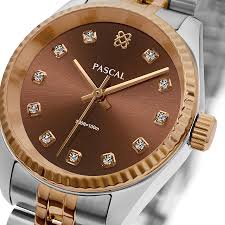
PASCAL’s approach to PASCAL gold diamond watch women puts legibility first. Diamonds appear at the bezel perimeter, at selected hour marker positions, or at the crown — placed where they catch light and contribute to the design without consuming the dial face. The result is a watch where you can read the time without effort and appreciate the stones in the same glance.
Gold Tone vs. Silver Tone — Making the Right Choice for Your Skin
Skin undertone is the most reliable guide for metal tone decisions: warm undertones (yellow, peachy, olive) generally work better with yellow gold; cool undertones (pink, bluish) lean toward silver and white gold. Neutral undertones have flexibility in both directions.
PASCAL offers women’s diamond watches in both gold-tone and silver-tone stainless steel finishes, using IP coating technology for durability. One practical advantage of gold-tone stainless over solid 18k gold that’s often overlooked: weight. 18k gold is significantly denser than stainless steel. For daily wear, particularly for smaller wrists or all-day wear, the stainless option sits more comfortably without sacrificing the visual warmth of gold tone.
Lab-Grown Diamonds at the Quality Grades That Actually Matter
PASCAL grades their lab-grown diamonds to D-F color and VVS-VS clarity. These standards sit at the top of the quality range regardless of origin. D-F means colorless to near-colorless — no yellow or brown tint visible to the naked eye. VVS-VS means very slight to slight inclusions that require 10x magnification to identify. Both specifications translate directly to visual performance: in natural light, in photographs, in the kind of casual examination a watch gets when someone notices it on your wrist.
The distinction between lab-grown and mined diamonds is about production, not optical quality. Lab-grown produces the same carbon crystal structure under controlled conditions. What changes is the story, the supply chain, and the price point — not the visual or physical properties of the stone.
The Everyday Luxury Standard
A watch that lives in a box for special occasions is a failed luxury purchase. It’s fulfilling neither its function (time-telling) nor its expressive role (daily self-presentation). The pieces that justify their cost are the ones you reach for consistently, wear through the actual variety of your day, and maintain without excessive anxiety.
PASCAL builds their women’s diamond watches to this standard: 3 ATM water resistance (handwashing and light rain without concern), Swiss quartz movements, stainless steel cases that handle physical contact, interchangeable straps on select models. The daily piece first, the luxury signal second — in that order, deliberately.


