

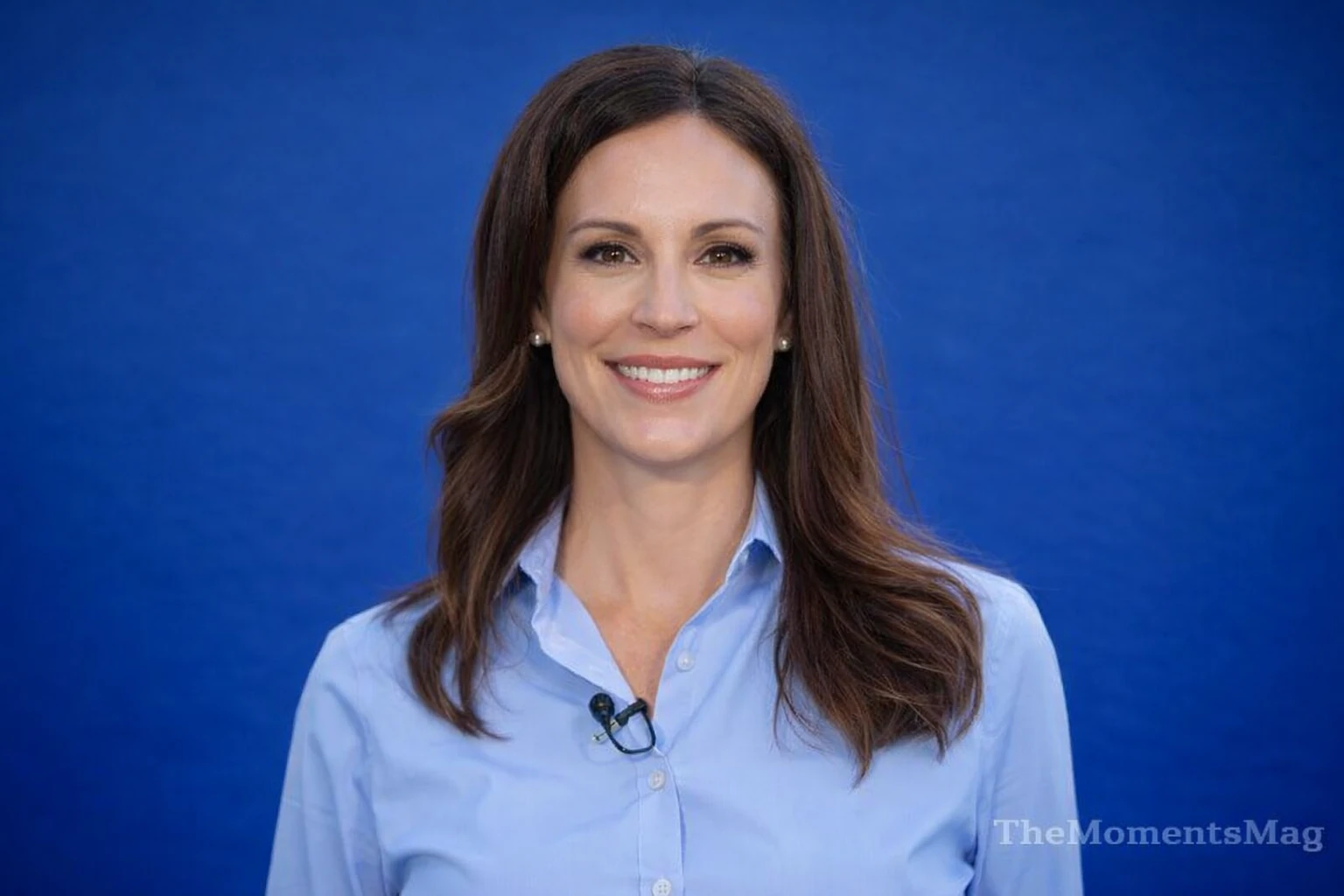
Today, at 49 years old in 2026, Dixon remains a recognizable figure in conservative political circles. She’s known first for her 2022 run as the Republican nominee for governor of Michigan. Yet like many women in public life, online curiosity about her often extends beyond her policy positions or business background. Searches for “Tudor Dixon measurements” regularly appear in trending queries, reflecting the complicated mix of political interest and personal scrutiny that defines modern fame.
To understand Tudor Dixon fully, you have to look past the search bar. Her story is about family, resilience, ambition, and the strange realities of becoming a public woman in the internet age.
| Attribute | Details |
|---|---|
| Full Name | Tudor Dixon |
| Date of Birth | May 5, 1977 |
| Age | 49 years old (as of 2026) |
| Place of Birth | Naperville, Illinois, United States |
| Nationality | American |
| Profession | Businesswoman, Conservative Commentator, Political Candidate |
| Famous For | Republican nominee for Governor of Michigan in 2022 |
| Marital Status | Married |
| Children | Four daughters |
| Estimated Net Worth | Estimated between $1–5 million (public estimates) |
Early Life and Midwestern Roots
Dixon’s upbringing was shaped by Midwestern values. Raised in Naperville before later settling in Michigan, she grew up in a family that emphasized hard work and independence. Those traits would become cornerstones of her public identity.
After high school, she attended the University of Kentucky, where she earned a degree in psychology. That choice feels telling in hindsight. Psychology is, at its heart, the study of human behavior and motivation. Years later, as she navigated the intensely emotional world of politics and media, those insights likely proved useful.
Her path wasn’t linear. Unlike many political figures who climb through law schools and legislative internships, Dixon’s early career unfolded in the business world.
From Steel Industry to Media Voice
Before she was a candidate, Tudor Dixon worked in Michigan’s steel industry. She served as the chief executive officer of Michigan Steel, Inc., a family business. The role gave her direct exposure to manufacturing, supply chains, and the economic pressures facing industrial states.
That business experience became central to her political narrative. Michigan has long been a state defined by industry, from automotive production to heavy manufacturing. Dixon often framed herself as someone who understood the struggles of employers and workers because she lived them.
Eventually, she transitioned into media. She became a conservative commentator and host for Real America’s Voice, a right-leaning cable network. There, she built a following by discussing national politics, cultural debates, and state-level issues.
The move from business executive to political commentator may seem dramatic. In reality, it reflects a broader shift in American politics. Media platforms have become launching pads for candidates. Visibility now functions as political capital.
The 2022 Michigan Governor’s Race
Tudor Dixon stepped onto the national stage in 2022 as the Republican nominee for governor of Michigan. Her opponent was Democratic incumbent Gretchen Whitmer, a well-known figure after her high-profile leadership during the COVID-19 pandemic.
Dixon’s campaign emphasized parental rights, economic recovery, and opposition to certain pandemic-era restrictions. She also spoke about education reform and crime policy, themes that resonated with parts of the electorate.
The race was closely watched. Michigan is a battleground state, often serving as a barometer for national political trends. While Dixon ultimately lost the election to Whitmer in November 2022, the campaign elevated her profile significantly.
For many Americans outside Michigan, it was the first time they heard her name. With that visibility came intense scrutiny.
The Curiosity Around Tudor Dixon Measurements
Public figures, especially women, face a particular kind of attention. It’s not limited to speeches or voting records. It extends to clothing choices, hairstyles, and, inevitably, physical appearance.
Search trends show that phrases like “Tudor Dixon measurements,” “Tudor Dixon height,” and similar queries surface alongside policy-related questions. It’s a phenomenon familiar to actresses and pop stars. Increasingly, it also applies to politicians.
However, there is no verified public record of Tudor Dixon’s body measurements such as bust, waist, and hip size. Reputable biographies and official campaign materials do not publish such details. Height and weight figures that appear on certain entertainment-style websites are typically unsourced.
That doesn’t stop speculation. In the internet’s content economy, pages listing “celebrity measurements” often follow a template. Political figures get added to that list once they reach a certain level of recognition.
The reality is straightforward. Tudor Dixon is known for her career and candidacy, not for modeling or acting. Her physical measurements have never been a central part of her public narrative, nor have they been confirmed in credible interviews.
Yet the persistence of the search term reveals something deeper about how fame operates today. Politics is visual. Social media magnifies images. And once a name becomes searchable, curiosity expands in every direction.
Media Attention and Gendered Scrutiny
Women in politics frequently experience heightened attention to their appearance. Research from organizations like Pew Research Center has documented public perceptions that media coverage often focuses heavily on how women candidates look.
Dixon was no exception. During the 2022 race, her style, tone, and demeanor were discussed alongside her policy positions. This isn’t unique to one party or one candidate. It’s a structural feature of contemporary media.
The scrutiny can feel relentless. Photos from rallies circulate on Instagram and X. Clips from debates spread on TikTok. Comment sections rarely stay on policy for long.
For Dixon, a mother of four daughters, the experience added another layer. She has spoken publicly about wanting to model resilience and confidence for her children. That’s not easy in a culture that sometimes reduces public women to visual summaries.
A Survivor’s Strength
One of the most defining chapters of Tudor Dixon’s personal life is her battle with breast cancer. She was diagnosed in her twenties, an experience that reshaped her priorities and perspective.
Cancer survivorship is not a footnote. It’s a transformative event. For Dixon, it deepened her appreciation for family and faith. It also became part of her public story during her campaign, where she shared her journey as an example of perseverance.
Breast cancer remains one of the most common cancers among women in the United States. Survivors often describe a renewed clarity about what matters most. Dixon has echoed that sentiment in interviews, emphasizing gratitude and determination.
The experience likely fortified her for the harsh spotlight of political life. After facing a life-threatening illness, online commentary about appearance may seem trivial by comparison. Still, that doesn’t mean it doesn’t sting.
Family Life and Marriage
Tudor Dixon is married and the mother of four daughters. Family has been a consistent theme in her public messaging. On the campaign trail, she often referenced school experiences, parental concerns, and the everyday logistics of raising children.
Balancing political ambition with motherhood is a complicated act. The schedule alone can be grueling. Campaigns demand constant travel, late-night strategy calls, and weekend events.
Yet Dixon has framed her candidacy as rooted in her role as a parent. She has argued that policy decisions affect families first, which is why parents should have a strong voice in education and community governance.
Her daughters have occasionally appeared in public photos, smiling beside their mother at events. It’s a reminder that beyond the headlines, there’s a household navigating the rhythms of ordinary life.
Personal Style and Public Image
Tudor Dixon’s style leans toward polished professionalism. Structured blazers, fitted dresses, and understated accessories are common choices. It’s a look that communicates authority without flash.
Political wardrobes are rarely accidental. Clothing can signal alignment with voters. In industrial Michigan, business-ready attire reinforces her identity as a manufacturing executive turned candidate.
The interest in “measurements” often intersects with fashion curiosity. Viewers see an outfit on television and wonder about sizing or proportions. But sizing is not the same as personal data. Most public figures do not publish clothing sizes, and Dixon is no exception.
What remains clear is that her presentation is deliberate. It supports her message rather than overshadowing it.
Financial Standing and Net Worth
Estimating a public figure’s net worth can be tricky. Available public estimates place Tudor Dixon’s net worth between $1 million and $5 million, largely tied to her business background and media work.
Michigan Steel, Inc. provided a foundation in manufacturing leadership. Later media roles added income streams and visibility. Campaign finance disclosures offer some insight into assets and liabilities, but precise figures are rarely exact.
Compared to long-serving politicians or national media celebrities, Dixon’s wealth is modest. Her financial profile aligns more with that of a regional business executive than a career Washington insider.
Life After the 2022 Election
Losing a gubernatorial race doesn’t necessarily mean retreating from public life. In fact, many candidates find their influence grows afterward.
Dixon has remained active in conservative media circles, offering commentary on national politics and Michigan issues. Her platform allows her to shape conversations even without holding office.
There’s always speculation about future campaigns. Michigan remains politically competitive, and figures who have already built name recognition often re-emerge in later cycles.
Whether Dixon runs again or continues primarily as a commentator, she’s now part of the broader narrative of Midwestern conservative politics.
The Reality Behind Online Searches
The phrase “Tudor Dixon measurements” might promise simple answers. Instead, it reflects the layered nature of modern public life.
We live in a time when personal details can trend within hours. Algorithms amplify curiosity. The line between celebrity culture and political coverage has blurred.
Yet not every search yields a meaningful or verified answer. In Dixon’s case, while her date of birth, career history, and family details are publicly documented, her body measurements are not.
That absence says something. It suggests that despite the appetite for intimate data, there are still boundaries.
The Human Story Beyond the Keywords
Strip away the search terms, and Tudor Dixon’s biography reads like a distinctly American arc. A Midwestern upbringing. A psychology degree. Leadership in a family business. A pivot into media. A high-profile campaign. A return to commentary.
She has faced illness, public defeat, and national attention. She has raised four daughters while navigating the rough terrain of modern politics.
There’s a steadiness in that trajectory. It isn’t glamorous in the Hollywood sense. It’s grounded.
Political figures often become symbols. Supporters project hope onto them. Critics project frustration. In the process, the person can get lost.
Dixon’s story is more nuanced than a headline or a search suggestion. It’s shaped by industry boardrooms and kitchen tables alike.
Public Woman, Private Boundaries
Fame invites questions. Some are fair. Others cross into territory that feels intrusive.
Height and weight may be casually discussed for actors or athletes, though even that raises concerns. Detailed body measurements, however, rarely serve any civic purpose.
For Tudor Dixon, as for many women in public life, the conversation often veers toward appearance. It’s a pattern that reflects broader cultural habits more than individual choice.
There’s a quiet strength in maintaining boundaries. Not every curiosity deserves satisfaction.
A Continuing Journey
At 49, Tudor Dixon’s story is still unfolding. American politics shifts quickly. Media landscapes evolve. Public figures reinvent themselves.
What remains consistent is her Midwestern foundation and her willingness to step into arenas that demand thick skin.
The online fascination with “measurements” may fade, replaced by new trending phrases. Campaign cycles will come and go. Through it all, Dixon remains a businesswoman, a mother, a cancer survivor, and a political voice shaped by her state.
Biography isn’t about tape measures or speculation. It’s about context. It’s about tracing the threads that connect childhood neighborhoods to campaign rallies, personal trials to public platforms.
Tudor Dixon’s life, like most lives, cannot be summarized in inches or numbers. It’s measured in experiences, challenges, and choices made under bright lights.
And that, more than any statistic, is what defines her place in America’s political story.
Also Read: Emily Threlkeld: Life, Career & Family Story
Conclusion
Tudor Dixon’s biography reveals a woman shaped by industry, resilience, family, and faith. Born in Naperville in 1977 and rising to prominence as Michigan’s 2022 Republican gubernatorial nominee, she has navigated business leadership, media visibility, and the intensity of statewide politics.
The recurring curiosity around “Tudor Dixon measurements” reflects the broader dynamics of modern fame rather than any verified public record. While her age, career milestones, and family life are well documented, detailed body measurements are not publicly confirmed, nor are they central to her identity.
Her real measurements, if one insists on the metaphor, are endurance and ambition. They’re found in surviving cancer in her twenties, leading a manufacturing company, raising four daughters, and stepping into a competitive political arena.
Public life often invites superficial assessments. Yet biography calls for depth. Tudor Dixon’s story is ultimately about more than what fits into a search bar. It’s about the arc of a Midwestern woman who chose to enter the national conversation and continues to shape it in her own way.
That’s the portrait that endures. Not a set of numbers, but a life still in motion.

