

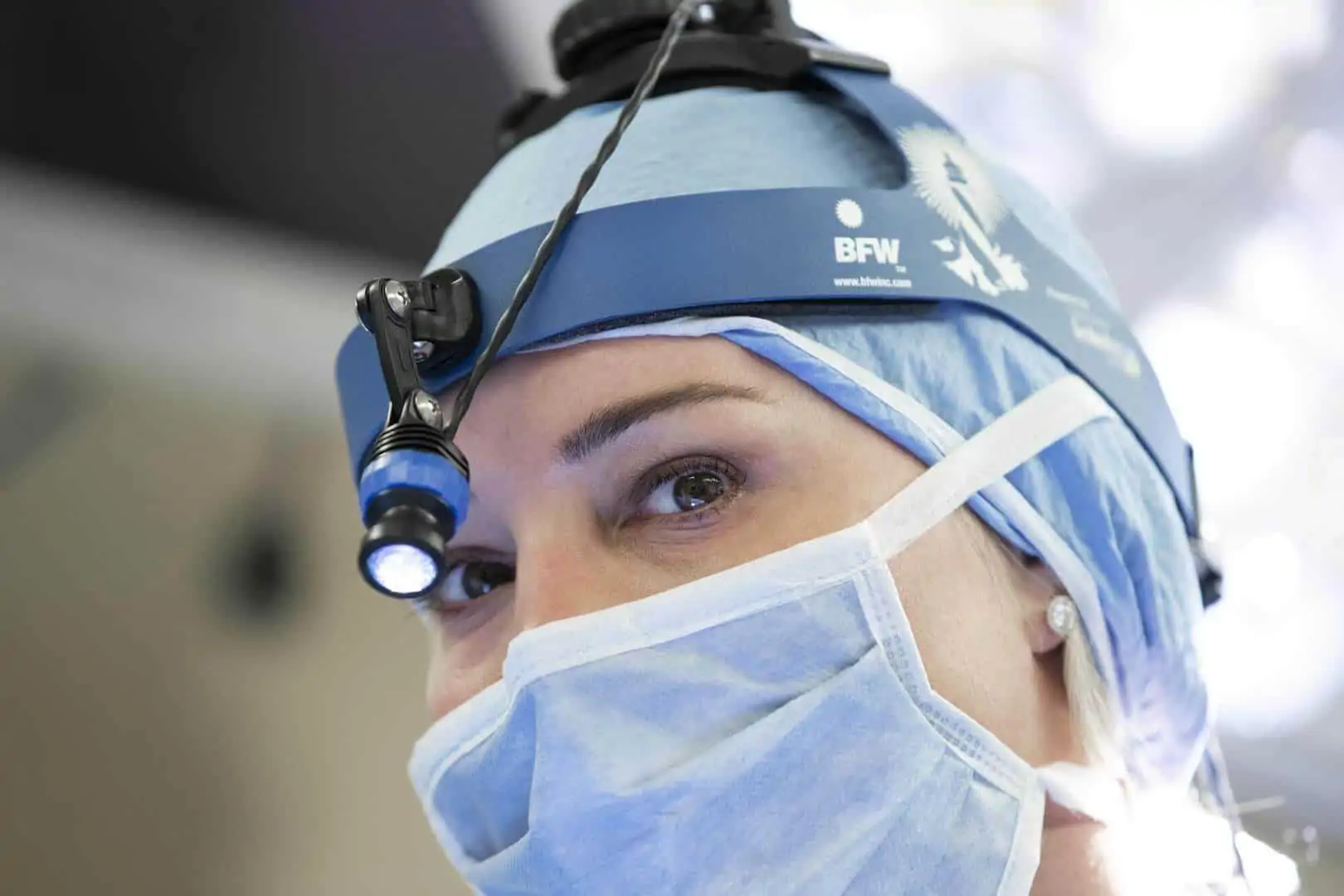
Precision is essential in modern surgical practice. Surgeons regularly work with delicate anatomical structures where visibility affects accuracy and patient outcomes. For this reason, many clinicians rely on the best surgical loupes combined with advanced lighting systems.
Magnification improves the ability to see fine anatomical details, while focused illumination ensures the surgical site remains clearly visible. When surgical loupes are paired with an LED surgical headlight, surgeons gain a bright, shadow-free view of the operating field, reducing visual strain and supporting more precise surgical work. Because of these advantages, magnification and head-mounted lighting are widely used across surgical and dental specialties.
Why the Best Surgical Loupes Improve Surgical Precision
Surgical loupes magnify the operating field while preserving natural depth perception and optical clarity. Without magnification, structures such as nerve fibers, microvascular tissue, and thin connective layers can be difficult to distinguish.
The best surgical loupes provide the detail needed to perform delicate tasks with greater control. Procedures involving suturing, tissue dissection, and precise instrument placement benefit from enhanced visualization.
Magnification also improves intraoperative awareness. Subtle differences in tissue color, structure, or texture become easier to identify, helping surgeons make accurate clinical decisions. However, magnification alone does not guarantee optimal visibility; proper lighting is equally important.
The Role of Surgical Headlights in the Operating Room
Operating rooms rely on overhead lighting, but these lights do not always illuminate deep or narrow surgical sites effectively. Shadows can appear when instruments, hands, or body positioning block the light source.
This is why surgical headlights are commonly used in surgical and dental procedures. A head-mounted light directs illumination exactly where the surgeon is looking and remains aligned with the viewing field throughout the procedure.
This alignment reduces shadows and provides consistent lighting in areas where overhead lights cannot reach. When magnification loupes and headlights are used together, surgeons gain a brighter and more stable visual field without repeatedly adjusting lighting equipment.
Advantages of LED Surgical Headlights
Lighting technology used in surgical environments has evolved significantly. Traditional halogen systems produced adequate brightness but generated more heat and consumed more energy.
Modern systems rely on LED surgical headlight technology, which offers several advantages:
- Consistent illumination: steady brightness during long procedures
- Reduced heat: greater comfort during extended use
- Energy efficiency: lower power consumption and longer battery life
- Lightweight design: reduced fatigue when worn with loupes
Because of these benefits, the LED surgical headlight has become a preferred lighting option in many surgical settings.
How Surgical Loupes and Lighting Work Together
Magnification and illumination function best as a single visual system. Surgical loupes enlarge the operative field, while a head-mounted light keeps that field illuminated.
When properly aligned, the light beam follows the same visual axis as the loupe optics, keeping the brightest part of the beam centered in the magnified viewing area.
This alignment helps provide:
- Reduced shadows during procedures
- Clearer visibility of small structures
- Improved contrast between tissue layers
- Less eye fatigue during long surgeries
Because of these advantages, clinicians searching for the best surgical loupes often prioritize systems that integrate smoothly with modern surgical lighting.
Better Depth Perception and Visual Detail
Depth perception is critical during surgical procedures. Surgeons must judge distances accurately when working with delicate tissues and instruments.
High-quality loupes preserve natural depth perception while magnifying the field of view. When lighting is added, the surgical environment becomes clearer and more detailed. Illumination improves contrast between tissues and highlights anatomical details that might otherwise be overlooked.
Procedures that benefit most from this combination include microsurgery, oral and maxillofacial surgery, implant placement, and plastic or reconstructive surgery.
Ergonomics and Surgeon Comfort
Surgical procedures require long periods of concentration and steady posture. Limited magnification or poor lighting can force surgeons to lean forward to see the operative field clearly.
Modern magnification systems support both visibility and ergonomics. Using the best surgical loupes with a properly aligned headlight allows surgeons to maintain a natural head position while viewing the surgical site.
Improved posture helps reduce neck and shoulder strain during lengthy procedures and supports long-term professional health.
Improving Efficiency in the Operating Room
Clear visibility plays an important role in surgical efficiency. When shadows interfere with the operative field, procedures may slow down while adjustments are made.
Head-mounted lighting helps prevent these disruptions. Because surgical headlights move with the surgeon’s head, they maintain continuous illumination without repositioning overhead lights. This allows clinicians to stay focused on the procedure.
Lighting technology has also improved compared with traditional operating room systems. Many clinicians explore this further by examining how LED surgical headlights compare with traditional lighting systems in surgical environments.
Choosing the Right Magnification and Lighting System
Selecting surgical magnification and lighting requires evaluating several practical factors.
Magnification Strength
Different procedures require different magnification levels. Surgeons should choose optics that provide sufficient detail while maintaining a comfortable field of view.
Optical Quality
High-quality lenses ensure sharp resolution and consistent brightness across the viewing field.
Lighting Alignment
Lighting systems should align with loupe optics so the brightest illumination remains centered in the viewing field.
Comfort and Weight
Since surgeons often wear magnification and lighting equipment for long periods, lightweight designs help reduce fatigue.
Clinicians seeking reliable illumination systems designed for surgical magnification often explore options available through the best surgical loupes that support clear lighting and optical precision.
The Role of Magnification and Lighting in Modern Surgery
Modern surgical practice increasingly depends on tools that improve visualization and accuracy. Magnification and directed illumination have become essential components of many surgical workflows.
By combining high-quality loupes with an LED surgical headlight, surgeons gain a bright, shadow-free view of the operative field. This improves the ability to identify anatomical structures, perform delicate techniques, and maintain precision during complex procedures.
Clear visualization allows clinicians to carry out detailed surgical work with greater confidence, accuracy, and control.


