

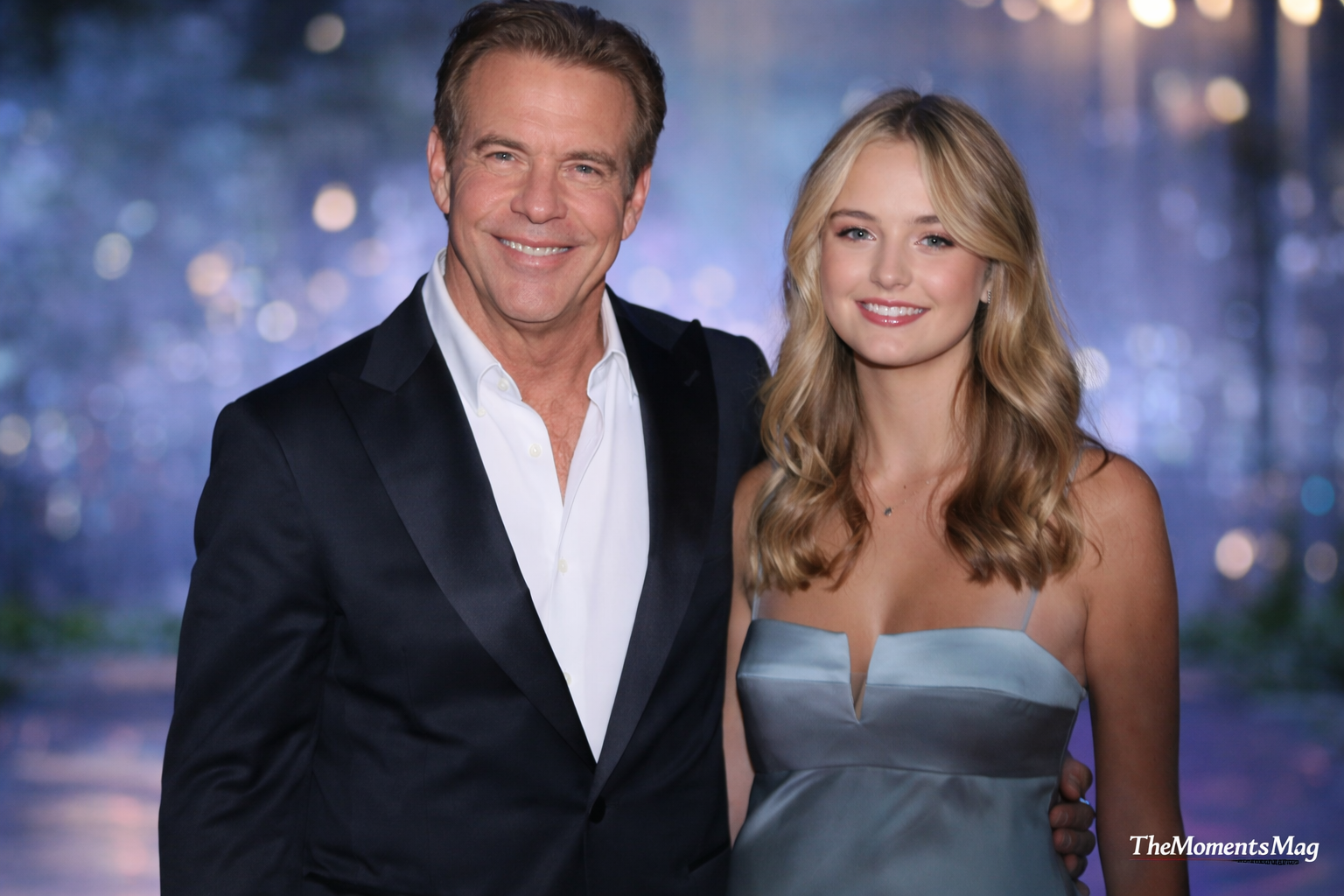
Zoe Grace Quaid is a name that often sparks curiosity, not because of public achievements or media appearances, but because of what surrounds it. She was born into Hollywood royalty, entered the world under extraordinary circumstances, and then—unlike many celebrity children—largely stepped away from the spotlight. Her story is less about red carpets and more about privacy, resilience, and the evolving idea of what it means to grow up famous in a digital age.
This biography takes a careful look at Zoe Grace Quaid’s life as it is publicly known, placing facts within context while respecting the boundaries her family has consistently maintained.
Table of Contents
ToggleEarly Life and Family Background
Zoe Grace Quaid was born in November 2007 in the United States. She is the daughter of acclaimed American actor Dennis Quaid and real estate agent and businesswoman Kimberly Buffington. Zoe was born as a twin, alongside her brother Thomas Boone Quaid, via a gestational carrier.
At the time of her birth, Dennis Quaid was already a well-established Hollywood figure, known for decades of work in film and television. That context alone would have placed Zoe in the public eye. However, her entrance into the world drew attention for a much more serious reason.
Just days after their birth, Zoe and her twin brother were hospitalized following a highly publicized medical error. While being treated at Cedars-Sinai Medical Center, the newborn twins were accidentally administered an overdose of the blood thinner heparin. The incident quickly became national news, not because of celebrity intrigue, but because it raised urgent questions about patient safety in American hospitals.
Both children recovered, but the event left a permanent mark on the family’s public narrative.
The Medical Incident That Shaped Public Awareness
The heparin overdose incident occurred when Zoe and her brother were only days old. According to widely reported accounts, the twins received a dosage far higher than intended due to a medication error. The story resonated far beyond entertainment news, drawing attention from healthcare professionals, policymakers, and patient safety advocates.
For Dennis Quaid and Kimberly Buffington, this was not just a frightening personal experience. It became a catalyst for public advocacy. Dennis Quaid later spoke openly about the emotional toll of nearly losing his children and the systemic failures that allowed such an error to happen.
In the years that followed, he became involved in patient safety initiatives and helped establish a foundation focused on reducing medical errors. While Zoe herself was too young to remember the incident, it became an unavoidable part of her early public story. It is also one of the main reasons her name continues to appear in searches and media references.
Importantly, as Zoe grew older, her parents made a deliberate choice not to center her identity around this event. Public statements about the twins gradually faded, replaced by a consistent request for privacy.
A Childhood Largely Out of the Spotlight
Unlike many children of famous parents, Zoe Grace Quaid did not grow up as a constant presence in tabloids or on social media. Her parents, particularly Dennis Quaid, were intentional about limiting public exposure.
Over the years, Dennis Quaid has occasionally mentioned the twins in interviews, usually in broad, affectionate terms. He has spoken about fatherhood, pride, and gratitude, but rarely shared specific details about Zoe’s daily life, education, or interests. This restraint is notable in an era when oversharing has become common, even expected, among public figures.
Zoe’s childhood unfolded largely away from cameras. There are no verified public social media accounts attributed to her, and she has not been positioned as an influencer, performer, or public personality. This absence is not accidental. It reflects a parenting philosophy that prioritizes normalcy over visibility.
As a result, Zoe Grace Quaid remains known primarily by name and lineage rather than by curated public persona.
The Quaid Family Dynamic
Zoe is part of a blended family that has long been familiar to the public. Her father’s personal life has been widely covered over the decades, including his marriage to actress Meg Ryan and the birth of his older son, Jack Quaid.
Jack Quaid chose a public path, following his parents into acting and building a successful career in film and television. His visibility often highlights the contrast within the same family: one sibling living openly in the public eye, while others grow up privately.
This contrast underscores an important truth. Being born into fame does not dictate a single future. Each child’s path reflects personal choice, parental guidance, and timing. Zoe’s upbringing suggests that her parents wanted to give her the freedom to decide who she wants to be before the world weighs in.
Growing Up in the Digital Era
Zoe Grace Quaid belongs to a generation that has never known life without the internet. Born in 2007, she grew up alongside smartphones, social media platforms, and algorithm-driven visibility. Even children without famous parents now leave digital footprints from infancy.
In this context, privacy has become increasingly difficult to maintain. Names can trend without warning. Photos can circulate without consent. A single mention can generate speculation across platforms.
That reality makes the Quaid family’s approach even more striking. While Zoe’s name appears in searches, there is remarkably little verifiable information attached to it beyond basic biography. This absence can feel frustrating to curious readers, but it also serves as a quiet case study in digital restraint.
Zoe’s life illustrates a growing tension in modern culture: the difference between what can be shared and what should be shared.
Education and Personal Life
There is no publicly confirmed information about Zoe Grace Quaid’s education, hobbies, or personal ambitions. This is not an oversight. It reflects a conscious boundary maintained by her family and respected by most reputable media outlets.
Speculation about her schooling, career plans, or relationships remains just that—speculation. Ethical biographical writing avoids filling in gaps with assumptions, especially when the subject has not chosen a public role.
What can be said, based on her parents’ occasional comments, is that Zoe and her twin brother have been described as healthy, happy, and thriving. Beyond that, details remain private.
In a culture that often treats personal access as a public right, this restraint is increasingly rare.
Public Curiosity and Responsible Interest
Search interest in Zoe Grace Quaid tends to surge periodically, often driven by renewed attention to her father’s career or by retrospective discussions of the hospital incident that occurred at her birth.
This curiosity is understandable. Humans are drawn to stories that combine fame, vulnerability, and resilience. However, there is a meaningful difference between interest and intrusion.
Zoe has not granted interviews, launched a brand, or positioned herself as a public figure. As such, responsible coverage focuses on verified facts and broader context rather than personal detail.
Her biography is, in many ways, defined by what is not public. That absence tells its own story about evolving norms around childhood, consent, and identity.
The Broader Cultural Meaning of Her Story
Zoe Grace Quaid’s life sits at the intersection of several modern themes. One is celebrity culture and its impact on families. Another is patient safety and the long tail of early-life trauma. A third is digital privacy in an age where attention is constant and permanent.
Her story also reflects a generational shift. Older celebrity children were chased by paparazzi. Today’s are tracked by algorithms. The risks are different, but no less significant.
By keeping Zoe largely out of public view, her parents made a statement, whether intentional or not. They suggested that fame does not have to be inherited in full, and that children can be protected from the most invasive aspects of public life.
This approach aligns with a growing movement among parents, famous and not, who are rethinking how much of a child’s life belongs online.
Adulthood and Future Possibilities
As Zoe Grace Quaid moves closer to adulthood, public interest may continue. Some children of celebrities eventually step into public careers. Others choose private professions entirely unrelated to entertainment. Both paths are valid.
At present, there is no indication that Zoe has pursued acting or media work. If she ever chooses to do so, that decision will likely come with renewed attention. If she does not, her name may remain a quiet footnote in Hollywood family histories.
Either outcome would be consistent with the values reflected in her upbringing.
Also Read: Marcy Wudarski: Life, Legacy, and the Woman Behind Fame
Conclusion
Zoe Grace Quaid’s biography is not defined by public milestones or curated narratives. It is defined by context, restraint, and the deliberate choice to let a child grow up away from constant scrutiny.
Born into fame, she entered the world under extraordinary circumstances that briefly placed her at the center of national attention. Yet as she grew, her life moved steadily out of view, guided by parents who understood the cost of exposure.
In an era where visibility is often treated as currency, Zoe Grace Quaid represents something different. She represents the possibility of privacy in public life, the value of boundaries, and the idea that not every story needs to be fully told to be meaningful.
Her name may continue to draw interest, but the most important part of her story is simple and increasingly rare: the right to live it on her own terms.

