

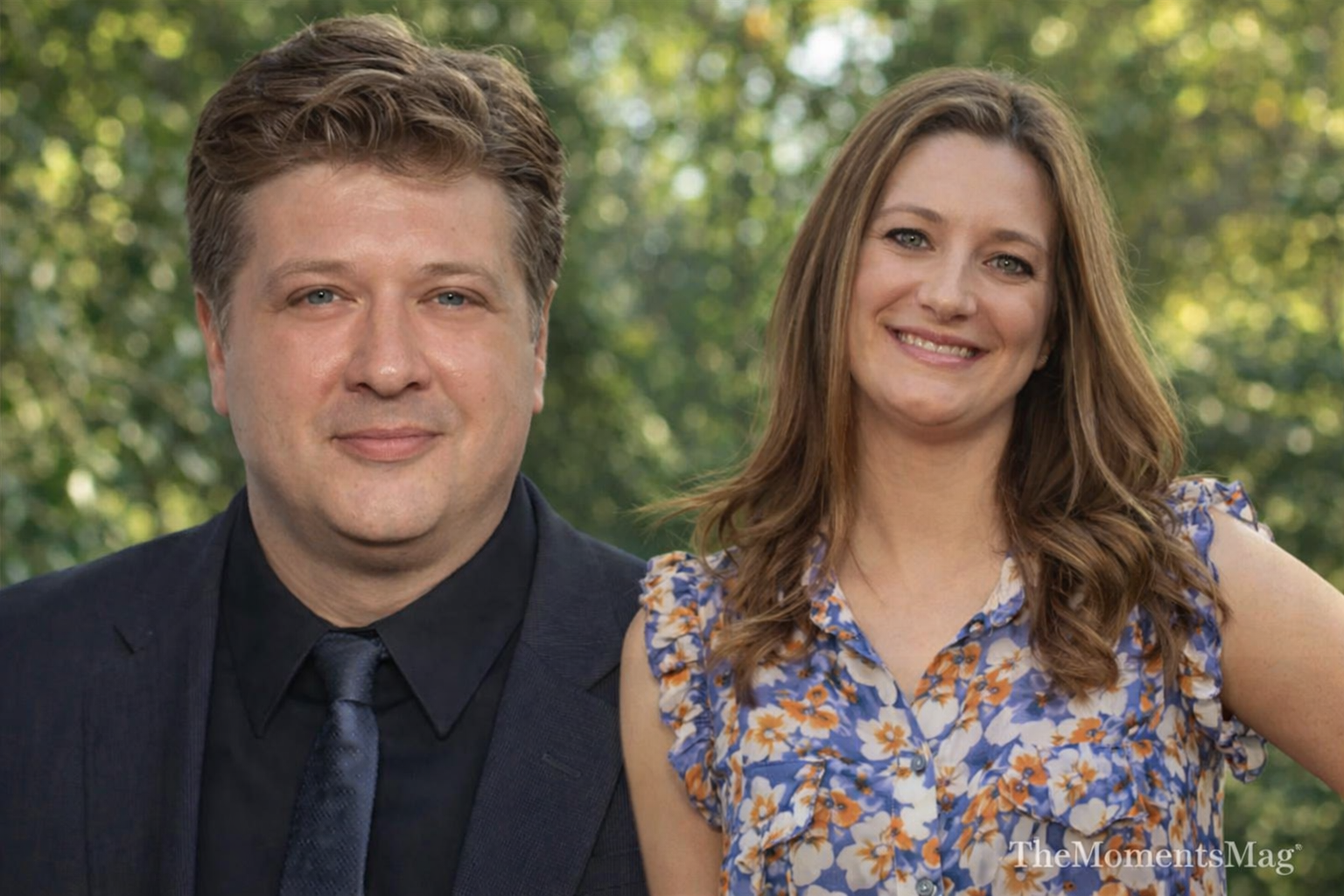
In an age when personal lives are increasingly public by default, privacy itself has become a statement. Few people illustrate this better than Aliza Barber. Known primarily as the wife of actor Lance Barber, Aliza Barber has drawn steady public curiosity despite never seeking attention herself. Her name circulates widely online, yet verified information about her remains deliberately sparse.
This contrast—high interest paired with low visibility—has turned Aliza Barber into something of a digital paradox. She exists in the public imagination largely through association, but not through self-promotion, interviews, or social media presence. Instead, what we know comes from reputable journalism and indirect references, forming a portrait of someone who has consciously chosen substance over spotlight.
This biography focuses on what can be responsibly documented about Aliza Barber, while also examining why her story resonates so strongly in modern celebrity culture.
Table of Contents
ToggleEarly Life and Background
Aliza Barber’s early life is not publicly documented in detail. Unlike actors, musicians, or influencers, she has never presented a curated personal narrative for public consumption. Her upbringing, education, and formative years remain private, and no verified sources offer specifics about her childhood or family background.
This absence of information is not accidental. It reflects a broader pattern in Aliza Barber’s life: a consistent separation between personal identity and public curiosity. In a digital environment that often treats personal data as a form of entertainment, her low public profile stands out.
What can be reasonably inferred is that her background prepared her for a demanding professional path. Her later career suggests discipline, creativity, and resilience—traits typically developed through years of focused training and hands-on experience.
Career as a Professional Chef
The most consistently verified aspect of Aliza Barber’s professional life is her work as a chef. Multiple reputable entertainment publications have identified her as a professional chef, a fact repeated across independent sources without contradiction.
Being a chef is not a casual designation. Professional kitchens are structured environments that demand precision, stamina, and adaptability. Long hours, high pressure, and constant evaluation are standard. That Aliza Barber built and maintained a career in this field suggests deep commitment to her craft.
Unlike celebrity chefs who leverage media exposure, her culinary career appears grounded in practice rather than publicity. There are no branded cookbooks, television appearances, or promotional interviews tied to her name. This implies that her professional satisfaction comes from the work itself, not from recognition.
In many ways, her career choice reinforces her broader approach to life. Cooking, at its core, is about service, skill, and consistency. It is a profession where success is often measured privately, by the people you feed and the standards you uphold, rather than by public acclaim.
Marriage to Lance Barber
Aliza Barber is married to Lance Barber, an American actor best known for portraying George Cooper Sr. on the television series Young Sheldon. Lance Barber has also appeared in shows such as The Comeback, where he worked alongside established figures in television comedy.
Their marriage has been described by colleagues and journalists as stable and grounded. While Lance Barber’s career places him in the public eye, he has consistently spoken about his family life with restraint, rarely offering details beyond general expressions of gratitude and contentment.
This dynamic suggests a partnership built on mutual respect for boundaries. Aliza Barber does not appear as a red-carpet fixture, nor does she engage in public commentary about her husband’s work. Instead, the relationship operates largely outside the spectacle of celebrity culture.
Such restraint is increasingly rare and may explain why public interest in her continues to grow. The less she reveals, the more curiosity builds—a phenomenon driven as much by digital culture as by human psychology.
Family Life and Children
Aliza and Lance Barber share two children. Beyond this fact, little verified information is available, and that limitation appears intentional. No credible sources disclose their children’s names, ages, or daily lives, and no public-facing accounts are associated with them.
This approach aligns with a growing movement among public figures to shield children from unwanted exposure. In recent years, many actors and entertainers have spoken openly about the long-term consequences of growing up under public scrutiny. The Barber family’s decision to maintain privacy reflects an awareness of those risks.
Family life, in this context, is treated as something to be lived rather than documented. It exists outside algorithms, headlines, and speculation, reinforcing the idea that not all meaningful lives require public validation.
Life Away From the Public Eye
Aliza Barber is believed to live with her family in Los Angeles, a practical choice given Lance Barber’s work in television and film. Beyond geographic location, however, little is known about her daily routines, interests outside of cooking, or social circles.
This absence has not prevented the internet from speculating. Numerous websites attempt to fill the gaps with unverified claims, ranging from estimated net worth figures to invented biographical milestones. These narratives often repeat one another, creating an illusion of accuracy through volume rather than evidence.
What distinguishes reliable reporting from speculation is restraint. Reputable outlets stop where verification ends. In Aliza Barber’s case, that stopping point comes relatively quickly, and that is precisely what makes her biography unusual in the digital age.
Public Curiosity and Online Misinformation
The fascination with Aliza Barber reveals more about internet culture than about her as an individual. Modern search behavior rewards completeness, even when completeness requires invention. As a result, private individuals connected to public figures are often assigned elaborate backstories they never authored.
This phenomenon is not unique to Aliza Barber, but her case is especially clear. The verified facts are simple, yet the online ecosystem surrounding her name is crowded with exaggerated or unsupported claims. The gap between truth and narrative highlights how easily misinformation fills silence.
Importantly, silence does not imply consent. Choosing privacy is not an invitation for speculation. In this sense, Aliza Barber’s biography becomes a case study in ethical storytelling: how much should be said when someone has chosen not to speak publicly?
Cultural Significance of Her Privacy
There is a quiet cultural relevance to Aliza Barber’s life choices. In a time when visibility is often equated with value, she represents an alternative model. Her identity is not built on branding, influence, or constant engagement. It is built on work, family, and personal boundaries.
This model resonates with many people who feel overwhelmed by performative living. The idea that one can be connected to fame yet remain personally grounded challenges the assumption that exposure is inevitable.
Her story also reframes success. Instead of measuring achievement through followers or headlines, it emphasizes fulfillment through profession, partnership, and private life.
A Life Defined on Her Own Terms
Ultimately, Aliza Barber’s biography is defined as much by what is absent as by what is known. She has not sought public validation, nor has she attempted to leverage her proximity to fame for personal gain. Her professional identity as a chef stands independently of her husband’s career, and her family life remains protected from public consumption.
This autonomy is perhaps her most defining characteristic. In a landscape where personal narratives are often shaped by external expectations, Aliza Barber has retained authorship over her own story by choosing not to publish it.
Also Read: Lyzel Williams Biography: Life Behind Jill Scott’s Song
Conclusion
Aliza Barber is not a celebrity in the conventional sense, and that is precisely what makes her compelling. She is a professional chef, a wife, and a mother who exists alongside fame without being absorbed by it. Her life demonstrates that visibility is optional, even in close proximity to the entertainment industry.
In telling her story responsibly, the most important detail is restraint. The verified facts are enough. They reveal a person who values craft, family, and privacy in a culture that often undervalues all three. In an era defined by exposure, Aliza Barber’s quiet presence is not a mystery to solve, but a choice to respect.