

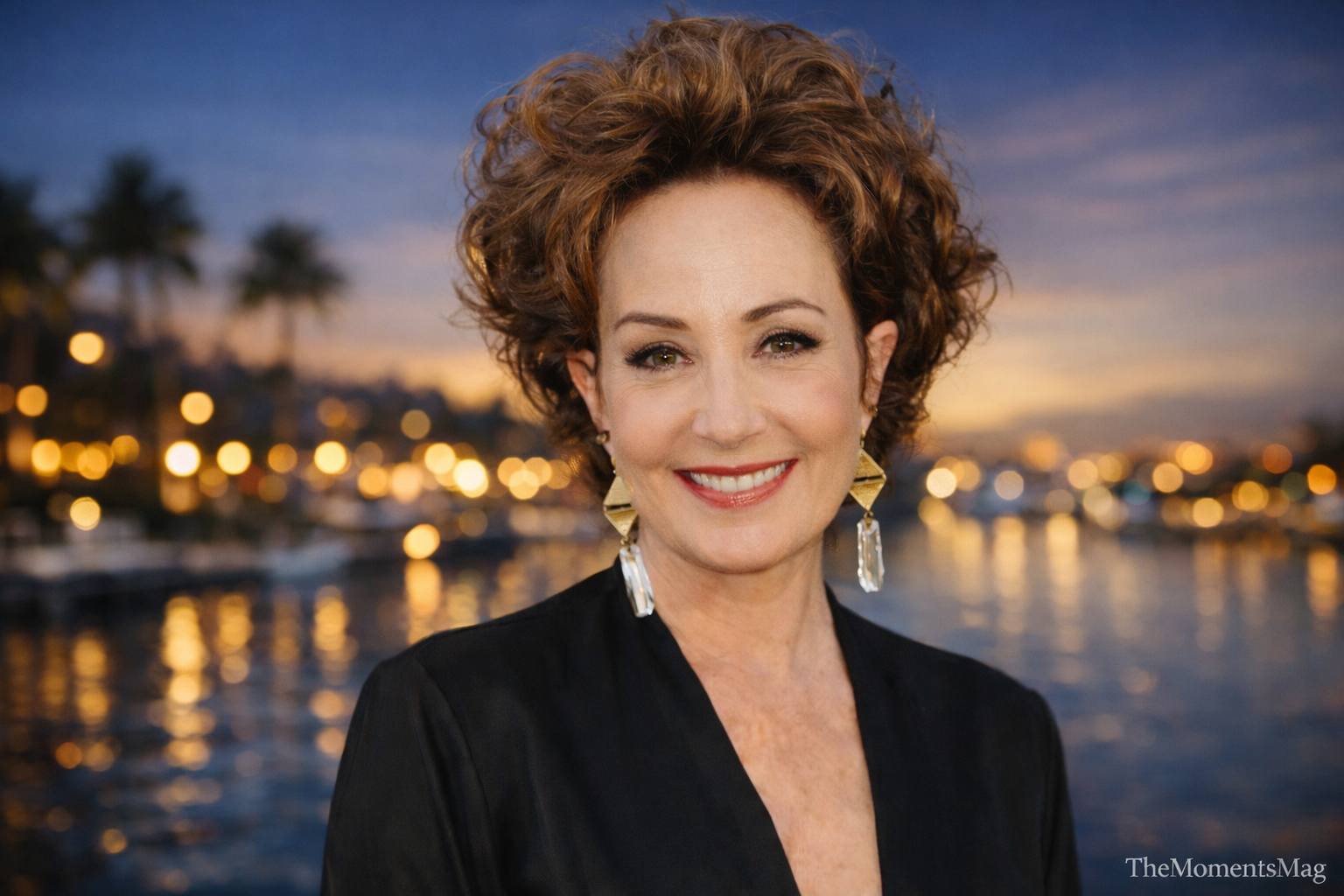
Elizabeth Grissette Potts is a name that surfaces most often in connection with Hollywood, yet her own life has unfolded largely outside public view. Unlike many people linked to famous families, she has not pursued celebrity, media attention, or a public-facing career. Instead, her presence in the historical and biographical record exists primarily through family context, genealogy references, and brief mentions in authoritative biographies of her younger sister, actress Annie Potts.
That contrast—between public curiosity and private reality—is what makes Elizabeth Grissette Potts an intriguing figure. Her story is not one of fame or spectacle, but of a life lived deliberately away from it.
Table of Contents
ToggleEarly Life and Family Background
Elizabeth Grissette Potts was born into an American family rooted in the southern United States. She was raised in Kentucky, where the Potts family spent their formative years. Her parents, Dorothy Harris Potts (née Billingslea) and Powell Grisette Potts, were part of a stable, working family environment that emphasized education, resilience, and close sibling bonds.
Elizabeth was one of three daughters. She was the eldest, followed by Mary Eleanor Potts Hovious, and then Annie Potts, who would later become a prominent figure in American film and television. Growing up as the oldest sibling often comes with a unique role in family dynamics, and by most accounts, Elizabeth occupied that position quietly and responsibly.
Family biographies suggest that the Potts household valued normalcy despite later brushes with fame. Long before Hollywood entered the picture, the sisters grew up in a modest environment, attending local schools and participating in everyday community life. Elizabeth’s childhood, like much of her later life, was defined by stability rather than spectacle.
Relationship With Annie Potts
Public interest in Elizabeth Grissette Potts exists almost entirely because of her relationship to Annie Potts. Annie’s career—spanning decades and including iconic roles in film, television, and voice acting—has generated extensive biographical coverage. Within those biographies, Elizabeth appears as a supporting detail: an older sister mentioned in passing.
That brief mention, however, has been enough to spark curiosity. Fans of Annie Potts often want to know more about her family, her upbringing, and the people who shaped her early years. Elizabeth, as the eldest sister, naturally becomes part of that narrative.
There is no public record suggesting that Elizabeth sought involvement in Annie’s career or used that connection for personal exposure. On the contrary, her absence from interviews, red carpets, and media features suggests a conscious decision to remain private. In an era when family members of celebrities often become public figures themselves, Elizabeth’s low profile stands out.
The Nickname “Dollie”
Some biographical and genealogical sources note that Elizabeth Grissette Potts was known by the nickname “Dollie.” While nicknames often offer insight into family intimacy or childhood personality, this detail has limited public context.
What it does reveal is something subtle but important: Elizabeth was known within her family circle in a personal, affectionate way that never translated into a public persona. The nickname appears in family records rather than popular media, reinforcing the idea that her identity has remained rooted in private relationships rather than public branding.
Education and Personal Path
Unlike her younger sister Annie, whose career trajectory is well documented, Elizabeth Grissette Potts has not had her educational or professional life detailed in mainstream publications. This absence is not unusual for individuals who do not seek public recognition.
What can be reasonably inferred—without speculation—is that Elizabeth pursued a life defined by personal priorities rather than public acclaim. She came of age during a period when women increasingly had access to higher education and professional opportunities, but many still chose paths centered on family, local careers, or private enterprise.
The lack of detailed public records suggests that Elizabeth valued autonomy and discretion. Her life story is preserved not through headlines or awards, but through the quieter channels of family memory and archival documentation.
Privacy in the Age of Public Data
Elizabeth Grissette Potts’ limited digital footprint highlights a broader cultural shift. In the modern era, it is increasingly difficult for individuals connected to public figures to remain private. Genealogy platforms, digital archives, and automated search indexing systems can surface names and relationships that were once confined to family records.
Elizabeth’s name appears in databases and reference sites largely because of these systems. Her inclusion is not the result of self-promotion, but of association. This phenomenon raises important questions about consent and visibility in the digital age. Not everyone whose name is searchable has chosen to be part of the public conversation.
In that sense, Elizabeth Grissette Potts represents a generation whose lives straddled two eras: one where privacy was default, and another where documentation is automatic.
Public Curiosity and Misidentification
Another reason Elizabeth Grissette Potts attracts attention is the risk of confusion. The name “Elizabeth Potts” appears in various historical and cultural contexts unrelated to the Potts family of Kentucky. Without careful verification, readers may encounter incorrect or misleading information tied to entirely different individuals.
This underscores the importance of restraint in biographical writing. A lack of information should not be filled with assumptions. Responsible biography acknowledges what is known, clarifies what is not, and resists the urge to invent narrative where evidence is thin.
Elizabeth’s case is a reminder that silence in the record does not imply mystery or scandal. Often, it simply reflects a life lived without public documentation.
A Life Defined by Choice
One of the most striking aspects of Elizabeth Grissette Potts’ story is the implication of choice. She lived alongside a sibling whose career placed her in the national spotlight. Opportunities for proximity to fame likely existed. Yet Elizabeth remained outside that sphere.
That choice deserves recognition. In a culture that often equates visibility with success, opting for privacy can be an act of confidence. It suggests contentment with a life measured not by recognition, but by personal fulfillment.
Elizabeth’s biography, therefore, is less about events and more about boundaries. She illustrates how it is possible to be adjacent to fame without being consumed by it.
Legacy and Meaning
Elizabeth Grissette Potts does not leave behind a legacy of films, awards, or public accolades. Instead, her legacy exists in quieter forms: as a member of a close-knit family, as a sister who shared formative years with a future star, and as an individual who maintained her own identity apart from public narratives.
For researchers, fans, and readers, her story serves as a reminder that not every life connected to celebrity is meant to be documented in detail. Some stories matter precisely because they resist full exposure.
Also Read: Timoteo Schreiber: Biography of Pablo Schreiber’s Son
Conclusion
Elizabeth Grissette Potts occupies a unique space in modern biographical curiosity. She is known, yet largely unknown. Her name is searchable, yet her life remains private. Through her connection to Annie Potts, she appears in public records, but she has never stepped into the spotlight herself.
Her biography is not defined by dramatic milestones or public achievements, but by the consistency of her absence from public life. In an age of constant visibility, that absence is meaningful. It reflects a life shaped by personal choice, familial connection, and a clear boundary between the public and the private.
In the end, Elizabeth Grissette Potts reminds us that significance is not always measured by fame. Sometimes, it is found in the quiet decision to live fully, without needing to be seen.