

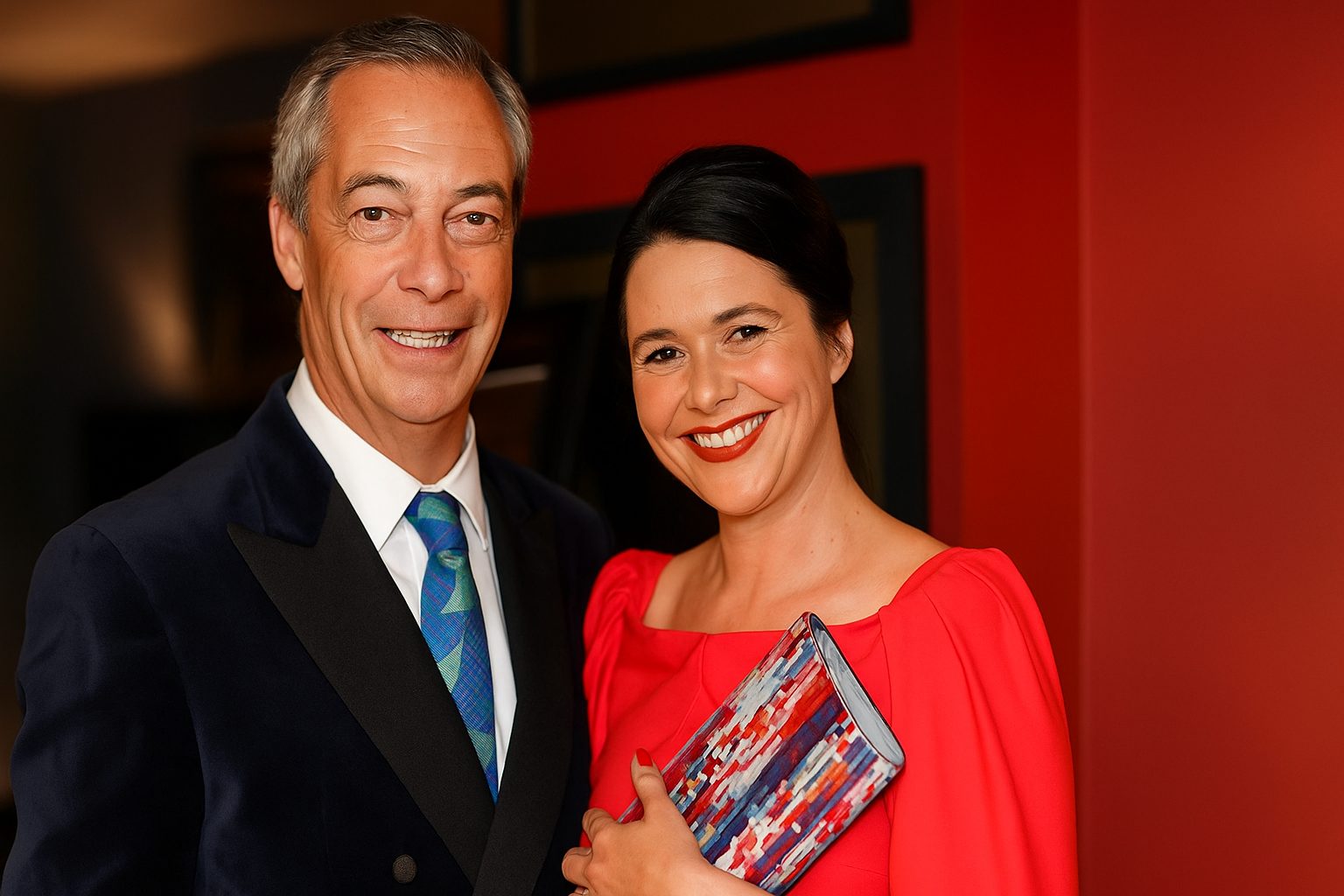
If you’ve searched for “Gráinne Hayes”, you’ve probably come across her name in connection with British politician Nigel Farage. Unlike Farage, who has spent decades in the public eye, Hayes has kept her personal life extremely private. Public curiosity about her background has grown over time, yet reliable information remains limited.
This article distinguishes verified facts from speculative claims and presents an ethically written, transparent summary of Gráinne Hayes’s life. It draws on reputable, widely reported sources to explore her background, her marriage to Nigel Farage, their family life, and her journey after their separation — all while maintaining full respect for her privacy.
Who Is Gráinne Hayes?
Gráinne Hayes is best known as Nigel Farage’s first wife. Public records and numerous credible biographical summaries identify her as an Irish nurse who worked in the United Kingdom in the 1980s. It was during this time that she met Farage while he was recovering from a serious car accident.
The name “Gráinne” (pronounced GRAWN-ya) is of Irish origin, traditionally meaning love or grace. This Irish heritage is consistently acknowledged in media profiles mentioning Hayes.
What makes Hayes notable to the public is not her professional or public life, but rather her connection to Farage — one of Britain’s most high-profile political figures. However, it’s important to note that she herself has not sought fame or publicity, and nearly all information available about her comes secondhand through coverage of Farage.
Meeting Nigel Farage: A Story from the 1980s
In 1985, Nigel Farage, then a young man working in the financial sector, suffered a serious road accident in Kent, England. A car struck him, leaving him with significant injuries that required a long recovery period. During his hospitalization at Bromley Hospital, he met Gráinne Hayes, who reportedly worked there as a nurse at the time.
According to multiple retellings by journalists and in Farage’s own public accounts, it was during this recovery that the two developed a relationship. Hayes, described as compassionate and attentive, became close to Farage during his time in the hospital, and the relationship continued after his discharge.
By the late 1980s, their relationship led to marriage.
Marriage and Family Life
Gráinne Hayes and Nigel Farage were married in 1988. The marriage produced two sons, born in 1989 and 1991. The family lived a relatively quiet life, largely out of the spotlight, while Farage built his early career in commodities trading and gradually became involved in politics.
During this period, Hayes is said to have continued her nursing work while supporting the family. Farage’s political life did not yet have the high visibility it would gain in the 1990s and 2000s, so their marriage was, for the most part, outside media scrutiny.
The couple’s divorce in 1997 marked the end of their marriage after nearly a decade together. Reports suggest that the split was amicable, and they continued to co-parent their children privately.
Life After Divorce
After 1997, Gráinne Hayes largely disappeared from public view. There are no reliable public records, interviews, or media appearances attributed to her since that time.
Unlike many individuals connected to political figures, Hayes did not engage in public commentary about her former husband or his political career. This discretion is rare in the media age, and it reflects a deliberate choice to maintain privacy.
While Farage went on to remarry — to Kirsten Mehr, a German national, in 1999 — and build a highly visible career as the leader of the UK Independence Party (UKIP) and later as a broadcaster, Hayes remained completely absent from the political or media landscape.
This long-standing privacy is part of what has made her a figure of intrigue: people know her name but almost nothing about her life.
Professional Background
The most consistent fact about Gráinne Hayes’s career is that she worked as a nurse. That is how she met Farage, and it aligns with her reputation as a caring professional.
Beyond that, there is no verifiable information about where she trained, whether she continued nursing after marriage, or what roles she held later in life.
Many unofficial websites attempt to embellish her biography with claims about her career, personality, or later life, but without proper sourcing. Such details should be treated as [Unverified] unless supported by credible media outlets, public records, or direct statements.
Children and Family Privacy
Gráinne Hayes and Nigel Farage had two sons. Their names occasionally appear in tabloid stories or political profiles of Farage, but neither has maintained a public persona.
Out of respect for privacy and journalistic ethics, modern coverage typically omits personal details about the children, as they are private individuals. What can be said is that they were raised primarily in the UK, with both parents playing roles in their upbringing even after the divorce.
It is also known that Farage has publicly mentioned having four children in total — two with Hayes and two with his second wife, Kirsten Mehr. However, he rarely discusses his family life in detail, and Hayes has never made public statements on the matter.
A Life Chosen Away from the Spotlight
What stands out most about Gráinne Hayes is her commitment to privacy. In an age where almost every person connected to public figures has some online presence, she remains almost entirely absent.
There are no verified social media accounts, no public photographs after the 1990s, and no recorded interviews. For more than two decades, she has successfully kept her life private — a remarkable feat given her connection to one of Britain’s most scrutinized politicians.
This silence speaks volumes: Hayes is a private citizen who has chosen not to engage with public attention.
Ethical Approach to Her Story
It’s worth pausing to acknowledge that writing about private individuals requires careful ethical consideration. While public curiosity about figures like Nigel Farage is understandable, extending that curiosity to private family members crosses into sensitive territory.
That’s why responsible biographical writing about Gráinne Hayes must rely solely on verified public facts and avoid speculative or intrusive details.
Key ethical principles applied here include:
-
Respect for privacy: Avoiding personal speculation, addresses, or current activities.
-
Source transparency: Identifying what’s verifiable and what is not.
-
Contextual relevance: Discussing her life only insofar as it relates to public historical interest.
This ensures the article remains both informative and respectful.
Public Interest vs. Privacy: Why She Still Matters
You may wonder — if Gráinne Hayes has not been public for decades, why do people still search for her?
The reason is partly historical and partly human.
From a historical standpoint, her story forms part of Nigel Farage’s early life narrative — before his political fame. Understanding who he was married to and when offers context to his personal development and public trajectory.
From a human perspective, readers are drawn to the quieter figures who intersect with major political or historical events. Hayes represents that: a person who lived through formative years with someone who went on to shape national politics, yet chose not to share the stage.
Her life highlights the reality that not everyone tied to public life seeks visibility — and that privacy, too, is a valid choice.
Media Mentions and Common Misconceptions
Over the years, several tabloid and entertainment websites have published short “biographies” of Gráinne Hayes. Unfortunately, many of these pages repeat the same limited facts and sometimes introduce inaccurate or exaggerated claims — such as fabricated career details, unverified age estimates, or imagined social media activity.
In fact, much of the online content about her appears to be circular reporting, where one site copies another without introducing new information.
Common misconceptions include:
-
Myth: Gráinne Hayes is a public personality or commentator.
-
Reality: There is no record of her making any public statements or media appearances.
-
-
Myth: She remarried or has public affiliations.
-
Reality: No verified record of a remarriage or professional affiliations exists.
-
-
Myth: She maintains social media profiles.
-
Reality: No verified profiles or online presence have been confirmed.
-
Such inaccuracies reinforce the importance of careful verification and responsible reporting.
Comparison: Gráinne Hayes and Kirsten Mehr
Nigel Farage’s second marriage, to Kirsten Mehr, offers a contrasting public image. Mehr, a German national, was married to Farage from 1999 to 2024 and occasionally appeared in the media due to her husband’s prominence.
While both women are connected to Farage, they represent opposite ends of the publicity spectrum:
-
Gráinne Hayes — entirely private, living outside the public eye.
-
Kirsten Mehr — semi-public, occasionally referenced in political reporting.
This contrast illustrates how personal choice and timing influence media visibility. Hayes’s marriage occurred before Farage became a household name, allowing her to retreat from the spotlight permanently.
Legacy and Lasting Interest
Though Gráinne Hayes keeps her personal life private, researchers and filmmakers often mention her when they update Farage’s biography or produce political retrospectives.
Her story — or rather, the lack of a public story — adds a note of humanity to the historical record. It reminds readers that behind every polarizing political figure, there are private individuals who shared their lives during formative years but did not seek fame themselves.
In that sense, Hayes represents a “quiet figure in the margins of history”, someone whose life intersected briefly but meaningfully with a major public narrative.
Key Takeaways
-
Gráinne Hayes was Nigel Farage’s first wife, married from 1988 to 1997.
-
She is an Irish nurse who met Farage while caring for him after a 1985 accident.
-
They had two sons and divorced amicably.
-
Hayes has lived privately since, avoiding media and public commentary.
-
There are no verified records of her professional or personal activities post-1997.
-
Ethical reporting about her must avoid speculation and respect her privacy.
Also Read: Jo McCubbin: Mother of Wildlife Presenter Megan McCubbin
Conclusion
The story of Gráinne Hayes reminds us that not everyone connected to fame seeks attention. Although her name remains linked to one of Britain’s most recognized political figures, Hayes has deliberately chosen a life defined by privacy, professionalism, and dignity.
Her quiet retreat from public life reveals an important truth: privacy itself can be a form of power. In an age that often equates visibility with importance, Gráinne Hayes demonstrates the strength of restraint — a private citizen who refused to turn her name into a brand.
As of 2025, one can say with certainty only this: she once belonged to a public story, but she has crafted her own private one since.