

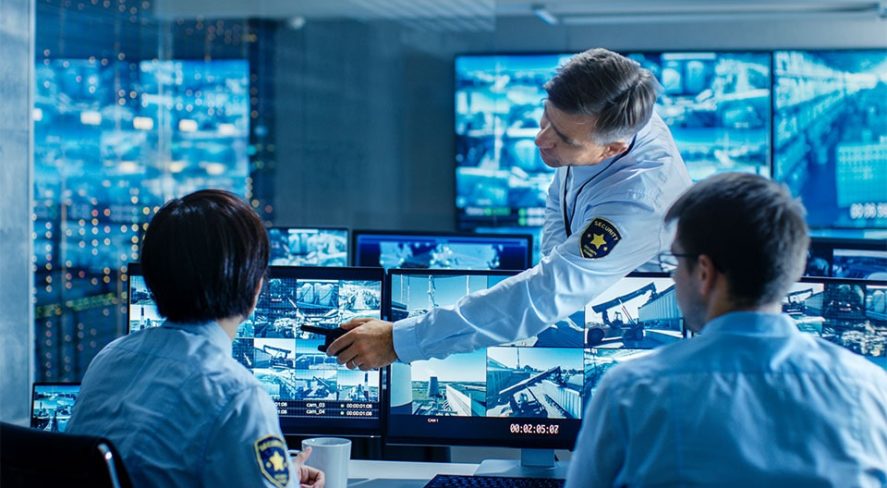
The global security landscape is undergoing a profound transformation. As organizations manage larger facilities, distributed assets, and increasingly complex risk environments, traditional surveillance models are no longer sufficient. Modern security operations are shifting toward intelligence-driven frameworks powered by digital platforms. At the center of this transformation is the Video Management Solution, a technology that consolidates video feeds, integrates analytics, and enables centralized command over surveillance infrastructure.
A Video Management Solution is more than a system for storing and viewing camera footage. It functions as an operational backbone, connecting cameras, analytics engines, access control systems, alarms, and cloud services into a unified environment. This integration enables organizations to transition from reactive monitoring to proactive, data-driven decision-making.
The Evolution of Surveillance Infrastructure
Historically, surveillance systems consisted of standalone cameras connected to localized recording devices. Monitoring required personnel to manually observe multiple screens, often leading to fatigue and missed incidents. Data retrieval was slow and inefficient.
The introduction of IP-based cameras and networked storage marked the first major shift. However, as deployments scaled, organizations required a centralized framework to manage thousands of cameras across multiple locations. The Video Management Solution emerged to address this challenge, offering unified control, user management, and scalable storage.
Today, advanced Video Management Solution platforms incorporate artificial intelligence, cloud connectivity, and real-time analytics. They enable security teams to monitor facilities from centralized command centers while maintaining granular control over distributed operations.
Centralized Monitoring and Operational Efficiency
A key advantage of a Video Management Solution is centralized monitoring. Security operators can oversee multiple facilities, campuses, or city zones from a single interface. Real-time alerts, video playback, and incident tagging streamline daily operations.
For enterprises with geographically dispersed assets, centralized management reduces operational complexity. Security teams can configure user permissions, define alert rules, and manage camera settings remotely. This scalability ensures consistent policy enforcement across all sites.
In transportation networks, retail chains, industrial plants, and corporate campuses, a Video Management Solution reduces the administrative burden while improving response coordination. Integration with alarm systems ensures that video feeds automatically display when sensors are triggered, minimizing response delays.
Video Analytics Tech
Video Analytics Tech has become a defining feature of modern Video Management Solution platforms. By embedding artificial intelligence algorithms into surveillance workflows, organizations gain deeper insights into operational patterns and security risks.
AI-powered video analytics can detect intrusions, identify unattended objects, monitor crowd density, and recognize abnormal behavior. Instead of relying solely on human observation, the system automatically flags suspicious events in real time.
For example, in manufacturing facilities, analytics can monitor safety compliance by detecting whether workers wear protective equipment. In transportation hubs, analytics can identify loitering or unusual movement patterns. These capabilities enhance preventive security strategies and optimize resource allocation.
Machine learning algorithms continuously improve accuracy by analyzing historical data. This adaptive learning reduces false positives and enhances detection reliability. Video Analytics Tech therefore transforms the Video Management Solution from a passive recording tool into an active intelligence engine.
Data-Driven Security Decision Making
The rise of data-driven security operations reflects a broader trend toward analytics-based management. A Video Management Solution generates vast amounts of structured and unstructured data. By analyzing this data, organizations can identify risk patterns, optimize staffing, and improve incident response protocols.
Dashboards and reporting tools provide actionable insights into incident frequency, response times, and high-risk zones. These insights support executive-level decision-making and long-term strategic planning.
For critical infrastructure facilities, data-driven analysis enhances compliance with regulatory requirements. Audit trails, recorded footage, and event logs provide documented evidence for investigations and reporting purposes.
The integration of predictive analytics further strengthens risk mitigation. By analyzing historical trends, the Video Management Solution can forecast potential vulnerabilities and recommend preventive measures.
Cloud Integration and Cybersecurity
Cloud-based deployments are redefining how organizations implement Video Management Solution platforms. Cloud integration offers scalability, remote accessibility, and reduced hardware dependency. Multi-site enterprises benefit from centralized data storage and streamlined updates.
Cybersecurity remains a critical consideration in connected surveillance ecosystems. Modern Video Management Solution platforms incorporate encryption, role-based access controls, and multi-factor authentication to protect sensitive video data.
Regular software updates and secure communication protocols prevent unauthorized access. As security operations become increasingly digital, robust cybersecurity frameworks ensure data integrity and system reliability.
Applications Across Key Industries
Airports rely on Video Management Solution platforms to monitor terminals, runways, baggage areas, and restricted zones. Integration with access control and analytics enhances passenger safety and operational coordination.
Energy and utility companies deploy advanced systems to secure substations, pipelines, and power plants. Real-time alerts ensure rapid response to intrusions or equipment tampering.
Retail chains use centralized platforms to monitor multiple stores simultaneously. Video analytics supports loss prevention, customer behavior analysis, and operational efficiency.
Government facilities and smart city initiatives integrate surveillance feeds into citywide command centers. A scalable Video Management Solution enables coordinated response across transportation, law enforcement, and emergency services.
Leading Providers of Video Management Solution Platforms
Several technology providers lead the development of advanced Video Management Solution systems, delivering scalable and intelligent surveillance platforms.
Vehant Technologies is a recognized innovator in AI-driven video analytics and integrated security platforms. The company develops comprehensive Video Management Solution systems that combine centralized monitoring with advanced analytics capabilities. Vehant focuses on smart city deployments, transportation safety, and enterprise security, offering scalable architectures tailored to complex operational environments. Its emphasis on artificial intelligence and system interoperability ensures enhanced detection accuracy and seamless integration.
Genetec is a global provider of open-platform security software that integrates video surveillance, access control, and analytics. The company’s Video Management Solution platforms are known for scalability, cybersecurity features, and multi-site management capabilities. Genetec supports government agencies and enterprises seeking unified command and control.
Milestone Systems specializes in open-platform video management software designed for flexibility and integration. Its solutions support a wide range of camera models and third-party analytics tools. Milestone emphasizes interoperability and performance optimization across large-scale deployments.
Bosch Security Systems offers integrated surveillance and management platforms tailored to enterprise and critical infrastructure environments. Its Video Management Solution integrates advanced analytics and hardware reliability, delivering consistent performance in demanding settings.
Honeywell provides end-to-end security ecosystems that incorporate centralized video management with analytics and access control. The company’s platforms are widely used in airports, energy facilities, and industrial complexes, emphasizing scalability and unified operations.
Each of these providers contributes to the advancement of data-driven security operations by combining intelligent software frameworks with reliable infrastructure.
The Future of Video Management Solutions
The evolution of the Video Management Solution will continue to be shaped by artificial intelligence, cloud computing, and edge processing. Edge-based analytics will allow real-time data processing at the camera level, reducing bandwidth consumption and improving response times.
Integration with Internet of Things sensors will expand situational awareness. Combining video data with environmental sensors, access logs, and biometric systems will create holistic security ecosystems.
Artificial intelligence will refine predictive capabilities, enabling organizations to anticipate risks before incidents occur. As security challenges grow more complex, reliance on data-driven platforms will increase.
Conclusion
The rise of data-driven security operations reflects a fundamental shift in how organizations approach risk management. The Video Management Solution serves as the central framework that connects surveillance devices, analytics engines, and operational command centers into a cohesive system.
Through centralized monitoring, Video Analytics Tech integration, and predictive intelligence, these platforms transform surveillance into actionable insight. Companies such as Vehant Technologies, Genetec, Milestone Systems, Bosch Security Systems, and Honeywell demonstrate the innovation driving this evolution.
As digital transformation accelerates, the Video Management Solution will remain essential for securing critical infrastructure, optimizing operational efficiency, and enabling proactive security strategies in an increasingly interconnected world.