

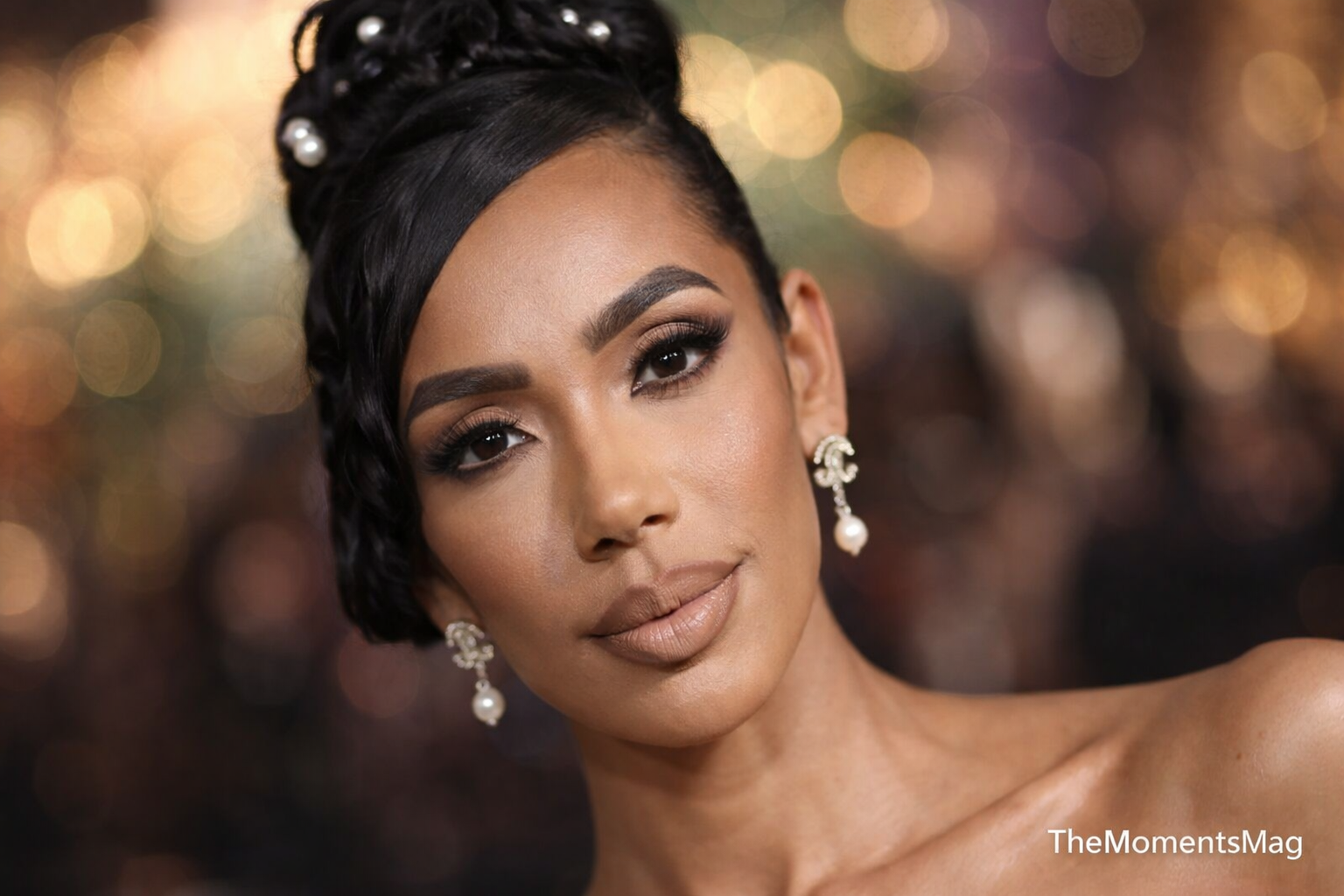
Erica Mena’s life reads like a modern celebrity biography shaped by ambition, exposure, controversy, and survival. Long before social media turned everyday personalities into brands, Mena was navigating fame in a harsher, less forgiving era—one where visibility came through music videos, reality television, and tabloid scrutiny. Her story is not simply about stardom. It’s about endurance in an industry that rarely allows women, especially outspoken women, to evolve quietly.
Born Erica Jasmin Mena on November 8, 1987, in Newburgh, New York, she grew up far from the glamour she would later inhabit. Her childhood was marked by instability and trauma, including experiences she has publicly described as abusive. These early struggles shaped the toughness and emotional intensity that would later become both her armor and her controversy. From aising herself emotionally in difficult circumstances, Mena developed a sharp survival instinct—one that fueled her climb into entertainment but also complicated her public image.
Early Modeling and the Music Video Era
Erica Mena entered the entertainment world through modeling at a time when hip hop music videos were a major gateway to fame. In the early and mid-2000s, appearing in a high-profile video could launch a career overnight. Mena became associated with that era, often described in media as a prominent “video vixen,” a term widely used at the time for women featured in rap and R&B visuals.
These appearances gave her visibility, but they also came with limitations. Women in that lane were often admired, scrutinized, and dismissed all at once. Opportunities existed, but creative control was minimal. Still, Mena used what access she had to build name recognition, network within the industry, and position herself for the next phase of her career. She was not content to remain a background figure. She wanted a voice.
Reality Television and the Love & Hip Hop Breakthrough
That voice arrived when Erica Mena joined Love & Hip Hop: New York, the VH1 reality series that would define her public identity. Premiering during a period when reality TV was becoming more raw and personality-driven, the show turned cast members into full-time public figures. Mena quickly became one of its most talked-about stars.
On screen, she was emotional, confrontational, vulnerable, and unpredictable. Her relationships, friendships, and conflicts unfolded in front of millions of viewers. What set her apart was her willingness to reveal deeply personal wounds—abandonment, insecurity, and anger—without softening them for the camera. For fans, this honesty felt real. For critics, it felt chaotic.
During her time on the show, Erica Mena became synonymous with intensity. She was frequently at the center of storylines, not because producers forced it, but because she naturally commanded attention. In reality television, presence is currency, and Mena had it. Her tenure helped solidify Love & Hip Hop as a cultural staple and made her a recognizable figure far beyond the show’s core audience.
Expanding Beyond Reality TV
Aware that reality fame can be fleeting, Mena made deliberate efforts to expand her career. She ventured into acting, securing roles in films and scripted television projects. While these roles were often modest, they represented something crucial: an attempt to be seen as more than a reality personality.
She also turned to writing, publishing memoir-style books that explored her life, relationships, and emotional struggles. These works allowed her to reclaim her narrative in a way reality television never fully could. On the page, she was not edited into soundbites. She could contextualize her behavior, explain her pain, and speak directly to readers who saw parts of themselves in her story.
This period marked a quieter but important chapter in her life. While she remained a public figure, she was actively trying to shift how she was perceived—from volatile reality star to multifaceted entertainer and survivor with a story worth understanding.
Love, Marriage, and Public Motherhood
Erica Mena’s personal life has always been intertwined with her public career, but this became especially true when she entered a high-profile relationship with rapper and television personality Safaree Samuels. Their romance played out on Love & Hip Hop: Atlanta, bringing renewed attention and a new audience.
The relationship moved quickly. Engagement, marriage, and pregnancy followed in rapid succession, all under the gaze of cameras and social media. Mena embraced motherhood publicly, sharing moments of joy and vulnerability. She became a mother to three children, often speaking about how parenthood reshaped her priorities and softened parts of her that viewers rarely saw before.
However, the marriage was turbulent. Conflicts, accusations, and emotional breakdowns became part of the public narrative. In 2021, Mena filed for divorce while pregnant with their second child together. The separation was finalized in 2022, marking the end of a relationship that had been both a career revival and a deeply personal challenge.
Motherhood did not remove her from controversy, but it added complexity. She was no longer just a reality star. She was a parent navigating co-parenting, legal disputes, and public judgment simultaneously.
The 2023 Controversy and Career Consequences
In 2023, Erica Mena faced one of the most defining moments of her career. During a heated exchange on Love & Hip Hop: Atlanta, she directed a racist slur at cast member Spice. The incident sparked immediate backlash from viewers, fellow cast members, and advocacy voices online.
VH1 announced that Mena would not return to the show. For the first time in her reality TV career, controversy resulted not in heightened visibility, but in professional removal. The moment reflected a broader cultural shift. Reality television, once notorious for rewarding outrageous behavior, was now facing stronger accountability pressures from audiences and advertisers alike.
For Mena, the fallout was swift and sobering. She issued apologies and acknowledged wrongdoing, but the damage to her television career was significant. The incident became a turning point, not just in how she was perceived, but in what opportunities remained accessible to her within mainstream reality TV.
Life After Peak Reality Fame
In the years following her exit from Love & Hip Hop, Erica Mena has remained visible, though in a different way. She has continued acting, participating in independent film projects and maintaining a presence in entertainment spaces that exist outside traditional cable television. Her social media platforms have become her primary means of communication with fans, allowing her to speak without producers or editors shaping the narrative.
Her public image today is more restrained, shaped by experience and consequence. She speaks often about growth, healing, and accountability, though opinions about her remain divided. Some see her as a cautionary tale of reality TV excess. Others view her as a woman who made serious mistakes but continues to evolve under relentless public pressure.
What is undeniable is her resilience. Many reality stars disappear entirely once the cameras stop rolling. Mena has not. She remains culturally relevant because her story reflects larger truths about fame, identity, and survival in a media environment that rarely offers second chances.
Legacy and Cultural Impact
Erica Mena occupies a complicated place in pop culture history. She is emblematic of a generation of women who transitioned from music video visibility to reality television stardom before influencer culture normalized self-branding. Her career highlights both the power and the danger of hyper-exposure.
She challenged norms by being emotionally transparent at a time when reality stars were still expected to play archetypes. Yet that same transparency often worked against her, amplifying her worst moments as defining traits. Her journey illustrates how little room there is for error when personal pain becomes public entertainment.
Despite setbacks, Mena’s influence persists. She helped shape the tone of reality television during its most culturally impactful years. She demonstrated how reality fame could be leveraged into books, acting roles, and long-term recognition. And she stands as a reminder that fame is not static—it evolves, contracts, and demands accountability in ways previous generations of celebrities never faced.
Also Read: Emilie Kiser Net Worth: Life, Career, and Rise Online
Conclusion
Erica Mena’s biography is not a simple rise-and-fall narrative. It is a story of constant motion—of a woman pushing forward through opportunity, backlash, reinvention, and reflection. From a difficult childhood to music videos, from reality television dominance to public controversy, her life has unfolded under a microscope few people could withstand.
In an era where celebrity is increasingly disposable, Erica Mena remains relevant because her story feels unfinished. She represents the complexities of modern fame: the rewards of visibility, the cost of mistakes, and the possibility of growth even after public failure. Whether admired, criticized, or debated, she continues to occupy space in the cultural conversation—and that, in itself, is a testament to her enduring impact.

