

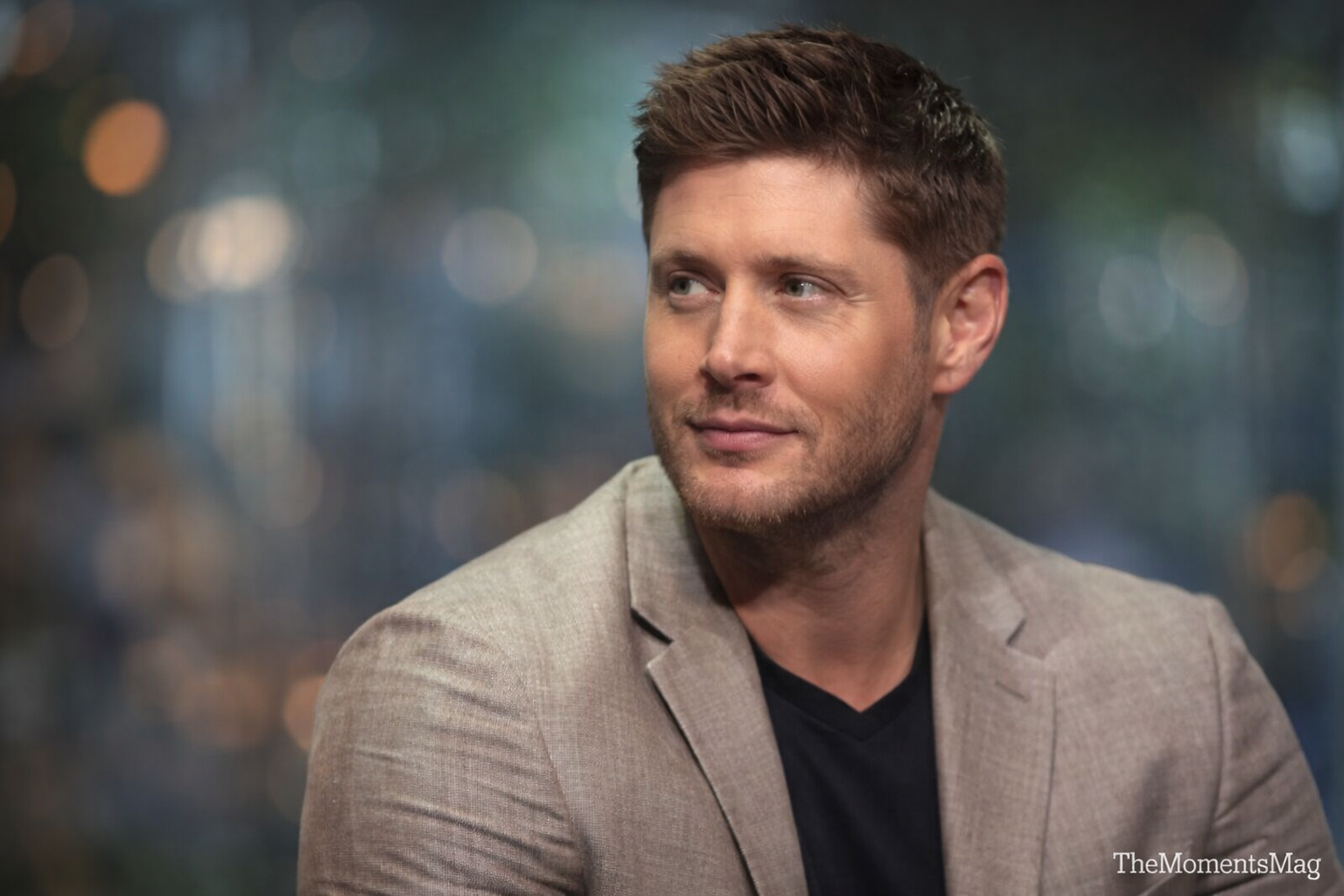
Jensen Ackles has become one of the most enduring and recognizable faces in American television. His career spans more than three decades, yet it rarely feels dated. Instead, it reads like a quiet masterclass in adaptation: how to grow with the industry, stay relevant across eras, and evolve without losing the trust of an audience. From daytime soaps to cult television, from streaming megahits to producing his own content, Ackles’ story is not about overnight success. It’s about patience, craft, and timing.
This is the biography of an actor who turned consistency into cultural impact.
Early Life and Foundations
Jensen Ross Ackles was born on March 1, 1978, in Dallas, Texas. Entertainment was part of his environment early on. His father, Alan Ackles, was an actor, which meant Jensen grew up with firsthand exposure to auditions, sets, and the rhythms of performance. Still, acting was not initially framed as a guaranteed career path. Like many children with creative leanings, Ackles explored several interests, including sports and modeling, before fully committing to acting.
As a child, he appeared in commercials and small modeling assignments, gaining early comfort in front of the camera. That familiarity would later become one of his defining traits: a calm, grounded screen presence that never feels forced. After graduating from L.V. Berkner High School in Richardson, Texas, Ackles briefly considered studying sports medicine. However, the pull toward acting proved stronger, and by his late teens, he relocated to Los Angeles to pursue it seriously.
Breaking In Through Daytime Television
Ackles’ professional breakthrough came in the late 1990s, a period when daytime television still functioned as a rigorous training ground for young actors. He joined the cast of the long-running soap opera Days of Our Lives, playing Eric Brady. The role demanded volume, speed, and emotional range. Soap actors often film dozens of pages of dialogue per day, with little room for error.
That environment sharpened Ackles’ technical skills quickly. His work earned critical attention within the industry, including multiple Daytime Emmy Award nominations. More importantly, it established his reputation as reliable and disciplined, two qualities that casting directors quietly prize above flash.
By the early 2000s, Ackles had outgrown the soap format. He transitioned into prime-time television, appearing in series such as Dark Angel, where he played Alec McDowell. The role introduced him to a broader audience and hinted at his ability to balance physicality with emotional depth. It also positioned him firmly within the science fiction and genre television space, an area that would soon define his career.
The Supernatural Era and Cultural Impact
In 2005, Ackles was cast as Dean Winchester in the CW series Supernatural. At the time, few could have predicted the show’s future. It debuted as a modestly budgeted genre series about two brothers hunting urban legends across America. What followed was one of the longest and most influential runs in modern television.
Supernatural aired for 15 seasons, concluding in 2020 after 327 episodes. Over that span, Dean Winchester evolved from a wisecracking hunter into a deeply layered character marked by trauma, loyalty, humor, and resilience. Ackles’ performance anchored the series, providing emotional continuity even as storylines grew increasingly complex.
What made his portrayal stand out was restraint. Dean was not written as a traditional television hero. He was flawed, impulsive, and often self-destructive. Ackles leaned into those contradictions without exaggeration. As a result, the character felt human, even when surrounded by demons, angels, and apocalyptic stakes.
The show’s longevity created an unusually strong bond between cast and audience. Fans did not simply watch Supernatural; they built communities around it. Conventions, online forums, fan fiction, and charity initiatives flourished. Ackles became a central figure in that ecosystem, known for engaging with fans respectfully while maintaining clear boundaries. This balance helped preserve goodwill over a decade and a half, something few television leads manage to sustain.
Behind the scenes, Ackles also began directing episodes of the series, expanding his skill set and gaining a deeper understanding of production. By the time Supernatural ended, he was no longer just a leading actor. He was a seasoned television professional with experience on both sides of the camera.
Reinvention in the Streaming Era
After Supernatural, Ackles faced a crossroads familiar to many actors associated with iconic roles. The risk of typecasting loomed large. Rather than rushing into another similar part, he chose selectively.
His most visible post-Supernatural role came with Amazon Prime Video’s The Boys, where he portrayed Soldier Boy. The character was intentionally abrasive, morally compromised, and unsettling. It was a sharp departure from the sympathetic heroism of Dean Winchester.
The performance was widely noted for how deliberately it subverted expectations. Ackles did not attempt to make Soldier Boy likable. Instead, he leaned into the character’s ego and brutality, using them as commentary on celebrity, power, and nostalgia. The role reintroduced him to audiences who may not have followed his earlier work, while also demonstrating to industry observers that he could dismantle his own image when necessary.
This phase of his career coincided with a broader shift in television. Streaming platforms were reshaping how stories were told and consumed. Ackles’ move into high-profile streaming projects showed an awareness of that shift and a willingness to engage with it directly.
Voice Acting and Expanding Range
Alongside live-action roles, Ackles has built a notable presence in animation. He voiced Batman in animated films such as Batman: The Long Halloween. Voice acting requires a different discipline, relying solely on vocal performance to convey emotion, authority, and nuance.
His casting as Batman was particularly significant. The character carries heavy cultural weight, and audiences tend to be protective of its portrayal. Ackles’ performance was praised for capturing both the stoicism and vulnerability of the character, further reinforcing his versatility.
These projects extended his reach beyond traditional television audiences and added longevity to his career. Voice work, by nature, is less constrained by age and physical type, making it a strategic complement to on-screen acting.
Producing and Creative Control
As his acting career matured, Ackles increasingly focused on shaping projects from the ground up. Together with his wife, actress Danneel Ackles, he co-founded a production company that entered into development deals with major studios and streaming platforms.
Producing allowed Ackles to influence storytelling, casting, and tone in ways acting alone could not. It also reflected a broader trend among established performers, who now seek ownership and creative input as safeguards in an unpredictable industry.
One of the early projects under this banner was The Winchesters, a prequel connected to Supernatural. While the series had a limited run, it served as a practical learning experience in franchise expansion and development. Not every project succeeds, but the willingness to take calculated risks is part of long-term sustainability.
Personal Life and Public Image
Ackles married Danneel Harris in 2010. The couple has three children and divides their time between Texas and Los Angeles. Unlike many public figures, Ackles has kept his family life relatively private, sharing selectively without overexposure.
Outside entertainment, he co-owns a brewery in Texas, reflecting an interest in building something tangible and community-oriented. The business is often described as an extension of his personality: grounded, social, and rooted in shared experiences rather than spectacle.
Publicly, Ackles is perceived as approachable but professional. He avoids controversy, speaks thoughtfully in interviews, and rarely overextends himself in public commentary. This consistency has helped him maintain a positive reputation over decades, an increasingly rare achievement in the entertainment industry.
Legacy and Continuing Relevance
Jensen Ackles’ career does not fit the traditional arc of meteoric rise and decline. Instead, it resembles a steady climb marked by strategic pivots. He built credibility early, deepened it through long-form television, and then used that foundation to explore darker, more complex roles in the streaming era.
What distinguishes him is not just talent, but timing and judgment. He has shown an instinct for when to hold steady and when to change course. In an industry defined by rapid shifts in taste and technology, that instinct is invaluable.
As television continues to evolve, Ackles remains positioned at the intersection of experience and adaptability. Whether acting, producing, or voicing iconic characters, he operates with a clear understanding of his strengths and an openness to growth.
Also Read: Timothy Shamaly: The Story Behind the Name Everyone Searches
Conclusion
Jensen Ackles’ biography is ultimately a story of endurance. He did not chase trends recklessly, nor did he cling to past success. Instead, he built a career on reliability, respect for the craft, and thoughtful reinvention. His journey illustrates how longevity in entertainment is less about constant reinvention and more about knowing when and how to evolve.
For audiences, his work offers familiarity without stagnation. For the industry, it offers a model of sustainable success. And for Ackles himself, it represents a career still very much in motion, shaped by experience but not constrained by it.

