

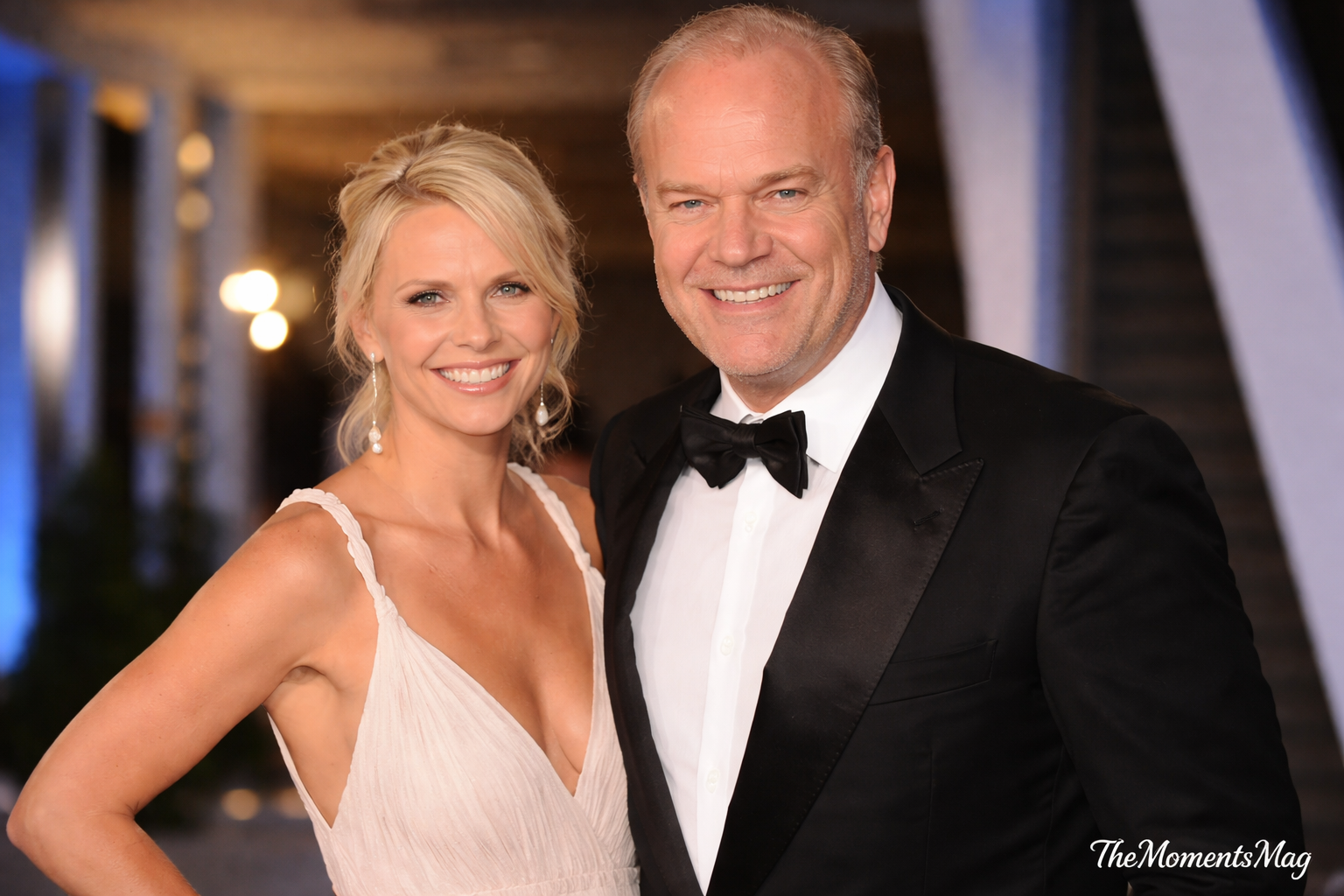
Leigh-Anne Csuhany is one of those names that continue to surface long after the moment that first brought them public attention has passed. Her story is not one of celebrity ambition or a career played out in headlines. Instead, it is the biography of a woman whose life briefly intersected with fame and then returned to privacy, even as public curiosity refused to let go.
What makes Csuhany compelling is not how much is known about her, but how little can be said with certainty—and what that absence reveals about modern celebrity culture. Her name is most often mentioned in connection with her short-lived marriage to actor Kelsey Grammer in the early 1990s. Beyond that chapter, the public record grows thin, fragmented, and often distorted by speculation. This biography follows the verified facts, the context around them, and the reasons her name still resonates decades later.
Table of Contents
ToggleEarly Life and Background
Leigh-Anne Csuhany’s early life remains largely undocumented in public sources. Unlike many individuals who become associated with famous partners, she did not arrive with a public résumé, interviews, or an established media presence. What has been consistently reported is that she worked as a dancer prior to her marriage, a detail that appeared in contemporary newspaper coverage during the legal disputes that later followed.
The absence of detailed biographical information about her upbringing, education, or family is not unusual for someone who never sought a public career. Yet, over time, this lack of information has become fertile ground for online guesswork. Numerous websites have attempted to fill in the blanks with assumed birth dates, invented personal histories, or conflated identities. None of those additions are supported by reliable primary sources.
In this sense, Csuhany’s early life exists mostly outside the reach of public documentation. What can be said with confidence is that she lived an ordinary private life until her relationship with a major television star briefly brought her into public view.
Meeting Kelsey Grammer and a Sudden Public Spotlight
Leigh-Anne Csuhany entered the public consciousness through her relationship with Kelsey Grammer, who by the early 1990s was one of the most recognizable faces on American television. At the time, Grammer was starring as Dr. Frasier Crane on Cheers, a role that would later spin off into one of the most successful sitcoms in television history.
Their relationship moved quickly. In September 1992, the couple married in Las Vegas. The wedding itself was not a major media event, but news of the marriage spread soon after, largely because of Grammer’s celebrity status. For Csuhany, this marked an abrupt shift from private life to public scrutiny.
The early months of the marriage coincided with a turbulent period in Grammer’s personal life, which was already under frequent media attention. As a result, Csuhany found herself drawn into a narrative shaped largely by tabloid interest and entertainment reporting rather than her own voice or choices.
A Marriage That Unraveled in Public
The marriage lasted less than a year, but its ending played out far more publicly than its beginning. By mid-1993, Grammer filed for an annulment, a legal move that drew attention because of what it implied about the validity of the marriage itself.
Contemporary newspaper reporting described a contentious split. Csuhany publicly opposed the annulment, creating a legal dispute that attracted coverage from national and regional outlets. At the time, reporters described her as Grammer’s estranged wife and noted disagreements over the nature of the marriage and its dissolution.
One of the most sensitive aspects of this period involved reports that Csuhany was pregnant during the separation. Accounts from the time and later summaries do not fully align on the outcome of that pregnancy. Some reports suggested an abortion, while later biographies described a miscarriage. The discrepancy highlights a recurring problem in celebrity-adjacent reporting: deeply personal events are often summarized without full context, leaving behind conflicting versions that persist indefinitely.
Ultimately, the marriage was annulled in 1993. With that legal conclusion, Csuhany’s direct connection to the public narrative surrounding Grammer largely ended. Yet, the story did not disappear.
Life After the Annulment
After the annulment, Leigh-Anne Csuhany effectively vanished from public view. There are no verified interviews, no public statements, and no known professional ventures that kept her in the spotlight. Unlike many individuals who leverage a connection to fame into media careers or memoirs, Csuhany chose silence.
This decision has had a paradoxical effect. On one hand, it allowed her to reclaim personal privacy. On the other, it left a vacuum that the internet has repeatedly attempted to fill. Over the years, her name has been reused in online biographies that offer speculative details presented as fact, from exact birthdates to supposed career trajectories. These profiles often cite no sources and repeat the same errors across multiple platforms.
Photographic evidence from reputable archives confirms that Csuhany did appear publicly with Grammer on at least a few occasions, including industry events in the early 1990s. Beyond that, there is no credible indication that she maintained a public presence after the marriage ended.
Misidentification and Online Confusion
As search engines and content platforms expanded, Leigh-Anne Csuhany became a frequent example of misidentification. Her name has been mistakenly linked to unrelated entertainment credits, social media profiles, and even other individuals with similar names.
This confusion is not accidental. Modern content systems reward completeness and certainty, even when certainty does not exist. When factual information is scarce, algorithms and low-quality publishers often default to placeholders or borrowed details. Over time, these inaccuracies gain the appearance of legitimacy simply through repetition.
For Csuhany, this has meant that her digital footprint bears little resemblance to her actual, verifiable life. The irony is stark: someone who withdrew from public attention is now represented by a sprawling and often incorrect online persona she never created.
A Study in Privacy and Celebrity Proximity
Leigh-Anne Csuhany’s biography is instructive not because of dramatic achievements or scandals, but because it illustrates what happens when an ordinary individual briefly intersects with extraordinary visibility. Her experience underscores a broader truth about fame by association. One does not need to seek celebrity to be affected by it, nor to remain part of its ecosystem long after stepping away.
Her story also highlights the limitations of public knowledge. The desire to know everything about someone connected to a famous figure often clashes with the reality that not all lives are meant to be public records. Csuhany’s silence after the annulment can be read not as absence, but as a deliberate boundary.
Why Her Name Still Matters
Decades later, people continue to search for Leigh-Anne Csuhany, often expecting a complete biography with neat dates and milestones. What they find instead is a fragmented trail shaped by media attention from a single period in time.
The enduring interest in her name says less about her actions and more about how modern audiences consume biographical information. In an age where data feels infinite, gaps become uncomfortable. Csuhany’s life reminds us that not every gap should be filled, and not every story belongs to the public.
Also Read: Chloe Holladay Net Worth: Biography, Career, and Rise
Conclusion
Leigh-Anne Csuhany’s biography is, at its core, a story of brief visibility and lasting privacy. Known primarily for her marriage to Kelsey Grammer in the early 1990s, she experienced a sudden entry into public life followed by a decisive retreat from it. The verified facts surrounding her life are few, but they are enough to understand the shape of her public narrative.
What remains after the headlines fade is a reminder that biographies do not always resolve into complete portraits. Sometimes, they end quietly, with unanswered questions and deliberate silence. In Csuhany’s case, that silence may be the most authentic detail of all.

