

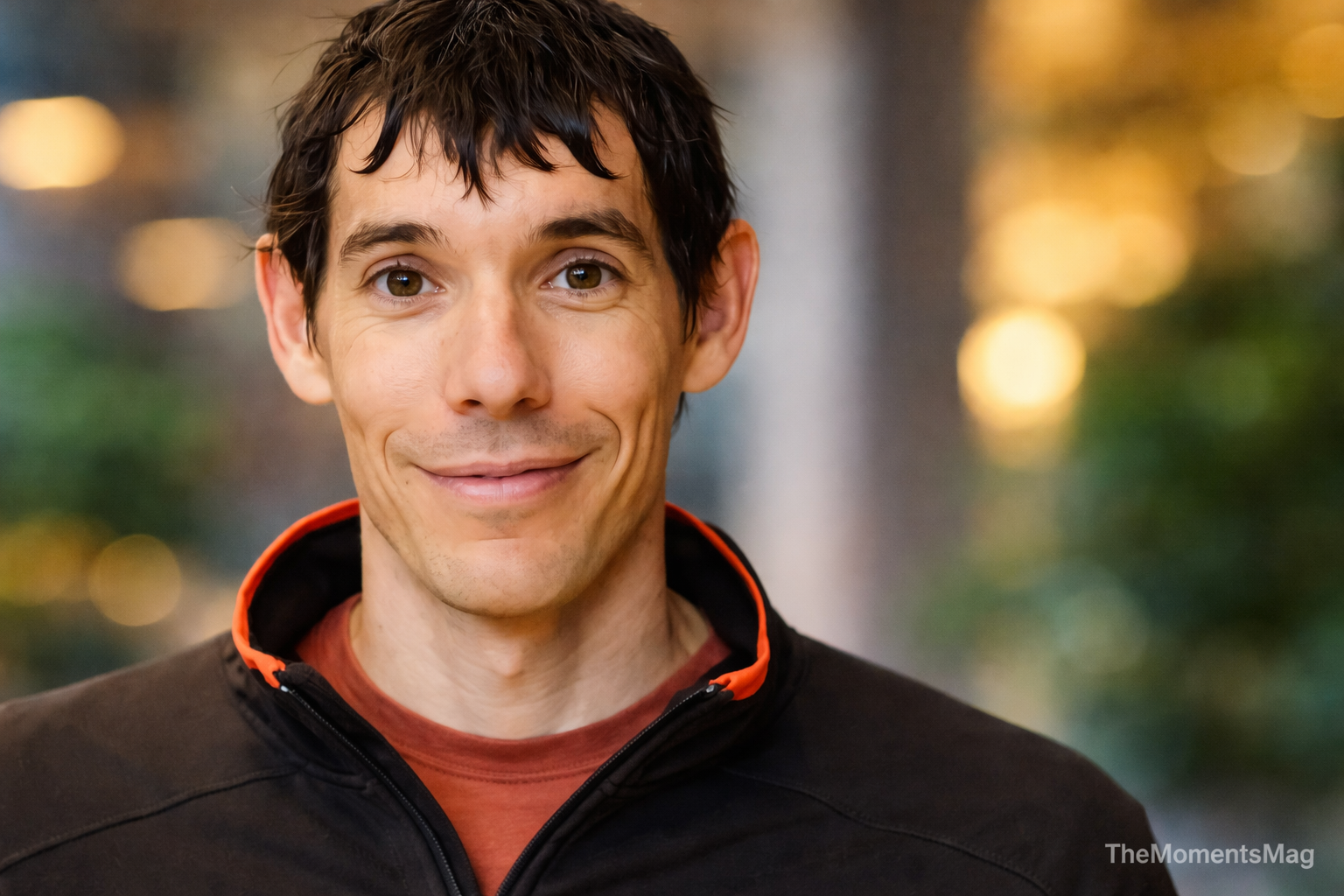
Alex Honnold has never fit neatly into the categories the modern media world prefers. He isn’t loud, flashy, or interested in selling a larger-than-life persona. He doesn’t chase fame, yet fame has followed him relentlessly. And when Netflix broadcast him climbing one of the tallest buildings in the world without ropes, the public fixation didn’t land on his technique or mindset first. It landed on a simpler, almost uncomfortable question: how much is Netflix paying Alex Honnold?
To understand the answer, you have to understand Honnold himself, the path that led him to this moment, and why money has always been the least interesting part of his story.
Table of Contents
ToggleAlex Honnold Before Netflix
Long before streaming platforms competed for attention, Alex Honnold was a quiet kid from California who preferred granite walls to classrooms. Born in 1985 in Sacramento, he gravitated toward climbing as a teenager, finding a sense of calm in exposure that most people would find paralyzing. His early years were defined not by sponsors or contracts, but by an obsessive pursuit of mastery.
Honnold’s reputation grew within the climbing community as someone unusually comfortable with risk. Free soloing—climbing without ropes or protection—was never a marketing hook for him. It was simply the style that felt most honest. That philosophy reached the wider world in 2017, when his ropeless ascent of El Capitan in Yosemite was captured in the documentary Free Solo. The film won an Academy Award and turned Honnold into a global name almost overnight.
Yet even after that moment, he remained resistant to celebrity culture. He continued to live simply, talk openly about fear management rather than bravado, and frame climbing as a personal discipline rather than entertainment.
The Netflix Era and a New Kind of Climb
When Netflix announced a live broadcast featuring Honnold climbing Taipei 101, it marked a turning point. This wasn’t a documentary filmed over months and edited with care. It was a live event, beamed across the world in real time, carrying all the tension and unpredictability that live television implies.
The climb itself was historic. Taipei 101 stands more than 1,600 feet tall, and while the route was planned and rehearsed, the act of climbing such a structure without ropes placed Honnold back in the exact space that made him famous: absolute exposure, total commitment, no margin for error.
Netflix framed the event as a celebration of human potential and mental focus. Critics and fans, however, quickly began debating the ethics of broadcasting such a dangerous act live. Underneath that debate sat another question, quieter but persistent: what kind of money does it take to persuade someone like Honnold to do this on a global stage?
So, How Much Is Netflix Paying Alex Honnold?
The short answer is that no exact figure has been publicly confirmed by Honnold or Netflix. However, multiple major media outlets have reported that Netflix’s payment to Honnold falls in what industry sources describe as the “mid-six figures.”
In practical terms, that phrase typically means several hundred thousand dollars, commonly interpreted as somewhere around half a million dollars. Some reports have suggested a figure near that range, but it’s important to be precise: Honnold himself has declined to name a number.
What he has said publicly is just as revealing. In interviews, he described the amount as “embarrassing” when compared to the salaries of mainstream professional athletes. Coming from someone who willingly climbs thousands of feet above the ground with no rope, that comment landed with a mix of humility and quiet critique. It underscored a reality Honnold has often pointed out: extreme climbing, no matter how dangerous or captivating, exists far outside the commercial machinery of traditional sports.
Why the Number Is Hard to Pin Down
Unlike professional sports contracts, deals like Honnold’s don’t fit into standardized frameworks. Netflix wasn’t paying him per season or per episode. It was commissioning a single, highly produced live event that blended sport, documentary, and spectacle.
The reported payment likely covered more than the act of climbing itself. It would have included exclusivity, promotional obligations, rehearsal time, and the use of Honnold’s name and likeness in global marketing. In other words, the check wasn’t just for the climb. It was for the moment.
Netflix also had strong reasons to keep the details vague. Publicly disclosed numbers set expectations for future talent and can complicate negotiations. From Honnold’s perspective, avoiding a headline figure keeps the focus on the climb rather than on accusations that he was “paid to risk his life.”
Money Versus Motivation
One of the most striking aspects of this story is how consistently Honnold downplays money as a motivator. This isn’t a performance. His career supports the claim. For years, he lived out of a van, spent sponsorship money sparingly, and invested his earnings into conservation through the Honnold Foundation.
In interviews following the Taipei 101 climb, he emphasized that the project aligned with a personal ambition. Climbing a skyscraper had been on his mental list for years. Netflix simply provided the access, logistics, and platform to make it possible at an unprecedented scale.
That distinction matters. For Honnold, Netflix didn’t buy his courage. It bought the opportunity to document it live.
Netflix’s Perspective: Paying for Attention, Not Just Risk
From Netflix’s side, a mid-six-figure payment is modest by entertainment standards. The company routinely spends tens of millions on scripted series and has paid far more for comedy specials, live sports experiments, and high-profile exclusives.
What Netflix gained from Honnold’s climb wasn’t just content. It was a global conversation. Live events create urgency in a streaming world built on on-demand viewing. They encourage people to tune in at a specific moment, to talk about it in real time, and to associate that experience with the platform.
In that sense, Honnold’s payment reflects a strategic calculation. Netflix wasn’t valuing him as a traditional athlete or actor. It was valuing his ability to create a moment that couldn’t be replicated or postponed.
The Ethics and the Aftermath
Broadcasting a free solo climb live forced uncomfortable questions into the open. Some critics argued that televising such risk crossed a line, regardless of consent or preparation. Others countered that Honnold has always taken these risks privately, and that careful planning, weather delays, and broadcast safeguards reduced the danger as much as possible.
Honnold himself addressed these concerns calmly, as he usually does. He acknowledged the risk without dramatizing it and reiterated that the decision was his alone. The payment, he suggested, didn’t change the calculus of fear or preparation. It simply reflected the realities of modern media.
What This Deal Says About Alex Honnold Today
The Netflix payment, whatever the precise number, highlights an evolution rather than a departure. Honnold is no longer just a climber operating on the fringes of public awareness. He is a cultural figure whose actions carry symbolic weight.
Yet his relationship with money remains unusually grounded. A mid-six-figure deal did not suddenly turn him into a spectacle-seeking celebrity. Instead, it reinforced a long-standing pattern: Honnold chooses projects that align with his personal values, then accepts the financial structures that make those projects feasible.
Also Read: Chloe Holladay Net Worth: Biography, Career, and Rise
Conclusion
So, how much is Netflix paying Alex Honnold? Based on credible reporting, the answer sits in the mid-six figures, likely several hundred thousand dollars, with no official confirmation of an exact amount. But the more meaningful answer lies beyond the number.
The payment reflects a meeting point between a deeply private athlete and a global entertainment platform hungry for authentic, unrepeatable moments. For Netflix, it was a strategic investment in live attention. For Honnold, it was another chapter in a life defined not by money, but by an almost meditative relationship with risk, focus, and personal challenge.
In the end, the figure matters less than what it represents. Alex Honnold didn’t climb Taipei 101 because Netflix wrote a check. Netflix wrote the check because Alex Honnold was willing to climb it.