

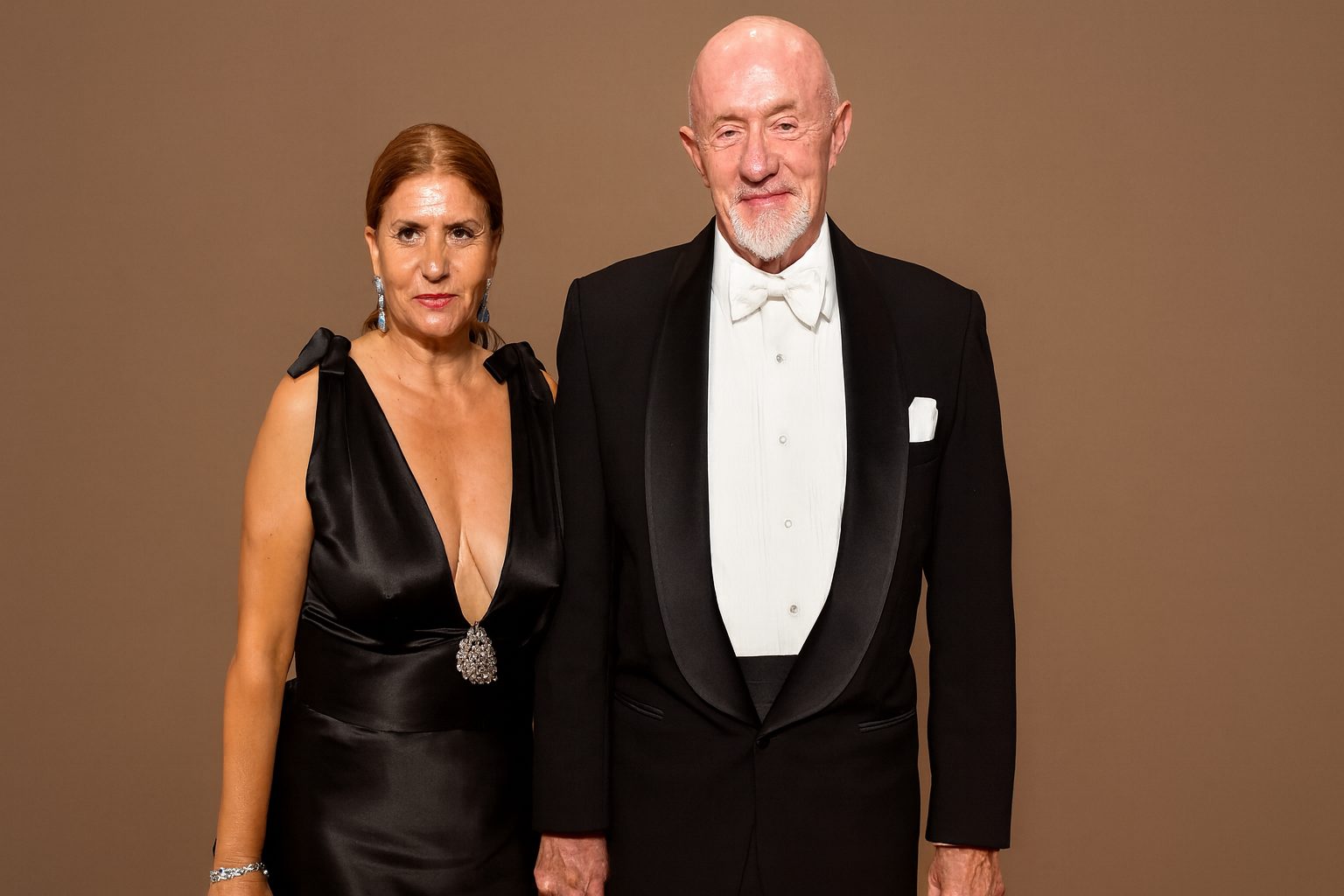
The name Marnie Fausch Banks rarely appears in headlines, yet it has become a point of fascination for people who search beyond the spotlight of Hollywood biographies. Her identity is usually tucked behind a single line referencing her early marriage to actor Jonathan Banks. But when you step away from those brief mentions and look closer at her life, an entirely different portrait of Marnie emerges — one that reveals a woman who shaped her own path in journalism, raised a family, and contributed much more than most people ever realize.
Her story begins long before the internet tried to piece together fragments of her life. It begins in a family connected to newspapers and community storytelling, a background that quietly laid the groundwork for the career she later built. Even from childhood, she moved in a world where printed pages mattered, and that exposure would eventually influence the most important professional decision of her life.
As she grew older, Marnie’s journey wove through marriage, motherhood, creative work, and entrepreneurship. Each phase added another layer to who she became — not as an extension of someone else’s fame, but as a woman determined to stand on her own foundation.
Early Life and Family Background
The details of Marnie’s early life point toward a deep-rooted connection with communication and community-focused work. She was born into a family that had already experienced the newspaper world from the inside. This kind of upbringing tends to shape a person in subtle ways: the constant flow of stories, the discipline required to publish regularly, and the awareness that local journalism can influence daily life just as powerfully as national media.
Growing up in a family where publishing was part of the lineage meant Marnie was never far from conversations about deadlines, design, or the pulse of community events. That environment fostered a creative sensibility in her, one that later shaped her approach to professional life. Even as a young woman, she gravitated toward visual communication and literary spaces, finding comfort in both artistic and editorial settings.
Those pieces of her upbringing would eventually evolve into a career that blended creativity, organization, and the desire to give communities a voice.
Marriage to Jonathan Banks
Marnie’s life entered the public eye when she married Jonathan Banks, long before he gained the recognition he holds today as one of television’s most respected character actors. Their marriage took place when both were young, still at the threshold of their futures, navigating early adulthood and the uncertain slope toward their ambitions.
Their relationship was brief, lasting only a couple of years. Time eventually took them in separate directions, and the two divorced while still in their early twenties. Yet that short marriage became a permanent part of Marnie’s story for a far more meaningful reason: she and Jonathan welcomed a daughter together, a child who would grow up to blend creativity with visual storytelling in her own work.
Their marriage, though early and fleeting, marked a moment where two very different paths intersected. And while Jonathan Banks would later step into international recognition, Marnie continued building her life away from Hollywood, choosing quieter forms of expression that fit her temperament and background.
Becoming a Mother
Motherhood became one of the central experiences of Marnie’s life. Her daughter grew up to be a creative professional who developed a strong eye for narrative and imagery. That artistic inclination feels like a natural extension of her parents’ talents — Jonathan’s acting, Marnie’s history in design and journalism, and the storytelling heritage embedded in the family.
Marnie’s relationship with her daughter appears to have been one of her most defining roles. It provided a sense of continuity across generations, linking Marnie’s childhood influences with her daughter’s modern creative career. Through her, Marnie’s legacy continues to grow quietly, outside the public eye but undeniably present.
A Career Rooted in Journalism and Community
The most enduring chapter of Marnie’s professional life began when she stepped into the world of local journalism. In the early 1980s, she founded a community newspaper that became a meaningful resource for residents and seasonal visitors in a small coastal town. Creating a paper from scratch requires determination, coordination, and a belief that stories matter — all qualities that defined her work.
The newspaper she built served as a platform for community voices, local reporting, small businesses, and the daily rhythm of life in a region that thrives on its sense of place. Under her direction, the publication became more than a bundle of pages. It became part of the town’s identity, offering residents a shared source of information and connection.
Eventually, after years of effort, she sold the paper and carried her experience into new roles within the broader communications field. Those who knew her work described her as someone who understood the balance between creativity and practicality, someone who cared deeply about the communities she served.
Her career was not loud or glamorous, but it was purposeful — built on the belief that local journalism still matters.
A Life Cut Short
Although she achieved more than many people realize, Marnie’s life ended far too soon. She passed away at a young age, leaving family and friends with the difficult task of holding onto her memory through the work she completed and the people she touched.
Her early death meant she never got to see how widely the world would come to know Jonathan Banks, nor how her daughter’s creative life would unfold. Yet what she did leave behind — both professionally and personally — forms the foundation of how she is remembered today.
There is a quiet poignancy to her story: a woman whose name appears in searches mostly because of her former spouse, yet whose accomplishments stand firmly on their own.
How Marnie Is Remembered Today
For many people, the first time they encounter Marnie’s name is through curiosity about Jonathan Banks’ early life. But once they step beyond that initial context, they find a woman who lived with intention, creativity, and a commitment to community.
Her memory lives on through the daughter she raised, the newspaper she founded, and the subtle but important ways she shaped the people and places around her. To understand her story is to appreciate how much of life happens outside the limelight — in local newsrooms, in family circles, and in the quiet determination of someone who chooses to build something meaningful.
Marnie’s life reminds us that legacy doesn’t always come from fame. Sometimes it comes from the work no one notices at first glance, the kind that ripples forward in ways we don’t expect.
Also Read: Helena Schneider: Inside the Life of Rob Schneider’s Ex-Wife
Final Thoughts: The Real Human Story Behind the Name
When people search for “Marnie Fausch Banks,” they often expect to find a footnote in someone else’s biography. What they discover instead is the story of a woman who built her life around community, creativity, and resilience. She grew up in a world shaped by newspapers, used that background to create something of her own, and raised a daughter who carried her artistic sensibilities into a new era.
Her marriage to a future television icon was only a small part of her timeline. The rest was shaped by her own choices, her work ethic, and the family she nurtured.
In the end, Marnie’s story stands as a reminder that every name we encounter online carries a life behind it — full of chapters, challenges, triumphs, and impact. And when you view her life that way, she becomes far more than a search query. She becomes a woman whose legacy continues, quietly but unmistakably, through the stories and people she helped shape.