

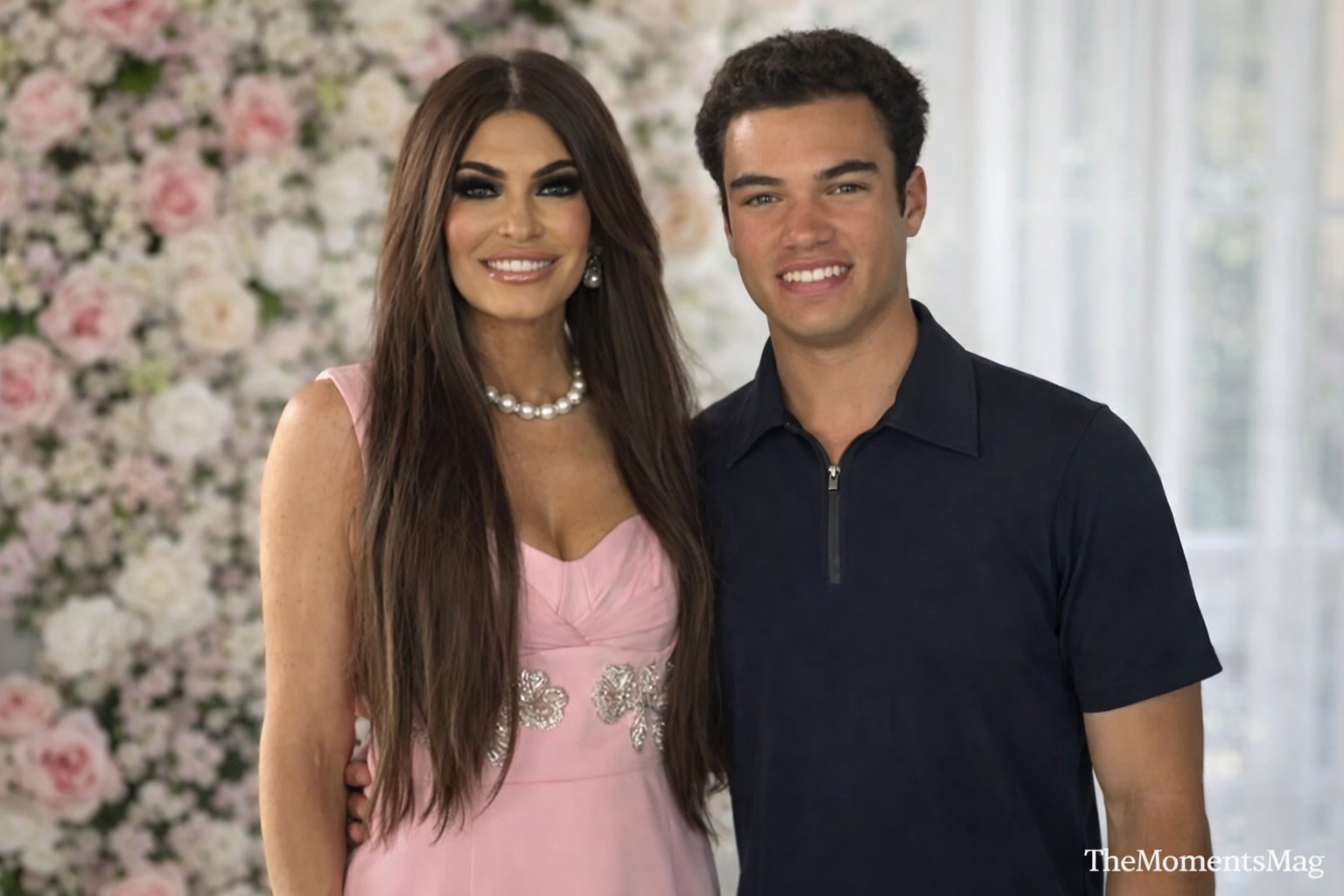
Ronan Anthony Villency was born into a world where public attention was not an abstract idea but a daily reality. From the moment of his birth, his life intersected with media, politics, and high-profile professional circles. Yet despite that visibility, Ronan’s story is not one of celebrity ambition or personal branding. It is, instead, a modern biography shaped by family legacy, careful privacy, and the complicated experience of growing up while the internet watches.
This is the story of Ronan Anthony Villency as it is publicly known today: factual, measured, and grounded in verifiable reporting rather than speculation.
Early Life and Family Background
Ronan Anthony Villency was born on October 4, 2006, in New York City. His birth was covered by mainstream celebrity media at the time, noting the arrival of a healthy child to two well-known parents. From the start, Ronan’s life was connected to prominence, but not to fame in the traditional sense. His parents were influential figures in their respective fields, each visible for different reasons and to different audiences.
His mother, Kimberly Guilfoyle, built a career that spanned law, television, and later national politics. Before Ronan was born, she had already established herself as a prosecutor and television legal analyst, roles that placed her regularly in front of a national audience. Over time, her profile expanded beyond media into political advocacy, increasing public interest in her personal life along with her professional one.
Ronan’s father, Eric Villency, came from a different kind of public background. He is associated with the Villency family’s long-standing presence in American furniture and interior design. His professional reputation has been rooted in business leadership and design innovation rather than constant media exposure. That contrast between his parents’ careers would quietly shape the environment in which Ronan grew up.
When Ronan was still very young, his parents divorced. Public reporting at the time described the separation as amicable, with both parents remaining involved in his upbringing. While divorce often attracts attention when it involves public figures, Ronan himself was largely shielded from that scrutiny, appearing rarely and selectively in media coverage.
Childhood in a Media-Saturated Era
Ronan’s childhood unfolded during a period of rapid change in how society documents family life. Unlike previous generations of children connected to public figures, he grew up in the age of social media. Platforms that reward immediacy and visibility were becoming dominant just as he entered grade school. This timing mattered.
Occasional photos and brief mentions of Ronan appeared online over the years, usually shared by his mother to mark milestones such as birthdays or family moments. These posts were typically restrained and celebratory rather than promotional. Still, even limited exposure carried weight. Once shared, images and captions could be reposted, archived, and discussed beyond their original context.
For Ronan, this meant that moments that might have remained private in another era became part of a searchable digital record. Importantly, though, there was no steady attempt to turn him into a public figure. He was not positioned as a child actor, influencer, or brand ambassador. His visibility was incidental, tied to family rather than individual ambition.
That distinction is central to understanding his biography. Ronan did not choose public attention; it arrived as a byproduct of family circumstance.
Education and Personal Development
Details about Ronan Anthony Villency’s education have not been widely disclosed, and reputable sources have generally avoided naming specific schools or institutions. This absence of information is notable in itself. It reflects a conscious boundary drawn by his family, particularly in an era when many public figures share educational details freely.
What can be inferred, based on credible reporting and public appearances, is that Ronan received a private education consistent with his family’s means and emphasis on discretion. He has been described as well-spoken and composed in the few public settings where he has appeared, traits that suggest a strong focus on personal development rather than publicity.
As he moved through his teenage years, Ronan largely stayed out of the spotlight. Unlike many children of high-profile parents, he did not maintain a visible public social media presence. That absence contributed to an unusual dynamic: his name became recognizable even as his voice remained unheard.
Public Appearances and Growing Recognition
The most significant increase in public attention surrounding Ronan occurred during his later teenage years, particularly when he appeared alongside his mother at high-profile political events. One widely circulated example came during the 2024 Republican National Convention, where Ronan was photographed attending with his family.
These appearances were not framed as political statements made by Ronan himself. Instead, they were presented as family moments within a public setting. Nevertheless, images from such events often travel quickly online, stripped of nuance and reinterpreted through partisan lenses.
As a result, Ronan’s name began appearing more frequently in search trends and media queries. Many people encountering him for the first time were simply asking basic questions: who he was, how old he was, and how he fit into the larger public narrative surrounding his mother.
This kind of attention is increasingly common for young adults connected to public life. The difference is that it arrives suddenly and without preparation. Ronan’s experience reflects a broader pattern in modern media, where proximity to power or fame can create visibility even in the absence of personal commentary.
Navigating Privacy in the Digital Age
One of the defining features of Ronan Anthony Villency’s biography is how carefully his privacy has been maintained. In a media culture that often rewards oversharing, that restraint stands out.
There are no verified interviews in which Ronan discusses his upbringing. There are no confirmed public statements outlining his political views, career ambitions, or personal philosophies. This silence is not accidental. It reflects an understanding that once words are published online, they become permanent artifacts.
For many young adults today, especially those connected to public figures, privacy is no longer about secrecy. It is about selectivity. Ronan’s life demonstrates that it is still possible to grow up under public scrutiny without surrendering one’s entire identity to it.
That approach aligns with growing awareness around digital footprints and consent. Children and teenagers today inherit online histories created not only by themselves, but by others. Ronan’s limited digital trail suggests an intentional effort to give him room to define himself later, on his own terms.
Adulthood and Future Possibilities
As Ronan entered adulthood, public curiosity naturally increased. In modern culture, adulthood is often treated as a turning point when children of notable figures are expected to “step into” public roles of their own. Yet adulthood does not require visibility, and Ronan has not signaled any immediate intention to pursue a public-facing career.
At present, there is no confirmed information about his professional plans or long-term aspirations. He has not announced involvement in politics, business, design, or media. That absence of information should not be mistaken for inactivity. It simply means that his life is unfolding outside the boundaries of public reporting.
If Ronan eventually chooses a career connected to his parents’ fields, he will enter with advantages of access and experience. If he chooses a private path, he will face a different challenge: managing public curiosity while building a life away from it. Both paths require careful navigation in an era where personal history is easily retrieved and endlessly discussed.
Cultural Significance of His Story
Ronan Anthony Villency’s biography matters not because of scandal or spectacle, but because it illustrates a generational shift. He represents a growing group of young adults who are known before they are heard. Their identities form in parallel with digital archives, search algorithms, and social media commentary.
His story raises important questions about consent, autonomy, and the long-term effects of growing up adjacent to fame. It also challenges the assumption that visibility must lead to public performance. Ronan’s life so far suggests another possibility: that presence and privacy can coexist, even under scrutiny.
In that sense, his biography is less about individual achievement and more about context. It captures what it means to come of age when family legacy, technology, and public curiosity overlap.
Also Read: Trevor Wakefield: Life, Family, and a Red Sox Legacy
Conclusion
Ronan Anthony Villency’s life is still very much in progress. What can be said with confidence is that he has grown up at the intersection of media, politics, and design culture without being consumed by any of them. His biography, as it stands today, is defined more by boundaries than by headlines.
In an era that often confuses exposure with importance, Ronan’s story offers a quieter counterexample. It reminds us that not every recognizable name belongs to someone seeking the spotlight, and not every public figure’s child is destined to become a public figure themselves.
As he continues into adulthood, Ronan Anthony Villency will ultimately decide how much of his life belongs to the public record. Until then, the most accurate way to understand his story is also the most respectful one: as a young man shaped by circumstance, protected by discretion, and still writing his own future.