

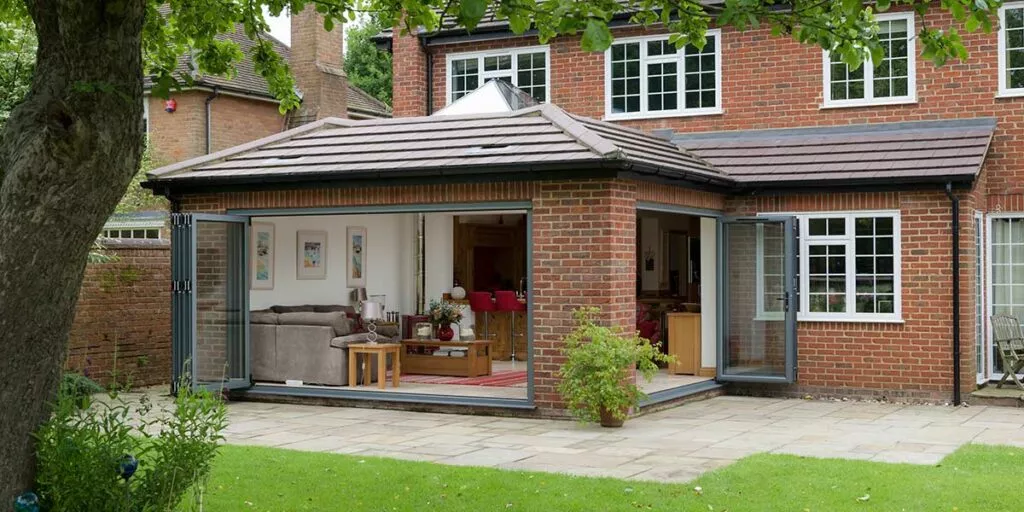
London homeowners are always looking for smarter ways to add space. The city is expensive. Planning can be slow. Traditional building work takes months. And living through a full construction project in a terraced house with limited outdoor space is genuinely difficult.
That is exactly why prefab extensions have become increasingly popular across the capital. They offer a faster, cleaner, and often more cost predictable route to getting more space. But there is more to it than just speed. Understanding why prefab works so well in London specifically helps explain why demand has grown steadily over the past few years.
What Is a Prefab Extension?
A prefab extension, short for prefabricated extension, is one where the structural components are manufactured off-site in a controlled factory environment. The panels, frames, and modules are built to precise specifications and then delivered to your property for assembly.
Rather than building everything from scratch on site, the construction team is largely assembling pre-made parts. This changes the entire project timeline and reduces the amount of disruption that happens at your home.
There are different types of prefab systems used for home extensions in the UK. Here is a quick comparison:
| Prefab System | Build Speed | Insulation Performance | Typical Cost Range |
| Structural insulated panels (SIPs) | Very fast | Excellent | £1,800 to £2,500 per sqm |
| Timber frame modular | Fast | Good to excellent | £1,500 to £2,200 per sqm |
| Steel frame modular | Fast | Good | £2,000 to £3,000 per sqm |
| Cross laminated timber (CLT) | Moderate to fast | Very good | £2,200 to £3,000 per sqm |
Each system has its own strengths. SIPs panels are popular for single storey extensions because of how quickly they go up and how well they perform thermally. Timber frame suits a wide range of home styles across London. CLT is growing in popularity for more design forward projects.
Why London Homes Are Particularly Well Suited to Prefab
Not every property is the same. But London housing stock has certain characteristics that make prefab a natural fit.
Most London homes are terraced. Access to the rear of the property is often through a side gate or shared access, not a wide open driveway. Traditional construction brings weeks of material deliveries, skips, scaffolding, and trade vehicles trying to navigate narrow streets. Neighbours notice. Councils notice. And the logistics add cost and time to every project.
Prefab changes that dynamic significantly. The bulk of the work happens in a factory. What arrives at your home is a set of finished components, not raw materials. The on-site assembly phase is dramatically shorter than a traditional build.
That matters a lot in London, where site access is consistently one of the biggest practical challenges any extension project faces.
Speed Is a Real Advantage
With a traditional brick and block extension, the on-site build phase for a single storey rear extension typically runs between 10 and 16 weeks depending on size and complexity. A prefab equivalent can often be structurally complete and weathertight within a few days to two weeks on site. The finishing work still takes time, but the disruptive heavy construction phase is much shorter.
For families living in their homes during the project, this is significant. A shorter build means less dust, less noise, and less disruption to daily routines. It also means the project is less likely to overrun into school terms, winter weather, or other inconvenient periods.
Cost Predictability Is a Significant Factor
One of the most consistent frustrations homeowners have with traditional construction is cost creep. Quotes change when unexpected issues come up on site. Weather delays add to labour costs. Material prices shift. By the time a project is finished, the final figure often bears limited resemblance to the original estimate.
Prefab reduces this risk. Because components are manufactured to exact specifications in a controlled environment, there are fewer surprises on site. The factory production process removes much of the variability that drives cost overruns in traditional builds.
This does not mean prefab is automatically cheaper per square metre. But it often means the final cost is closer to the original budget, which is genuinely valuable when you are managing a significant financial project.
Quality Control Is More Consistent
Factory production means every component is built to the same standard, in the same conditions, every time. There is no variation in quality based on which trades turned up that day or what the weather was doing. Structural insulated panels, for example, are manufactured under precise conditions with consistent material tolerances.
For homeowners investing in a wrap around extension or a more complex project, that consistency matters. The structural and thermal performance of the finished extension is more reliable when the core components are built properly from the start.
Planning Permission Still Applies
A common misconception is that prefab extensions bypass planning requirements. They do not. The same permitted development rules apply regardless of how the extension is built. What matters is the size, height, position, and design of the finished structure, not the construction method.
If your prefab extension falls within permitted development limits, it proceeds without a full planning application. If it exceeds those limits or your property is in a conservation area, you will still need to apply for planning permission in the normal way. The prefab method speeds up the build phase. It does not change the planning process.
This is worth understanding clearly before you start, because some homeowners assume that the faster build method somehow simplifies the regulatory side. It does not. Getting your planning position right first is still essential.
Sustainability Is an Increasingly Important Consideration
London homeowners are more sustainability conscious than they were five years ago. Prefab construction scores well on this front. Factory production generates less waste than on-site building. Timber frame and CLT systems store carbon rather than releasing it. And the thermal performance of modern prefab systems often exceeds what traditional construction achieves, reducing energy costs once the extension is occupied.
For anyone thinking about long-term running costs or the environmental impact of their project, the case for prefab is strong on sustainability grounds alone.
Is a Prefab Extension Right for Your London Home?
Not every project is best served by a prefab approach. Design complexity, site access, budget, and the style of your existing home all factor into which construction method makes the most sense.
But for a typical London terraced or semi-detached home where access is limited, speed matters, and the homeowner wants a predictable outcome, prefab deserves serious consideration.
Extension Architecture works with London homeowners on all types of extension projects, including prefab and modular approaches. They can assess your specific property, understand the planning position, and recommend the most suitable build route for your goals and your budget.
Get in touch with Extension Architecture to talk through whether a prefab extension is the right choice for your home.