

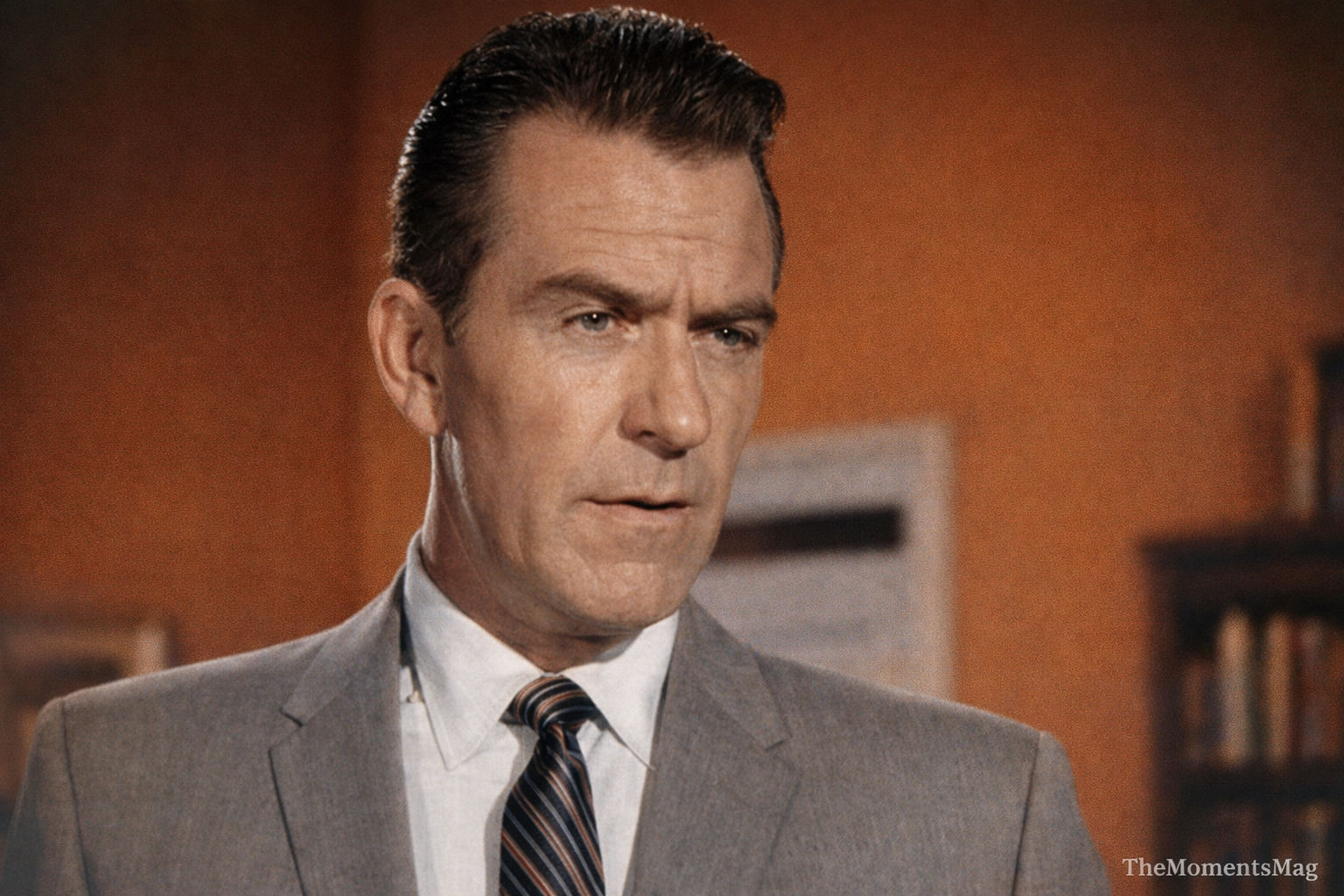
Hugh Beaumont occupies a rare place in television history. For millions of viewers, his face instantly evokes calm authority, moral clarity, and a steady voice that could turn childhood mistakes into life lessons. As Ward Cleaver on Leave It to Beaver, Beaumont became one of the most recognizable fathers in American pop culture. Yet his real life was far more complex than the idealized suburban world he portrayed on screen.
This biography article explores Hugh Beaumont’s life in full—from his early years and education to his marriage, career across film and television, estimated net worth at death, and the enduring legacy he left behind. It’s a story of discipline, faith, professional reinvention, and quiet resilience.
Early Life and Education: A Scholar Before an Actor
Hugh Beaumont was born Eugene Hugh Beaumont on February 16, 1909, in Eudora, Kansas. His childhood was marked by frequent moves, largely due to his father’s work, which exposed him to different regions and communities at an early age. This sense of adaptability would later serve him well in an unpredictable acting career.
Unlike many Hollywood actors of his era, Beaumont followed a deeply academic path. He attended the University of Chattanooga, where he earned a degree in theology. His intellectual curiosity did not end there. After moving to California, he continued his studies at the University of Southern California, again focusing on theology.
Faith was not a casual interest for Beaumont. He was ordained as a lay minister and remained deeply committed to religious study throughout his life. This background would later influence the kind of roles he accepted and the manner in which he carried himself both on and off screen.
From Pulpits to Pictures: Entering Hollywood
Beaumont’s entry into acting was gradual and practical rather than glamorous. He began with theater, radio work, and small film roles in the early 1940s. Like many actors of the studio era, he took whatever parts were available, often playing authority figures, professionals, or morally grounded characters.
During this period, he appeared in numerous films, many uncredited. His tall frame, calm demeanor, and articulate speech made him a natural fit for roles such as doctors, lawyers, ministers, and detectives. While he was rarely a marquee star, he quickly became a reliable character actor.
One of his more notable early appearances came in the 1946 film noir The Blue Dahlia, which later became a classic of the genre. The same year marked an important turning point when Beaumont was cast as private detective Michael Shayne.
The Michael Shayne Years: A Brief Stint as a Leading Man
Between 1946 and 1947, Beaumont starred in five films as detective Michael Shayne. These movies were modestly budgeted but popular enough to establish him as a credible leading man. The role showcased a sharper, more cynical side of Beaumont that contrasted strongly with the paternal warmth he would later become known for.
Although the series was short-lived, it demonstrated Beaumont’s range and screen presence. However, the rapidly changing studio system and the rise of television soon altered the trajectory of his career. By the early 1950s, television offered steadier work than film, and Beaumont adapted accordingly.
Television Breakthrough: Becoming Ward Cleaver
In 1957, Beaumont was cast as Ward Cleaver in Leave It to Beaver, a family sitcom that would become one of the most enduring shows in television history. The series ran for six seasons and more than 230 episodes, first on CBS and later on ABC.
As Ward Cleaver, Beaumont portrayed a father who was firm but compassionate, authoritative yet approachable. His character rarely raised his voice. Instead, he listened, reflected, and guided his sons through mistakes with reason rather than punishment. This portrayal stood out even in its own time and later became symbolic of an idealized version of American fatherhood.
What made Beaumont’s performance resonate was its authenticity. His theological training and real-life seriousness gave Ward Cleaver moral weight without slipping into preachiness. Viewers trusted him, and that trust translated into cultural permanence.
Even decades later, Ward Cleaver remains a benchmark against which television fathers are measured.
Life Behind the Camera: Marriage and Family
In 1941, Hugh Beaumont married actress Kathryn Adams, who was known for her work in films during the 1940s, including Alfred Hitchcock’s Saboteur. Their marriage lasted more than three decades and produced three children.
Kathryn Adams eventually stepped away from acting and pursued higher education, earning advanced degrees and building a second career as a psychologist and author. Her intellectual reinvention mirrored Beaumont’s own nontraditional path within Hollywood.
The couple divorced in 1974. Despite the end of their marriage, both Beaumont and Adams remained respected figures, each having built identities beyond the entertainment industry. Their long partnership reflected a life that balanced professional ambition with family responsibilities, even as the pressures of fame mounted.
Career After Leave It to Beaver
After Leave It to Beaver ended in 1963, Beaumont continued to work in television, appearing in guest roles on various series. However, the defining success of Ward Cleaver also became a limitation. Like many actors strongly associated with a single iconic role, Beaumont found it difficult to escape typecasting.
In 1970, he suffered a significant stroke, which further curtailed his acting career. Following this health setback, Beaumont largely retired from Hollywood and shifted his focus to a quieter life.
One of the most surprising chapters of his later years was his venture into agriculture. Beaumont owned and operated a Christmas tree farm in Minnesota, a far cry from studio lots and sound stages. This decision reflected his practical nature and willingness to reinvent himself outside the public eye.
Hugh Beaumont’s Net Worth at Death
Estimating Hugh Beaumont’s net worth at the time of his death is challenging. Unlike modern celebrities, actors of Beaumont’s era did not always benefit from lucrative residuals or transparent financial disclosures.
Various online sources estimate his net worth to have been around three million dollars at the time of his death in 1982. However, this figure should be treated as an approximation rather than a confirmed amount. Studio-era contracts, evolving residual structures, and private investments make precise calculations difficult.
What is clear is that Beaumont enjoyed a comfortable, stable life. His income came from decades of steady acting work, writing, and later, his business ventures. Adjusted for inflation, even conservative estimates suggest he accumulated the equivalent of several million dollars in today’s terms.
More importantly, Beaumont never appeared driven by wealth. His choices suggest he valued independence, intellectual fulfillment, and family stability over the pursuit of celebrity excess.
Death and Final Years
Hugh Beaumont died on May 14, 1982, while visiting his son in Munich, Germany. He was 73 years old. The cause of death was reported as a heart attack.
His passing received respectful coverage, often emphasizing his role as Ward Cleaver and his reputation as one of television’s most reassuring presences. For many fans, his death felt like the loss of a family elder—someone who had quietly shaped their understanding of right and wrong during formative years.
Cultural Legacy and Lasting Influence
Hugh Beaumont’s legacy extends beyond nostalgia. In an era of rapidly changing family dynamics and media landscapes, his portrayal of Ward Cleaver continues to provoke discussion. Some see it as an unrealistic ideal. Others view it as a timeless example of emotional intelligence and moral leadership.
What cannot be denied is Beaumont’s influence on television storytelling. He helped define the template for the thoughtful, involved father—a character type that continues to evolve in modern series.
Moreover, his personal life adds depth to his legacy. He was not merely an actor playing wisdom; he was a scholar, minister, writer, and businessman who lived with intention and adaptability.
Also Read: Betsy Berardi: Life, Marriage, and Story Behind Sammy Hagar
Conclusion
Hugh Beaumont’s life was a study in quiet strength. From his theological education and early struggles in Hollywood to his iconic role on Leave It to Beaver and his unexpected second act away from the spotlight, Beaumont embodied a rare balance of intellect, humility, and professionalism.
His estimated net worth at death reflects a successful career, but his true wealth lay in the trust he earned from audiences and the integrity with which he lived his life. In a medium often driven by spectacle, Hugh Beaumont proved that consistency, calm, and character could leave an enduring mark.
Decades after his passing, Ward Cleaver still feels familiar, comforting, and relevant. That lasting connection is Hugh Beaumont’s greatest legacy—a reminder that sometimes, the most powerful presence is the quiet one.