

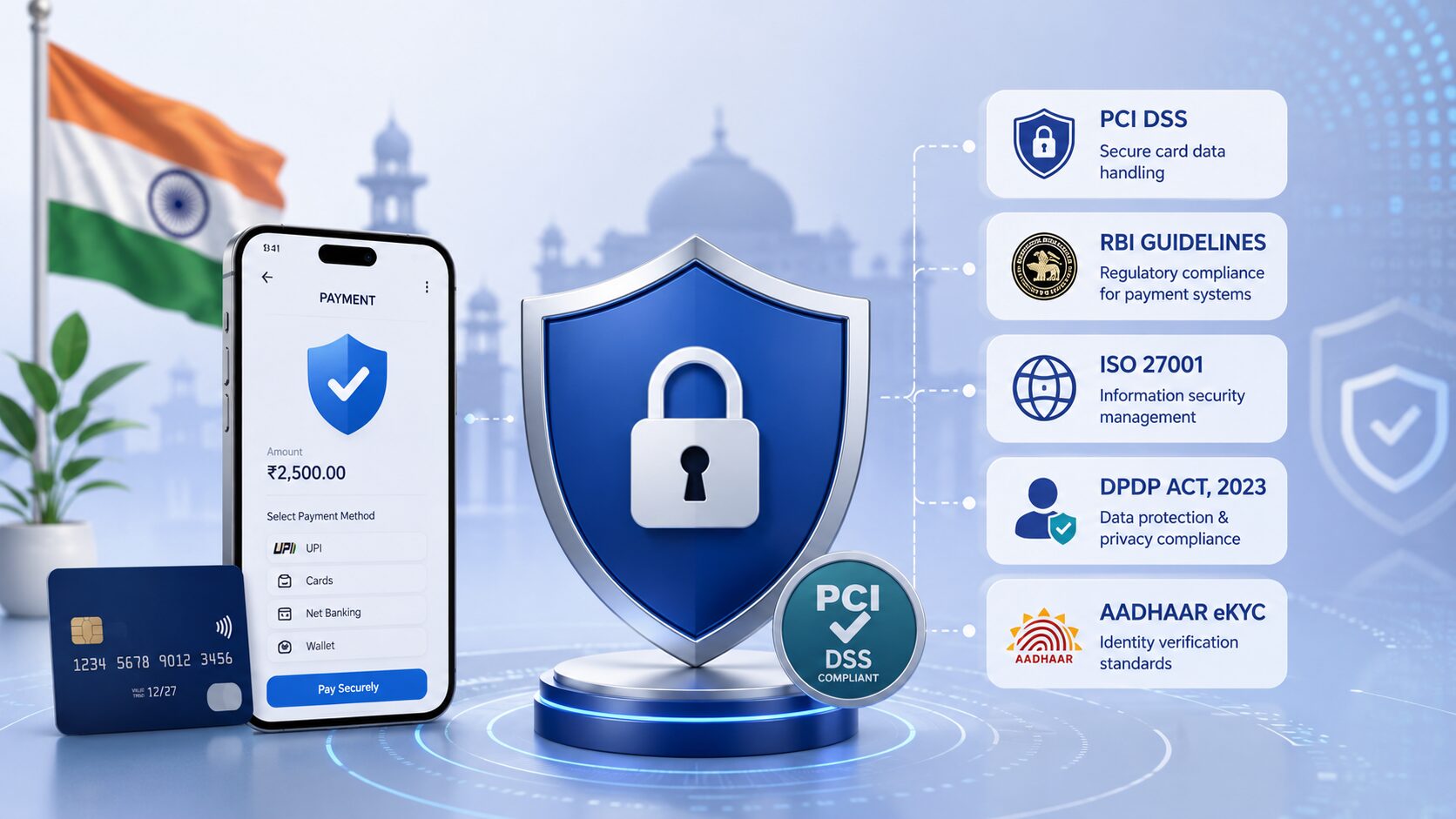
Digital payments in India have evolved rapidly, driven by regulatory clarity, infrastructure growth and increasing consumer adoption. As businesses move towards digital-first operations, selecting the right solution is no longer simply about transaction speed or convenience.
Compliance now plays a central role in ensuring security, reliability and long-term scalability. In 2025, the Reserve Bank of India (RBI) recorded 13,516 fraud incidents. These cases resulted in losses of around USD 63 million. This highlights the growing need for strong compliance frameworks.
When evaluating a payment gateway in India, understanding the compliance standards governing its operations is essential. Let’s examine the key compliance requirements that matter and how they shape the payment system.
Understanding the regulatory framework for payment systems
India’s payment system is governed by strict guidelines that ensure transparency and accountability. These regulations are primarily defined by the RBI, which sets the foundation for how a payment gateway in India should operate.
From licensing requirements to transaction monitoring, every aspect of digital payments is structured to minimise risk. Payment gateways must align with these frameworks to ensure they can process transactions legally and securely.
Key compliance standards that define a payment gateway in India
To evaluate a reliable payment gateway in India, it is important to look beyond basic features and focus on the compliance standards that govern its operations. These frameworks ensure secure transactions, protect customer data and maintain trust across the payment systems while enabling businesses to scale with confidence.
-
RBI guidelines and payment aggregator regulations
The RBI introduced specific guidelines for payment aggregators and gateways to bring uniformity and accountability. Among several compliance requirements, one critical mandate stands out: any payment gateway in India operating as a payment aggregator must obtain authorisation from the RBI.
These regulations define how funds are handled, how merchants are onboarded and how customer data is protected. They also mandate periodic audits and reporting to ensure compliance is maintained over time.
For businesses, choosing a gateway that adheres to RBI regulations ensures operational reliability and reduces legal risks.
-
PCI DSS compliance for data security
One of the most critical standards for any payment gateway in India is the Payment Card Industry Data Security Standard (PCI DSS). This global framework ensures that cardholder data is stored, processed and transmitted securely.
Payment gateways must implement encryption, access control measures and regular vulnerability assessments. These safeguards prevent data breaches and protect sensitive financial information.
For merchants, PCI DSS compliance ensures that customer data remains secure, strengthening trust and credibility.
-
Tokenisation and data localisation requirements
India has introduced strict rules around card data storage and localisation. A payment gateway in India must comply with tokenisation guidelines, where actual card details are replaced with secure tokens.
Additionally, the RBI mandates that payment data for Indian transactions be stored within the country. This ensures better regulatory oversight and quicker access during audits or investigations.
These measures reduce fraud risks and enhance data protection across the payment system.
-
KYC and merchant onboarding norms
Know Your Customer (KYC) is a fundamental requirement for onboarding merchants. A compliant payment gateway in India must verify merchant identities before enabling transaction processing.
This includes validating business documents, bank account details and ownership structures. KYC norms help prevent fraudulent entities from entering the payment system.
For businesses, this ensures a safer system where transactions occur between verified participants.
-
Two-factor authentication and mandate compliance
India follows a strict Two-factor Authentication (2FA) system for digital payments. A payment gateway in India must support this requirement, especially for card-based transactions.
In fact, the RBI issued new rules requiring stronger authentication protocols for all digital transactions by April 2026. Issuers will also bear direct responsibility for compensating customers in cases of non-compliance.
For recurring payments, additional mandate-based authentication is required, where users approve auto-debit instructions within defined limits. This ensures that customers retain control over automated transactions.
These measures enhance transaction security while maintaining user confidence in digital payments.
-
Anti-money laundering and fraud monitoring
Anti-Money Laundering (AML) and fraud detection systems are essential components of compliance. A reliable payment gateway in India must monitor transactions for suspicious activity and report anomalies as required.
This involves real-time tracking, risk scoring and transaction pattern analysis. Payment gateways must also comply with guidelines related to reporting suspicious transactions to regulatory authorities.
Such frameworks help maintain the integrity of the financial system and prevent misuse of digital payment channels.
-
Grievance redressal and customer protection norms
Customer protection is a key focus of India’s regulatory framework. Every payment gateway in India must have a structured grievance redressal mechanism.
This includes defined timelines for resolving disputes, clear escalation processes and transparent communication with users. Payment gateways are also required to appoint nodal officers to handle complaints.
A strong grievance system improves customer trust and ensures accountability in case of transaction issues.
-
Audit requirements and periodic compliance checks
Compliance is not a one-time process. A payment gateway in India must undergo regular audits to ensure ongoing adherence to regulatory standards.
These audits assess system security, transaction processes, data handling practices and operational controls. Payment gateways must also submit compliance reports to regulatory bodies as required.
For businesses, this ensures that the gateway remains reliable and aligned with evolving standards.
Enabling secure growth through compliant payment systems
Compliance standards form the foundation of India’s digital payment system. They ensure transactions remain secure, transparent and reliable for both businesses and customers. A well-regulated payment gateway in India goes beyond payment processing and promotes a trusted environment where digital transactions can grow sustainably.
Businesses that choose compliant payment solutions position themselves for long-term success while maintaining customer confidence. Payment gateways such as Pine Labs Online offer advanced security frameworks and strong compliance adherence that help ensure every transaction remains secure and reliable at scale.
The next step is to evaluate how your chosen payment gateway in India aligns with these compliance standards and supports secure, future-ready payment operations.
Also Read: One-day Car Insurance: When Do You Need Short-Term Cover?