

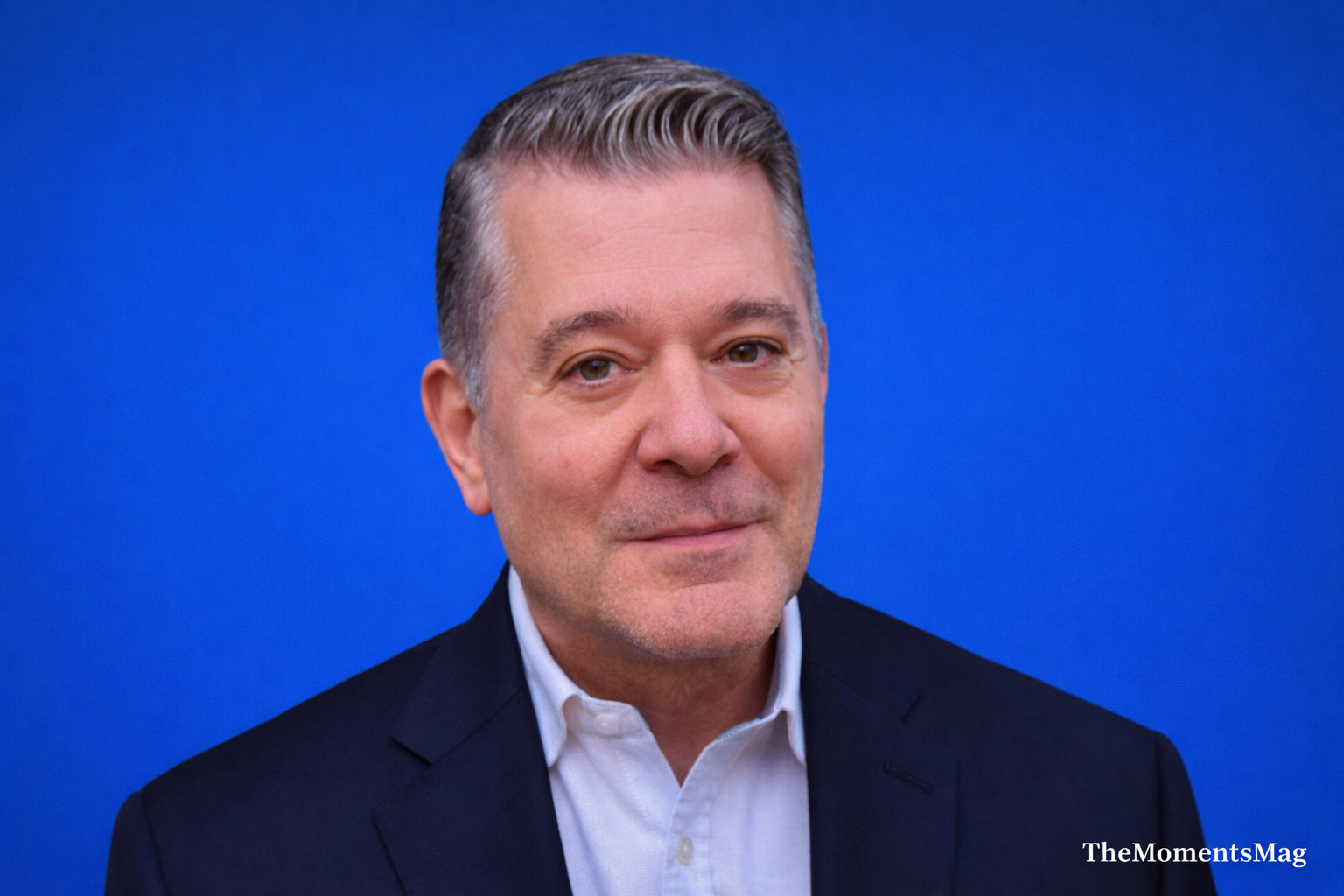
Paul Mauro occupies a distinctive place in America’s public safety conversation. He is neither a career politician nor a purely academic commentator. Instead, he represents a rarer profile: a longtime law-enforcement leader who transitioned into law, media analysis, and public testimony while retaining an operational mindset shaped by decades inside one of the world’s most complex police departments.
Today, Paul Mauro is widely known as a Fox News contributor and attorney, offering analysis on crime, terrorism, policing policy, and national security. Yet that public role only makes sense when viewed through the long arc of his career. His perspective was not formed in studios or think tanks, but in patrol commands, intelligence briefings, legal oversight offices, and the aftermath of some of the most defining security challenges of modern New York City.
This biography-style profile explores who Paul Mauro is, how his career developed, and why his voice continues to matter in national debates about safety, reform, and governance.
Early Career and Entry Into the NYPD
Paul Mauro began his career with the New York City Police Department in the late 1990s, entering law enforcement during a period of profound change for New York City. Crime rates were falling from their historic highs of the early 1990s, but the city remained a demanding and unpredictable environment for police officers.
His early assignments were rooted in patrol and field operations in Manhattan South, one of the NYPD’s most active and scrutinized areas. These early years placed him in daily contact with street-level crime, narcotics enforcement, and quality-of-life policing. The experience proved formative. It exposed him to the realities of urban crime enforcement, the consequences of policy decisions, and the importance of leadership under pressure.
Those who later worked with Mauro have often noted that his public commentary reflects this grounding. Rather than speaking in abstractions, he consistently frames issues around how policies translate into day-to-day enforcement and public experience.
Rising Through Leadership and the Commissioner’s Office
As Mauro advanced within the department, his career moved beyond street operations into strategic and administrative leadership. In the early 2000s, he was assigned to the Office of the Police Commissioner, a role that offered a rare vantage point on how policing, politics, and public communication intersect.
During this period, Mauro worked on speechwriting and special projects for senior NYPD leadership. While often overlooked, this function is critical within large institutions. The words of a police commissioner shape internal morale, external trust, and policy direction. Mauro’s work in this role required translating complex operational realities into clear public language, a skill that would later define his effectiveness as a media analyst.
At the same time, Mauro’s expertise began extending beyond city boundaries. He served as the NYPD’s representative to the National Infrastructure Advisory Committee, a federal advisory body focused on critical infrastructure protection and national security. In that capacity, he contributed to reports addressing terrorism risks and systemic vulnerabilities, with findings ultimately delivered to the White House.
Intelligence Bureau and Counterterrorism Leadership
Following the September 11 attacks, counterterrorism became a central mission for the NYPD. Paul Mauro spent much of his mid-career in the department’s Intelligence Bureau, where he held senior leadership roles for more than a decade.
From approximately 2007 to 2019, Mauro served as an executive officer overseeing intelligence operations, analysis, and coordination with federal partners. This period included some of the most intensive counterterrorism work in the city’s history, as New York developed its own sophisticated intelligence capabilities alongside federal agencies.
In this role, Mauro supervised personnel, managed sensitive investigations, and worked closely with prosecutors on terrorism-related cases. His responsibilities extended beyond immediate threat response to long-term strategic planning, intelligence collection, and information sharing.
The experience reinforced a worldview that still shapes his public commentary. Mauro often emphasizes that security threats evolve faster than institutions, and that governance frameworks must adapt without sacrificing constitutional safeguards. His later legal work and media appearances frequently return to this balance between capability and restraint.
Commanding Officer of the NYPD Legal Bureau
In the later stage of his NYPD career, Paul Mauro became the Commanding Officer of the department’s Legal Bureau, a position he held from 2019 until his retirement in 2021. This role placed him at the center of one of the most complex challenges facing modern policing: implementing sweeping criminal justice reforms while maintaining operational effectiveness.
As head of the Legal Bureau, Mauro oversaw hundreds of attorneys and civilian staff responsible for advising the department on litigation, policy compliance, electronic discovery, cyber issues, and intelligence oversight. Importantly, this period coincided with major changes to New York’s bail laws, discovery rules, and oversight structures.
Mauro’s responsibilities required translating legislative reforms into workable police procedures. This experience deeply informed his later public positions. Rather than debating reform solely in ideological terms, he focuses on how laws function in practice, where they succeed, and where unintended consequences may emerge.
His tenure also included oversight of cyber-related legal issues, reflecting the growing importance of digital evidence, surveillance law, and data governance in policing.
Transition to Law and Legal Practice
After retiring from the NYPD with more than two decades of service, Paul Mauro transitioned fully into the legal profession. He became an attorney at DeMarco Law, where his practice focuses on cyber investigations, electronic surveillance, data governance, and anti-money laundering compliance.
This legal work aligns closely with his law enforcement background. Modern crime increasingly intersects with technology, from ransomware and financial fraud to encrypted communications and digital marketplaces. Mauro’s career positioned him to navigate both the technical and legal dimensions of these threats.
His legal practice also informs his public commentary. When discussing crime trends or national security risks, Mauro frequently draws attention to the legal frameworks that enable or constrain institutional responses. This perspective distinguishes him from commentators who approach these issues solely from political or cultural angles.
Media Career and Fox News Contribution
Paul Mauro’s national media presence expanded significantly after his retirement from the NYPD. He became a contributor for Fox News, appearing across Fox News Channel and Fox Business to provide legal and criminal justice analysis.
In 2024, Fox News formally announced Mauro as a contributor, although he had appeared on the network prior to that designation. His commentary typically focuses on violent crime trends, policing policy, counterterrorism threats, and high-profile legal cases.
Unlike many media analysts, Mauro speaks with the authority of someone who has both enforced the law and overseen its legal implementation. He often emphasizes operational realities, such as response times, repeat-offender dynamics, and the limits of enforcement under existing legal frameworks.
In addition to his analyst role, Mauro has hosted content for Fox Nation, including specials examining organized crime and international gangs. These programs reflect his long-standing interest in the global dimensions of crime and security.
Public Testimony and Policy Advocacy
Paul Mauro’s influence extends beyond media commentary into formal policy discussions. In 2025, he testified before the U.S. House Judiciary Committee on issues related to crime, public order, and law enforcement.
In his testimony, Mauro traced the evolution of New York City’s public safety landscape, from the crime declines of the 1990s through the counterterrorism era after 9/11 and into the reform-driven environment of the 2020s. He argued that public safety is foundational to civil society and warned against policies that, in his view, weaken deterrence and accountability.
His testimony also highlighted a recurring theme in his work: the idea that disorder and low-level crime can have outsized effects on community trust and quality of life. While critics often challenge this framework, it remains influential in public debate and underscores Mauro’s emphasis on lived experience over abstract metrics.
Personal Life and Public Privacy
Despite his public role, Paul Mauro has kept much of his personal life private. Authoritative biographies and official profiles do not provide detailed information about his family, spouse, or children. This discretion is consistent with many former law enforcement officials who prefer to separate professional visibility from personal exposure.
Search interest around Mauro often includes questions about his age, family background, and personal details. However, reliable sources focus primarily on his professional accomplishments rather than biographical specifics, reflecting a career defined more by service than celebrity.
Legacy and Ongoing Relevance
Paul Mauro’s relevance in national discourse stems from timing as much as experience. He entered law enforcement during a period of reform-driven crime reduction, served through the trauma of 9/11, led intelligence operations in an era of global terrorism, and managed legal compliance during sweeping criminal justice reforms.
Few public commentators can claim that breadth. As debates over crime, policing, and reform continue into the mid-2020s, Mauro represents a perspective shaped by institutional memory. He reminds audiences that public safety systems evolve slowly, that unintended consequences are common, and that effective governance requires both accountability and capacity.
Whether one agrees with his policy positions or not, Mauro’s analysis resonates because it is grounded in systems rather than slogans. His career illustrates how law enforcement leadership can translate into broader civic engagement, and how experience can inform debate without erasing disagreement.
Also Read: Bad Bunny Net Worth: How the Global Star Built His Fortune
Conclusion
Paul Mauro’s biography is ultimately a story about continuity and adaptation. From patrol officer to intelligence executive, from legal commander to national commentator, his career reflects the evolving challenges of public safety in a complex society.
He is not simply a television analyst, nor merely a retired police official. He is a practitioner who moved through the operational, legal, and communicative layers of law enforcement, and who now brings that integrated perspective to a national audience.
In an era when crime debates are often polarized and data is frequently politicized, Paul Mauro stands out as a figure shaped by long service and institutional responsibility. His work invites agreement, disagreement, and scrutiny, but above all, it insists that public safety be discussed with seriousness, context, and respect for the real-world consequences of policy choices.