

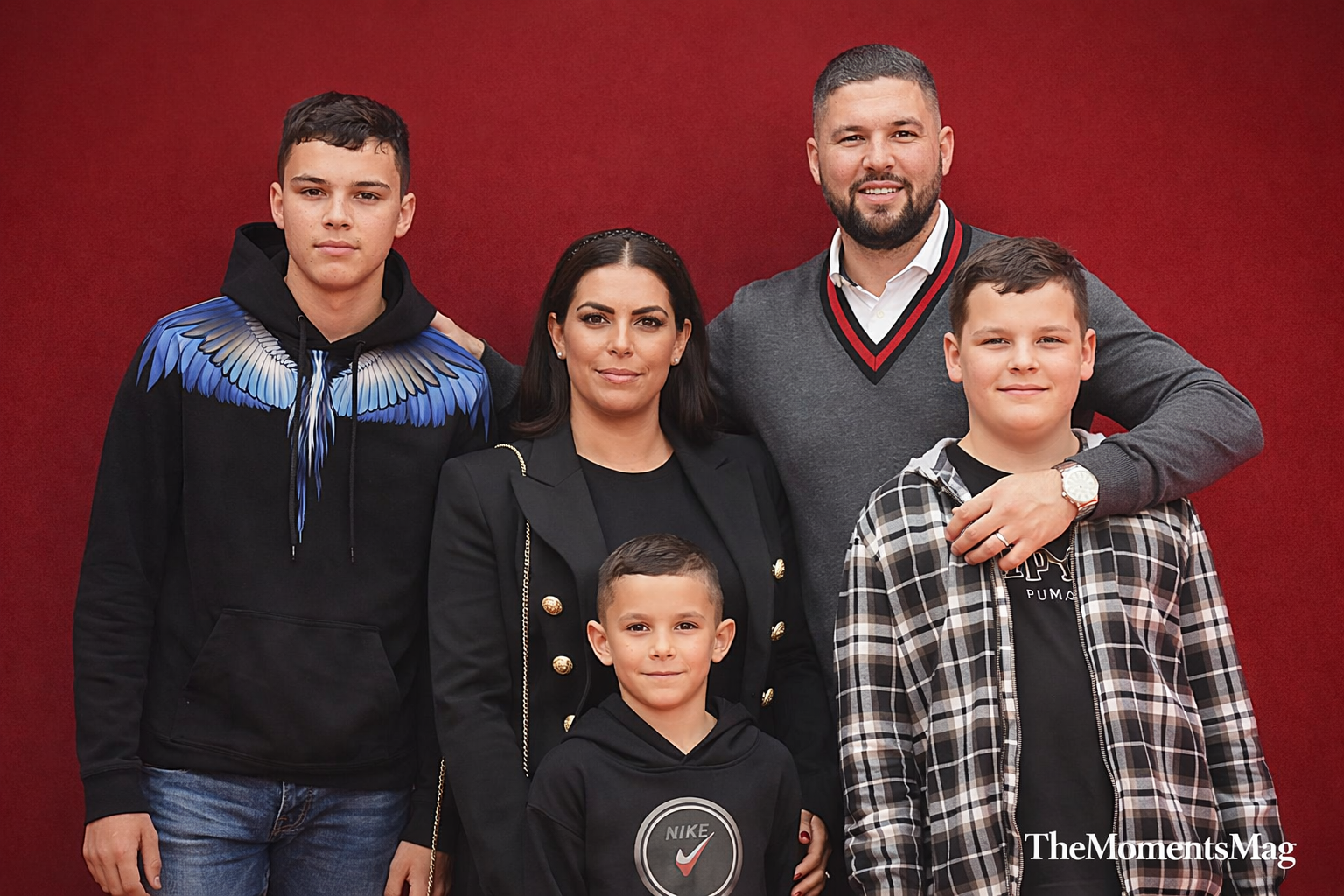
Corey Bellew is not a public figure in the conventional sense. He has not built a career in sport, entertainment, or media, nor has he sought out attention on his own terms. Yet his name continues to surface in online searches, entertainment listings, and media conversations. The reason is simple and deeply human: Corey Bellew is the son of Tony Bellew, one of Britain’s most recognisable boxing champions of the modern era.
What makes Corey Bellew interesting is not celebrity, controversy, or achievement measured in trophies. It is context. His story sits at the intersection of family, fame, and restraint. In an age where children of public figures are often pushed into the spotlight early, Corey’s biography is defined just as much by what is not public as by what is.
This is the story of Corey Bellew as it can be responsibly told: grounded in verified moments, shaped by his father’s career, and framed by a family that has consistently chosen privacy over exposure.
Table of Contents
ToggleEarly Life and Family Background
Corey Bellew was born into a working-class Liverpool family long before his father became a household name. Tony Bellew’s rise through British boxing was not overnight. It involved years of domestic fights, financial uncertainty, and personal sacrifice. Corey’s early childhood unfolded during that climb, not at its peak.
Tony Bellew has spoken candidly in interviews about the pressures of boxing life while raising a family. Training camps meant long absences. Fights carried physical risk and emotional toll. At the same time, Bellew has repeatedly described his identity as a father as central to his life, not secondary to his profession.
That balance shaped Corey’s upbringing. Unlike the children of some global sports stars, Corey did not grow up in constant media glare. The Bellew family largely avoided social media exposure, paparazzi culture, and public storytelling about their children. This decision has had a lasting impact on how little verified information exists about Corey’s personal life today.
A Defining Public Moment: Goodison Park, 2016
One moment, however, stands out as a cornerstone of Corey Bellew’s public biography.
In May 2016, Tony Bellew fought Ilunga Makabu for the WBC cruiserweight world title at Goodison Park, the home of Everton Football Club. For Bellew, a lifelong Everton supporter, it was the most meaningful night of his career. He won the fight and became a world champion in front of a home crowd.
After the victory, Tony Bellew made a rare and deliberate decision. He invited Corey into the ring to share the moment. In later interviews, Bellew explained that he normally avoided having his children near boxing environments, believing them to be too dangerous and unpredictable. But this night was different. He wanted his son to remember being present when his father achieved something historic.
At the time, Corey was ten years old.
That decision reveals much about the family dynamic. It was not about publicity or optics. It was about memory, legacy, and a father wanting his child to witness the culmination of years of struggle. For Corey, that moment permanently tied his childhood to one of British boxing’s most emotional victories.
Growing Up Alongside a Sporting Career
As Tony Bellew’s profile grew, so did the complexity of being his son. Fame changes daily life in subtle ways. Public recognition follows families into supermarkets, schools, and holidays. Conversations about safety, boundaries, and normalcy become routine.
Yet Corey Bellew remained largely outside that public sphere. There were no reality shows, no branded social media accounts, and no tabloid narratives built around his adolescence. This absence is notable precisely because it is uncommon.
Many athletes’ children are introduced early to media as part of a wider personal brand. The Bellews resisted that pattern. When Corey appeared in public, it was almost always in controlled, respectful contexts connected to family rather than promotion.
That approach suggests a deliberate parenting philosophy: achievement belongs to the parent, not the child, and identity should be allowed to form without public pressure.
Television Appearance and Renewed Public Interest
Public curiosity around Corey Bellew increased significantly following his appearance with his father on the ITV programme Romesh Ranganathan’s Parents’ Evening. The show pairs celebrities with their parents or children in a light-hearted quiz format designed to explore family relationships rather than professional success.
Tony and Corey Bellew’s episode stood out for its warmth and authenticity. Their interaction was relaxed, occasionally teasing, and unmistakably genuine. Viewers saw not a boxer and a prop, but a father and son negotiating the same dynamics familiar to households across the UK.
The appearance did not reveal personal details about Corey’s education, ambitions, or private life. Instead, it reinforced an image already suggested by his limited public presence: someone comfortable with family, but not chasing attention.
Following the broadcast, online searches for Corey Bellew spiked. This pattern reflects a broader trend in modern media consumption. Audiences increasingly seek connection and relatability over spectacle. A genuine family interaction can generate more interest than a championship belt.
Education, Interests, and Personal Direction
There is no verified public record detailing Corey Bellew’s education, career plans, or professional interests. That is not an oversight. It is the result of consistent privacy.
Speculation exists online, as it does for nearly anyone connected to a famous figure, but responsible biography draws a firm line between confirmation and conjecture. What can be said with confidence is that Corey has not pursued public-facing roles in boxing, media, or entertainment to date.
Whether he has an interest in sport, academics, or an entirely different field remains known only to his family. Importantly, that uncertainty is itself part of his story. It highlights a growing recognition among high-profile families that children deserve the space to choose their paths without inherited expectations.
The Weight of a Famous Surname
Carrying a well-known surname brings unique psychological challenges. Children of elite athletes often navigate comparisons they never asked for. Expectations can be explicit or implied. Even silence can feel heavy.
Tony Bellew has spoken in various interviews about the dangers of pressure in sport and life. His own career was built on resilience, self-belief, and an underdog mentality. Translating those lessons into parenting requires restraint as much as encouragement.
For Corey Bellew, the challenge is not living up to a legacy but defining himself outside it. That task becomes harder when public curiosity exists, even if mild. Every television appearance, however small, renews attention.
The Bellew family’s response has been consistent: engage selectively, share moments rather than narratives, and step back before exposure becomes expectation.
Public Identity Versus Private Reality
In modern Britain, public identity often begins online. Social media profiles, tagged photos, and algorithmic visibility blur the line between private life and public record. Corey Bellew’s digital footprint remains remarkably light.
This absence is not accidental. It reflects a broader cultural shift among some public figures who came of age before social media dominance. Tony Bellew’s generation experienced fame without constant digital surveillance. That experience appears to have informed how he protects his children from similar pressures.
As a result, Corey’s biography resists the common arc of “celebrity offspring.” There is no early branding, no curated persona, and no public reinvention. Instead, there is patience.
Why Corey Bellew Matters Beyond Celebrity
The interest in Corey Bellew says less about him as an individual and more about what audiences are seeking. In a media landscape saturated with manufactured narratives, authentic family relationships stand out.
Corey represents a quieter story: a young person adjacent to fame but not consumed by it. His visibility is occasional, contextual, and grounded in real moments rather than strategy.
That makes his biography unusual and, in many ways, instructive. It challenges the assumption that proximity to celebrity must result in public life. It also suggests that boundaries, once established early, can endure.
Also Read: Daria Sergeyevna Gordeeva-Grinkova: A Quiet Biography
Conclusion
Corey Bellew’s life story is not one of public ambition or professional achievement measured in headlines. It is a biography shaped by restraint, family values, and deliberate privacy.
As the son of Tony Bellew, he has witnessed extraordinary moments, including a world title victory inside a football stadium filled with emotion and history. He has also navigated the quieter realities of growing up near fame without being pulled into it.
In a culture that often confuses visibility with importance, Corey Bellew stands as a reminder that some stories are meaningful precisely because they remain incomplete to the outside world. His biography is still being written, privately, and on his own terms. That, perhaps, is the most defining detail of all.