

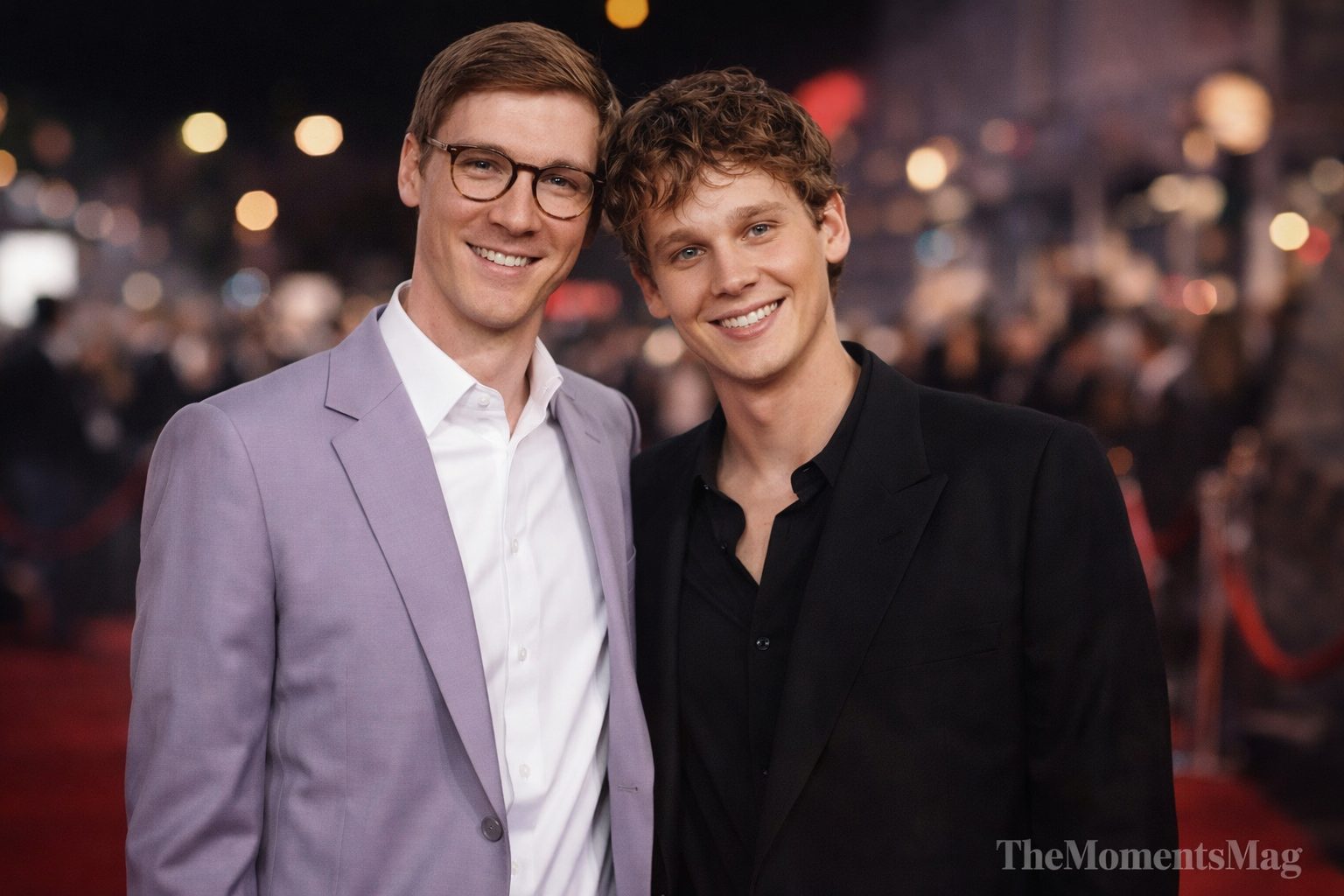
Some public figures are known for their spotlight moments. Others are known because they stand beside someone famous. And then there are people like Fielder Jewett, whose name surfaces in headlines and search engines not because he seeks attention, but because his life intersects with multiple compelling worlds. He is both a film professional and a practicing attorney. He is also widely recognized as the husband of actor Hunter Doohan, known for his role in Netflix’s global hit series Wednesday.
Yet reducing Fielder Jewett to a single label misses the larger story. His biography reflects a modern kind of ambition—one that blends creativity with discipline, public life with privacy, and artistic collaboration with legal precision. In an era where careers are rarely linear, Jewett’s journey offers a portrait of adaptability and quiet determination.
Early Life and Education
While Fielder Jewett has kept much of his early life private, what is clear is that his professional path required both strong academic grounding and creative instincts. Becoming a practicing attorney demands years of rigorous education and formal qualification. At the same time, earning film production credits involves networking, strategic thinking, and a deep understanding of storytelling.
His educational background ultimately led him to the legal field, where he built credentials as a licensed attorney in California. The discipline required for legal training often shapes how someone approaches problem-solving. It sharpens analytical thinking, strengthens communication skills, and demands attention to detail. Those traits would later prove useful in both of his professional worlds.
Although not much is publicly documented about his childhood or formative influences, his career trajectory suggests a person comfortable navigating high-performance environments. Whether in film production meetings or law firm conference rooms, the ability to operate with focus and discretion seems to define him.
Entering the Film Industry
Before establishing himself in law, Fielder Jewett built experience in the independent film sector. Independent filmmaking is often misunderstood from the outside. It is not merely about creativity or artistic expression. It is about managing budgets, coordinating teams, solving unexpected problems, and guiding projects from concept to completion.
Jewett earned producer credits on films such as Bleeding Heart (2015), The Vanishing of Sidney Hall (2017), and Rosy (2018). These projects exist within the independent cinema landscape, where storytelling tends to be character-driven and emotionally complex. Independent films typically operate with tighter financial margins than major studio productions, which means producers must balance artistic vision with practical execution.
Working on such films requires stamina. Producers often oversee casting discussions, negotiate agreements, coordinate schedules, and ensure that the final product reaches audiences through festivals or distribution platforms. It is a role that blends creativity with structure. The producer may not always stand in front of the camera, but without their leadership, many projects would never reach completion.
Jewett’s involvement in multiple productions suggests consistency and trust within professional circles. Film is a collaborative industry. Repeated opportunities often indicate reliability and the ability to work effectively with directors, actors, and financiers. Even when films operate outside blockbuster visibility, they contribute meaningfully to the broader cinematic ecosystem.
The Independent Film Landscape
To understand Jewett’s early career, it helps to consider the timing. The mid-2010s were a transformative period for independent film. Streaming platforms were expanding rapidly. Distribution models were shifting. Traditional theatrical releases were no longer the sole path to audience engagement.
Independent producers had to adapt quickly. They navigated new agreements with digital platforms, reconsidered marketing strategies, and worked within evolving audience behaviors. Success no longer depended solely on box office numbers. It depended on long-term rights management, streaming partnerships, and strategic placement in film festivals.
Operating in this environment likely strengthened Jewett’s understanding of contracts, intellectual property rights, and negotiation. These are precisely the kinds of skills that bridge seamlessly into legal practice. While the industries differ in tone, they overlap in structure. Film production, after all, is built on contracts, financing agreements, and intellectual property law.
Transition into Law
At some point, Fielder Jewett pivoted more fully into the legal profession. He is now a litigation associate at O’Melveny & Myers, a prominent international law firm with offices in Los Angeles and beyond. Litigation is demanding. It involves preparing arguments, researching case law, drafting motions, and representing clients in high-stakes disputes.
Working in commercial litigation and trademark matters requires careful analysis and strategic thinking. Trademark disputes, in particular, often intersect with branding, media, and intellectual property—areas closely tied to entertainment. In that sense, Jewett’s background in film may offer a unique perspective.
Law firms operate in high-pressure environments. Deadlines are strict. Accuracy is non-negotiable. Every word in a filing matters. For someone who has experienced the fast-paced, unpredictable nature of film production, the structured rigor of legal practice may feel both challenging and familiar.
The legal field also offers stability and long-term growth. For many professionals, especially those who begin in creative industries, transitioning into law can provide a different kind of fulfillment. It allows for problem-solving at an intellectual level while maintaining proximity to business and media sectors.
A Modern Hybrid Career
What makes Fielder Jewett’s biography compelling is not simply that he worked in film and now works in law. It is that his path reflects a broader shift in how careers evolve in the 21st century.
In previous generations, professionals often defined themselves by one title for life. Today, adaptability is essential. Industries change quickly. Technology reshapes economic models. Professionals who can pivot while maintaining credibility are increasingly valued.
Jewett’s dual experience suggests a willingness to grow beyond a single identity. Rather than remaining confined to one field, he appears to have leveraged transferable skills across industries. Communication, negotiation, organization, and analytical thinking are valuable in both film and litigation.
This hybrid model resonates particularly in Los Angeles, where entertainment and law frequently intersect. Contracts, intellectual property rights, and branding disputes all underpin the creative economy. Having firsthand knowledge of production environments can enrich a lawyer’s understanding of industry dynamics.
Marriage to Hunter Doohan
Public curiosity around Fielder Jewett intensified after his marriage to actor Hunter Doohan. The couple married in June 2022, and their relationship quickly attracted attention, especially as Doohan’s career reached new heights.
Hunter Doohan gained international recognition for his role in Wednesday, a Netflix series that became one of the platform’s most watched shows. With increased fame comes increased interest in personal lives. Naturally, fans wanted to know more about the person sharing Doohan’s life.
Yet by most accounts, Jewett maintains a relatively private profile. He appears in photographs at select public events, but he does not cultivate celebrity visibility. That balance suggests intentional boundaries. Being connected to a public figure can bring opportunities, but it also invites scrutiny.
Their marriage represents a visible same-sex partnership within the entertainment industry. Representation matters, particularly in media landscapes where LGBTQ couples were once underrepresented. At the same time, Jewett and Doohan seem to approach visibility with calm authenticity rather than spectacle.
Navigating Public and Private Life
Balancing professional identity with public attention is not simple. For someone working in law, discretion is crucial. Clients expect confidentiality. Court matters require professionalism. Public exposure can complicate that.
Jewett appears to manage this balance carefully. His professional biography focuses on his legal credentials and work, not on celebrity connections. That separation reinforces credibility in the legal sphere while acknowledging his personal life.
In an age of social media oversharing, restraint stands out. Many public-adjacent figures build personal brands around relationships. Jewett’s approach seems different. He allows his professional accomplishments to speak independently.
This dynamic reflects a broader conversation about privacy in modern culture. Fame today often blurs lines between work and personal life. Maintaining boundaries requires deliberate effort. By avoiding excessive public commentary, Jewett appears to prioritize stability over attention.
Professional Reputation and Credibility
Working at a firm like O’Melveny & Myers places an attorney within a highly competitive environment. Such firms handle complex litigation for major corporations and high-profile clients. Associates contribute through research, drafting, and strategic planning.
Building credibility in that space depends on consistent performance. Legal careers are measured not by public applause but by results, teamwork, and professional growth. While film credits can be visible markers of achievement, legal success often unfolds quietly behind the scenes.
Jewett’s ability to establish himself within a respected law firm suggests dedication and competence. It indicates long hours, intellectual rigor, and a commitment to excellence. These qualities do not always generate headlines, but they define long-term professional success.
Cultural Context and Visibility
The interest in Fielder Jewett also reflects broader cultural patterns. When an actor rises to global prominence, audiences often seek human details. They want to understand the person behind the performance. Relationships provide that human connection.
At the same time, society’s understanding of career fluidity has evolved. People increasingly value stories of reinvention and multidimensional identity. Jewett embodies that narrative. He demonstrates that a person can contribute to creative storytelling and later engage in legal advocacy without contradiction.
This dual identity challenges outdated notions of career permanence. It highlights how modern professionals often build layered resumes rather than single-track ones. In doing so, they reflect the complexity of contemporary work life.
Personal Values and Quiet Influence
Although Fielder Jewett does not frequently grant interviews or offer personal manifestos, his life choices suggest certain values. Commitment to professional growth. Respect for privacy. Support for a partner’s rising career. Adaptability in changing industries.
Sometimes influence is subtle. It is not about public speeches or viral moments. It is about showing that stability and ambition can coexist. It is about demonstrating that supporting a partner’s visibility does not diminish one’s own achievements.
In many ways, Jewett represents a form of modern partnership that feels grounded and equal. Both individuals pursue demanding careers. Both maintain individuality. Yet they also present a united front when necessary.
Also Read: Carla Diab Biography: Fashion, Career & Life
Conclusion
Fielder Jewett’s biography is not defined by spectacle, nor by a single profession. It is shaped by movement between worlds. From independent film production to commercial litigation, from creative collaboration to courtroom preparation, his journey illustrates the power of transferable skills and thoughtful reinvention.
Public attention may have amplified his name through his marriage to Hunter Doohan, but his professional record stands independently. He has contributed to films that required endurance and strategic thinking. He has built credentials within a respected law firm. And he has navigated visibility with composure.
In a cultural moment that often rewards constant self-promotion, Jewett’s path offers a quieter narrative. Success does not always shout. Sometimes it builds steadily, behind the scenes, across industries, supported by discipline and discretion.
As careers continue to evolve in unpredictable ways, Fielder Jewett’s story serves as a reminder that identity is not fixed. It can expand. It can pivot. And it can thrive in more than one arena at once.