

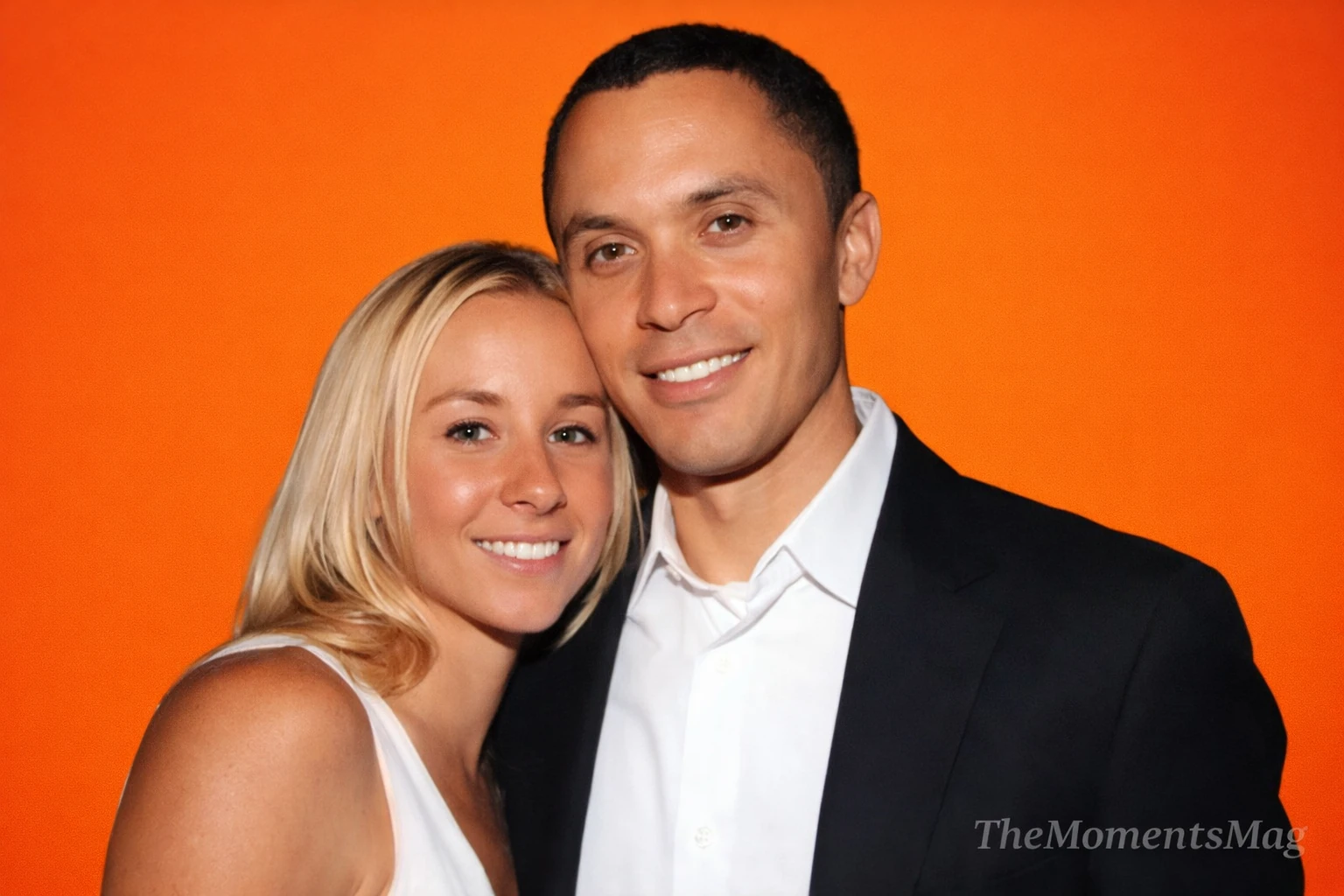
Instead, she built a life next to someone who did.
To many Americans, Emily Threlkeld is best known as the wife of Harold Ford Jr., the former U.S. Representative from Tennessee who served in Congress from 1997 to 2007. But that shorthand barely scratches the surface. Behind the public appearances and gala photographs stands a woman shaped by Southern roots, fashion-world ambition, and a deliberate choice to remain largely private in a culture that rewards constant exposure.
Her story unfolds quietly. And that’s precisely what makes it compelling.
Profile Summary Table
| Attribute | Details |
|---|---|
| Full Name | Emily Frances Threlkeld |
| Date of Birth | January 2, 1981 |
| Age | 45 years old (as of 2026) |
| Place of Birth | Naples, Florida, United States |
| Nationality | American |
| Profession | Public Relations Consultant, Fashion Industry Professional |
| Famous For | Being the wife of former U.S. Congressman Harold Ford Jr. |
| Marital Status | Married |
| Children | Two children |
| Estimated Net Worth | Estimated $3–4 million (combined household net worth significantly higher) |
A Southern Beginning
Emily Frances Threlkeld was born on January 2, 1981, in Naples, Florida. She grew up in a part of the country where community, tradition, and family ties carry weight. Florida in the 1980s was expanding rapidly, blending old Southern sensibilities with new economic energy.
Those early years were marked by stability, but also by change. Her parents later divorced, a transition that shaped much of her childhood. Friends have described her upbringing as grounded yet adaptive — the kind of environment that teaches resilience early.
Naples, known for its beaches and understated luxury, gave her exposure to affluence without demanding performance. It’s a detail that seems small, but environments leave fingerprints. Growing up somewhere that values polish yet prizes discretion may have subtly influenced the woman she would become.
Education was always central. Emily attended local schools before enrolling at the University of Miami. There, she studied business and marketing — a practical choice that would later anchor her career in public relations and branding.
College in the late 1990s and early 2000s was a transformative time for many young women entering industries that were rapidly evolving. The fashion and communications sectors were beginning to digitize. Branding was becoming global. Image was becoming currency.
Emily paid attention.
Finding Her Footing in Fashion
After graduating, she moved into the fashion industry — a world that looks glamorous from afar but demands relentless organization behind the scenes. She began working in public relations and fashion communications, reportedly holding roles with designers and fashion houses in New York.
Public relations isn’t about flash. It’s about timing. It’s about knowing which editor to call, which event matters, which detail can’t slip. It requires diplomacy, strategy, and thick skin.
The U.S. Bureau of Labor Statistics reports that public relations specialists earned a median annual wage of $69,780 in 2024, with steady job growth projected through 2034. It’s a stable profession built on reputation management and storytelling. Emily stepped into that world early and learned its rhythms.
Colleagues from the fashion circuit have described her as poised and detail-oriented. She wasn’t the loudest person in the room, but she didn’t need to be. In PR, the best operators often work invisibly.
There were reports linking her to swimwear label Basta Surf as a co-founder alongside designer Samantha August. While documentation around that venture has been limited in mainstream records, the association underscores her connection to entrepreneurial circles in fashion.
Even if the headlines were modest, the skill set was significant. Branding, messaging, event strategy — these are tools that translate well beyond the runway.
Meeting Harold Ford Jr.
Emily met Harold Ford Jr. in the early 2000s. At the time, Ford was already a rising Democratic political figure. He had been elected to Congress in 1996 at just 26 years old, representing Tennessee’s 9th congressional district.
He came from a political dynasty. His father, Harold Ford Sr., had also served in Congress. Politics wasn’t just a job for him. It was family business.
Their worlds could not have looked more different on paper. She was immersed in fashion and branding. He was immersed in policy and public debate. But shared ambition and mutual understanding often bridge unlikely divides.
They began dating seriously as his national profile expanded. In 2006, Ford ran for the U.S. Senate in Tennessee in a closely watched race that ultimately ended in defeat. That campaign was intense, widely covered, and emotionally charged.
Through it all, Emily remained largely out of interviews. She appeared by his side but rarely spoke publicly. It was an early signal of how she would navigate public life: present, supportive, but never performative.
The couple married in April 2008 in Miami. The ceremony was elegant but not ostentatious. It reflected their blended worlds — Southern heritage meeting cosmopolitan polish.
Life in the Public Eye — Carefully
Marriage to a former congressman ensures visibility. After leaving Congress in 2007, Harold Ford Jr. transitioned into finance and media. He became a political analyst and commentator, appearing regularly on national television.
With each appearance came renewed interest in his personal life. And by extension, in Emily.
Photo archives show her attending high-profile events such as the Robin Hood Foundation gala in New York in May 2010. She appeared poised, understated, often dressed in sleek eveningwear that nodded to her fashion background.
Yet interviews were rare. Social media presence was minimal. There were no lifestyle blogs, no oversharing, no curated influencer persona.
In an era when public figures often monetize personal life, Emily chose distance.
That restraint aligns with broader trends. Pew Research Center has consistently reported growing concern among Americans about data privacy and digital exposure. Many people feel uneasy about how much of their lives lives online.
Emily seemed to intuit that shift early.
Motherhood and Balance
The couple welcomed two children after their marriage. They have worked diligently to shield their children from public scrutiny. Names and personal details have largely been kept private, a decision that speaks volumes in a culture of exposure.
Parenthood reshapes priorities. Friends describe Emily as deeply devoted to her family. While Harold’s career kept him in boardrooms and television studios, she focused on building stability at home.
That division of labor is often invisible. It rarely trends. But it underpins many public careers.
Balancing motherhood with a background in a demanding industry isn’t simple. Yet those who’ve known her suggest she thrives on structure. Organization, after all, was always part of her professional DNA.
The Power of Selective Visibility
There’s a difference between privacy and absence. Emily has never disappeared. She attends important events. She supports philanthropic initiatives. She stands beside her husband at moments that matter.
But she doesn’t overextend. She doesn’t narrate her life in real time.
The London School of Economics has published research commentary on how images shape political meaning. A single photograph can communicate unity, stability, or tension without a word spoken.
Emily’s appearances often project calm partnership. No dramatic gestures. No headline-grabbing statements. Just presence.
In modern public life, that’s a strategy.
Navigating Scrutiny
Public curiosity often breeds speculation. Online biographies have occasionally inflated or contradicted details about her career and finances. Net worth estimates, in particular, vary widely across websites.
Reliable figures are difficult to pin down. Her personal estimated net worth is often cited between $3 and $4 million, though household wealth is likely higher due to her husband’s finance and media career.
What stands out isn’t the number. It’s the discretion.
There are no flashy real estate tours splashed across tabloids. No reality television ventures. No brand endorsements.
She has kept her financial life as quiet as her personal one.
A Marriage in Modern America
Harold Ford Jr. and Emily Threlkeld’s marriage has spanned nearly two decades — a notable milestone in public life. Political marriages often endure intense strain. Campaign cycles, media scrutiny, career pivots — each phase tests resilience.
Ford’s transition from Congress to Wall Street and media commentary required reinvention. Reinvention affects families as much as individuals.
Through those transitions, Emily’s steady presence has remained consistent. She rarely comments publicly on political issues, allowing her husband to occupy that arena fully.
That separation creates clarity. It also protects her own identity.
The Fashion Influence That Never Fully Left
Even as her public profile centered around marriage and family, fashion remained part of her visual language. Observers frequently note her polished yet understated style at events.
Fashion communicates without speaking. It can suggest confidence, awareness, and restraint simultaneously.
The global fashion industry continues to evolve rapidly. McKinsey’s “State of Fashion” reports highlight digital disruption and shifting consumer behavior. Branding has become more nuanced and more global.
Emily’s early immersion in that environment likely sharpened her understanding of image — including her own.
Public Life, Private Core
The most striking element of Emily Threlkeld’s biography may be what isn’t visible.
There are no memoirs. No public speeches. No extended interviews revealing personal philosophy.
And yet her story resonates.
Perhaps because it mirrors the quiet ambitions of many professional women who balance career, partnership, and motherhood without broadcasting every step.
She built expertise in a demanding industry. She married into politics without being consumed by it. She raised children outside the glare of constant publicity.
That’s not accidental. It’s intentional.
The Digital Age and Deliberate Distance
The early 2000s were a turning point in how public figures interact with media. Social platforms exploded. Oversharing became normalized. Personal branding became an expectation.
Emily stepped back just as the culture leaned forward.
Pew Research has documented increasing public skepticism about social media companies and data usage. Many Americans express concern about how personal information is handled online.
By limiting her digital footprint, Emily sidestepped much of that exposure.
It’s a quiet form of control.
Looking Ahead
As of 2026, Emily Threlkeld is 45 years old. Her children are growing. Her husband remains active in finance and media commentary.
Public interest in her persists, though she has given little new material to feed it.
There’s something refreshing about that.
In a time when attention often feels compulsory, she has demonstrated that it isn’t.
Her biography may never be filled with dramatic headlines. Instead, it offers something subtler: a study in composure, strategic privacy, and the strength that comes from knowing who you are without needing to announce it.
Also Read: Taj Cross Age: Biography, Career & Early Life
Conclusion
Emily Threlkeld’s life doesn’t follow the typical arc of celebrity culture. She didn’t build a brand around herself. She didn’t leverage political proximity into personal fame. She didn’t turn visibility into currency.
She built a career in fashion communications. She married a man whose career placed him squarely in the public eye. She raised a family with intention and discretion.
In doing so, she carved out a space that feels increasingly rare — one defined by presence without overexposure.
Her story is less about headlines and more about steadiness. Less about spotlight and more about shadow. And in today’s culture, that balance may be its own quiet form of power.