

Key takeaways:
- Immersive technologies offer unique advantages for modern employee development and skill acquisition.
- Virtual reality provides complete immersion in simulated environments, ideal for high-risk practice.
- Augmented reality overlays digital information onto the real world, offering excellent on-the-job guidance.
- Mixed reality allows users to interact with both physical and digital elements simultaneously for advanced collaboration.
- Partnering with an experienced provider ensures successful implementation and measurable business outcomes.
Modern businesses are constantly searching for better ways to educate and upskill their workforce. Traditional classroom sessions and standard video modules often fail to keep employees engaged or prepare them for real-world scenarios. This is where extended reality technologies step in to change the landscape of corporate training. By incorporating immersive tools, companies can create highly effective, interactive learning experiences that boost retention, improve safety, and enhance overall employee performance.
Navigating the world of immersive learning can seem complex at first glance. You will often hear terms like virtual reality, augmented reality, and mixed reality used interchangeably, but they represent entirely distinct approaches to learning. Understanding the unique capabilities of each technology is the first step toward building a highly effective educational program that meets your organization’s specific goals. Let’s break down these distinct methodologies and explore how they can benefit your business.
Complete Immersion With Virtual Reality Training
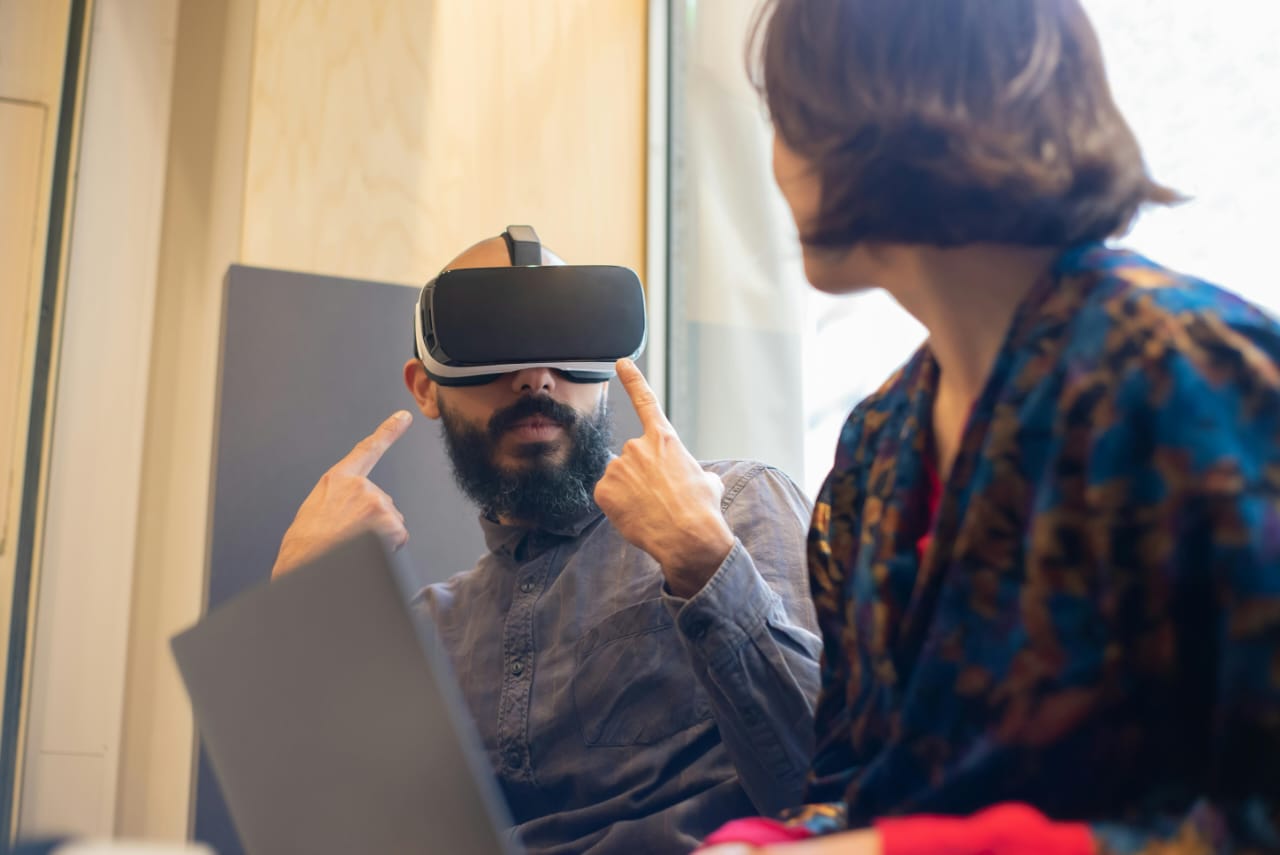
When a program requires focused attention and a highly controlled environment, virtual reality training shines. This technology uses a specialized headset to completely block out the physical world and transport the user into a fully simulated 3D environment. Employees can practice complex procedures, experience rare emergency situations, or develop essential soft skills in a completely safe, consequence-free setting.
This level of complete immersion makes VR training highly effective for high-risk industries. For example, manufacturing workers can practice operating heavy machinery without the risk of physical injury or expensive equipment damage. Healthcare professionals can simulate surgical procedures, gaining valuable hands-on experience before working with actual patients. The simulated nature of virtual reality training means that mistakes become valuable learning opportunities rather than costly errors.
Beyond safety, this technology significantly improves knowledge retention. Because employees are actively “doing” rather than just watching a screen or reading a manual, the brain encodes the information much more effectively. Companies utilizing VR training consistently report faster learning times and higher confidence levels among their staff. This directly translates to better on-the-job performance, reduced onboarding times, and a stronger return on educational investments.
On-the-Job Support Through Augmented Reality Training
Unlike VR, which completely replaces the real world, augmented reality training adds digital elements to the user’s physical surroundings. Using devices like smartphones, tablets, or smart glasses, AR overlays text, graphics, or animations onto the real-world environment. This approach is highly practical for providing real-time information exactly when and where an employee needs it most.
Imagine a technician repairing a complex piece of equipment on the factory floor. Instead of consulting a heavy manual or walking back to a computer station, they can use AR training tools to see digital arrows pointing to the exact parts that need adjustment. They can view step-by-step floating instructions while keeping their hands on the actual machinery. This immediate access to information reduces errors, speeds up task completion, and minimizes the need for direct supervisor intervention.
Augmented reality training is also an excellent tool for onboarding new hires. Employees can take interactive tours of a facility, using their mobile devices to scan objects and learn about different departments or safety protocols. By bridging the gap between digital knowledge and physical tasks, augmented reality training offers an incredibly versatile and accessible approach to everyday employee development.
The Best of Both Worlds: Mixed Reality Training
If AR overlays digital elements and VR creates entirely new worlds, mixed reality training represents the next evolutionary step in immersive education. This technology blends the physical and digital worlds, allowing real and holographic objects to co-exist and interact in real-time. Using advanced headsets, learners can manipulate digital objects as if they were physically present in the room with them.
In a mixed reality training scenario, an engineering team could gather around a physical table to examine a 3D hologram of a new product design. They can physically walk around the digital model, point out specific components, and make changes collaboratively. MR training requires sophisticated spatial mapping technology, enabling the digital elements to understand and respond to the physical environment.
The business benefits of mixed reality training are substantial, particularly for collaborative and highly technical fields. It allows remote teams to work together in a shared virtual space while still remaining grounded in their physical offices. While it requires a larger initial investment in specialized hardware compared to mobile AR, MR training provides an unparalleled level of interaction and realism for complex educational needs.
Choosing the Right Corporate Training Solution for Your Business
Selecting between VR, AR, and MR depends entirely on your specific organizational goals, the nature of the tasks being taught, and your available budget. High-consequence environments benefit most from VR, while tasks requiring in-the-moment guidance are perfect for AR. Collaborative design and advanced technical simulations are where MR truly excels.
Regardless of which technology you choose, successful implementation requires expertise. Partnering with a dedicated agency ensures that your educational content is engaging, technically sound, and aligned with your business objectives. For organizations looking to integrate these advanced methodologies, Roundtable Learning offers comprehensive solutions across all these modalities. As a leading provider of these immersive technologies, they specialize in developing custom programs that leverage the right tools to solve specific business challenges.
By working with experienced professionals, you can ensure that your team receives the highest quality instruction. Transitioning to immersive learning is a major step forward, and having the right partner guarantees that your investment delivers measurable results.
Conclusion: The Future of Corporate Training
The landscape of employee education is shifting rapidly toward more interactive and engaging formats. Immersive technologies are no longer just futuristic concepts; they are practical tools driving real business results today. From the safe simulations of virtual reality to the real-time support of augmented reality and the interactive holograms of mixed reality, these tools offer unprecedented ways to build a highly capable workforce. Investing in modern corporate training methods shows a clear commitment to your team’s growth and your organization’s long-term success. By understanding the distinct differences between VR, AR, and MR, you can make informed decisions that will empower your employees and keep your business ahead of the curve.