

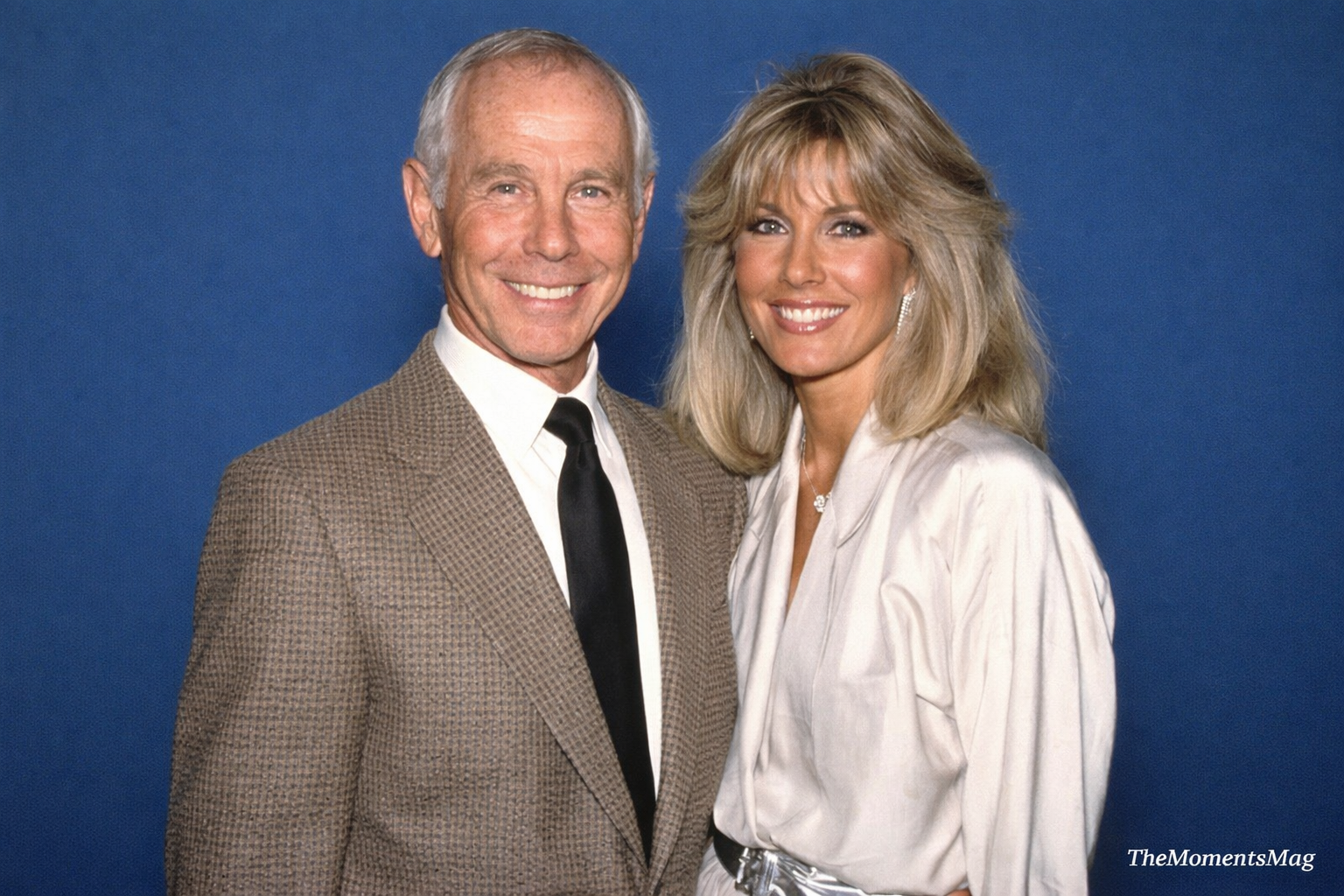
Alexis Maas is a name that often appears in connection with one of the most influential figures in American television history, Johnny Carson. Yet unlike many people linked to fame, Maas has never sought public attention, media influence, or celebrity status of her own. Her story is defined not by visibility, but by discretion. In an age when personal lives are routinely transformed into content, Alexis Maas represents something increasingly rare: a life lived largely outside public narration.
This biography explores what is known, what is verifiable, and why her quiet presence continues to generate interest decades after Johnny Carson stepped away from the late-night stage.
Early Life and Background
Very little confirmed public information exists about Alexis Maas’s early life, and that absence is not accidental. Unlike entertainers, politicians, or business leaders, Maas never occupied a role that required public disclosure. Most reputable publications that mention her do so only in relation to her marriage, without delving into her childhood, education, or professional pursuits prior to meeting Carson.
What can be responsibly said is that Maas was living in California when she met Johnny Carson in the mid-1980s. Reports from established media outlets describe their meeting as accidental and unpretentious, taking place on a beach in Malibu. That detail, often repeated in credible obituaries and profiles of Carson, has become part of the mythology surrounding their relationship. It suggests a meeting far removed from television studios and celebrity circles, aligning with the quieter phase of Carson’s life at the time.
Meeting Johnny Carson
By the time Alexis Maas met Johnny Carson, he was already a cultural institution. For three decades, Carson had been the face of American late-night television, shaping humor, celebrity culture, and political commentary from behind The Tonight Show desk. He was also a man who had experienced several highly publicized marriages and divorces, each scrutinized by tabloids and mainstream press alike.
The relationship with Maas marked a clear shift. Friends and colleagues later described Carson as calmer, more private, and less interested in social visibility. Maas, by all accounts, fit naturally into that transition. She was not a public figure, did not give interviews, and did not attempt to leverage Carson’s fame.
Their relationship developed quietly, without the media buildup that typically followed Carson. That silence, paradoxically, made the relationship more intriguing to outsiders.
Marriage and a Different Kind of Partnership
Alexis Maas and Johnny Carson married in 1987. The wedding itself reflected the values that would define their life together. It was small, private, and deliberately shielded from the press. The ceremony took place at Carson’s Malibu home, overlooking the Pacific Ocean, with only a handful of people in attendance. There was no celebrity guest list, no magazine exclusives, and no orchestrated media moment.
This was Carson’s fourth marriage, but it was also his last. Unlike previous unions, this one endured until his death in 2005. The longevity of the marriage is notable not simply because of its duration, but because of its relative absence from public drama. In an industry where personal relationships often become public narratives, Maas and Carson maintained strict boundaries.
Those boundaries were not passive. They required active choices: fewer appearances, selective social engagement, and a shared understanding that privacy mattered more than public relevance.
Life After The Tonight Show
When Johnny Carson retired from The Tonight Show in 1992, he did not gradually fade from public view. He withdrew almost completely. He stopped giving interviews, avoided award shows, and limited his public presence to rare occasions. Alexis Maas was central to this phase of his life, not as a public spokesperson, but as a private partner.
They lived primarily in California and spent time away from Hollywood’s social circuit. Friends described Carson as content with routines that would have been unimaginable during his television years. Meals at home replaced industry dinners. Travel became personal rather than promotional. Fame, once constant, became something managed at a distance.
Maas did not attempt to reinterpret Carson for the public or position herself as a guardian of his image. Instead, she allowed him to retreat fully. That restraint earned respect among those who understood how difficult such a withdrawal could be for someone of Carson’s stature.
Johnny Carson’s Death and Public Reaction
Johnny Carson died in January 2005 at the age of seventy-nine after complications related to emphysema. The news prompted an outpouring of tributes from entertainers, politicians, and journalists. Networks replayed classic moments. Comedians credited him with launching their careers. Late-night television paused to acknowledge the end of an era.
Throughout this period, Alexis Maas remained largely invisible. She did not give extensive interviews or participate in memorial programming. Her silence was consistent with how she had lived during Carson’s final years. While some spouses of famous figures become public narrators after death, Maas did not assume that role.
This absence was not interpreted as indifference. On the contrary, many observers viewed it as a continuation of the respect she had shown for Carson’s desire for privacy. The public mourned a legend. Maas mourned a husband.
Estate, Philanthropy, and Legacy
One area where Alexis Maas’s name continues to surface is in discussions of Johnny Carson’s estate and philanthropic legacy. Carson was known to be financially successful, but more importantly, he was deliberate about how his wealth would be used after his death.
A significant portion of Carson’s estate was directed toward charitable foundations, most notably the Johnny Carson Foundation. The foundation has since supported education, healthcare, arts initiatives, and public broadcasting, with particular emphasis on institutions connected to Carson’s past, including his alma mater.
Because of the size of the estate and the scale of the philanthropy, public curiosity about Maas’s role is inevitable. However, there is no credible evidence that she sought control, influence, or visibility through these structures. The foundation operates with formal governance and public filings, reflecting long-term planning rather than personal promotion.
It is important to separate documented facts from speculation. While Maas was Carson’s surviving spouse, the detailed mechanics of estate distribution remain largely private. What is publicly verifiable is that Carson’s legacy was designed to extend beyond personal inheritance and into institutional impact.
Why Public Interest Persists
Alexis Maas remains a subject of online searches and biographical curiosity not because of what she has said or done publicly, but because of what she has not done. In a media environment driven by disclosure, she represents an anomaly.
Her biography challenges common assumptions about proximity to fame. It suggests that one can be close to immense cultural power without absorbing or reflecting it. Maas did not transform into a celebrity widow, a public commentator, or a symbolic figure. She remained herself, largely undefined by external narratives.
This restraint fuels speculation, but it also commands a certain respect. Many people are drawn to stories that resist easy categorization. Maas’s life, as publicly visible, resists simplification.
Life Today and Public Silence
As of recent years, Alexis Maas has continued to maintain a low public profile. There are no verified public statements, social media accounts, or media appearances attributed to her. This absence makes it difficult to offer definitive updates about her current life, but it also reinforces the consistency of her choices over time.
In biographies, silence is often treated as a gap. In Maas’s case, it is more accurately understood as a throughline. From the beginning of her public association with Johnny Carson to the decades that followed, she has chosen privacy as a principle rather than a temporary strategy.
Understanding Alexis Maas in Context
Alexis Maas is not a conventional biographical subject. She did not shape public policy, build a business empire, or dominate cultural conversations. Yet her story intersects with one of the most influential entertainers of the twentieth century at a moment when he was redefining himself.
Her significance lies in that intersection. She was present during Johnny Carson’s final chapter, a period marked by withdrawal, reflection, and long-term legacy planning. She shared his life when the applause faded and the cameras turned away.
In that sense, Alexis Maas occupies a subtle but meaningful place in cultural history. She represents the human reality behind a public legend, reminding us that even the most visible lives depend on private relationships to sustain them.
Also Read: Kurt Perez The Blacklist: Why the Tribute Mattered
Conclusion
Alexis Maas’s biography is defined by intention rather than exposure. She did not seek fame, and she did not inherit it by default. Her life alongside Johnny Carson illustrates how privacy can coexist with cultural significance, and how restraint can shape legacy as powerfully as visibility.
In a world that increasingly rewards constant self-disclosure, Maas’s story stands apart. It is not dramatic, promotional, or performative. It is quiet, consistent, and grounded in personal choice. That is precisely why, years later, her name continues to invite curiosity—and why her biography remains compelling without ever needing to be loud.