
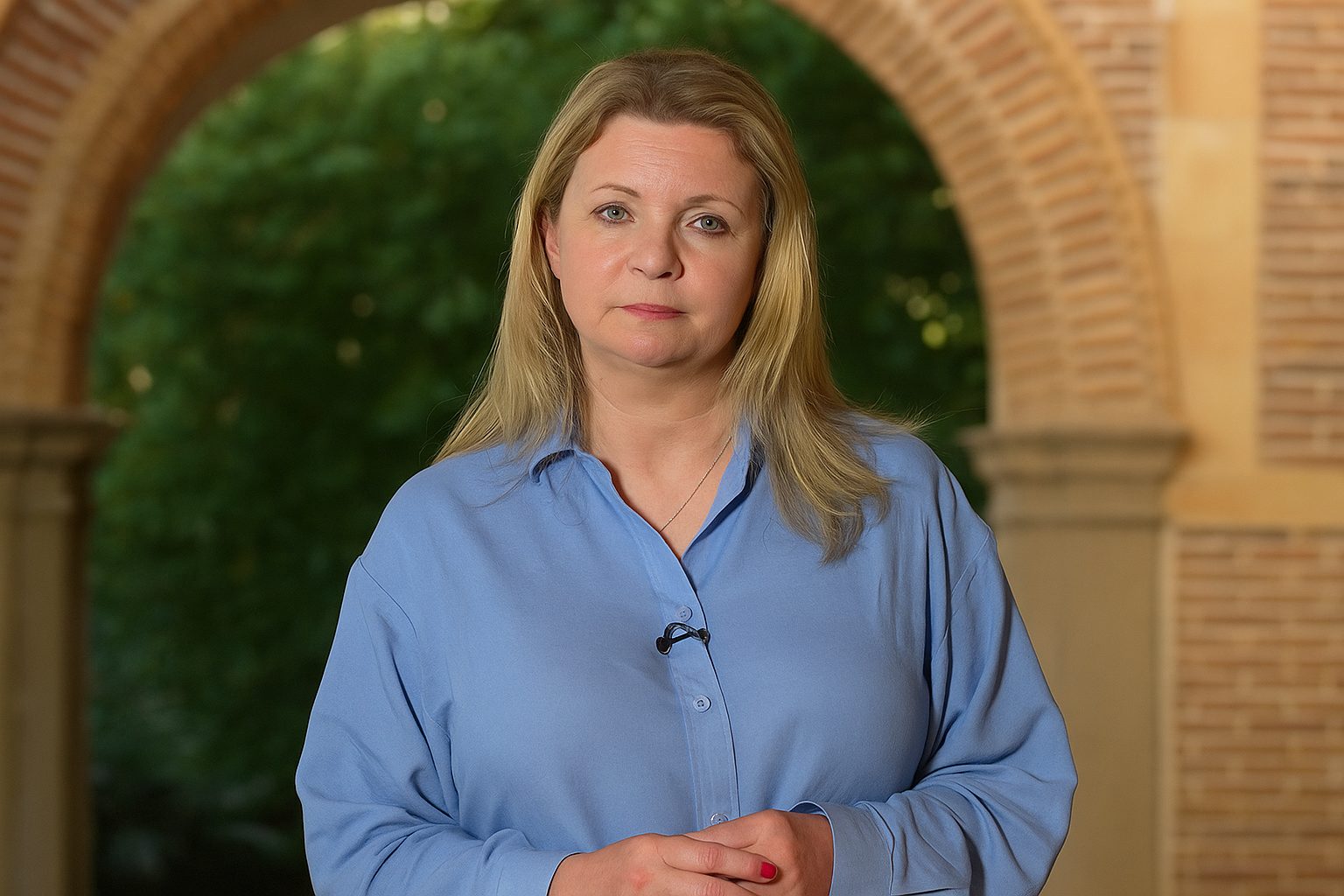
Who is Emma Murphy? For many people searching the name, the answer is Emma Murphy, the ITV News journalist appointed international editor in July 2024. But the name also appears in stories about domestic abuse awareness, patient-safety campaigning, academic research and Irish sport.
These subjects should not be confused. A journalist reporting on international conflicts, a campaigner discussing the risks of a prescription medicine and an academic studying Middle Eastern political economy may appear in similar search results without sharing a professional or personal connection.
This guide begins with the ITV journalist, whose appointment and reporting record are documented in the supplied sources. It then examines the other profiles associated with the name, distinguishing established information from details that still need confirmation.
Emma Murphy: ITV News International Editor
Emma Murphy was appointed international editor of ITV News in July 2024, taking responsibility for leading the broadcaster’s foreign coverage. The appointment followed a career that included work as a US correspondent, Europe correspondent and senior correspondent.
The announcement, reported by Press Gazette on 4 July 2024, established a significant change in the broadcaster’s international reporting team. Murphy succeeded Rageh Omaar, who moved into an international affairs analyst role after serving as international affairs editor for 11 years.
The distinction matters because the editor’s job extends beyond reporting individual events. Leading foreign coverage involves editorial decisions about which international developments receive attention, how complex situations are explained and how correspondents’ reporting reaches audiences.
Her career at ITV News
Murphy’s experience spans American politics, European affairs, major breaking news and international conflicts. Her previous correspondent assignments gave her opportunities to cover events from different geographical and political perspectives.
Press Gazette’s account of her appointment identified a substantial range of stories she had covered, including:
- International conflicts: The war in Ukraine, the conflict between Israel and Hamas, and the fall of ISIS.
- American politics: The 6 January Capitol riot and Joe Biden’s presidential inauguration.
- Major investigations and legal proceedings: The Ghislaine Maxwell trial.
- Disasters and major incidents: The Turkey-Syria earthquake, the Notre Dame fire, the Manchester Arena bombing and the Grenfell Tower fire.
These assignments demonstrate the variety of subjects associated with her reporting career. They also explain why her appointment placed an experienced general news correspondent in charge of an international portfolio.
Her European reporting background is particularly relevant to understanding the position. European affairs involve relationships among governments, institutions and communities, while international crises require reporting that connects events on the ground with their wider political and humanitarian consequences.
What Emma Murphy said about becoming international editor
When her appointment was announced, Murphy described the changing demands of international journalism and the importance of explaining why overseas events matter to viewers.
“During this time of significant change in how people consume news, I am excited to bring a fresh approach and elevate our foreign coverage. As journalists, we are eyewitnesses to the most important global stories. In this role, I am committed to providing analysis that underscores their relevance and impact.”
The statement, reproduced in Press Gazette’s July 2024 report, highlights two priorities: reporting directly on significant international developments and providing the analysis necessary to understand their consequences.
ITV News editor Andrew Dagnell also praised Murphy’s leadership, original journalism and ability to manage the responsibilities of the position. His comments were made in connection with the 2024 appointment and should be understood as the broadcaster’s assessment of her work.
Reporting on Ukraine and Gaza
Ukraine and Gaza are among the major international stories associated with Murphy’s reporting. Her work on these conflicts also illustrates an important distinction between reporting from a location, analyzing developments and gaining independent access to a restricted area.
According to Press Gazette’s July 2024 account, Murphy was among approximately 55 British and American foreign correspondents who signed a letter urging Israel to allow independent journalists into Gaza. The report stated that the request had not succeeded at that time.
That detail is significant because access restrictions can affect what international correspondents are able to observe and verify personally. Reporting about a conflict does not automatically mean a journalist has been permitted to enter every area affected by it.
Murphy’s publicly displayed professional account, @emmamurphyitv on X, identifies her as ITV News international editor. The inspected account also included an August 2025 post linking to ITV News aerial footage showing destruction in Gaza, along with posts discussing events in Ukraine.
These examples provide a more specific picture of her international news interests than general descriptions of journalistic courage or influence. They do not, however, establish a complete record of every assignment she has undertaken.
Why her international role matters
International journalism requires correspondents and editors to explain events that audiences may encounter through fragmented social media posts, competing official statements and rapidly changing news reports.
Murphy’s documented reporting background covers several different forms of news: conflict, politics, criminal proceedings, disasters and domestic tragedies with international significance. That breadth is relevant to an editorial position responsible for coordinating foreign coverage.
Her July 2024 appointment is the clearest independently documented career milestone available in the material reviewed for this article. Her professional profile displayed the international editor title when inspected in October 2026, although the supplied material does not establish every subsequent staffing or assignment development.
Emma Murphy: The Fitness Blogger Who Spoke About Domestic Abuse
Another widely discussed account associated with the name Emma Murphy concerns a Dublin-based fitness blogger who publicly described her experience of domestic abuse in 2015.
The original article describes a Facebook video recorded while she was sitting in a car with visible injuries. In the video, she spoke about her experience and encouraged people experiencing abuse to recognize that such treatment is not an expression of love.
The article attributes the following statement to her:
“If you are in a situation where you are suffering from abuse, it is not love.”
The wording is preserved from the earlier article, but an original recording or contemporaneous transcript was not included in the inspected evidence. It should therefore not be treated as a newly authenticated quotation.
From fitness content to public advocacy
Before the video, the earlier account describes Murphy as a fitness and nutrition blogger who shared recipes, exercise routines and wellness content with her followers.
Her decision to speak publicly about domestic abuse placed a different subject before that audience. Rather than discussing physical fitness alone, she addressed personal safety, abusive relationships and the importance of recognizing harmful behavior.
The earlier article states that the video attracted millions of views within 24 hours and received international attention. Those precise viewing figures and the timing of the response have not been independently established by the inspected material, so they should be regarded as historical claims requiring confirmation rather than verified statistics.
The significance of such public testimony is not necessarily measured by a particular view count. A survivor describing abuse in her own words can help audiences recognize experiences that are often difficult to discuss openly.
Public appearances and later work
The original profile also describes subsequent television appearances, work with Irish charities and participation in conversations about recovery, mental health and survivor support.
It attributes another statement to Murphy: “recovery isn’t linear, but silence is deadly.” The original source and context for that quotation have not been established in the material reviewed.
A further claim concerns a purported 2018 RTÉ documentary titled Emma Murphy Fights Back. Because no RTÉ programme record or other supporting document was supplied, the documentary’s exact title, date and attribution remain unconfirmed.
These uncertainties do not change the subject of the earlier profile: a public account of domestic abuse and the use of a social media audience to discuss an issue extending beyond fitness and personal wellness. They do limit what can responsibly be said about the scale and chronology of her subsequent advocacy.
Emma Murphy and INFACT: Campaigning Over Sodium Valproate
The name Emma Murphy also appears in the original article in connection with the Independent Fetal Anti-Convulsant Trust (INFACT) and campaigning concerning sodium valproate.
The earlier article identifies Emma Murphy and Janet Williams MBE as co-founders of INFACT, an organization associated with families affected by exposure to anticonvulsant medicines during pregnancy.
An important identity distinction remains unresolved: the inspected evidence does not establish whether the Emma Murphy associated with INFACT is the same person as the Irish fitness blogger discussed above. The two accounts are therefore presented separately by subject, not as proof that they describe two different women.
What is the sodium valproate controversy?
Sodium valproate is a medicine used in the treatment of conditions including epilepsy and bipolar disorder. Exposure during pregnancy is associated with serious risks to a developing baby, including developmental problems.
The controversy discussed in the original article concerns whether patients were adequately informed about these risks and whether prescribing arrangements provided sufficient protection.
For affected families, the issue extends beyond the medicine itself. It also concerns access to information, informed decisions about treatment, recognition of harm and the responsibilities of healthcare institutions.
The earlier account describes Emma Murphy’s family as having been personally affected and connects her campaigning with calls for better support and accountability. These personal and organizational details have not been independently corroborated by the two inspected sources.
Prescribing safeguards and patient information
The original article identifies 2018 as an important year in the introduction of stricter UK prescribing safeguards involving valproate and pregnancy prevention.
That historical reference should not be read as a complete description of the rules applying in October 2026. Medicine-safety requirements can change, and the current regulatory position must be established from the relevant official guidance rather than inferred from a previous article.
The central patient-safety question is clear: people making decisions about treatment need understandable information about serious risks, while healthcare professionals must work within the applicable prescribing and monitoring requirements.
Anyone taking valproate who has questions about pregnancy-related risks should consult their prescribing clinician or pharmacist rather than changing or stopping treatment solely because of an online article.
The campaign’s wider significance
The earlier profile associates INFACT with efforts to obtain recognition for affected families, improved support, compensation and stronger medical accountability. It also names The Guardian, the BBC and The Pharmaceutical Journal as outlets that have covered the campaign.
Those named references are retained as part of the earlier account, but specific articles were not included in the inspected source material. Consequently, this update does not assign a particular regulatory decision or government response exclusively to Emma Murphy or INFACT.
The substantive issue raised by the profile remains important: when concerns about medicine safety emerge, families may seek explanations not only about clinical risks but also about how warnings were communicated and how institutions responded.
Professor Emma Murphy: Researching the Political Economy of the Middle East
A further academic profile associated with the name concerns Professor Emma Murphy of Durham University, described in the original article as a scholar of political economy specializing in the Middle East and North Africa.
Unlike the ITV journalist’s work, which focuses on reporting current events, the academic profile concerns research into political and economic structures, governance and social change.
The supplied material does not include a current university staff record, so the precise title and present institutional appointment have not been independently reconfirmed.
Research interests and regional expertise
The original profile identifies several connected themes in Professor Murphy’s work: economic reform, governance, technological change, youth unemployment and the effects of globalization on societies in the Middle East and North Africa.
These subjects belong to a wider question in political economy: how do political institutions, economic opportunities and social pressures shape one another?
For example, studying youth unemployment involves more than measuring the number of people seeking work. A political-economy approach also considers how education, labor markets, government policy and access to opportunity interact.
Similarly, research into digitalization can explore how new technologies affect communication, economic activity and relationships between citizens and political institutions. These examples explain the intellectual territory described in the original profile; they are not presented as findings from any specific publication by Professor Murphy.
Academic publications and policy discussion
The earlier article describes contributions to research on North African political economy, including economic reform and social development. It also attributes encyclopedia entries, think-tank reports and policy briefings to Professor Murphy.
However, the inspected material contains no bibliography, publication titles or research abstracts. It would therefore be misleading to invent individual works, citation counts or academic awards.
Readers looking for her scholarship should search by full name, institution and research subject, then check the author information attached to individual publications. This is especially important when several academics or writers may have similar names.
Her inclusion here illustrates a useful distinction: someone searching for Emma Murphy’s research on the Middle East is looking for an academic publication record, not ITV broadcasting credits or advocacy-related news coverage.
Other People Named Emma Murphy: Sport and Local Media
The original article also refers to an Emma Murphy associated with Cork camogie and to other people sharing the name in local journalism and creative work.
The Cork camogie reference
Camogie is an Irish stick-and-ball team sport closely related to hurling. The earlier account states that an Emma Murphy associated with Cork appeared in league and championship fixtures.
It does not, however, identify a particular season, club, competition, team sheet or match report. Without those details, a specific sporting biography cannot be established confidently.
A reliable identification would require an official roster or dated match record connecting the correct player to the claimed appearance. Broad references to Cork camogie are insufficient because they do not uniquely identify an athlete.
Journalists, writers and creators with the same name
Emma Murphy may also appear as a byline or professional name in local reporting and creative work. The original article mentions these possibilities without identifying particular publications or individuals.
When researching a writer, the most useful clues are the publication carrying the byline, the subject covered, the date and any accompanying author biography. A shared name alone is not evidence that two pieces of work were created by the same person.
How to Find the Right Emma Murphy Online
The most useful way to distinguish these profiles is to search for Emma Murphy alongside a specific employer, organization, institution or subject.
- For the ITV journalist: Search for “Emma Murphy ITV News international editor”. The July 2024 appointment report provides a dated reference point for her role and earlier positions.
- For the domestic abuse account: Use “Emma Murphy fitness blogger 2015 video” and prioritize contemporary reporting or an original recording when checking quotations and the chronology.
- For the patient-safety campaign: Search for “Emma Murphy INFACT Janet Williams sodium valproate”. Check organizational and official records before assuming that this campaigner is a separate person from other advocates with the same name.
- For the academic: Search for “Emma Murphy Durham University political economy” and confirm publication authorship through institutional records.
- For a sportsperson: Include the sport, club, competition and year. A dated team sheet is more informative than a generic search result.
Professional affiliations and dates generally provide stronger identifying clues than photographs, broad descriptions or biographical summaries copied between websites.
Check when a source was published, whether it identifies the person directly and whether its claims are supported by original records. An official-looking domain or a polished biography is not, by itself, proof that every detail is accurate.
What These Profiles Have in Common—and Why the Differences Matter
Journalism, survivor advocacy, patient-safety campaigning, academic research and sport involve different kinds of work. It is reasonable to discuss communication and public engagement as themes across these fields, but it would be inaccurate to assume that everyone sharing the name Emma Murphy has identical motivations, achievements or personal values.
The more useful connection is methodological: each profile needs to be understood through evidence appropriate to its subject. A journalist’s record can be examined through reporting credits and professional appointments. A campaigner’s contribution calls for organizational records, public statements and documented outcomes. An academic’s work is best evaluated through research publications, while sporting participation requires reliable competition records.
Applying these distinctions prevents an attractive but unsupported narrative from replacing a person’s actual professional history.
Why Accurate Identification Matters
Search results can bring together people who have little in common beyond their names. That creates a particular problem when an article combines sensitive personal experiences, medical campaigning and professional biographies.
Misattributing an advocacy role can distort the history of a campaign. Associating an unverified quotation with the wrong person can misrepresent an individual’s experience. Confusing academic and journalistic records can also create a misleading account of someone’s expertise.
For this reason, the strongest part of a multi-person profile is not a list of admirable qualities. It is a clear explanation of who did what, when the relevant events occurred and which records support the identification.
Related reading: Gráinne Hayes: Biography of Nigel Farage’s First Wife.
Emma Murphy: One Name, Different Professional Stories
For readers searching for the ITV journalist, the most firmly documented answer is that Emma Murphy became ITV News international editor in July 2024, following correspondent and senior reporting roles. Her record includes coverage of international conflicts, American politics, major criminal proceedings and significant disasters.
Other accounts associated with the name concern domestic abuse awareness, sodium valproate campaigning, Middle Eastern political-economy research and Irish sport. Those subjects deserve to be understood on their own terms, without assuming that all references describe different people or that similarly named individuals are connected.
The essential distinction is straightforward: use the person’s documented role and the date of the relevant record—not the name alone—to establish which Emma Murphy a source is discussing.