

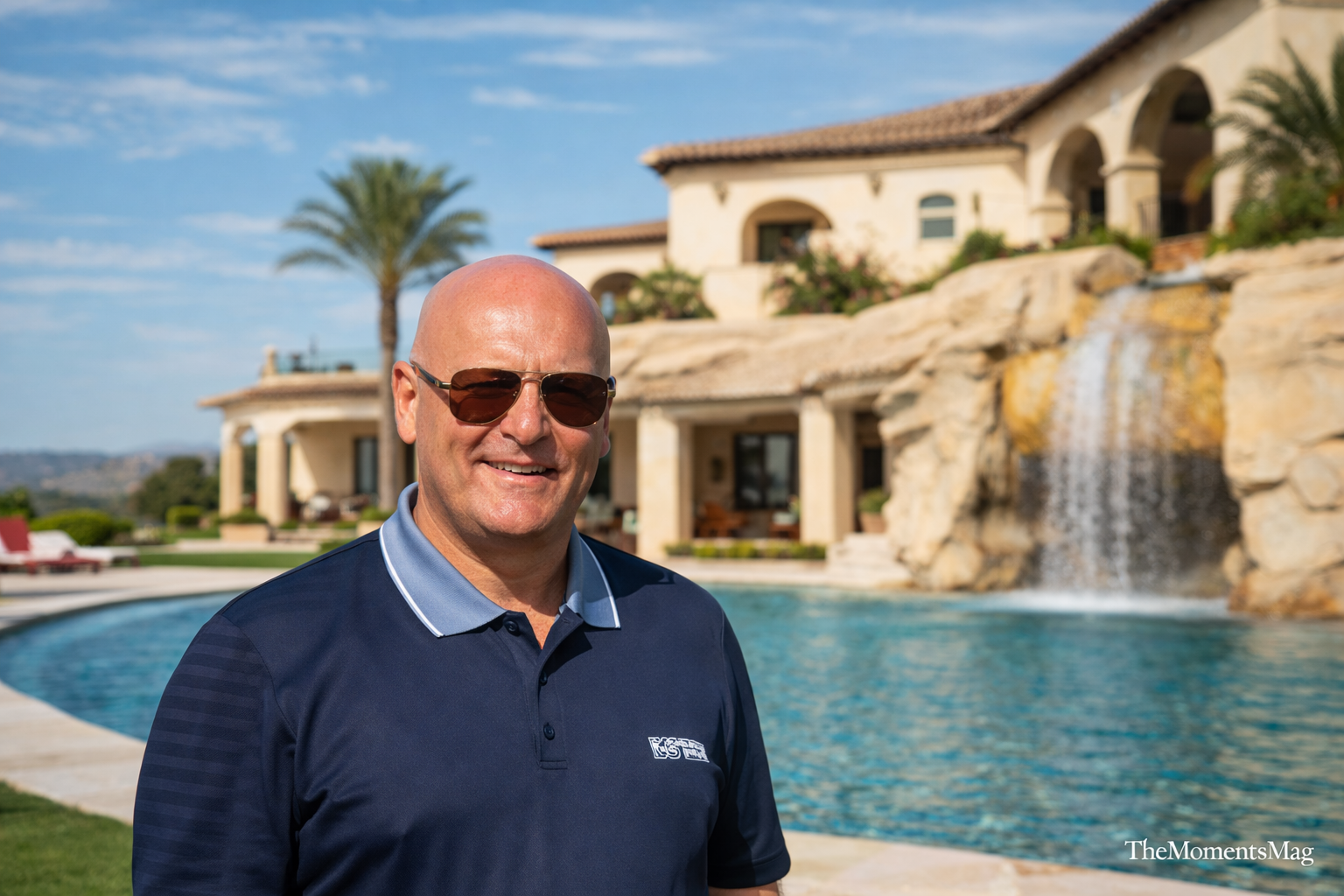
Fred Sines is not a celebrity in the traditional sense. He did not rise through music, film, or professional sports, nor has he built a personal brand through social media. Instead, his name comes from the quieter world of property, leisure parks, and private enterprise in the United Kingdom. For decades, he operated largely outside the public spotlight. That changed abruptly when his name appeared in international news coverage connected to one of the most unusual art thefts in modern British history.
As public curiosity surged, so did searches for “Fred Sines net worth.” Yet unlike public figures whose finances are routinely disclosed or estimated, Sines remains a private businessman. His wealth, while clearly significant in scale, cannot be reduced to a single verified figure. Understanding his net worth requires understanding his life, his business career, and the structure of the companies associated with his name.
Early Life and Entry Into Business
Public records and interviews suggest that Fred Sines, also known in formal filings and court records as Frederick Doe, built his career gradually rather than through sudden success. Accounts published in business-oriented platforms describe him entering the UK property and park-home sector in the late 1990s. His first acquisition is often cited as a small park purchased in 1997, marking the beginning of what would become a long-term involvement in leisure property.
This period coincided with a broader shift in the UK housing market. Rising home prices, an ageing population, and increasing demand for downsized living options created fertile ground for park homes and residential leisure sites. Sines positioned himself within this niche, focusing on ownership and operation rather than rapid expansion or media visibility.
Over time, this steady approach allowed him to accumulate assets in a sector known for generating reliable long-term income rather than short-term speculation.
Building Sines Parks and a Property Portfolio
The business most closely associated with Fred Sines is Sines Parks Holdings Limited, a private company incorporated in 2012. The company operates as a holding entity within a wider group structure connected to residential and leisure parks.
Companies House filings show that Sines Parks Holdings Limited has controlled substantial fixed assets, primarily in property and investment holdings. In financial statements covering the early 2020s, the company reported net assets in excess of £20 million. This figure reflects the value of land, park developments, and related investments after accounting for liabilities.
However, these numbers require careful interpretation. Company net assets do not equate directly to personal wealth. Assets may be leveraged, tied to long-term financing, or held within complex group structures. Still, they demonstrate that the businesses associated with Fred Sines operate on a scale far beyond small or medium enterprises.
Another related entity, Sines Parks Limited, shows a more complex financial picture. Later filings reveal significant liabilities and provisions, leading to negative equity in certain reporting periods. This contrast illustrates a central truth about property-based wealth: high asset values often coexist with equally high obligations.
Understanding Fred Sines’ Net Worth in Context
The phrase “Fred Sines net worth” implies a neat figure, but private wealth rarely works that way. In the UK, there is no requirement for private individuals to disclose their personal net worth. As a result, estimates often rely on incomplete data, assumptions about ownership percentages, and speculation about asset liquidity.
In Sines’ case, his wealth is best understood as tied to the long-term value of property holdings rather than cash or easily measurable income. Park-home businesses typically generate revenue through pitch fees, sales commissions, and ongoing site management. These income streams are steady but regulated and sensitive to political scrutiny.
Moreover, company structures matter. A holding company may show substantial equity while an operating company carries debt or future liabilities. Personal wealth depends on how these companies are owned, financed, and interconnected.
As a result, any website claiming to know Fred Sines’ exact net worth should be treated cautiously unless it is supported by primary documentation or court-mandated disclosures.
Public Attention and the Blenheim Palace Case
Fred Sines became a household name not through business success, but through criminal court reporting. In 2019, a fully functioning 18-carat gold toilet titled America, created by Italian artist Maurizio Cattelan, was stolen from Blenheim Palace. The artwork, insured for millions of pounds, was never recovered and is believed to have been dismantled.
Court proceedings later identified Frederick Doe, also known as Frederick Sines, as a middleman involved in the conspiracy to transfer criminal property. In 2025, he received a suspended prison sentence and community service. While the case did not involve allegations that he personally stole the artwork, the association placed him under intense media scrutiny.
This exposure transformed a previously obscure businessman into a widely searched name. Importantly, the case did not reveal details of his personal finances. Still, it shaped public perception and fueled assumptions about wealth, influence, and lifestyle.
Identity, Name Changes, and Public Records
Another factor complicating searches for Fred Sines’ net worth is the presence of multiple names in public records. Court documents, company filings, and media reports reference Frederick Doe, Fred Doe, Maurice Sines, and Fred Sines. Reputable reporting has stated that these names refer to the same individual, with changes occurring over time.
Such changes are not inherently unusual in business, particularly when branding, family history, or legal considerations are involved. However, they do make casual research more difficult and contribute to conflicting online narratives.
Companies House records confirm that the same individual has served as director and person with significant control across multiple entities, reinforcing the conclusion that the business activities are centralized rather than fragmented among different people.
Wealth in the Park-Home Industry
To understand the scale of wealth potentially associated with Fred Sines, it helps to understand the industry itself. The UK park-home sector serves tens of thousands of residents, many of them retirees. Sites are often located on valuable land and generate predictable income over long periods.
At the same time, the industry faces increasing scrutiny. Rising site fees, regulatory reforms, and consumer protection debates have made park operators a political target. High-profile disputes involving other major operators, such as RoyaleLife, have brought attention to business practices across the sector.
This environment means that wealth in the park-home industry is real but contested. Asset values can be substantial, but reputational risk, legal challenges, and regulatory changes can affect long-term profitability.
Media Narratives Versus Financial Reality
The internet tends to favor simple stories. A businessman linked to a bizarre art theft becomes, in some retellings, a shadowy millionaire with hidden riches. The reality is more nuanced.
Financial filings show that companies associated with Fred Sines control assets worth tens of millions of pounds. They also show large liabilities, provisions, and structural complexity. From a financial perspective, this is typical of property-focused enterprises rather than evidence of extreme personal wealth or poverty.
It is also important to distinguish between lifestyle assumptions and documented facts. There is no public evidence of extravagant personal spending, celebrity-level consumption, or offshore wealth structures disclosed in court. What exists instead is a picture of a long-term operator in a capital-intensive industry.
A Private Figure in a Public Spotlight
Unlike entrepreneurs who actively court publicity, Fred Sines has not given extensive interviews about his personal life or financial philosophy. This silence has allowed speculation to flourish but has also preserved a degree of privacy unusual in the digital age.
His story illustrates how quickly a private individual can become a public subject when legal proceedings intersect with sensational headlines. It also highlights the limitations of net-worth culture, which often prioritizes numbers over context.
For researchers, journalists, and curious readers, the most responsible conclusion is that Fred Sines is a wealthy businessman by most conventional standards, but not one whose personal net worth can be accurately quantified from public information alone.
Also Read: Dean Richard Bromstad: Biography, Family, and Private Life
Conclusion
Fred Sines’ net worth is less a single number and more a reflection of a career built in property, patience, and private enterprise. Through decades in the park-home and leisure sector, he accumulated control over valuable assets while navigating the complexities of debt, regulation, and market change. Public fascination with his wealth intensified only after criminal court proceedings thrust his name into global headlines, despite those proceedings offering little insight into his finances.
What emerges is not a caricature of sudden riches or mysterious fortune, but a portrait of a businessman whose wealth is embedded in land, companies, and long-term structures. In an era obsessed with exact figures and rankings, Fred Sines serves as a reminder that real-world wealth, especially private wealth, rarely fits neatly into a headline.