

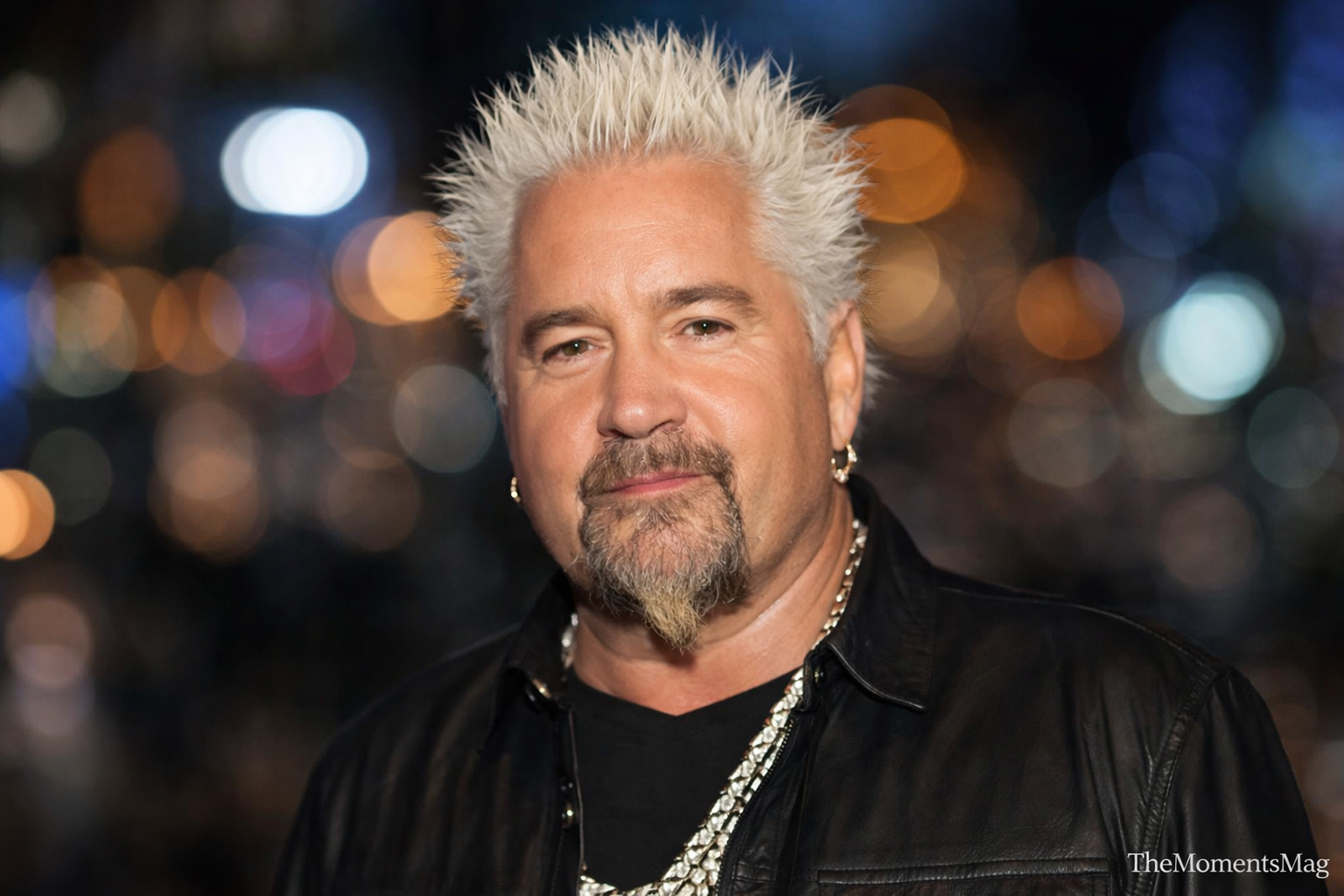
When Guy Fieri appeared online recently looking almost unrecognizable, the reaction was immediate and intense. Social media paused. Comment sections exploded. Fans leaned closer to their screens, asking the same question in slightly different ways: Is that really him?
Gone, at least temporarily, were the spiked, bleached tips and the unmistakable goatee that have become cultural shorthand for Fieri over the past two decades. In their place was something far more subdued. The man staring back at viewers looked cleaner, calmer, and markedly more ordinary. It was a startling contrast for a personality so closely associated with volume, color, and excess.
What followed was more than a viral moment. It became a window into how celebrity identity works in the modern media era, how personal branding can both empower and confine, and why Guy Fieri’s evolution still commands attention long after his rise to fame.
Table of Contents
ToggleFrom a Small California Town to a National Persona
Long before the hair became a headline, Guy Fieri was Guy Ferry, a kid growing up in Ferndale, California. Born in 1968, he was raised in a family that valued hard work and independence. As a teenager, he ran a soft pretzel cart called “The Awesome Pretzel,” an early sign of the entrepreneurial streak that would later define his career.
Fieri’s path was not linear. He studied hospitality management at the University of Nevada, Las Vegas, and spent years working in restaurants, learning the business from the inside out. Those who knew him then describe someone who was energetic, opinionated, and deeply serious about food, even if his personality often came wrapped in humor.
The national breakthrough came in 2006, when Fieri won the second season of The Next Food Network Star. Almost overnight, he became a household name. The Food Network didn’t just gain a host; it gained a character. Spiky hair, flame shirts, wraparound sunglasses worn backward. The look was bold, unapologetic, and impossible to ignore.
The Making of a Visual Identity
Television is a visual medium, and Fieri understood that instinctively. His appearance became part of the package, a signal to viewers that what they were about to watch would be loud, indulgent, and fun. Diners, Drive-Ins and Dives debuted later that year and went on to become one of the most successful food shows in television history.
For many viewers, Fieri’s hair and clothing were inseparable from the comfort of the show itself. He wasn’t presenting fine dining or culinary theory. He was celebrating roadside burgers, family-run diners, and greasy spoons with heart. The look matched the mission.
Over time, however, that same visual identity became a caricature in the public imagination. Late-night comedians mocked it. Internet memes exaggerated it. Fieri became shorthand for excess, sometimes unfairly so. Lost in the jokes was the fact that he had built a formidable media empire and had quietly become one of the most influential figures in American food television.
The New Look That Stopped the Scroll
That context is what made the recent appearance so jarring. When Fieri shared a video marking his birthday, he did so with a line that seemed almost throwaway: “New year. New guy. New look.” The man on screen appeared clean-shaven, wearing understated clothing, his hair neatly styled and brown rather than bleached.
The effect was immediate. Fans joked that he looked like an insurance adjuster or a suburban dad. Others expressed genuine surprise, even discomfort. Some questioned whether the image was real or digitally altered, a sign of the growing uncertainty audiences feel in an age of filters and artificial intelligence.
Fieri did not rush to overexplain. That restraint was notable. In earlier eras, celebrities often felt compelled to clarify every viral moment. Here, the ambiguity seemed intentional. Whether the look was temporary, symbolic, or digitally enhanced mattered less than the reaction it provoked.
A Career Built on Being “Too Much”
To understand why a simple change in appearance resonated so deeply, it helps to understand how much Fieri’s career has depended on being unmistakable. His voice, his expressions, his aesthetic all operate at a high register. He has never been subtle, and that has been his strength.
Yet over the years, Fieri has also revealed layers that contradict the stereotype. He has used his platform to raise millions for restaurant workers during crises. He has spoken openly about family, loss, and responsibility. Industry insiders frequently note his generosity and work ethic, traits that rarely make headlines.
The new look, then, felt less like a reinvention and more like a reminder. Beneath the persona is a man who has spent decades playing a role that audiences expect. For a brief moment, he stepped outside that frame.
Aging in the Public Eye
There is also the matter of time. Fieri is in his late fifties now, an age when many public figures begin renegotiating how they want to be seen. The entertainment industry is not always kind to aging, particularly for men whose appeal is tied to youthful energy.
Rather than resisting that reality, Fieri’s appearance seemed to acknowledge it. The cleaner look did not erase his past; it contextualized it. It suggested someone comfortable enough with his legacy to experiment, even if only playfully.
This moment also arrives after a period in which Fieri has faced physical challenges, including a serious injury sustained during filming. Recovery has a way of sharpening perspective. It forces stillness on people accustomed to motion. For someone whose career has been defined by constant travel and production, that pause may have mattered.
The Public Reaction as Cultural Mirror
The fascination with Fieri’s appearance says as much about the audience as it does about him. In a media landscape saturated with content, familiarity is currency. Viewers form relationships with recurring figures, and changes to those figures can feel personal.
The reaction also reflects a broader discomfort with uncertainty. When audiences cannot immediately tell whether an image is real, filtered, or generated, it destabilizes trust. Fieri’s look landed at the intersection of celebrity culture and technological anxiety, amplifying its impact.
Yet the tone of the response was largely affectionate. The jokes were gentle. The surprise was genuine, but so was the curiosity. People wanted to know what it meant, even if the answer was simply that it didn’t have to mean much at all.
Beyond the Hair: A Legacy Already Set
Regardless of whether the look returns or disappears, Guy Fieri’s place in American pop culture is secure. He has outlasted trends, weathered criticism, and expanded his influence far beyond television. Restaurants, cookbooks, production deals, and philanthropy have all become part of his professional portfolio.
More importantly, he has helped redefine what food television can be. By centering everyday cooks and overlooked establishments, he shifted attention away from exclusivity and toward accessibility. That impact remains, hair color notwithstanding.
The recent moment works precisely because it does not threaten that legacy. It adds a footnote, not a rewrite. It reminds audiences that even the most recognizable figures are, at their core, individuals who evolve.
A Man Comfortable With His Own Myth
In the end, the story of Guy Fieri’s new look is less about fashion than about confidence. Only someone secure in their identity can afford to play with it publicly. Only someone who knows exactly who they are can momentarily set aside the symbols that made them famous.
Fieri has spent years leaning into his myth. This time, he stepped just far enough outside it to let people see the outline more clearly. The reaction proved what his career already suggests: people are not only invested in the persona, but in the person beneath it.
Whether he returns to the spikes or keeps things understated, the moment has already done its work. It reminded audiences that Flavortown was never just a look. It was a voice, an attitude, and a way of showing up in the world. Hair can change. The essence, it seems, does not.
Also Read: Kevin Corke Spouse: Is the Fox News Journalist Married?
Conclusion
Guy Fieri’s brief departure from his signature style sparked conversation because it touched something deeper than appearance. It highlighted how tightly identity and image are woven together in modern fame, and how rare it is for a public figure to loosen that weave, even for a moment.
In showing himself as “just a guy,” Fieri did not diminish his larger-than-life reputation. He humanized it. And in doing so, he proved once again why his presence continues to matter in an industry that often moves on too quickly.