

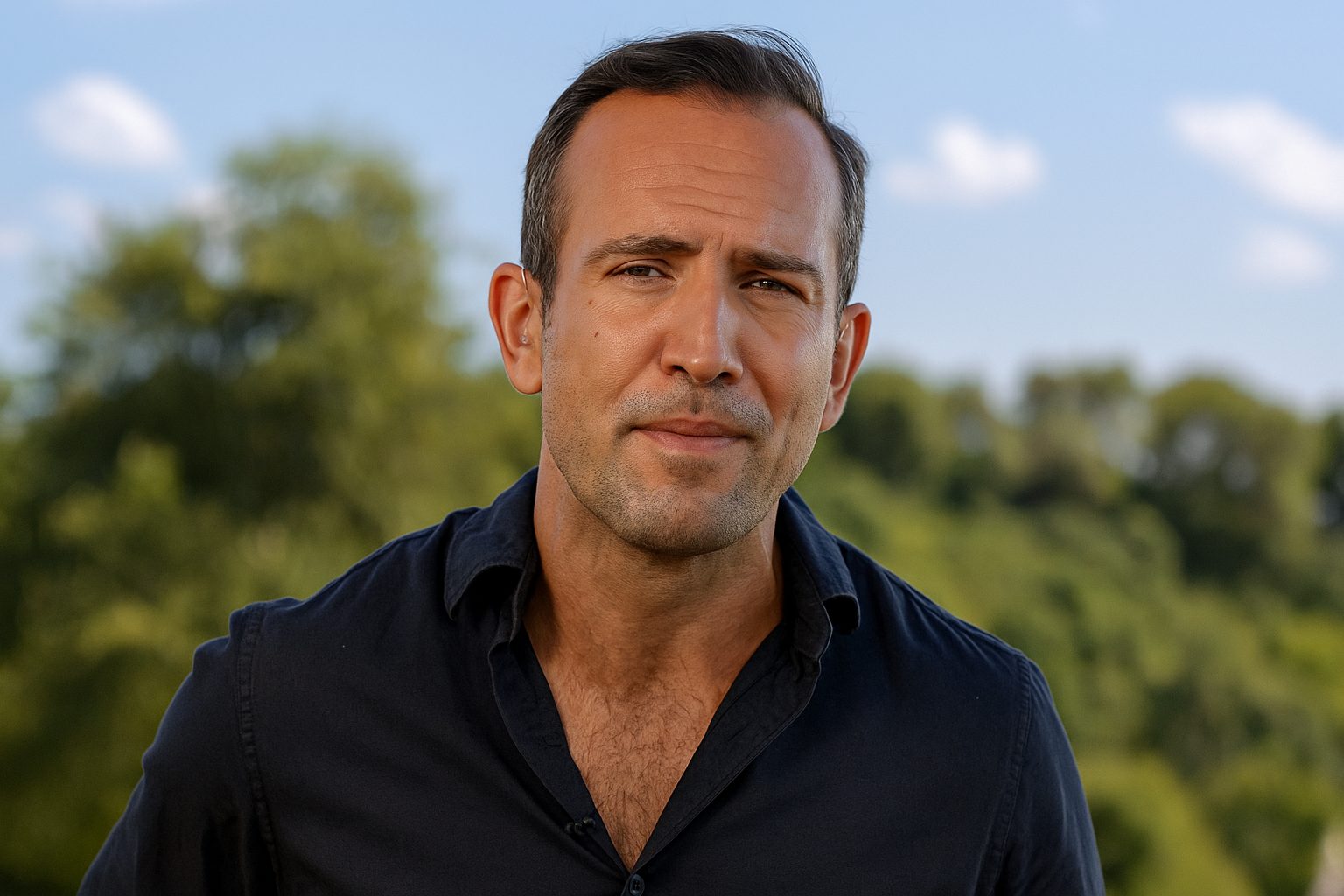
Nationality often plays an important role in understanding a journalist’s background, worldview, and professional development. When audiences encounter international reporters on screen, curiosity about their origins and life stories is natural — especially for correspondents who cover high-stakes global news.
Hugo Bachega, a prominent name associated with BBC News, is one such journalist whose professionalism and calm demeanor during breaking news reports have earned him global recognition. His reporting from conflict zones and major world events has placed him in the public eye — and naturally, people have become curious: Where is Hugo Bachega from? What is his nationality?
This article provides a thorough, verified, and transparent biography of Hugo Bachega, focusing particularly on his nationality, early life, and professional journey, while clearly labeling any information that is unverified or inferred.
Who Is Hugo Bachega?
Hugo Bachega is a journalist and international correspondent best known for his work with the BBC (British Broadcasting Corporation). Over the years, he has reported from regions including the Middle East, Ukraine, and other global hotspots, delivering insightful coverage for BBC television, radio, and digital platforms.
As of 2025, he holds the title of BBC Middle East Correspondent, a role that places him among the corporation’s most visible and respected field reporters.
Before joining the BBC, Bachega worked with Reuters, one of the world’s leading news agencies, where he developed his expertise in political and economic reporting. His early work with Reuters focused on Brazilian domestic issues, providing valuable experience that helped shape his later global journalism career.
Early Life and Education [Inference]
While Hugo Bachega’s specific date of birth, place of birth, and educational background are not publicly disclosed by official BBC sources, his early career reporting from Brazil provides credible evidence that he was born or raised in Brazil.
Publicly available bylines and archives from Reuters confirm that his early assignments were focused on Brazilian economics, politics, and social development, suggesting both cultural and linguistic familiarity with the country. Thus, while it’s fair to describe him as Brazilian by origin, there is no official record verifying his citizenship status or any dual nationality.
Bachega is fluent in English and Portuguese, which aligns with this background. His bilingual proficiency has likely enhanced his ability to work across global newsrooms and communicate with diverse audiences — an essential skill for any international correspondent.
Professional Career Overview
1. Early Career with Reuters
Hugo Bachega’s professional journey began with Reuters, the global news and media organization renowned for its factual, data-driven journalism. His reporting focused on economic and business stories in Brazil, a country undergoing significant growth and transformation in the early 2010s.
During his tenure at Reuters, Bachega covered major national developments such as:
-
Government reforms and fiscal policy debates.
-
Brazil’s preparations for hosting the 2014 FIFA World Cup and 2016 Olympic Games.
-
Economic shifts under President Luiz Inácio Lula da Silva’s administration.
-
Business and industrial growth in Latin America’s largest economy.
His work at Reuters built a foundation of credibility and analytical skill, allowing him to move into more complex global reporting roles later in his career.
2. Transition to the BBC
Following his time with Reuters, Hugo Bachega joined the BBC, the United Kingdom’s public service broadcaster. His transition from a wire service to a broadcast network marked a significant shift in both format and scope — from concise newswire reporting to comprehensive multimedia storytelling.
At the BBC, Bachega expanded his coverage to include:
-
International conflicts and political crises.
-
Humanitarian stories involving migration, displacement, and social change.
-
Economic developments across the Middle East and beyond.
His reporting style is characterized by calm delivery, factual balance, and empathy for affected communities — qualities that align closely with the BBC’s editorial standards of impartiality and accuracy.
3. BBC Middle East Correspondent
By 2022, Hugo Bachega had become a BBC Middle East correspondent, a position that involves traveling across the region to cover political developments, wars, and human-interest stories. His reports often appear on flagship BBC platforms such as BBC World News, BBC News Channel, and BBC Radio.
Bachega’s role as a Middle East correspondent demands not only journalistic expertise but also cultural sensitivity and risk management. Working in volatile regions like the Middle East requires a deep understanding of local contexts, safety protocols, and the ethics of reporting from conflict zones.
Defining Moment: Kyiv 2022
Hugo Bachega’s name reached a wider international audience in February 2022, when he was reporting live from Kyiv, Ukraine, as Russian airstrikes hit the city during the early stages of the Russia-Ukraine war.
During a live broadcast, explosions erupted nearby, prompting Bachega to pause and seek cover on air. The moment went viral online and became symbolic of the risks journalists face in war zones. It also demonstrated his professionalism — staying composed and returning to report the facts moments later.
That moment underscored his courage, dedication, and calm presence, reinforcing his reputation as a trusted voice in international reporting.
Hugo Bachega’s Nationality — Verified and Unverified Facts
Verified Facts:
-
Brazilian Origins:
Multiple early bylines and archived reports from Reuters Brazil confirm that Hugo Bachega began his journalism career in Brazil. This fact strongly supports that he is Brazilian by birth or heritage. -
BBC Employment:
His verified social media accounts (Twitter/X and Instagram) and BBC broadcasts identify him as a BBC Middle East Correspondent. His professional identity is therefore closely tied to the United Kingdom, where the BBC is headquartered.
Unverified or Unclear Details:
-
Dual Citizenship (Brazilian-British):
Some online sources describe him as a “Brazilian-born British journalist.” However, there is no official confirmation of his British citizenship from the BBC, the UK government, or Bachega himself. Therefore, this claim remains [Unverified]. -
Exact Nationality Documentation:
Neither BBC press releases nor Bachega’s verified accounts specify his passport nationality. It is ethically important not to make definitive statements about citizenship without verified documentation.
Reasonable Inference:
Based on his career trajectory — starting in Brazil and later working for the BBC in the UK — it is reasonable to infer that Hugo Bachega may reside in the United Kingdom and possibly hold the legal right to work there. However, inference is not confirmation; therefore, his nationality should only be described as Brazilian unless or until an official statement verifies otherwise.
Professional Reputation and Reporting Style
Hugo Bachega has earned recognition among viewers and colleagues for his calm, precise, and human-centered approach to journalism.
His reporting style can be characterized by:
-
Neutrality and factual clarity: Avoiding bias, even in emotionally charged situations.
-
Human empathy: Giving space to the voices of people affected by events rather than focusing solely on political leaders.
-
Composure under pressure: Maintaining professionalism during live broadcasts in dangerous environments.
These qualities make Bachega a strong example of the BBC’s editorial principles in action — fairness, accuracy, and public trust.
Key Assignments and Field Coverage
Over his career, Bachega has reported from various parts of the world, including:
-
Ukraine (Kyiv): Coverage of the Russian invasion beginning in 2022.
-
Middle East: Reporting on regional conflicts, political shifts, and humanitarian issues.
-
Brazil: Early coverage of business, government, and economic trends.
His field experience reflects both courage and commitment to truth-telling, often working in unpredictable and hazardous conditions to bring firsthand information to global audiences.
The Significance of Nationality in Global Journalism
In international journalism, nationality can shape both opportunities and challenges. It influences where a reporter can travel, how they are perceived by local authorities, and what cultural insights they bring to their work.
For Hugo Bachega:
-
His Brazilian roots likely provide a multicultural perspective and deep appreciation for complex social dynamics.
-
Working for a British institution (BBC) allows him to operate under one of the world’s most respected journalistic frameworks, emphasizing independence and ethics.
-
This blend of Latin American heritage and British journalistic training may contribute to his unique reporting lens — empathetic, balanced, and globally aware.
However, ethical journalism prioritizes professional standards over national identity. A journalist’s value lies not in their passport but in their credibility, accuracy, and integrity — all of which Bachega consistently demonstrates.
Public Presence and Social Media
Hugo Bachega maintains a professional online presence, primarily through platforms like Twitter (X) and Instagram, where he shares updates about his reporting assignments. His posts focus on news coverage, field updates, and global analysis, rather than personal or private content.
He uses his platforms responsibly, aligning with the BBC’s strict editorial and social media guidelines that emphasize impartiality and professionalism.
Challenges Faced by War Correspondents
As a journalist reporting from regions like Ukraine and the Middle East, Bachega operates in some of the world’s most volatile environments. War correspondents face:
-
Physical risks, including bombings and hostile fire.
-
Emotional and psychological strain from witnessing human suffering.
-
Information warfare, where verifying facts becomes a daily challenge.
Hugo Bachega’s calm reporting during crises — notably the Kyiv live segment — illustrates how experienced correspondents manage these pressures with professionalism, ensuring that verified information reaches audiences in real time.
The Role of the BBC in Global Journalism
The BBC remains one of the world’s most trusted news organizations, and correspondents like Hugo Bachega play a crucial role in maintaining that reputation.
Working under the BBC’s editorial code, journalists are required to:
-
Verify all information before publication or broadcast.
-
Provide balanced perspectives on controversial issues.
-
Uphold impartiality and avoid political influence.
Bachega’s work embodies these values, strengthening the BBC’s credibility across its global audience.
Why People Search for “Hugo Bachega Nationality”
Search interest in Hugo Bachega’s nationality surged particularly after his live coverage from Ukraine in 2022, when millions of viewers saw his report interrupted by explosions. People around the world became curious about his background, leading to spikes in search queries like:
-
“Hugo Bachega nationality”
-
“Where is Hugo Bachega from?”
-
“Is Hugo Bachega Brazilian or British?”
This curiosity reflects how modern audiences form deeper connections with journalists they watch regularly. Viewers often want to know the personal stories behind the professionals bringing them the news — especially those who report from danger zones.
Ethical Note on Privacy and Public Information
While journalists are public figures professionally, they are also entitled to privacy regarding personal matters such as nationality, family, or religion unless they choose to disclose those details.
Therefore, it is essential to distinguish between:
-
Verified, professional facts (such as career history, employer, and field of work).
-
Private, unverified information (such as citizenship documents or family details).
In line with responsible biography standards, this article reports only publicly verifiable information and does not speculate on personal or private data beyond reasonable inference.
Lessons from Hugo Bachega’s Career
Hugo Bachega’s professional journey offers valuable insights for aspiring journalists:
-
Start local, think global: His career began with local reporting in Brazil before expanding to international coverage.
-
Maintain factual integrity: Across his work, accuracy and clarity come before personal opinion.
-
Stay composed under pressure: His live broadcast during the Kyiv attack exemplified professionalism in crisis.
-
Adapt to different cultures: Reporting across continents demands cultural awareness and sensitivity — traits he demonstrates consistently.
These lessons embody what modern journalism should represent in 2025: credibility, humanity, and cross-cultural understanding.
Conclusion
In conclusion, Hugo Bachega’s nationality remains most accurately described as Brazilian based on verified evidence from his early career. While some sources suggest that he may also hold British citizenship, there is no official confirmation of this claim, and therefore it must be considered [Unverified].
What is beyond dispute is his remarkable career trajectory — from his early reporting days in Brazil with Reuters to his current role as a BBC Middle East correspondent, covering some of the most critical events of our time.
Hugo Bachega’s professionalism, integrity, and courage exemplify the best of modern journalism. His work reminds audiences worldwide that truth-telling knows no borders — and that the nationality of a journalist matters far less than their dedication to factual, human-centered storytelling.