

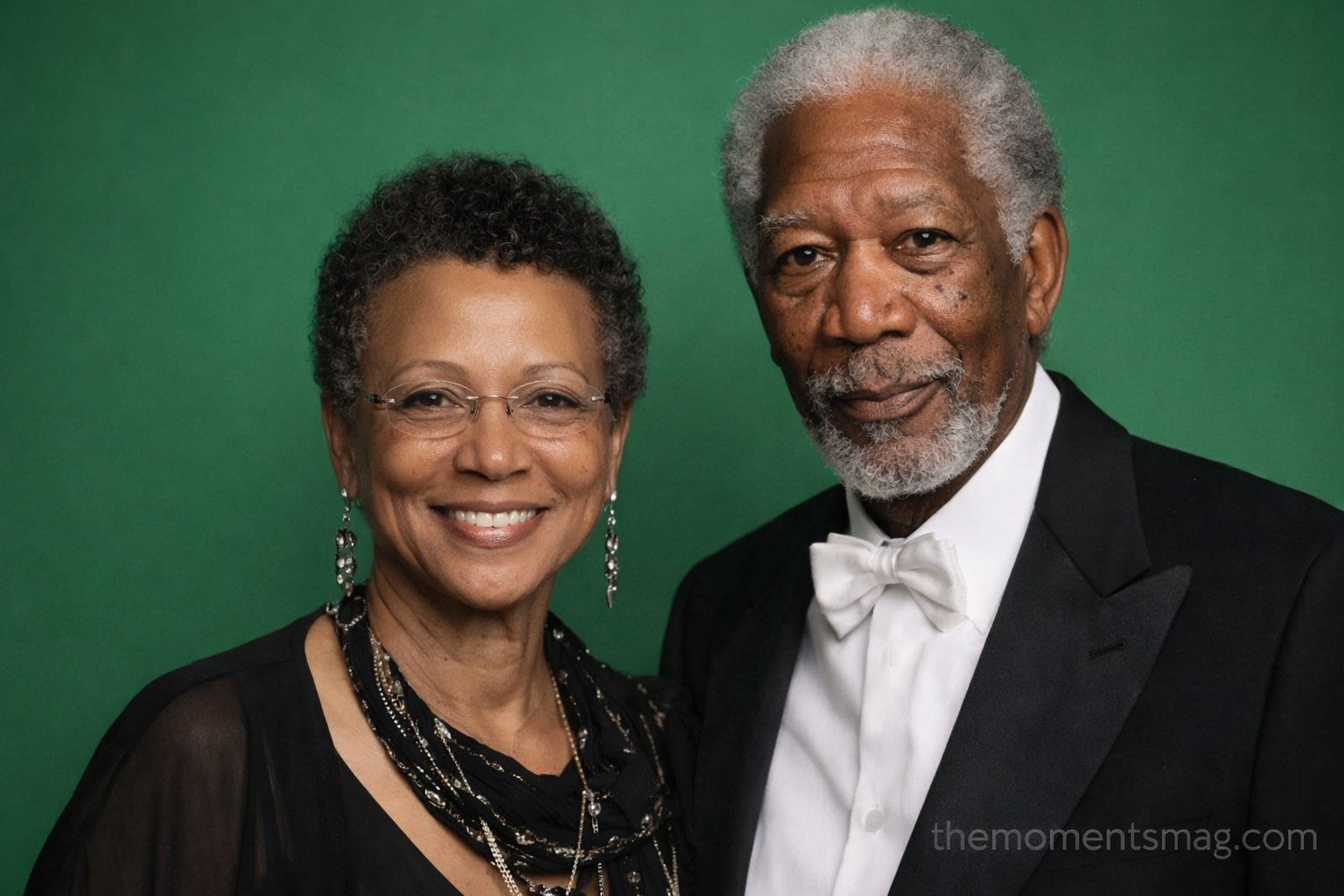
Jeanette Adair Bradshaw is a name that frequently surfaces in conversations about Hollywood history, yet she remains one of its most private figures. Best known as the first wife of acclaimed actor Morgan Freeman, Bradshaw’s life has long intrigued fans and biographers alike. However, unlike many individuals connected to celebrity culture, she has chosen a path away from public attention. That choice has shaped the narrative surrounding her—one defined as much by dignity and discretion as by her association with a global film icon.
While her former husband went on to become one of the most respected actors of his generation, Jeanette Adair Bradshaw represents an earlier chapter of his life. Hers is a story rooted in the years before awards ceremonies, blockbuster premieres, and worldwide recognition. To understand her place in history is to look at the foundations beneath fame—the relationships and realities that existed long before the spotlight grew bright.
Early Life and Background
Very little verified information exists about Jeanette Adair Bradshaw’s early life, and that scarcity is not accidental. She has never positioned herself as a public personality. There are no widely circulated interviews, memoirs, or media appearances in which she recounts her childhood or ambitions. As a result, much of her formative years remain respectfully undocumented.
What is clear is that Bradshaw lived during a period of significant social and cultural change in the United States. The 1960s and 1970s reshaped American society through civil rights movements, evolving gender roles, and shifts in the entertainment industry. Any partnership formed during that era would have been shaped by those larger transformations.
Her life entered the public record primarily through marriage, rather than through a public-facing career. Yet that does not diminish her individuality. In fact, it underscores the complexity of being linked to a rising public figure while maintaining a personal identity separate from fame.
Marriage to Morgan Freeman
A Union Before Stardom
Jeanette Adair Bradshaw married Morgan Freeman in 1967. At that time, Freeman was far from the Academy Award-winning actor audiences would later celebrate. He was still building his career, working in theater and television while striving for greater opportunities in film.
Their marriage lasted approximately twelve years, ending in divorce in 1979. These were formative years in Freeman’s professional life. He appeared in stage productions and gained recognition through television roles, including performances on educational programming. However, his major film breakthrough would not arrive until the late 1980s.
This context is important. Bradshaw’s years as Freeman’s spouse unfolded during a period marked by ambition, uncertainty, and gradual progress rather than instant success. Supporting a creative career often requires patience and resilience. While the public record does not detail the inner workings of their marriage, it is reasonable to understand that those early years carried both promise and pressure.
Family Life and Parenthood
During their marriage, Freeman adopted Bradshaw’s daughter, Deena. The couple also welcomed a daughter together, Morgana, born in 1971. Family life became a central part of their shared experience.
Parenthood, particularly during the demanding years of a developing acting career, can present unique challenges. Travel, auditions, inconsistent income, and long working hours all place strain on a household. Although the private details remain between those who lived them, the fact that they built a family together suggests a partnership grounded in commitment.
After their divorce, Freeman’s life continued to unfold publicly, while Bradshaw retreated further from view. Their children, however, remain part of the broader narrative that links them historically.
Life After Divorce
Choosing Privacy Over Publicity
Following the end of her marriage to Morgan Freeman, Jeanette Adair Bradshaw stepped away from public association with Hollywood. Unlike many former spouses of celebrities who publish memoirs or participate in interviews, she did not leverage her connection for visibility.
Her absence from public life has contributed to a sense of mystery. Yet it may also reflect a deliberate desire for normalcy. The end of a marriage—especially one connected to a public figure—can invite scrutiny. Choosing silence can be a form of protection.
In an era long before social media, maintaining privacy was more achievable. Today, however, digital archives and online curiosity keep names circulating long after individuals have stepped away from public spaces. Bradshaw’s story illustrates how a person can become a recurring subject of interest without actively participating in that narrative.
The Impact of Association
Being married to a figure who later achieves immense fame creates a lasting association. Even decades after their divorce, Jeanette Adair Bradshaw’s name appears in biographies and retrospectives about Freeman’s life.
This phenomenon is not uncommon. The early spouses of public figures often become part of the historical framework that explains “who they were before they became who they are.” In Bradshaw’s case, she is frequently referenced as part of Freeman’s early adult life—a period defined by growth, struggle, and persistence.
Yet her identity extends beyond that single chapter. While the public may primarily recognize her through that connection, her private life likely includes experiences, achievements, and relationships unknown to the wider world.
The Context of the 1960s and 1970s
Marriage in a Changing America
To better understand Jeanette Adair Bradshaw’s life during her marriage, it helps to consider the cultural climate of the time. The late 1960s and 1970s were marked by shifting attitudes toward marriage, gender roles, and professional ambition.
Women were increasingly entering the workforce, asserting independence, and redefining expectations within relationships. Simultaneously, the entertainment industry was undergoing transformation, with new voices emerging and traditional systems being challenged.
A marriage during this era would have existed within that broader atmosphere of change. Balancing family responsibilities with personal aspirations was not simply a private negotiation; it reflected larger societal conversations.
The Struggle Before Success
Morgan Freeman’s eventual acclaim sometimes obscures how long his path to recognition truly was. His major breakthrough roles in films like “Street Smart” and later “Driving Miss Daisy” came years after his first marriage ended.
This timeline means that Bradshaw experienced the pre-fame years—the stretch when recognition was not guaranteed. Those who stand beside artists during those years often witness both vulnerability and determination. The glamour associated with Hollywood success had not yet materialized.
Such partnerships, though rarely chronicled in detail, can shape the resilience and perspective that artists carry forward.
Public Curiosity and Limited Information
Why Interest Persists
Search interest in Jeanette Adair Bradshaw continues decades after her divorce. Much of this curiosity stems from readers exploring Freeman’s biography and encountering her name. In a digital age where information feels instantly accessible, the absence of detail becomes intriguing.
However, the scarcity of verified information also invites speculation. Numerous online pages repeat similar claims about her birth year, professional life, or financial standing without citing primary sources. This repetition can create an illusion of certainty.
A careful reader distinguishes between documented facts and assumptions. In Bradshaw’s case, confirmed details center primarily on her marriage and family connection. Beyond that, responsible coverage acknowledges the limits of public knowledge.
The Ethics of Biography
Writing about individuals who value privacy raises important ethical considerations. Not every life linked to celebrity is meant for public consumption. Biographical writing, at its best, respects boundaries while contextualizing known facts.
Jeanette Adair Bradshaw’s story demonstrates how restraint can be as meaningful as revelation. Rather than filling gaps with conjecture, a thoughtful approach focuses on verified history and broader context.
Her Place in Morgan Freeman’s Story
A Foundational Chapter
Every public figure has chapters that precede widespread recognition. For Morgan Freeman, his first marriage represents part of that foundation. It was during those years that he refined his craft and navigated the realities of sustaining a creative career.
Jeanette Adair Bradshaw was present during that formative period. Though the public record does not detail her personal ambitions or career, her presence in that chapter remains historically significant.
In many ways, early partnerships provide emotional grounding. They exist before the pressures of fame intensify. Even when such relationships end, they form part of the narrative arc that shapes an individual’s life.
Beyond the Spotlight
Bradshaw’s continued privacy suggests a clear distinction between her life and the entertainment world. While Freeman embraced a career defined by visibility, she appears to have chosen a different rhythm.
That contrast adds dimension to her biography. Not every story connected to Hollywood is about red carpets and premieres. Some are about quiet departures and personal boundaries.
Reflection on Legacy
Jeanette Adair Bradshaw’s legacy is subtle. She does not have a filmography or public platform attached to her name. Instead, her historical footprint lies in her role within a pivotal era of another person’s journey.
Yet subtlety does not equal insignificance. The early chapters of any life often shape the confidence and direction that follow. By existing within that early period, she occupies a meaningful place in the broader timeline.
Her decision to remain private also serves as a reminder that not all individuals connected to fame seek recognition. In fact, stepping away can be a powerful statement about autonomy.
Also Read: Itzhak Ezratti Net Worth 2026 & GL Homes Fortune
Conclusion
Jeanette Adair Bradshaw remains an enduring figure in Hollywood history not because she sought fame, but because she was part of a life that later became famous. Her marriage to Morgan Freeman during his formative years places her within the narrative of one of cinema’s most respected actors. Yet her own story stands apart in its quiet dignity.
In a culture that often equates visibility with importance, Bradshaw’s life suggests another path. She appears to have chosen privacy over publicity, normalcy over notoriety. That decision has left many details unknown, but it has also preserved her autonomy.
Biography is not only about what is loudly documented; it is also about what is intentionally kept personal. Jeanette Adair Bradshaw’s story reminds us that behind every public legend are private chapters—chapters that deserve to be acknowledged with respect, not speculation.
Her name will likely continue to appear in searches and retrospectives. Still, the most accurate portrait may be the simplest: she was an important presence during a defining era of Morgan Freeman’s life, and she has since lived beyond the spotlight on her own terms.