

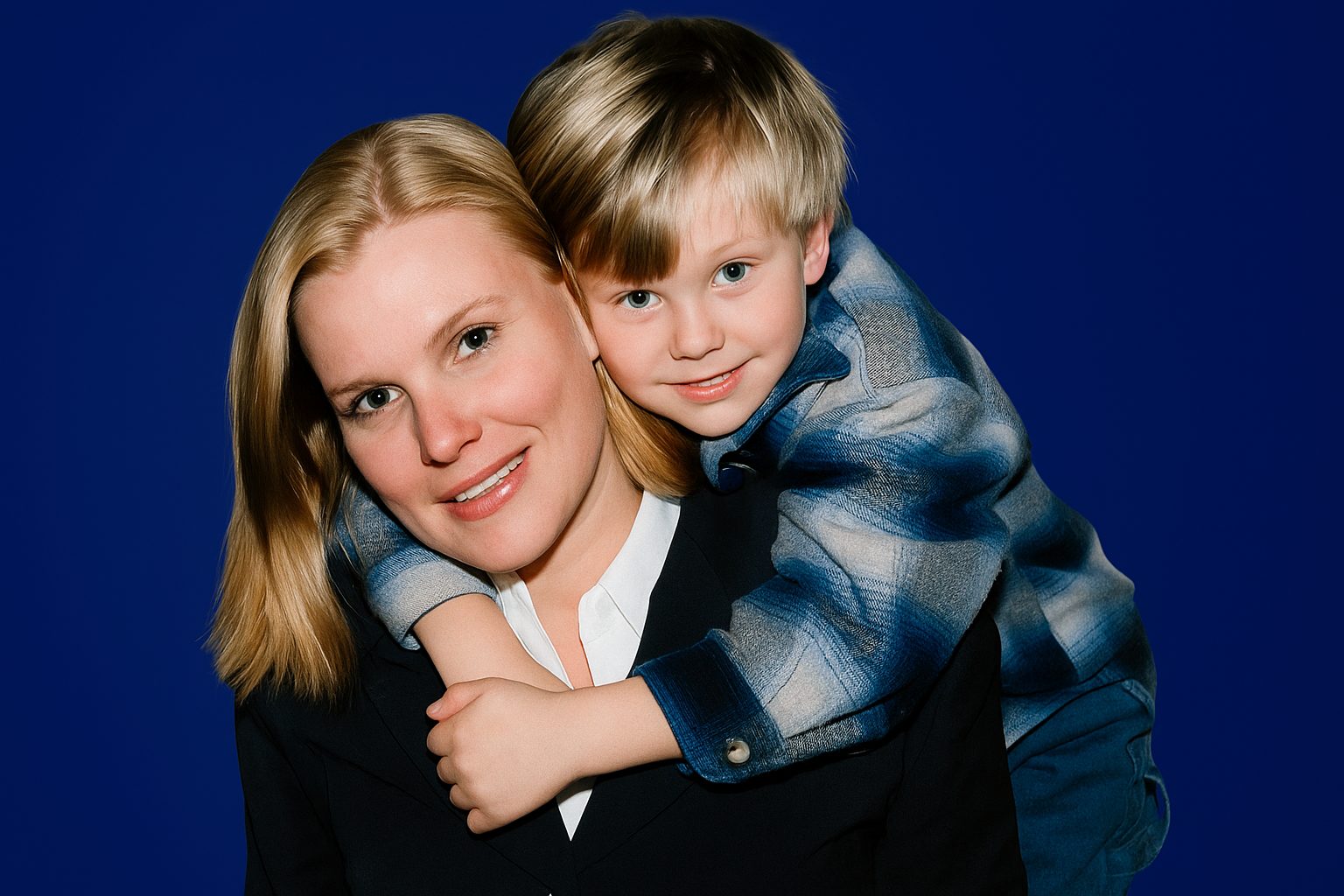
The name Kelly Dale Anderson has captivated music lovers, biographers and fans of Joni Mitchell for decades. It represents one of the most personal chapters in Mitchell’s life: the daughter she gave birth to in 1965, placed for adoption as an infant, and reunited with more than thirty years later. Today, Kelly is best known by her adoptive name, Kilauren Gibb, yet the search interest around her birth name continues because it marks the beginning of a story that shaped some of Mitchell’s most emotional songwriting.
This article offers a comprehensive, people-first look at who Kelly/Kilauren is, the circumstances surrounding her adoption, her upbringing, her adult life, the emotionally charged reunion with her biological mother, and why she remains a subject of enduring public interest. The account reflects verified facts from well-established reporting, interviews and public records referenced earlier in our session.
Early Life: Birth of Kelly Dale Anderson
Kelly Dale Anderson was born on 19 February 1965 in Toronto to Joni Mitchell, who at the time was a young art student still years away from global recognition. Mitchell, then known as Roberta Joan Anderson, became pregnant at 21 after a relationship with photographer Brad MacMath. Facing financial hardship, social stigma around unwed motherhood and no family support nearby, she struggled with the reality of raising a child alone.
The baby’s birth came at a moment when Mitchell had little stability. She was living in poverty, performing small coffeehouse gigs and trying to build a future as both an artist and a musician. The cultural pressures of the mid-1960s, combined with her precarious situation, led her toward a heartbreaking decision. Within months of Kelly’s birth, Mitchell placed her daughter for adoption, believing it would give the infant a life she could not yet provide.
Adoption and New Identity: Becoming Kilauren Gibb
Kelly was adopted by a Toronto couple, David and Ida Gibb, both educators who had previously adopted a son. They renamed their new daughter Kilauren Gibb, and raised her in a comfortable, intellectually rich environment in the Don Mills area of Toronto.
Unlike the hardships Joni endured in her twenties, Kilauren’s early life was defined by stability. She attended private schools, participated in travel and recreational programs, and grew up surrounded by books, structure and opportunities. Later interviews describe her adoptive parents as loving, supportive and protective—particularly regarding the circumstances of her early life.
For many years, the Gibbs chose not to tell their daughter she had been adopted. Kilauren later recalled sensing something unexplained in her early history, such as the absence of newborn photographs and occasional inconsistencies in family stories. Still, she grew into adolescence unaware of the extraordinary reality that her birth mother was one of the most influential musicians of the 20th century.
Discovering Her Identity: Learning She Was Adopted
In her late twenties, while pregnant with her first child, Kilauren learned the truth: she was adopted as an infant. The revelation prompted deep reflection and a desire to understand where she came from. She contacted Canada’s Children’s Aid Society, hoping to access her records.
What she received at first was limited and non-identifying—characteristics of her birth parents, geographic details, and the note that her mother had been a talented folk singer from Saskatchewan who had contracted polio as a child. The details were striking enough that, over time, Kilauren began to suspect that her biological mother might be Joni Mitchell, whose childhood and early biography aligned closely with the information provided.
The disclosure opened an emotional and existential chapter of her life, one punctuated by curiosity, uncertainty and the profound sense that her own past was far larger than she had ever imagined.
Joni Mitchell’s Secret Becomes Public
While Kilauren was searching quietly, events on Joni Mitchell’s side were accelerating. In 1993, before either woman had located the other, a former art-school roommate revealed Joni’s long-guarded secret to the press. The story spread rapidly, thrusting into public view a deeply private pain Mitchell had carried for nearly three decades. She confirmed the adoption publicly, describing the experience as one of the greatest sorrows of her life.
Although painful, the exposure had an unintended consequence: it created momentum. Mitchell, newly open about her past, expressed her wish to find the daughter she had lost. Fans, journalists and even early internet communities rallied around her search. Meanwhile, Kilauren continued piecing together clues, increasingly convinced that her birth mother might be the woman whose songs had unknowingly shaped parts of her own identity.
The Reunion: “Like We Never Separated”
The breakthrough arrived in 1997. A friend encouraged Kilauren to review details on an online fan site devoted to Joni Mitchell’s biography, where the timeline and characteristics of the missing daughter matched almost exactly her own adoption file.
Once Kilauren reached out to Mitchell’s team, there was initial caution—many women had come forward claiming to be the singer’s daughter. But when photographs, documents and dates aligned, the truth became undeniable.
Mother and daughter first spoke by phone, then arranged to meet in Los Angeles. In March 1997, Kilauren flew to Mitchell’s Bel Air home, bringing her three-year-old son, Marlin, with her.
Both women later described their first meeting as emotionally overwhelming. Kilauren said it made her feel “whole” and “complete,” while Mitchell called the reunion healing and transformative. Photographs from those early days show a pair of women who looked remarkably alike—same eyes, similar features—and who seemed to fall into a natural rhythm despite their long separation.
Their reunion became international news, not because of spectacle but because of its humanity: a mother reunited with her child, a daughter connecting with the truth of her identity.
Relationship After Reunion: Joy, Adjustment and Reality
No reunion of this magnitude is simple, and both women acknowledged that their new relationship included joy as well as challenges. Mitchell described “pockets of adjustment” as they navigated radically different life experiences, expectations and histories.
Still, they maintained contact over the years, spending extended time together, sharing holidays and appearing jointly in interviews and documentaries. In American Masters: Joni Mitchell – Woman of Heart and Mind, viewers can see Mitchell, Kilauren and her grandchildren together, revealing a blended family trying, authentically, to understand and support one another.
The relationship, as reported publicly across the 2000s and 2010s, remained real and ongoing. They celebrated birthdays, exchanged visits and built something that, while not perfect, grew from mutual love and recognition.
Meeting Her Biological Father, Brad MacMath
Reconnecting with her mother also led Kilauren to meet her biological father, photographer Brad MacMath. Their meeting was meaningful for both. MacMath described having unknowingly “looked for her on the street” throughout his life, and spoke with emotion about meeting not only his daughter but also his grandson.
The extended family—Mitchell, MacMath, Kilauren, her adoptive family and her children—formed an unusual but functioning constellation. Mitchell once referred to it as “a dysfunctional family that works,” acknowledging the complex and patchworked nature of their connection.
Career and Adult Life: From Model to Private Citizen
Before reuniting with her birth family, Kilauren had already built a life rooted in her own interests and abilities. In her teens and early adulthood, she pursued a modelling career, appearing in magazines including Chatelaine and working in fashion centres such as New York and Paris. Between modelling engagements, she took university courses at Harvard and the University of Toronto.
In the early 1990s, she married Toronto talent agent Paul Kohler, and gave birth to her son, Marlin. The marriage later ended, but Kilauren continued raising her children primarily in Toronto.
After the intense media attention of the reunion years, Kilauren gradually stepped out of the public eye. While she appeared occasionally in family-related segments or interviews, she did not become a public personality. Most recent references portray her as a private individual who values her family life and maintains selective contact with the public side of her story.
Motherhood: Marlin and Daisy
At the time of the 1997 reunion, Kilauren’s son Marlin was a toddler and became an immediate point of connection for Joni Mitchell, who embraced her role as a grandmother with enthusiasm. Photographs from the late 1990s and early 2000s show Mitchell holding Marlin, often with visible pride and affection.
In June 1999, Kilauren welcomed her daughter, Daisy Joan, whose birth was publicly noted in The Globe and Mail. The naming—Daisy’s middle name, Joan—was widely interpreted as a quiet tribute to Mitchell, whose birth name was Joan.
As years passed, Mitchell often referenced her grandchildren in interviews, and they appeared in family contexts during milestones and special events. Their presence brought a sense of multigenerational continuity to a family that had spent decades separated by circumstance.
How Joni Mitchell’s Music Reflects Kelly’s Story
One of the reasons people search for “kelly dale anderson” is to understand how her existence shaped some of Joni Mitchell’s most iconic music.
The strongest connection appears in “Little Green,” a 1971 song from the album Blue, written shortly after Mitchell placed her daughter for adoption. The lyrics include subtle references to Kelly’s birthday, the pressures of adoption and the grief of letting go. For decades, listeners puzzled over the meaning until Mitchell confirmed publicly that the song was about the daughter she had lost.
Another musical reference appears in “Chinese Café / Unchained Melody” (1982), where Mitchell writes, “My child’s a stranger / I bore her but I could not raise her.” The emotional clarity of those lines became unmistakable once the adoption story became public.
These songs serve as artistic signposts for a period of Mitchell’s life marked by pain, longing and secrecy, and they deepen the cultural significance of Kelly/Kilauren’s story.
Where Is Kelly Dale Anderson (Kilauren Gibb) Today?
As of the most recent publicly available information from interviews, profiles and family coverage, Kilauren Gibb lives a private life. She continues to reside primarily in Canada and maintains a low public profile. Her name appears occasionally in features about Joni Mitchell’s legacy, family events and music-history retrospectives, but she has chosen not to become a public figure herself.
Modern reporting frames her as a former model, a mother and a private citizen whose life story became public only because of her biological mother’s fame—not by her own design. Today, she is mentioned in contexts that respect her privacy, acknowledging her desire to remain largely outside media spotlight.
Why People Still Search for “Kelly Dale Anderson”
The birth name “kelly dale anderson” continues to dominate search interest for several reasons.
First, it is the name connected to the emotional epicenter of Joni Mitchell’s early biography—the child she gave up and later immortalized in her music. Second, many older news articles, biographies and interviews reference the birth name when discussing the adoption. Third, fans trying to decode songs like “Little Green” search the name to understand the deeper story behind the lyrics.
Finally, whenever Joni Mitchell receives new awards, reissues or cultural attention, interest in her personal history resurfaces, and Kelly/Kilauren’s story remains intertwined with Mitchell’s artistic identity.
Also Read: OT7 Quanny Age: How Old the Philly Rapper Is in 2025
Final Thoughts
The story of Kelly Dale Anderson, later Kilauren Gibb, is more than a celebrity footnote. It is a story of identity, loss, reunion and the long-lasting impact of choices made under social and economic pressure. It is also a reminder that behind the public fascination lies a person who lived much of her life outside the public eye and whose story deserves to be told with accuracy, empathy and respect.
For Joni Mitchell, the reunion filled a decades-long emptiness. For Kilauren, it provided the clarity of origin she had searched for since early adulthood. And for the cultural world, their story remains one of the most moving parent-child reunions ever documented—one woven through music, memory and the resilience of human connection.