

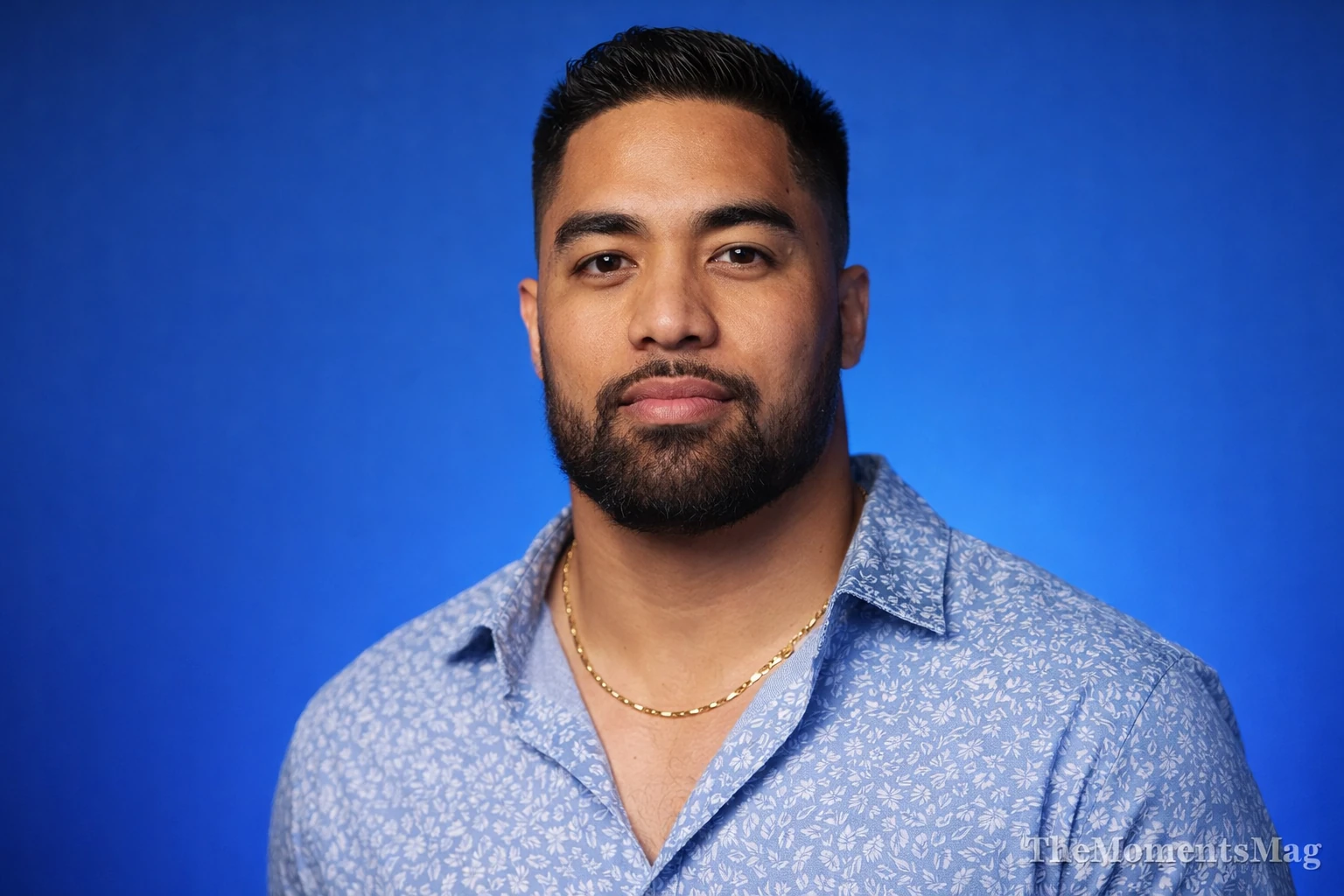
Manti Te’o’s life reads like a modern American sports epic—equal parts triumph, heartbreak, controversy, and redemption. For many fans, he will always be remembered as the dominant linebacker from Notre Dame who carried his team to a national championship appearance. For others, his name is tied to one of the most bizarre and publicized scandals in sports history. Yet beyond the headlines and highlight reels lies a far more layered story: that of a young man from Hawaii who rose to national fame, endured public humiliation, and rebuilt his life with resilience and grace.
Te’o’s journey is not just about football. It is about faith, identity, family, pressure, and growth under a relentless spotlight. His biography reflects the complex reality of modern celebrity, where athletic greatness can be overshadowed overnight and redemption requires more than talent. It requires courage.
Early Life and Family Roots
Growing Up in Hawaii
Manti Malietau Louis Te’o was born on January 26, 1991, in Laie, Hawaii. Raised in a tight-knit Polynesian family, he grew up in a community deeply rooted in faith and tradition. From a young age, football was more than a game; it was part of the cultural rhythm of life. Strength, discipline, and respect were values taught at home long before they appeared on a football field.
Te’o attended Punahou School in Honolulu, one of Hawaii’s most prestigious institutions. The school had already produced high-profile athletes, including former President Barack Obama in a different arena. By his teenage years, Te’o had become a standout football player, earning recognition as one of the top defensive prospects in the country.
A Highly Recruited Prospect
By the time he graduated high school, Te’o was a five-star recruit. Major programs across the United States courted him. Ultimately, he chose Notre Dame, a decision influenced by both football tradition and his Catholic faith. It was a choice that would shape the next chapter of his life in ways no one could have predicted.
College Stardom at Notre Dame
Immediate Impact
Te’o arrived at Notre Dame in 2009 with high expectations. He did not disappoint. As a freshman, he quickly became a starter at linebacker. His instincts, physicality, and leadership stood out. Coaches praised his football IQ, while teammates gravitated toward his calm confidence.
Over the next few seasons, he developed into one of the most feared defenders in college football. He accumulated tackles at a staggering pace and demonstrated a rare ability to anticipate plays. By his senior year in 2012, he had become the emotional heart of the Fighting Irish defense.
A Historic Senior Season
The 2012 season cemented Te’o’s place in college football history. He recorded multiple interceptions, a rare feat for a linebacker, and led Notre Dame to an undefeated regular season. The team advanced to the BCS National Championship Game.
Te’o finished second in the Heisman Trophy voting, an extraordinary accomplishment for a defensive player. He won several prestigious awards, including the Maxwell Award and the Bednarik Award. At that moment, he appeared destined for NFL stardom.
Yet even as he stood at the peak of his collegiate career, a storm was quietly gathering.
The Catfishing Scandal
A Personal Tragedy Turned Public
During the 2012 season, Te’o spoke publicly about the deaths of his grandmother and his girlfriend, Lennay Kekua, both of whom he said had passed away on the same day. The narrative of personal loss fueled national sympathy and admiration. It added emotional weight to Notre Dame’s undefeated run.
However, in January 2013, investigative reports revealed that Lennay Kekua did not exist. The story unraveled into one of the most shocking scandals in sports media. Te’o had been the victim of an elaborate catfishing scheme.
Media Frenzy and Public Judgment
The revelation triggered a media firestorm. Talk shows, sports networks, and social media platforms dissected every detail. Questions emerged about whether Te’o had been complicit or deceived. For a young man barely in his twenties, the scrutiny was overwhelming.
In interviews, Te’o maintained that he had been misled. Investigations later supported that he had indeed been the victim of a hoax. Still, the damage to his public image was significant. The scandal overshadowed his athletic achievements and cast a long shadow over his transition to the NFL.
Entering the NFL
Draft Day Slide
Once projected as a first-round pick, Te’o saw his draft stock fall. In the 2013 NFL Draft, the San Diego Chargers selected him in the second round. While still a strong position, it reflected the uncertainty surrounding his public image.
Te’o entered the league determined to prove himself on the field. However, the NFL is a different arena from college football. The speed is faster, the competition deeper, and the margin for error razor-thin.
Professional Career Highlights
Te’o played for the Chargers from 2013 to 2016. He showed flashes of the playmaking ability that had defined his college years. However, injuries and scheme changes limited his consistency.
Later, he signed with the New Orleans Saints, where he experienced a resurgence. In 2017, he started multiple games and delivered solid performances at linebacker. Although he was never a perennial Pro Bowl player, he carved out a respectable professional career.
He later had brief stints with other teams, including time with the Chicago Bears. By the early 2020s, his playing career quietly came to an end.
Life After Football
Reclaiming His Narrative
For years, Te’o remained somewhat defined by the scandal. Then, in 2022, Netflix released a documentary titled Untold: The Girlfriend Who Didn’t Exist. The film revisited the catfishing story but presented a more nuanced view of Te’o as a young man navigating manipulation and public shame.
The documentary allowed audiences to see his vulnerability. It reframed him not as a punchline but as a person who had endured emotional trauma. Public perception shifted. Many viewers expressed empathy and admiration for his honesty.
Media and Broadcasting Career
Following his playing days, Te’o transitioned into media. His articulate speaking style and deep understanding of the game made him a natural fit for football analysis. He began appearing on NFL Network programming, including Good Morning Football.
The move into broadcasting signaled a new chapter. It showed his ability to evolve beyond the identity of athlete alone. For many former players, this transition is challenging. For Te’o, it appeared to come with a sense of maturity shaped by experience.
Personal Life and Faith
Family and Marriage
In 2020, Te’o married Jovi Nicole Engbino. The couple has since started a family, and Te’o frequently shares moments of fatherhood and domestic life. His social media presence reflects a grounded, family-centered existence.
Faith continues to play a central role in his life. Throughout his career, he often referenced his Catholic beliefs as a source of strength. Even during the darkest moments of public scrutiny, he leaned on spiritual conviction.
Lessons in Resilience
If there is one defining trait in Te’o’s biography, it is resilience. He endured public embarrassment on a global scale. He navigated doubts about his integrity. He faced career setbacks and injuries.
Yet he did not disappear. Instead, he rebuilt his reputation through patience and transparency. In doing so, he became a symbol of perseverance in an age of instant judgment.
Legacy and Cultural Impact
A Cautionary Tale About Media
Te’o’s story is often cited as a turning point in how media handles viral narratives. The speed with which the scandal spread highlighted the dangers of incomplete information. It also exposed how quickly public opinion can form and harden.
In hindsight, many commentators view his experience as a lesson in digital-era vulnerability. Social media amplification can magnify both truth and misunderstanding. Te’o was caught in that crossfire.
Remembering the Athlete
It is easy to forget that before the scandal, Te’o was one of the most decorated defensive players in college football history. His senior season remains one of the most remarkable campaigns ever delivered by a linebacker.
His NFL career may not have reached Hall of Fame heights, but it was solid and respectable. He played at the highest level of the sport, a dream realized by very few.
More importantly, he demonstrated that identity is larger than performance metrics.
Also Read: Blooket Host Guide: How to Run Live Games Right
Conclusion
Manti Te’o’s biography cannot be reduced to a single headline or statistic. It is the story of a gifted athlete from Hawaii who reached the summit of college football, stumbled under extraordinary circumstances, and rebuilt his life with quiet determination.
His journey reflects the complexity of modern fame. It shows how quickly narratives can shift and how deeply they can wound. Yet it also reveals the power of growth and reinvention.
Today, Te’o stands not only as a former football star but as a husband, father, broadcaster, and survivor of public scrutiny. His life reminds us that redemption is possible, even in the most unforgiving spotlight. And perhaps that enduring resilience is the most meaningful achievement of all.