

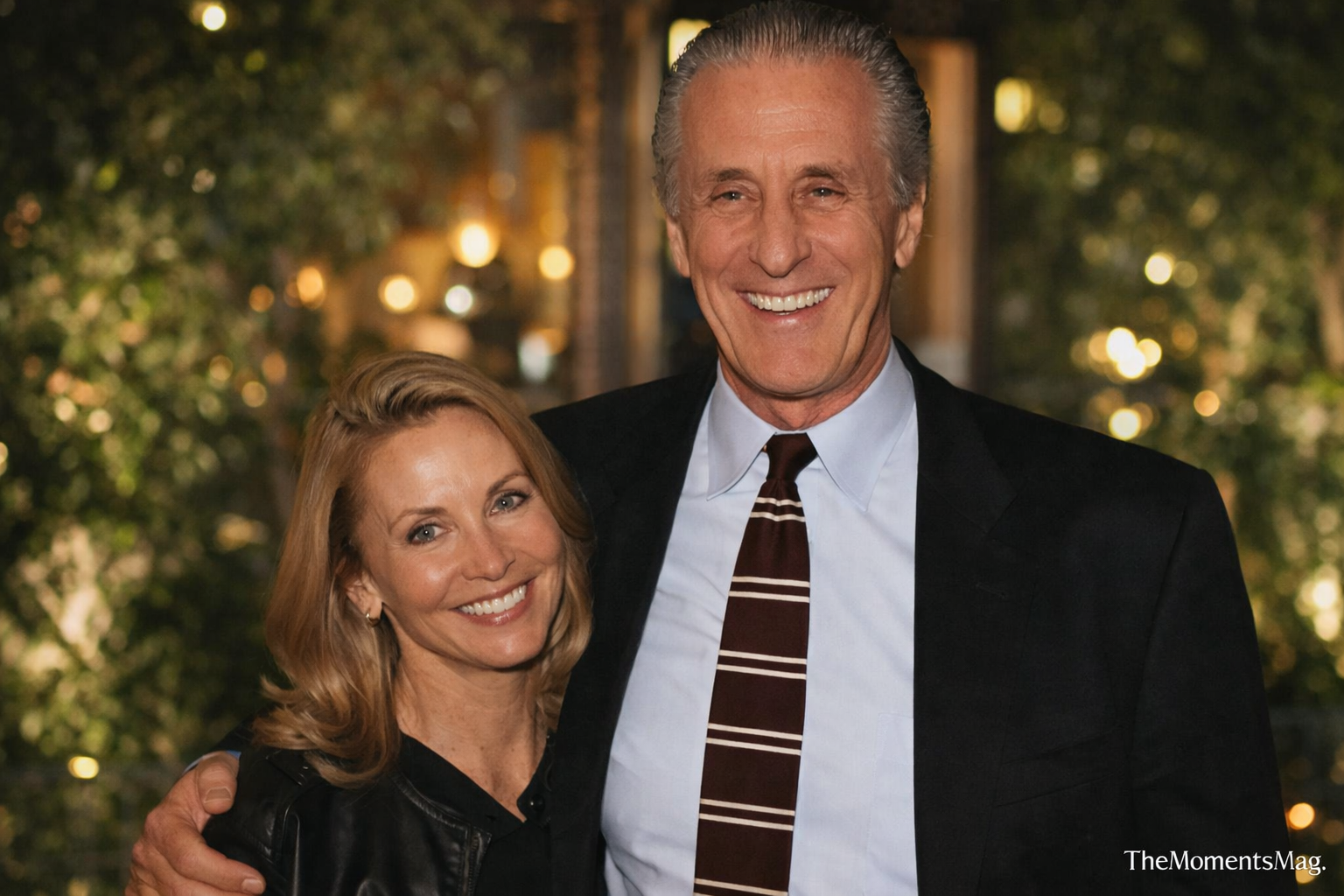
Chris Rodstrom has spent more than five decades adjacent to one of the most recognizable figures in professional basketball, yet she has never tried to become famous herself. In an age when proximity to power often turns into a platform, Rodstrom represents a different model of influence—one rooted in privacy, emotional steadiness, and long-term partnership rather than public visibility. Best known as the wife of Pat Riley, her story is not about chasing the spotlight, but about navigating life beside it.
This biography focuses on what can be responsibly known, while also acknowledging why so much about Chris Rodstrom remains intentionally out of public view. In doing so, it reveals a broader truth about relationships, resilience, and the often-unseen labor behind extraordinary careers.
Early Life and Background
Chris Rodstrom, often referred to as Christine Rodstrom in formal records, was born in the United States in the mid-20th century. Details about her childhood, family background, and early education are scarce. This absence is not accidental. Unlike many spouses of public figures, Rodstrom has consistently chosen to keep her personal history private, resisting the tendency to transform biography into branding.
What is clear from later accounts is that she possessed a strong sense of self long before she met Pat Riley. Anecdotes from journalists and cultural commentators suggest a woman who was composed, observant, and emotionally grounded—qualities that would later become central to her public perception, even if she never articulated them herself.
Meeting Pat Riley and the Beginning of a Partnership
Chris Rodstrom met Pat Riley in the late 1960s, before Riley became synonymous with championship rings and tailored Armani suits. At the time, Riley was a young professional basketball player, still shaping his identity and future. Their relationship developed away from cameras and social media, in a period when professional athletes were visible but not yet global brands.
They married on June 26, 1970, beginning a union that would endure through every phase of Riley’s evolution: from player to coach, from coach to executive, and ultimately to a Hall of Fame legacy. The longevity of their marriage is notable not just because of its duration, but because of the pressure surrounding it. Professional sports, particularly at the highest levels, are unforgiving environments for personal relationships. Careers involve constant travel, public scrutiny, and intense performance demands. Many relationships fracture under that weight. The Rileys’ did not.
Life Alongside a Rising Basketball Power
As Pat Riley’s career accelerated, Chris Rodstrom found herself increasingly adjacent to high-stakes environments. Riley’s coaching years with the Los Angeles Lakers during the “Showtime” era placed him at the center of American sports culture. Championships, celebrity players, and relentless media attention became part of daily life.
Rodstrom, however, never attempted to become a visible figure within that ecosystem. She attended events when appropriate and supported her husband, but she did not cultivate a public persona. This restraint became one of her defining characteristics. Those who have written about Riley often describe Rodstrom as a stabilizing force—someone who provided emotional continuity while the external world fluctuated between triumph and criticism.
One oft-repeated anecdote captures this dynamic. Early in their relationship, Riley reportedly took Rodstrom to a boxing match. When blood splattered onto her white dress during the fight, she remained unfazed. For Riley, the moment symbolized her calm under pressure. Whether embellished over time or not, the story persists because it aligns with the broader narrative of who she appeared to be: steady, unflinching, and grounded.
Family Life and Parenthood
Chris Rodstrom and Pat Riley chose to adopt their children rather than pursue biological parenthood. They adopted a son, James Patrick, in 1985, and a daughter, Elisabeth, in 1989. Once again, the couple shielded their family life from public exposure. Their children did not grow up as celebrity accessories, nor were they positioned for public consumption.
Rodstrom’s role as a mother has never been publicly dissected, but the consistency with which the Riley family has maintained privacy suggests intentional boundaries. In professional sports culture, where families are often woven into narratives of legacy and image, Rodstrom helped draw a firm line between public achievement and private life.
Privacy as a Defining Choice
One of the most striking aspects of Chris Rodstrom’s biography is how little verified information exists about her professional career. Many websites confidently claim degrees, job titles, or executive roles, often citing one another rather than primary sources. Reputable journalism, however, does not consistently confirm these details.
This matters because it highlights a larger issue in modern digital culture: the discomfort with not knowing. When a person connected to fame declines to tell their story, the internet tends to invent one. Rodstrom’s life challenges that impulse. Her refusal to perform transparency has become part of her identity.
Rather than diminishing her presence, this silence has amplified curiosity. People search her name not because she has given interviews or launched initiatives, but because she has not. In a paradoxical way, privacy has become her most visible trait.
Representation in Popular Culture
Chris Rodstrom entered mainstream pop culture consciousness for a new generation through the HBO series Winning Time: The Rise of the Lakers Dynasty. In the dramatized retelling of the Showtime Lakers era, Rodstrom appears as “Chris Riley,” portrayed by actress Gillian Jacobs.
The character is intelligent, grounded, and emotionally perceptive—often serving as a counterbalance to Riley’s intensity. While the series is explicitly a dramatization rather than a documentary, its portrayal reflects how Rodstrom is widely perceived: not as a background figure, but as a quiet equal in a demanding partnership.
Importantly, the show did not trigger a wave of public commentary from Rodstrom herself. She did not correct portrayals or capitalize on renewed interest. The silence held.
Philanthropy and Shared Values
Although she avoids publicity, Chris Rodstrom’s values become visible through philanthropy. In recent years, reporting around Pat Riley’s long-standing trademark on the term “three-peat” revealed that proceeds from its use have been directed toward charitable causes chosen by Riley and his wife.
These donations have supported organizations focused on military veterans and their families, including substantial contributions to the Special Operations Warrior Foundation. This form of giving aligns with the broader pattern of Rodstrom’s life: impactful but understated, meaningful without self-promotion.
Philanthropy, in this context, is not a branding exercise. It is an extension of private values into public good, executed without fanfare.
The Psychology of Long-Term Partnership
From a broader perspective, Chris Rodstrom’s life invites reflection on the psychology of long-term partnership under pressure. Research in psychology consistently shows that stable social support improves resilience, emotional regulation, and overall well-being. While Rodstrom has never framed her role in clinical terms, the durability of the Riley marriage suggests a partnership built on mutual respect and emotional intelligence.
Rather than being defined by sacrifice alone, her biography points toward agency. Choosing not to be visible is still a choice. Choosing not to speak publicly is still communication. In Rodstrom’s case, these choices appear deliberate, sustained, and deeply aligned with her understanding of a meaningful life.
Why Chris Rodstrom Still Matters
It would be easy to dismiss Chris Rodstrom as “simply” the spouse of a famous man. That framing misses the point. Her significance lies not in public achievements, but in the alternative narrative she offers in a culture obsessed with exposure.
She represents a model of strength that does not rely on performance, a form of influence that operates through presence rather than proclamation. In doing so, she challenges assumptions about relevance, especially for women connected to powerful men.
The continued interest in her life reflects a collective curiosity about how success is actually sustained. Championships and executive decisions happen in public. Endurance, however, is built in private.
Also Read: MariaSanta Mangione: Biography of a Physician-Scientist
Conclusion
Chris Rodstrom’s biography is defined as much by what is absent as by what is known. She married Pat Riley in 1970, raised a family with him, and remained a constant presence as his career reshaped professional basketball. Beyond those facts, she has resisted categorization, refusing to become a public figure simply because the world expected one.
In a digital era that rewards oversharing and personal branding, Rodstrom’s life stands as a quiet counterexample. Her story suggests that not every meaningful contribution leaves a paper trail, and not every influential person seeks recognition. Sometimes, the most enduring impact comes from staying grounded while everything else accelerates.
Chris Rodstrom may never publish a memoir or grant a defining interview. Yet her life continues to resonate precisely because it demonstrates a rare and increasingly valuable form of power: the power to remain whole, private, and purposeful in the shadow of global fame.