

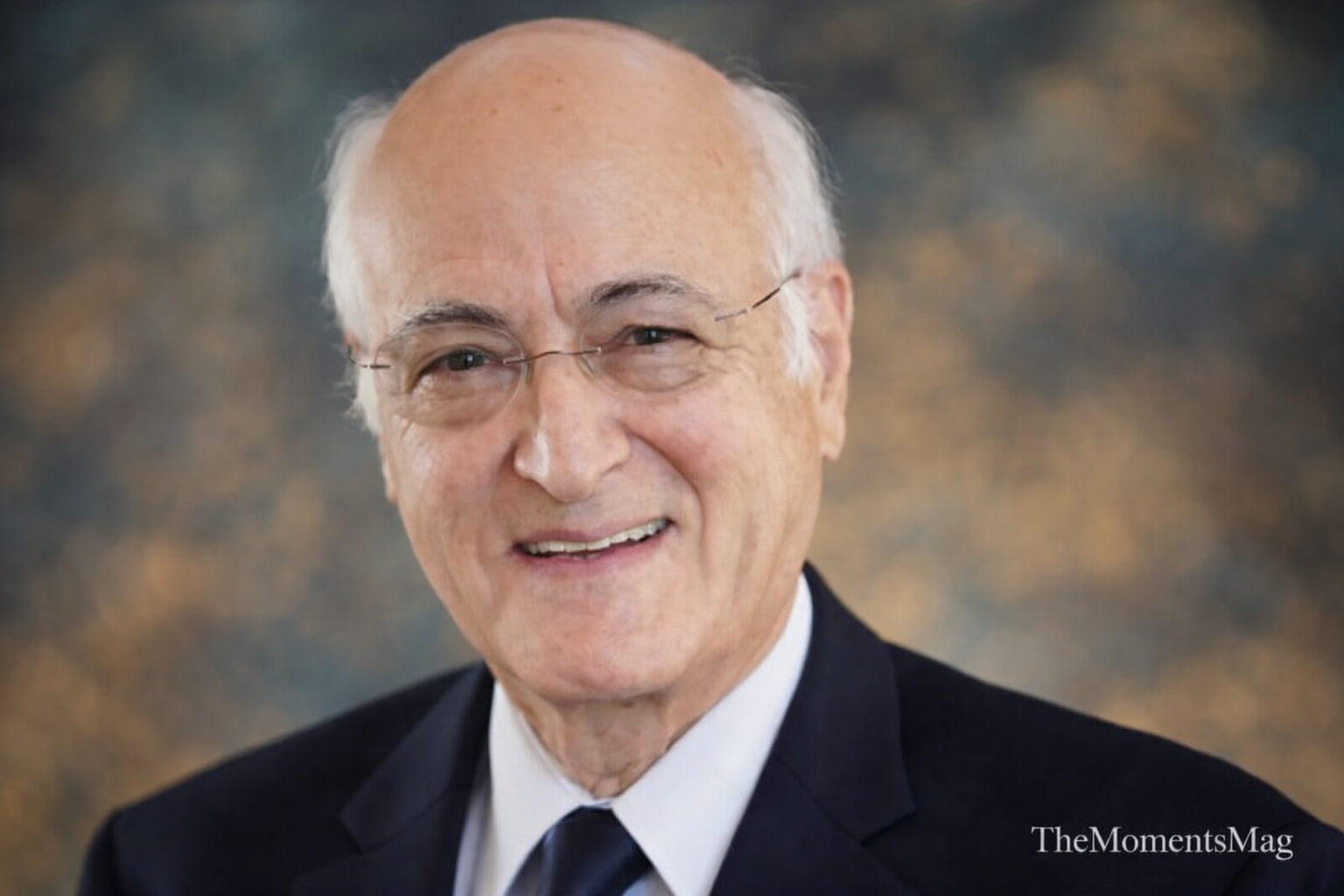
Abdulfattah Jandali is best known to the public as the biological father of Steve Jobs, one of the most influential figures in modern technology. Yet reducing Jandali’s life to that single fact misses the deeper, more human story. His biography is not the tale of a man chasing fame, nor one shaped by public ambition. Instead, it is the story of an immigrant intellectual, a private individual, and a life lived largely outside the spotlight—until history briefly turned its gaze toward him.
Jandali’s name surfaced late, pulled into public consciousness by Jobs’ extraordinary success and later by the revelations contained in Jobs’ authorized biography. What emerged was not a dramatic reunion or a sentimental narrative, but something more restrained and more realistic: a story of distance, pride, missed timing, and the long consequences of early-life decisions.
Early Life in Syria
Abdulfattah Jandali was born in Homs, Syria, into a family that valued education, cultural identity, and social standing. Homs, one of Syria’s oldest cities, was historically a center of commerce and learning, and Jandali grew up in an environment where intellectual achievement was closely tied to personal honor and family reputation.
From an early age, he demonstrated academic promise. His upbringing emphasized discipline and aspiration, qualities that would later shape his decision to leave his home country in pursuit of higher education. Like many young men from the Middle East in the mid-twentieth century, Jandali saw education abroad not as an escape, but as a path toward distinction.
Education and the Road to the West
Jandali’s academic journey took him first to the American University of Beirut, one of the most prestigious institutions in the region. At the time, the university served as a crossroads for students from across the Middle East, Europe, and beyond. It exposed him to Western political thought, global perspectives, and the idea that intellectual capital could open doors far beyond national borders.
From Beirut, Jandali moved to the United States to continue his studies. He enrolled in graduate-level political science, eventually attending the University of Wisconsin. This move placed him firmly within the postwar wave of international students who believed America represented both opportunity and intellectual legitimacy.
It was during this period that his life took a turn that would quietly echo for decades.
Joanne Schieble and a Defining Relationship
While studying in Wisconsin, Jandali met Joanne Schieble, a young American woman from a Catholic background. Their relationship was serious, but it existed within a cultural context that made acceptance difficult. Schieble’s father strongly opposed the match, largely because Jandali was Muslim and from the Middle East.
When Schieble became pregnant, the couple faced immense pressure. Social expectations, family resistance, and uncertainty about the future converged at once. Ultimately, Schieble chose to place the child for adoption. The adoption was arranged as a closed adoption, meaning identifying information about the biological parents was sealed.
In 1955, their son was born and adopted by Paul and Clara Jobs. That child would grow up to be Steve Jobs, though neither he nor Jandali would know each other at the time.
Life After Adoption
Following the adoption, Jandali and Schieble went on separate paths. Later, they reunited, married, and had another child, Mona Simpson, who would become a successful writer. The marriage, however, did not last. Over time, Jandali’s relationship with Mona also became distant, reinforcing a recurring theme in his life: separation shaped by circumstance rather than lack of feeling.
Jandali built a career that reflected his education and adaptability. He worked as a political science professor for a period, reportedly at the University of Nevada, Reno. Later, he transitioned into the hospitality and gaming industry, eventually holding executive and management roles in Reno-area casinos. This shift from academia to business suggested a pragmatic response to opportunity rather than a rejection of intellectual life.
Throughout these years, Jandali lived quietly. He was known locally as an educated immigrant professional, not as a man connected to Silicon Valley or global fame.
The Revelation of Steve Jobs
Steve Jobs learned about his biological parents as a young adult, but his emotional allegiance remained firmly with his adoptive family. He spoke often of Paul and Clara Jobs as his true parents and expressed little interest in forming a relationship with his biological father.
According to Jobs’ own account, he believed he once unknowingly met Jandali at a restaurant in California. Jobs recalled shaking hands with a Syrian-born owner or manager, later realizing that the man was likely his biological father. The moment passed without recognition. It became one of the most poignant details in Jobs’ biography, precisely because nothing came of it.
For Jandali, the revelation of Jobs’ identity was complicated. In interviews and reports, he expressed pride in his son’s achievements, yet also restraint. He avoided reaching out directly, later explaining that he feared Jobs might assume he was seeking financial benefit or publicity. Cultural pride and personal dignity played a significant role in his silence.
A Man Defined by Distance
Unlike many stories involving famous adoptees, the relationship between Steve Jobs and Abdulfattah Jandali never developed. There were no reconciliations, no emotional public meetings, no late-life closure. Jobs died in 2011 without establishing contact with his biological father.
This absence is central to understanding Jandali’s biography. His life is not one of abandonment in the dramatic sense, nor of redemption through reunion. Instead, it reflects how pride, cultural expectations, and timing can create permanent distance even when curiosity and regret exist on both sides.
Jandali has spoken about his son with admiration and sadness, but without bitterness. He acknowledged the reality of the situation and accepted that some choices, once made, cannot be reversed.
Cultural and Historical Context
Jandali’s story cannot be separated from the era in which it unfolded. Mid-twentieth-century America was far less open to interracial and interfaith relationships. Closed adoptions were standard practice. Immigrant men often navigated cultural isolation while trying to establish professional credibility.
His experience also reflects the broader immigrant narrative: individuals who contribute quietly to American society while remaining invisible to national history until a famous connection emerges. In this sense, Jandali’s life mirrors that of countless others whose stories remain untold.
Legacy and Public Perception
Today, Abdulfattah Jandali occupies a unique space in public memory. He is not a public figure by choice, nor a man who sought recognition through his son. His name appears in biographies, articles, and search queries largely because of what might have been.
Yet his legacy is more nuanced than a footnote in Steve Jobs’ life. It is the legacy of an educated immigrant who lived with dignity, complexity, and restraint. It is also a reminder that history often focuses on outcomes rather than origins, success rather than sacrifice.
Also Read: Leo Censori: Biography of Bianca Censori’s Father
Conclusion
Abdulfattah Jandali’s biography is a study in quiet significance. His life intersected with one of the most influential figures of the modern age, yet he remained on the margins of that story. Through education, migration, professional reinvention, and personal loss, he lived a life shaped more by circumstance than by choice.
In the end, Jandali’s story resonates because it feels real. It is not wrapped in triumph or tragedy alone, but in the subtle weight of human decisions. His biography reminds us that behind every celebrated life are untold stories—lives lived fully, yet quietly, beyond the reach of headlines.