

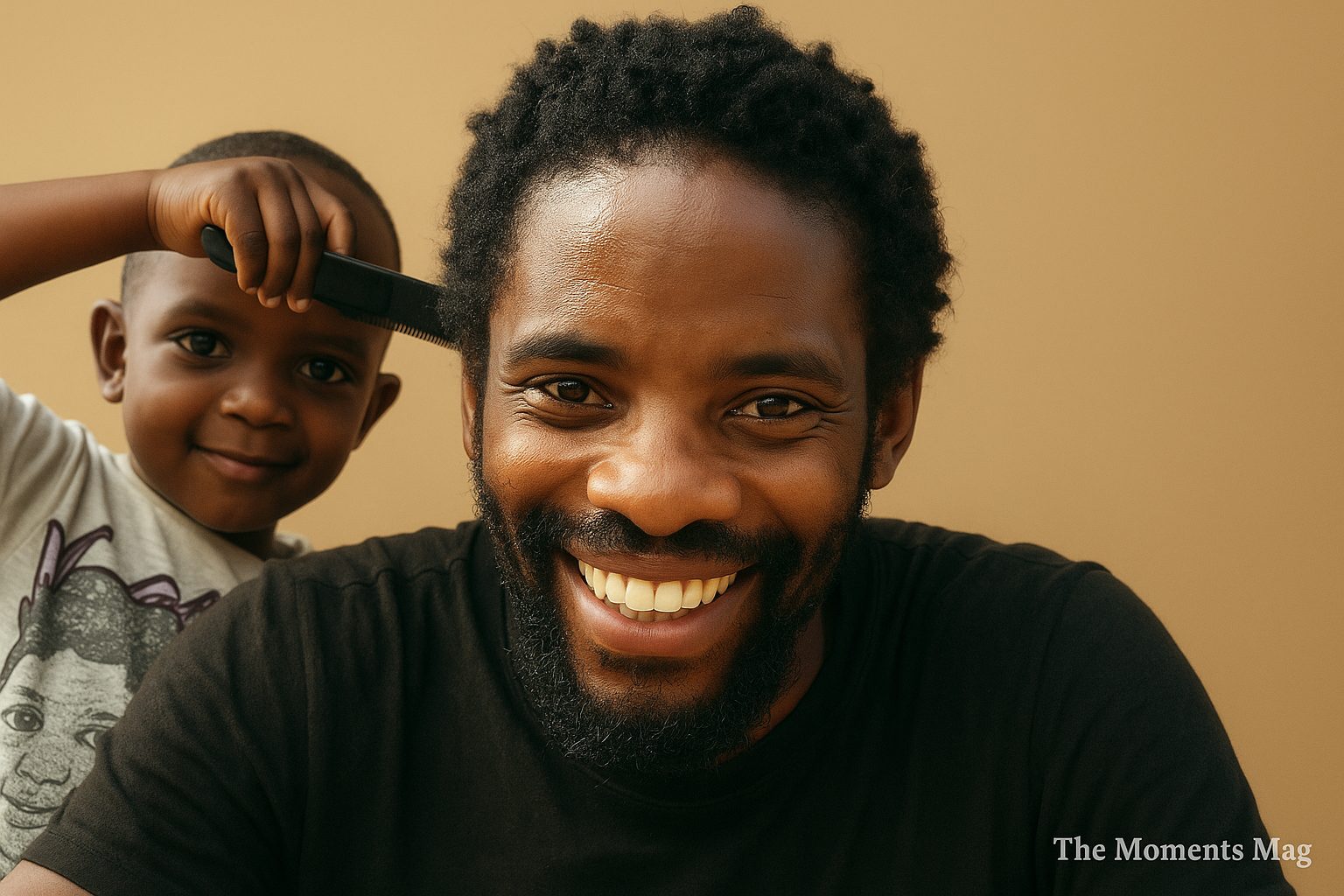
The name Andrew Shingange often appears in searches related to Trevor Noah, yet the man himself remains mostly unknown to the public. While Trevor’s rise from Johannesburg to international stardom is widely documented, Andrew has lived his life far from the spotlight. He shares the same history, the same home, and the same challenges that shaped Trevor, but he has chosen a quieter existence. Understanding Andrew requires looking beyond headlines to the emotional world that formed him.
His story begins in a family marked by resilience and conflict. He grew up in a home filled with laughter, tension, discipline, and moments of danger. His mother, Patricia, protected her children fiercely. Their father, Abel, introduced fear and instability. These forces shaped Andrew’s life and left a deep imprint on his values, relationships, and approach to adulthood. The picture that emerges is a portrait of a man defined not by fame, but by endurance, privacy, and a desire for peace.
Understanding Who Andrew Shingange Is
Andrew is the half-brother of Trevor Noah. They share the same mother, Patricia Nombuyiselo Noah, a woman known for her strength and independence. His father, Ngisaveni Abel Shingange, became a central and often painful figure in the family’s story. Andrew grew up with Trevor, the eldest, and later with Isaac, the youngest of the three boys. Their different fathers created a blended household, but their experiences tied them together.
Patricia’s influence shaped the boys’ early years. She demanded discipline, encouraged independence, and insisted on survival through self-belief. Her choices often defied South Africa’s restrictive environment, especially during the final years of apartheid. Andrew absorbed her courage and determination, but he also saw the cost she paid for it. Her life became a model of strength that guided all three brothers in different ways.
Unlike Trevor, Andrew never embraced public storytelling. His identity formed through private experiences—moments lived, not shared. The details we know come from Trevor’s reflections and from major events that reached national attention. Everything else remains intentionally guarded.
Early Childhood in Johannesburg
Andrew spent his childhood in Johannesburg, a city filled with energy, hardship, and transition. South Africa was shifting from apartheid to democracy, and families navigated complicated social rules. His home mirrored this complexity. Patricia worked hard to provide stability, yet the world around them often felt unpredictable. Andrew grew up in neighborhoods shaped by inequality and resilience, where danger and opportunity lived side by side.
He watched his mother build a life through sheer force of will. She created a home despite limited resources. She chased independence despite cultural resistance. Her strength became the foundation of the household. Andrew and Isaac, unlike Trevor, stayed more consistently in Patricia and Abel’s home. Their daily lives reflected the emotional patterns inside that house—moments of warmth followed by moments of fear.
The political environment influenced Andrew as well. Johannesburg exposed him to racial tension, shifting identities, and evolving ideas about community. His childhood existed at the intersection of old laws and new freedoms. This environment shaped his maturity and made him aware of threats and expectations from a young age.
Life in a Home Marked by Domestic Violence
Domestic violence shaped Andrew’s early world. Abel, his father, brought instability and anger into the home. Trevor’s memoir describes painful moments, but those scenes were Andrew’s lived reality. He saw arguments escalate without warning. He witnessed injuries, fear, and emotional exhaustion. The unpredictability of violence forced him to stay alert, protect Isaac, and understand danger before he understood childhood.
Such an environment teaches survival more than innocence. Andrew learned to sense shifts in mood and energy. He watched his mother endure cycles of intimidation, and he felt the weight of responsibility years before most children do. He also saw the strength required to keep a family together under pressure. This contrast—between fear and resilience—shaped his emotional development.
Each brother adapted differently. Trevor used humor and storytelling to process the trauma. Isaac, the youngest, absorbed the tension through quiet observation. Andrew stood in the middle, shaped by the same history but shielded by neither distance nor distraction. He developed a grounded, private nature that continues to define him.
The Turning Point: The 2009 Shooting
The most devastating moment in the family’s story happened long after the brothers reached adulthood. In 2009, Patricia left Abel and rebuilt her life. She found safety and stability outside the marriage. Abel refused to accept the change and confronted her outside a church. He shot her at close range, firing a bullet through her head and arm.
Miraculously, she survived.
The incident shocked the family and the country. It forced the legal system to confront years of ignored warnings. It also pushed the brothers into a moment of emotional reckoning. Andrew faced the reality of losing the most important person in his life. He had lived through violence before, but this moment carried a finality that changed everything.
The aftermath bound the siblings even closer. Patricia’s recovery showed her strength, but the emotional scars ran deep. The shooting marked the end of Abel’s influence and the beginning of a new chapter for the family. For Andrew, it reinforced a desire for privacy, stability, and a life free from chaos.
Why Andrew Chooses Life Outside the Spotlight
Many people connected to public figures pursue visibility. Andrew took the opposite path. He maintains distance from media, avoids interviews, and rarely appears in public with Trevor. This choice reflects more than personality. It demonstrates a deliberate boundary shaped by childhood experiences, emotional fatigue, and a desire to protect the life he has built.
Privacy gives Andrew control. It shields the people he loves. It allows him to live without constant reminders of his past. Fame would require him to revisit experiences he prefers to keep personal. His silence creates a sense of mystery, but it also offers a sense of peace. In a world hungry for details, Andrew chooses quiet dignity.
This approach offers a striking contrast to Trevor’s open, expressive style. Both brothers process their past in different ways. Trevor transforms pain into humor and storytelling, while Andrew turns inward and finds meaning in private reflection. Their paths diverge, yet their loyalty to each other remains strong.
Career and Professional Life
Information about Andrew’s work life stays intentionally limited. Several profiles describe him as someone involved in corporate roles that require structure and coordination. Fields like operations, logistics, or project management match the traits often associated with him. These roles demand focus, organization, and a steady temperament—qualities shaped during his upbringing.
He has also been linked to community work, particularly efforts related to family support and youth development. People familiar with local Johannesburg initiatives mention his presence in programs focused on emotional resilience and recovery. His name rarely appears in publicized campaigns, but his involvement suggests a quiet desire to improve the lives of people who face challenges similar to those he experienced.
This style of engagement reflects a hands-on approach rather than an activist mindset. He does not speak on stages or hold formal leadership positions. Instead, he serves where he feels useful, without seeking recognition. His contributions reflect the lessons he learned growing up: real change often happens without applause.
Relationship With Trevor Noah
Despite their different public roles, Andrew and Trevor share a close bond. Childhood adversity created a deep connection between the brothers. Their shared experiences developed trust, loyalty, and emotional understanding. Trevor has spoken about the importance of family in shaping his identity, and Andrew remains part of that foundation.
The brothers maintain a relationship built on mutual respect rather than publicity. Trevor often protects Andrew’s privacy by avoiding detailed discussions about him. Andrew supports Trevor’s success without placing himself in the spotlight. Their dynamic reflects a balanced, healthy connection shaped by years of surviving hardship together.
Moments of crisis, including their mother’s shooting, reinforced that bond. They relied on each other emotionally and practically. Their shared history continues to influence how they navigate adulthood.
Personal Life and Family
Andrew guards his family life carefully. Reports describe him as a man who values home, stability, and quiet routines. Some sources say he is married and raising children, though he has never confirmed these details publicly. His silence protects the next generation from unwanted exposure and commentary.
This guarded approach shows how deeply Andrew values peace. His childhood lacked predictability, so he builds it now. His early home held danger, so he focuses on protection. His adult life reflects priorities shaped by experience rather than ambition.
He does not seek validation through public presence. Instead, he invests in relationships, daily consistency, and emotional simplicity.
Mistaken Identity: The Athlete With the Same Name
A Tanzanian marathon runner shares the same name, which has caused significant confusion online. Many automated biographies mix details between the two men. The athlete’s accomplishments have nothing to do with Trevor Noah’s family, yet the overlap creates errors in search results. Andrew’s private life makes it easy for misinformation to circulate, but the two identities remain entirely separate.
Why People Remain Fascinated by Andrew Shingange
Interest in Andrew grows not because he seeks attention, but because his silence invites curiosity. He represents the rarely seen side of a public figure’s family—the person shaped by the same hardships but uninterested in visibility. Many readers relate to someone who chooses a grounded life instead of fame. His privacy becomes part of his identity, and that restraint sets him apart.
People sense the emotional weight behind his story. They see a man shaped by violence, survival, loyalty, and transformation. They recognize that not all influential family figures are public ones. Some serve as anchors behind the scenes, guiding their loved ones with quiet strength.
Andrew embodies that quiet strength. His influence exists in the spaces between moments, the choices he makes unseen, and the life he protects from the world’s noise.
Also Read: Nolan Pentz Martinez: Family, Life, and What We Know
Conclusion: The Enduring Legacy of a Private Life
The story of Andrew Shingange unfolds in silence, but the message it carries is powerful. He has lived through fear, trauma, and uncertainty, yet he built an adult life focused on stability, dignity, and emotional clarity. His path diverges from Trevor’s, yet both reflect the resilience their mother instilled in them.
Andrew shows that a meaningful life does not require fame. Strength thrives in privacy. Healing happens away from cameras. Identity forms through choices, not headlines. His legacy continues through the values he carries, the boundaries he protects, and the family he supports.
His story reminds us that not all remarkable lives are public ones. Some shine quietly, in homes built with care, in relationships shaped by endurance, and in the determination to create peace where it once did not exist.