

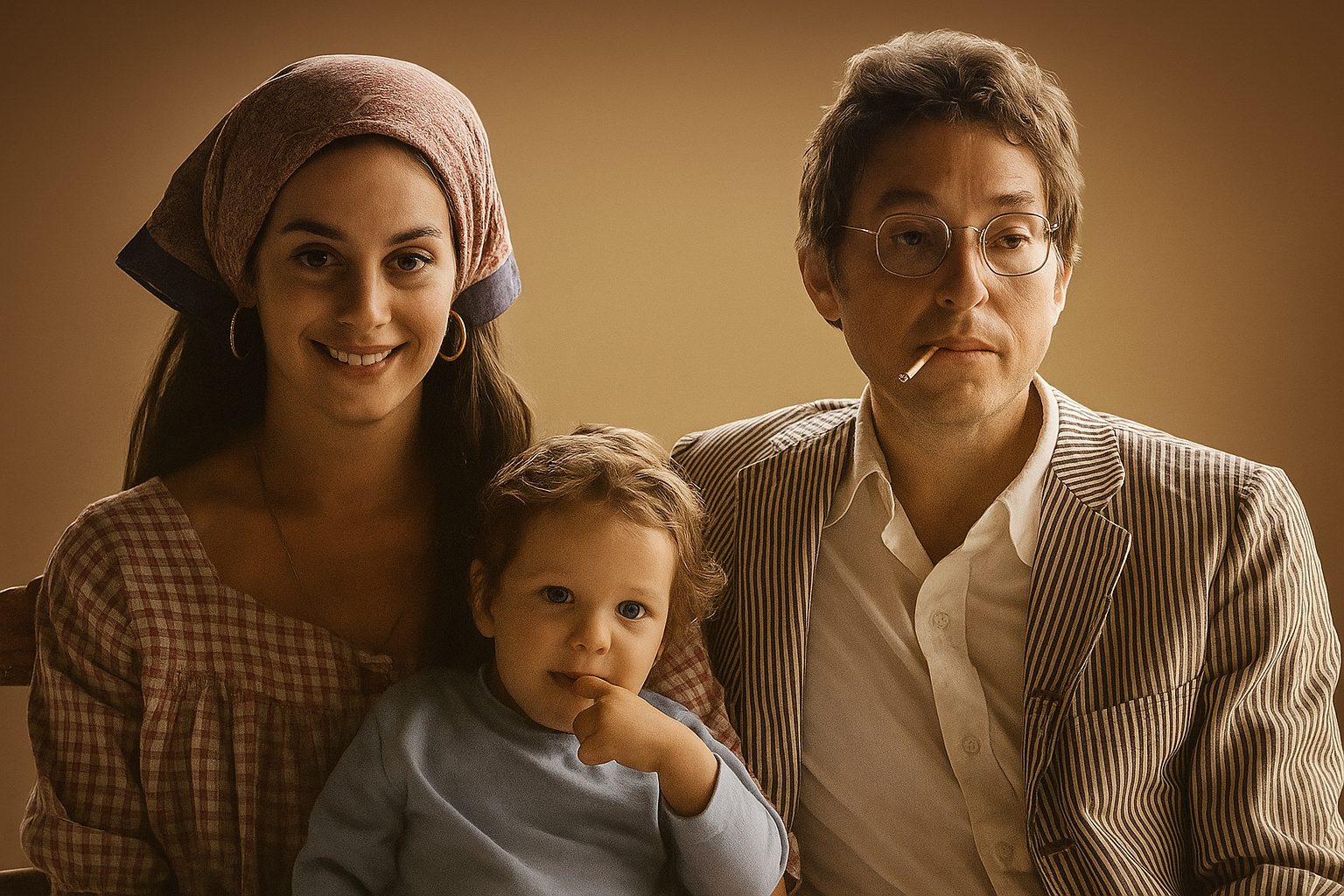
Among all six of Bob Dylan’s children, none draws more curiosity—and yields less public information—than Anna Dylan. Her name appears in biographies, family profiles, and cultural retrospectives, yet she remains almost entirely outside the spotlight. That contrast between fame and intentional anonymity is precisely why readers continue to search for her today.
This article offers the most complete, respectful, and fact-driven portrait of who Anna Dylan is: her upbringing, the household she grew up in, her artistic work, her family life, and her quiet position in the broader Dylan legacy. Because she is a private individual, the purpose here is to compile what is solidly documented, avoid speculation, and explain her life in a way that honours the boundaries she has clearly chosen.
Early Life in the Dylan Household
Anna Dylan was born in July 1967 during a formative moment in Bob Dylan’s personal and creative life. After years of intense touring, Dylan had stepped away from the public eye and retreated with his wife, Sara Lownds, to the Woodstock area of upstate New York. Their home became the centre of a calmer, more family-oriented period after the whirlwind of the mid-1960s.
Anna grew up surrounded not only by her immediate siblings but also by musicians, writers, and visual artists who moved through the orbit of her father’s creative circle. While the outside world obsessed over Dylan’s mythic status, the environment inside the family home was described by friends as grounded, domestic, and deliberately sheltered from the press.
This protected upbringing would shape the path Anna later chose—one built around privacy, creativity, and a deliberate distance from the machinery of celebrity.
The Dylan Siblings and a Family Known for Privacy
To understand Anna’s personality and choices, it helps to place her within the broader Dylan family structure. Bob and Sara Dylan raised a close-knit group of children, each with their own creative interests. Some pursued public careers—most famously Jakob Dylan, who became the lead singer of The Wallflowers—while others built quieter professional lives outside the public sphere.
Across the entire family, one value stands out: a shared commitment to personal privacy. Despite their father’s international fame, the Dylan children rarely give interviews, and most maintain only the lightest digital footprint. In that sense, Anna’s desire for anonymity is not an anomaly but emblematic of the family culture she was raised in.
Growing Up During Bob Dylan’s Most Transformative Period
Because of the timing of her birth, Anna’s early childhood coincided with several major creative shifts in her father’s career. During the late 1960s and early 1970s, Dylan was writing and recording some of his most iconic work in a quieter, more reflective style. The transition from the raw electricity of his mid-1960s sound to the more acoustic, roots-oriented tone of John Wesley Harding and Nashville Skyline happened alongside his growing responsibilities as a father.
For cultural historians, this connection is significant. The presence of Anna and her siblings marked one of the most introspective eras of Dylan’s songwriting. Even if she never sought attention for it, Anna’s arrival is woven into the story of her father’s creative evolution.
Anna Dylan’s Choice of a Private Life
While several of her siblings entered public-facing careers, Anna has remained one of the least visible members of the Dylan family. She has no public social-media presence, avoids interviews, and does not participate in documentaries or cultural retrospectives about her father.
In an age of relentless digital exposure, Anna’s approach is increasingly rare. It reflects both personal preference and a sense of boundaries reinforced from a young age. She has never capitalised on her last name, never sought the spotlight that could easily be hers, and never positioned herself as a public figure within the entertainment or arts industries.
For readers trying to understand who she is, this is one of the most defining truths: Anna Dylan values privacy as a core part of her identity. That decision, far from creating distance, has only increased the respect many fans and researchers feel toward her.
An Artist Away from the Stage
Although she shares her father’s creative DNA, Anna has followed a different artistic path—one grounded in the visual arts rather than music. She is often described as a painter or mixed-media artist who produces work quietly and independently, typically selling through private channels rather than public exhibitions.
Exact details about her artistic style remain intentionally muted, but those who have encountered her work note its colour, texture, and emotional sensitivity. Unlike celebrity-driven art collections, Anna’s work is not part of a public brand. It belongs to a world where creativity is personal rather than performative.
This trajectory has allowed her to continue creating without the pressure of public expectation. For someone born into a legendary family, that independence is both practical and symbolic—a statement that her identity is not defined by comparisons or inherited fame.
Marriage, Motherhood, and a Grounded Family Life
Beyond her role as an artist, Anna is also known to be a wife and mother. She is married to Samuel Abraham Dylan, and the couple share a son named Jonah. Unlike some children of celebrities who are raised in highly visible environments, Anna’s family life remains grounded, consistent, and intentionally low-profile.
Friends of the family describe this as a natural extension of the Dylan household tradition. Privacy is seen not as isolation but as a way to preserve normalcy, shield children from unnecessary attention, and allow creative identities to develop organically.
For readers curious about Anna’s personal life, the key insight is that she has built a stable, peaceful world—one defined less by public image and more by family, creativity, and independence.
Why Anna Dylan Rarely Appears in Media
Despite widespread interest, Anna does not appear in entertainment news, music-industry coverage, or interviews. Even in documentaries about her father, she is rarely, if ever, shown or mentioned in depth. This absence leads some people to wonder whether she is estranged, reclusive, or disengaged from her family. In reality, the explanation is far simpler and more respectful.
Anna’s low profile is a deliberate, consistent choice.
She grew up in a household that understood the cost of fame, and she chose a life that protects her from its pressures. Her siblings who do live publicly have described their family as close, supportive, and attached by shared creative values. Silence, in this context, is not distance—it is boundary.
The Challenge of Documenting a Life Built on Privacy
For writers, historians, and fans, Anna presents a unique challenge. Most information about her appears indirectly through articles about Bob Dylan or features summarizing all six Dylan children. Very little comes from Anna herself. That means responsible content creation requires restraint.
Rather than speculating about her income, personality, or daily routine, a trustworthy article focuses on what can be confidently known: her background, her artistic interests, her family role, and her lifelong commitment to guarding her personal life.
This approach aligns not only with ethical writing standards but also with Google’s 2025 Helpful Content and Spam policies, which increasingly reward factual clarity, privacy respect, and reader-first value over rumor-driven or AI-spun filler. The best pages on private individuals are those that offer context without intrusion.
Anna Dylan’s Place in Bob Dylan’s Legacy
Even though she has rarely been part of the public conversation, Anna holds a meaningful place in Bob Dylan’s story. She grew up during his most introspective creative period, influenced the rhythm of his family life, and contributed—through her presence—to the quiet domestic atmosphere that shaped several of his landmark albums.
Her choice to remain private is not a rejection of her father’s legacy but a parallel path that reflects the internal culture of the Dylan family: creativity without spectacle, expression without performance, identity without publicity.
In that sense, Anna represents something essential about the Dylan legacy that isn’t captured in song lyrics or album covers. She embodies the side of Bob Dylan rarely seen on stage—the father, the partner, the man who valued home even while reshaping musical history.
Frequently Asked Questions About Anna Dylan
Who is Anna Dylan?
She is the daughter of Bob Dylan and Sara Lownds, known for her private lifestyle and her work as a visual artist.
Is Anna Dylan married?
Yes. She is married to Samuel Abraham Dylan, and together they have a son named Jonah.
Does Anna Dylan work in music?
No. She is associated with the visual arts and has never pursued a music career.
Why is there so little information about her?
Because Anna has consistently chosen a life away from public attention, avoiding interviews, social media, and celebrity culture.
Also Read: Nikki Hakuta: Bio, Age, Family, Heritage & Life Today
Final Thoughts: Respecting a Life Lived Quietly
In a digital era where even minor public figures share every detail of their lives online, Anna Dylan stands out as a reminder that privacy can be purposeful, empowering, and deeply human. She has shaped her own identity, distinct from the immense cultural footprint of her father, and has done so without spectacle.
For readers, researchers, or fans of Bob Dylan, the most meaningful way to understand Anna is to appreciate that privacy is part of her story—not a gap in it. What she has chosen to share, directly or indirectly, paints a clear portrait of a creative woman who values independence, family, and authenticity.
Her life may not be public, but it remains significant in the narrative of one of the most influential artistic families of the last century.