

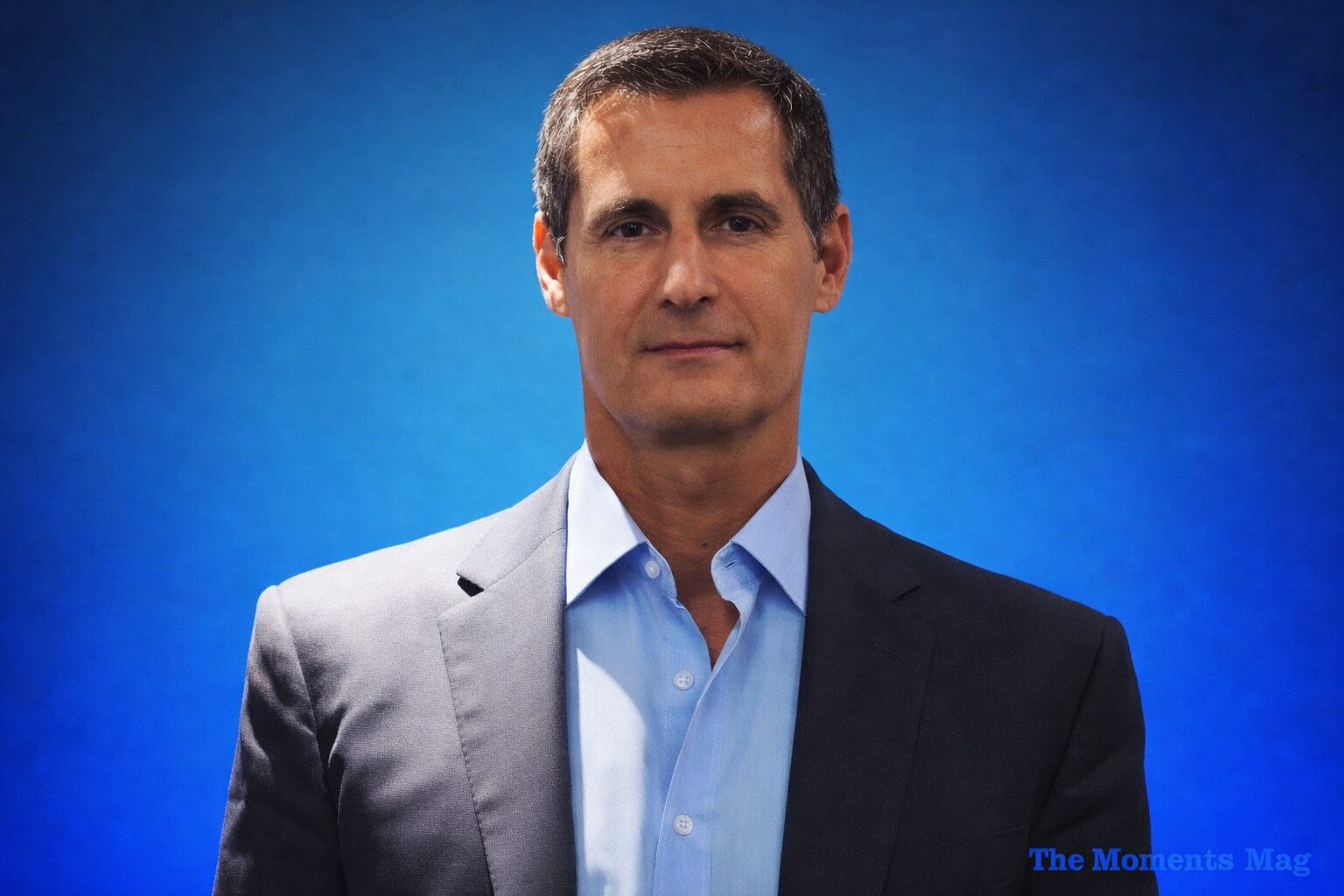
In global finance, influence rarely announces itself. The most powerful figures often operate away from headlines, shaping outcomes long before the public notices a transaction has even begun. Anwar Zakkour belongs to this category of leaders. His career spans elite Wall Street institutions, multibillion-dollar technology and media transactions, and executive investment roles across continents. While his name may not dominate popular business media, his impact has been deeply embedded in some of the most consequential deals of the modern corporate era.
This article presents a complete and unified account of Anwar Zakkour’s professional journey, philosophy, and lasting relevance in investment banking and private capital, drawing solely on the established details already outlined.
Early life, background, and intellectual foundation
Anwar Zakkour was born in May 1963 and is widely described as Beirut-born, a background that would later shape his global worldview and cross-cultural fluency. Unlike many of his peers in finance, his academic path did not begin in business or economics. He initially pursued medical studies, completing a three-year program at the University of Copenhagen’s medical school. That early exposure to medicine is more than an interesting footnote. It instilled a systems-based way of thinking, a tolerance for complexity, and a disciplined approach to risk—traits that later became central to his effectiveness in high-stakes financial environments.
After shifting away from medicine, Zakkour enrolled at Copenhagen Business School and later earned a master’s degree from ESCP Europe, one of the continent’s most respected management institutions. This combination of scientific training and European business education created an unusually broad intellectual base. It also helped explain his ease in navigating multinational corporations, cross-border negotiations, and culturally complex transactions throughout his career. He is fluent in English, French, Danish, and Arabic, a practical advantage that reinforced his credibility in global boardrooms.
Entry into Wall Street and early deal experience
Zakkour’s professional ascent began at Morgan Stanley, one of Wall Street’s most demanding training grounds. He later joined Citigroup and its predecessor firms, including Salomon Smith Barney and Salomon Brothers. These institutions were known not only for deal volume, but for cultivating bankers who could perform under relentless pressure. Long hours, unforgiving standards, and high-profile clients formed the environment in which Zakkour developed his deal discipline.
What distinguished his path, however, was an early move away from pure advisory work. In the late 1990s, he joined Cendant Corporation, where he served as Senior Vice President of Corporate Development and Executive Vice President of its Internet Group. This period placed him on the inside of a major corporation during a time of rapid digital expansion. Rather than advising from the outside, he experienced firsthand the operational realities that follow acquisitions, restructurings, and strategic pivots.
This corporate perspective became a defining asset. It shaped how he later advised CEOs and boards, because he understood that the true risk of a deal often begins after it closes. Integration challenges, internal politics, and execution failures rarely show up in valuation models, yet they determine long-term success or failure.
J.P. Morgan and the leap into top-tier leadership
Anwar Zakkour’s reputation for judgment and discretion ultimately led him to J.P. Morgan, where he rose to become Global Vice Chairman of Investment Banking. At this level, banking is no longer about spreadsheets or pitch books. It is about trust. Vice chairmen are called when stakes are existential, when reputations are on the line, and when boards need more than technical advice.
During this period, Zakkour became especially associated with the technology, media, and telecommunications sector. TMT deals tend to be volatile, politically sensitive, and exposed to rapid shifts in consumer behavior. They require advisors who can balance speed with caution and ambition with realism. His ability to operate calmly in that environment strengthened his standing as a senior counselor rather than merely a transaction executor.
Bank of America Merrill Lynch and landmark transactions
In 2013, Zakkour joined Bank of America Merrill Lynch, eventually leading its global TMT investment banking group. This role placed him at the center of some of the most visible transactions of the decade. Among the publicly reported deals he advised on were the sale of the Los Angeles Clippers to Steve Ballmer, Activision Blizzard’s acquisition of King Digital, and Verizon’s acquisition of Yahoo.
Each of these transactions presented unique challenges. The Clippers sale unfolded under intense public scrutiny and legal uncertainty, yet resulted in a record-breaking valuation. The Activision–King deal reshaped the global gaming landscape by accelerating mobile gaming’s rise. Verizon’s acquisition of Yahoo required careful navigation of declining legacy assets and strategic repositioning.
What connects these deals is not industry similarity, but situational complexity. They demanded emotional intelligence, timing discipline, and credibility with all sides involved. Zakkour’s role in these transactions reinforced his reputation as someone who could stabilize uncertainty and protect value when external pressures threatened to erode both.
Transition from banking to executive investment leadership
After decades advising others on capital allocation, Zakkour transitioned into a direct investment leadership role. From 2019 to 2020, he served as Chief Investment Officer of Majid Al Futtaim, one of the largest private conglomerates in the United Arab Emirates, with interests spanning retail, hospitality, and entertainment. He was also a member of the company’s executive committee.
This move represented a philosophical shift. Investment banking focuses on optimizing transactions. A CIO role requires optimizing outcomes over time. It involves long-term risk management, capital deployment discipline, and accountability for results beyond closing announcements. Zakkour’s appointment reflected confidence not only in his financial expertise, but in his strategic judgment and leadership maturity.
Private investor chapter and ongoing influence
Following his corporate investment role, Zakkour entered what is publicly described as his private investor phase. With a career spanning more than three decades, this stage reflects a common evolution among senior financiers: moving from institutional authority to selective capital deployment, advisory roles, and governance involvement.
As a private investor, his value lies less in public visibility and more in pattern recognition. Having witnessed multiple market cycles, technological shifts, and crisis-driven transactions, he brings a long-term perspective that early-stage founders and established executives alike often lack. His background allows him to evaluate not just business models, but leadership resilience, cultural alignment, and second-order consequences.
Why Anwar Zakkour remains relevant
The continued interest in Anwar Zakkour stems from what he represents rather than from personal branding. His career illustrates how influence is built through consistency, discretion, and credibility. He is a case study in how global finance actually functions at the highest levels, where trust travels faster than publicity and outcomes matter more than exposure.
His journey also demonstrates the power of intellectual range. From medicine to business, from Europe to Wall Street, from advisory roles to capital ownership, each transition added depth rather than dilution. In an era increasingly dominated by short-term thinking, his path underscores the advantage of patience, adaptability, and long-horizon judgment.
Also Read: Mark Bovenizer: Community Leader, Firefighter, and Philanthropist
Final thoughts
Anwar Zakkour’s story is not one of celebrity finance. It is a story of sustained relevance. Over more than thirty years, he has operated at the intersection of capital, strategy, and trust, influencing decisions that reshaped industries without seeking the spotlight.
For founders, executives, and students of finance, his career offers a powerful reminder. The most enduring success in business often belongs to those who understand complexity, respect consequences, and know when silence is more valuable than noise.
In that sense, Anwar Zakkour is not just a figure in investment banking history. He is a model of how quiet authority continues to shape the global economy.