

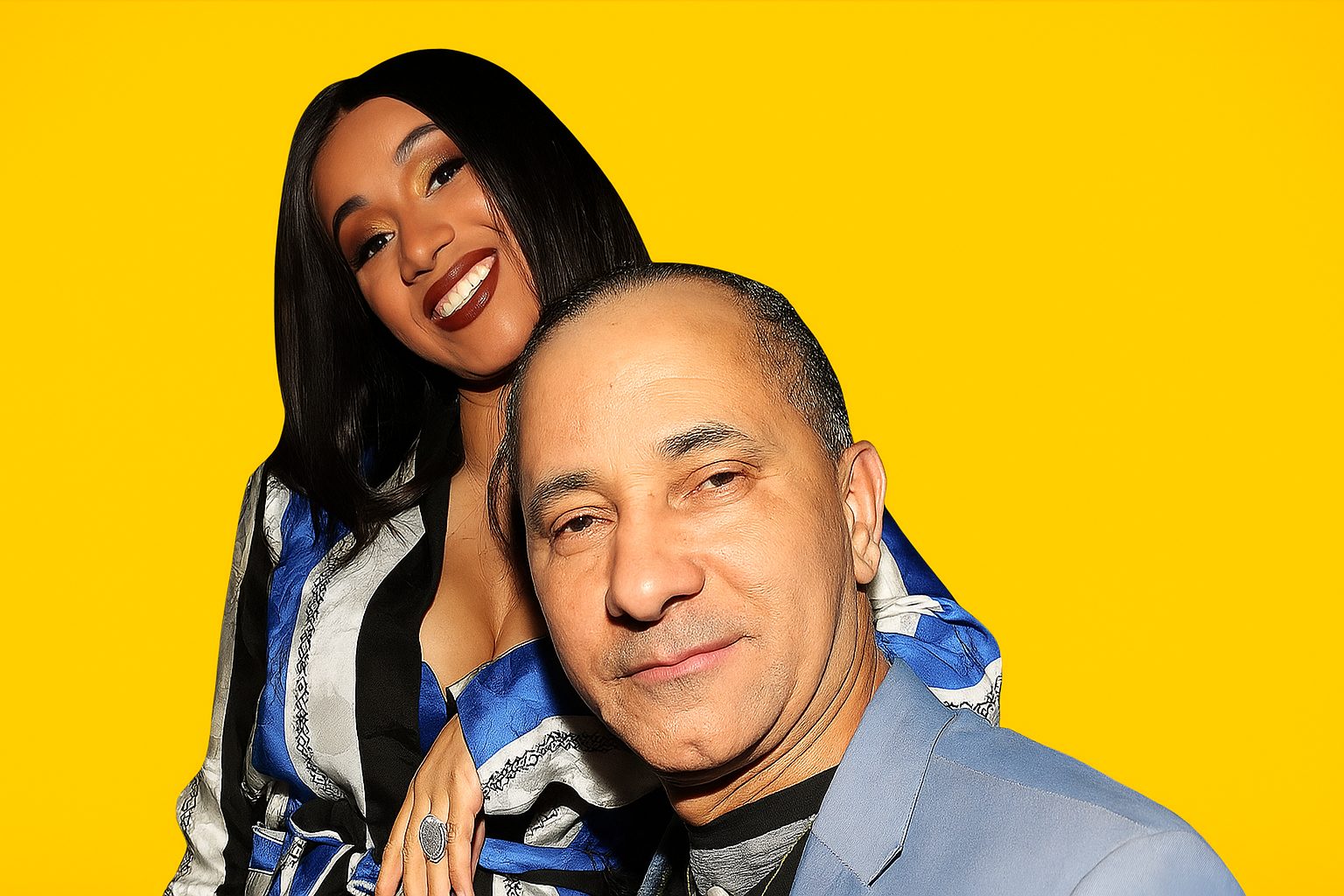
For many people, the name Carlos Alman surfaces when they begin exploring the family roots of Grammy-winning rapper Cardi B. While his daughter built a worldwide career with chart-topping music, viral personality, and relentless ambition, Carlos himself remains almost entirely outside the public eye. He does not give interviews, avoids social media, and has never tried to capitalize on his daughter’s fame. Yet his life story — from his upbringing in the Dominican Republic to the years he spent working as a taxi driver in New York — forms a significant part of Cardi B’s foundation and identity.
Understanding Carlos Alman requires a shift from celebrity-focused curiosity to a people-first perspective. His story is not one told through magazine covers or flashy moments. Instead, it reflects immigrant perseverance, quiet fatherhood, and the kind of working-class stability that allowed his children to one day chase extraordinary dreams. In a time when many online biographies rely on rumor or filler content, a clear, respectful account of who he is brings real value to readers looking for truthful, human information.
Early Life and Dominican Roots
Carlos Alman, born 19 March 1958 in the Dominican Republic, spent his formative years within a culture known for its strong family ties, vibrant music, and deep working-class resilience. Although the public record does not provide extensive details about his childhood, the cultural backdrop of the Dominican Republic during the mid-20th century offers meaningful context. Many families faced economic uncertainty, and migration was a common aspiration. Young people grew up with a sense that opportunities abroad — particularly in the United States — could change the course of entire families.
Like many Dominicans of his generation, Carlos grew up speaking Spanish, participating in a community where neighbors, cousins and grandparents played central roles in daily life. Traditional values around loyalty and perseverance were woven into his upbringing. These qualities would follow him years later when he became a father living far from home, trying to provide stability in a new country with a very different pace of life.
While confirmed specifics about his education or early employment are limited, the broader contours of Dominican-to-New York migration strongly align with his path. Many individuals moved seeking more predictable income, access to healthcare, and opportunities for their children. When Carlos eventually made the move, he joined a well-established Dominican community that helped shape New York’s identity, especially in neighborhoods like Washington Heights.
Journey to the United States and Life in New York
By the early 1990s, Carlos had relocated to New York City, becoming part of the vibrant Dominican diaspora that has long contributed to the city’s culture. Settling first in Manhattan and later in the Bronx, he entered a world where Spanish and English blended daily, where Caribbean food and music were woven into urban life, and where immigrant families often worked long hours to make ends meet.
Carlos built most of his working life around driving taxis. This profession, though not glamorous, is one of the most common jobs for newly arrived immigrants in New York. Taxi driving demands mental focus, patience with unpredictable passengers, and an ability to navigate the city’s relentless rhythm. It also requires long hours — often 10 to 12 hours a day — with income dependent on traffic, time of day, and demand.
For Carlos, taxi driving became a reliable way to support his growing family. He worked through seasons of cold, heat, rain and snow, navigating Midtown gridlock, late-night airport runs and the daily grind of New York City streets. His experience mirrors that of many immigrant parents who take on demanding jobs not because they are easy, but because they are available and essential.
His daughters, especially Cardi B, have spoken openly about their parents’ sacrifices. In interviews and public statements, Cardi has often acknowledged the long hours her father worked and the financial pressures that shaped their household. Growing up in a working-class environment gave her a clear understanding of how hard her parents pushed to give her and her siblings a chance at stability.
Marriage, Family and the Household He Built
Carlos eventually married Clara Mercedes Almánzar, a Trinidadian woman of Afro-Caribbean heritage. Their marriage united two distinct yet culturally linked Caribbean backgrounds — Dominican and Trinidadian — resulting in a household where Spanish, English, Caribbean food, bachata, soca, and New York street culture all mixed together. This cultural blend directly influenced the childhood of their daughters, especially Cardi B, who frequently describes herself as both Dominican and Trinidadian.
The couple raised their children in neighborhoods such as the South Bronx and Washington Heights, where immigrant families often live close to extended relatives. Cardi has mentioned spending substantial time at her paternal grandmother’s home, which contributed to her ability to speak Spanish and understand Dominican customs more deeply. This cultural connection is part of what makes her identity so distinctive in the music industry. She does not present her heritage as a branding tool; she presents it as a lived reality tied to her parents and grandparents.
Carlos and Clara eventually separated and later divorced, but both remained recognized as active influences in their children’s lives. While Clara appeared more frequently in public commentary — especially because she worked multiple jobs as a cashier and store employee — Carlos remained quiet and reserved. He continued working, supporting his children, and staying engaged in the background during important family moments.
Fatherhood and His Relationship With Cardi B
Although Carlos Alman has never sought public attention, his presence has been visible at key family celebrations, birthdays and private gatherings. Photos shared through relatives and celebrity coverage show him attending events such as Cardi B’s album celebrations, birthday parties, and gatherings with his grandchildren.
Cardi has sometimes spoken about her relationship with her father in nuanced ways, acknowledging that it was not always emotionally expressive but remained steady in its own way. In many immigrant households — particularly those shaped by demanding labor — affection is often shown through sacrifice rather than words. Providing rent, food and school essentials can become the unspoken language of care. Carlos embodies that pattern: a quiet, working man who did not articulate his support publicly but displayed it through day-to-day responsibility.
The separation between Carlos and Clara added complexity, as Cardi spent much of her youth with her mother and grandmother. Still, she has publicly expressed gratitude toward both parents, calling them her “biggest blessings” and crediting them with teaching her discipline, survival skills and the ambition that later fueled her career. Carlos’s role may not always appear front-and-center, but it exists steadily in the backdrop of her upbringing.
Dominican Influence on Cardi B’s Identity
Carlos’s heritage plays a crucial role in shaping Cardi B’s identity, especially her connection to Dominican culture. She has spoken proudly about her father’s background and the influence of her Dominican family. This influence shows up in her accent, her bilingual fluency, her comfort switching between Spanish and English, and her references to Dominican dishes, music and traditions.
Growing up with a Dominican father in New York also shaped her worldview in specific ways. She witnessed how immigrants navigated complex systems, how they balanced cultural identities, and how they fought for economic stability. These experiences later appeared in her personality, humor, and even her music, which often touches on authenticity, self-protection and ambition.
Carlos anchors this piece of her story. Without his migration and the cultural foundation he provided, Cardi’s identity — and by extension, the global persona her fans know today — would look very different.
A Man Who Values Privacy Over Fame
In an era when the relatives of celebrities often build careers from association, Carlos stands out as someone who actively avoids the public spotlight. He does not maintain social media accounts, rarely appears in public events unless they are private family occasions, and has never granted interviews to describe his version of events.
This silence has contributed to curiosity and speculation, but his actions reflect a consistent preference: he values privacy. For many immigrants of his generation, keeping a low media profile feels natural, especially when their work and life priorities centered long shifts, family obligations, and day-to-day responsibilities rather than publicity.
Even now, as Cardi B’s fame continues internationally, Carlos remains a background figure, surfacing mainly through family pictures or passing mentions in interviews. His low profile is not a mystery; it is a choice.
Clarifying Mistaken Identity: Not the Athlete or the Actor
Because the name “Carlos Alman” is shared by multiple individuals, confusion often arises online. Some people mix up Cardi B’s father with Carlos Manuel Almánzar, the professional baseball pitcher who played for teams in the MLB, or with an actor credited in children’s television programming.
These individuals are entirely separate people who simply share similar names. Cardi B’s father is the Dominican-born New York taxi driver born in 1958. Distinguishing these identities helps readers avoid misinformation and supports a more accurate overall understanding.
How His Story Helps Readers Understand Cardi B More Fully
The world often meets celebrities at their final destination — fame, success, red carpets — but their roots matter just as much. Understanding Carlos Alman allows fans and biographers to see the human foundation of Cardi B’s journey.
Carlos represents the immigrant backbone of her identity. His work ethic, cultural influence and economic sacrifices laid the groundwork for her to pursue opportunities he never had. Appreciating his role does not require turning him into a celebrity; it requires acknowledging the real weight of a father’s life spent driving long shifts so his children could aim higher.
In many ways, Carlos’s legacy is not measured in public accomplishments but in the success of his daughter — a global superstar who proudly carries her father’s Dominican surname and heritage across stages, interviews and award shows.
Also Read: Kelly South – Author, Mental-Health Advocate & Memoirist
Conclusion
Carlos Alman remains a compelling figure precisely because he does not seek attention. He represents the countless immigrant parents whose names the world may never know, yet whose sacrifices shape the lives of future generations. His story is not one of fame but of quiet determination — a Dominican man who built a life in New York, raised a family in the Bronx, and watched his daughter rise to international acclaim.
For readers searching his name, understanding him means looking beyond celebrity culture and recognizing the deeper truth: behind Cardi B’s global success stands a father who worked hard, lived privately and passed down the strength of his heritage. His influence lives on not through headlines but through the woman his daughter has become.