

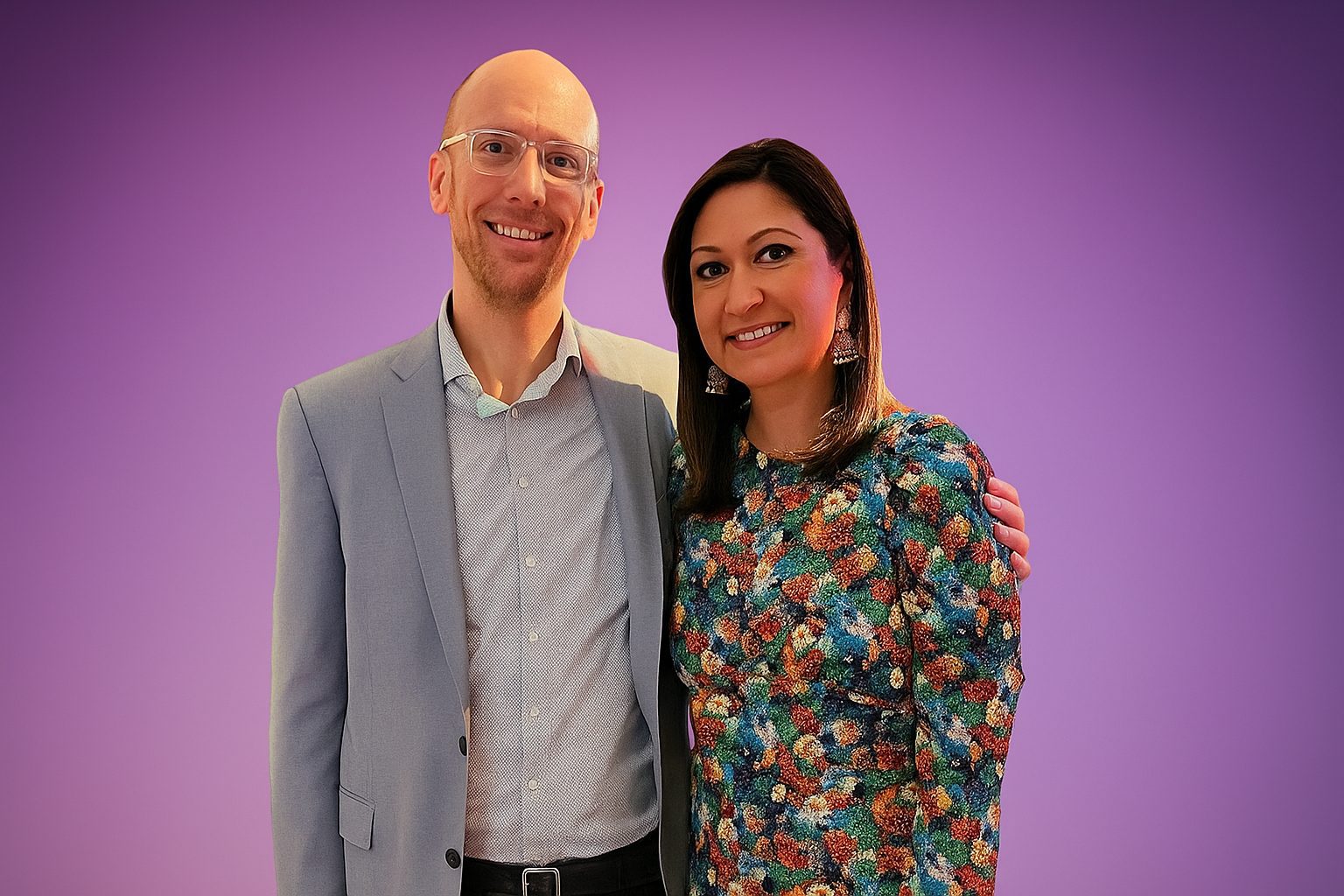
Paul Werdel’s name often appears beside that of PBS NewsHour co-anchor Amna Nawaz, but the public understanding of who he is rarely goes beyond that association. In reality, Werdel has built a career across some of the world’s most respected news organizations, shaping global coverage, digital transformation, and product innovation long before he ever stepped into a role that prioritized caregiving and family.
At a time when many conversations about journalism focus on high-visibility anchors or correspondents, Werdel’s story offers a different kind of insight—one rooted in the unseen labor that makes modern newsrooms function and the personal decisions that redefine traditional expectations of success.
This article brings together the full picture of who Paul Werdel is: his professional journey, his evolution from journalist to product leader, his marriage to Amna Nawaz, and the deeply intentional way he has balanced ambition, partnership, and parenthood.
Who Is Paul Werdel?
Paul Werdel is an American media professional whose career spans broadcast news, editorial roles, and digital product leadership. He is widely recognized for his work in global journalism, particularly through positions at BBC World News, Al Jazeera English, Talking Points Memo, and The New York Times.
To the public, he may be better known as the husband of Amna Nawaz, the history-making co-anchor of PBS NewsHour. The couple married in 2007 and have two daughters, and their partnership has been highlighted in several profiles for its balance of demanding careers, caregiving, and cultural interconnection.
Werdel’s professional and personal life reflects themes increasingly relevant in 2025: thoughtful media innovation, emotional resilience in journalism, and gender-role flexibility within families navigating high-stakes careers.
Early Education and Foundations in Journalism
Although Werdel is private about his early life, available professional information points to his formative years at the University of Maryland, College Park, where he earned a Bachelor of Arts in journalism in 2002. The institution is closely connected to Washington-area media, giving students exposure to live broadcasting, policy reporting, and newsroom production before graduation.
During his university years, Werdel gained experience in studio management and production coordination, providing early training in the kind of fast-paced, deadline-driven environments that would define his early career. What stands out in accounts of his professional beginnings is the breadth of roles he undertook: scripting, editing, directing, and later coordinating newsroom teams. This wide skillset later allowed him to bridge editorial teams and digital product departments—an increasingly valuable capability in modern newsrooms.
BBC World News: Mastering the Pressure of Live Global Broadcasting
Werdel’s first major professional role began at BBC World News, where he worked as a producer and director between 2004 and 2007. The BBC’s U.S. broadcasts were complex, international programs requiring a fluency in global events and a precise understanding of how to translate them into coherent, compelling live segments.
His responsibilities included writing scripts, shaping the rundown for each broadcast, coordinating correspondents, and supervising the technical execution of the show. Live news production demands emotional steadiness and rapid decision-making, especially when breaking events reshape a program’s entire structure within minutes. Working in this environment not only sharpened Werdel’s editorial judgment but also prepared him for later roles that required calmly managing cross-functional teams under intense pressure.
This phase of his career grounded him in the fundamentals of international journalism—contextual accuracy, ethical clarity, and the ability to tell global stories with cultural sensitivity.
Al Jazeera English and TPM: Expanding Global and Digital Perspectives
After leaving the BBC, Werdel joined Al Jazeera English as deputy news editor and later news editor. The role placed him at the center of coverage spanning the Middle East, Europe, Asia, and Africa, often involving complex geopolitical issues. The editorial responsibilities of shaping global narratives required both a deep awareness of regional contexts and a capacity to mediate differing journalistic perspectives across diverse teams.
His subsequent transition to TPM (Talking Points Memo) underscored the breadth of his professional interests. TPM was among the pioneering digital-native political sites in the United States, known for its independent reporting and fast-moving coverage of U.S. politics. Werdel’s work there as a senior associate editor reflected both a shift toward digital-first journalism and an embrace of the changing shape of news consumption.
This dual experience—global broadcast journalism and domestic digital reporting—positioned him uniquely for the hybrid editorial-product roles that would define the next stage of his career.
The New York Times: Leadership in Digital and Mobile Product Strategy
For many readers in the media world, Werdel’s tenure at The New York Times represents the most influential stage of his career. Joining the Times in 2012, he held roles including assistant editor for digital platforms, senior editor of platforms, senior product manager for mobile, and eventually product director overseeing mobile strategy and core digital products.
Editorial and Technical Fluency
The Times during this period was undergoing a major transition as mobile consumption overtook desktop. News organizations were rethinking how readers engaged with stories, notifications, interactives, and apps. Werdel’s positions involved both editorial insight—understanding what stories needed to accomplish—and technical product decision-making, such as how mobile features could support clearer, more intuitive storytelling.
This blend of skills is still relatively rare in the industry. Many newsrooms silo editorial staff from product teams, but the Times increasingly relied on professionals like Werdel who could link journalistic values with user experience principles. His role required interpreting the needs of reporters, designers, developers, and ultimately the audience.
Guiding Mobile Experience During a Critical Era
As product director, Werdel influenced decisions around mobile user interface, notification strategy, and feature prioritization. At a time when the Times was investing heavily in its digital subscription model, mobile experiences became a key point of user engagement. The success of mobile content delivery—and the reliability with which breaking news reached audiences—depended on teams he helped guide.
Even as he stepped deeper into product leadership, Werdel preserved a journalist’s instincts. He occasionally contributed to news coverage, including reporting on the 2014 World Cup, demonstrating that his editorial background remained an active asset in his broader responsibilities.
Marriage to Amna Nawaz: Partnership Built on Shared Purpose
In 2007, Werdel married Amna Nawaz, a journalist whose own career would take her through ABC News, NBC News, and ultimately PBS NewsHour, where she now serves as co-anchor. Nawaz is widely recognized as the first Asian American and first Muslim American to anchor a national evening news program in the United States, and her reporting has earned awards and national visibility.
The couple’s marriage has been noted in various profiles for its interfaith and intercultural nature, blending Nawaz’s Pakistani Muslim upbringing with Werdel’s Christian American background. They share two daughters and maintain a home life rooted in openness, empathy, and respect for multiple traditions.
Public interviews featuring Nawaz highlight how the two navigate parenting, religious observance, and cultural heritage with honesty and flexibility rather than rigid rules. Werdel’s low-profile public presence reflects a preference for privacy and a prioritization of family stability over personal visibility.
A Defining Decision: Stepping Back to Become a Primary Caregiver
One of the most defining and publicly discussed chapters of Werdel’s story is his decision to step back from full-time leadership roles at The New York Times around 2018, when Nawaz joined PBS NewsHour. The role required extensive travel, demanding hours, and an emotional toll that became especially visible during her coverage of mass shootings and humanitarian crises.
According to Nawaz’s own accounts, Werdel recognized the strain she was under and encouraged her to pursue therapy after covering the tragedy in Uvalde. More importantly, he proposed that he take over the “dance of childcare”—the daily logistics, emotional support, and presence their daughters needed—so that she could meet the demands of her new role without sacrificing family stability.
Profiles of Nawaz describe this shift as transformative. It enabled her to step fully into one of the most prestigious positions in public media, and it reframed the expectations many families hold about which partner’s career takes precedence. In doing so, Werdel challenged traditional assumptions about masculinity, ambition, and care work.
His decision also reflected a deeper understanding of the journalism profession. He had spent years witnessing the psychological and emotional impact of news coverage—from war and conflict to political division—and recognized that supporting a journalist requires more than logistical help. It means creating a stable emotional foundation amid unpredictable work.
Navigating Public Curiosity: Age, Net Worth, and Privacy
Because Werdel is connected to a public figure, online interest often spills into celebrity-style questions about his age, net worth, or personal background. Most of these inquiries arise from automated biography sites rather than meaningful human curiosity.
What can be stated responsibly is limited and straightforward:
Werdel is in his forties, based on publicly available career timelines, and specific financial details are neither public nor relevant to understanding his professional significance. His public presence has always been defined by discretion rather than self-promotion, and the couple maintains a careful boundary around their children’s privacy.
Focusing on unverified personal data detracts from the more interesting and accurate part of his story—his contributions to journalism, digital innovation, and his thoughtful approach to partnership and parenting.
Why Paul Werdel’s Career Matters Today
Paul Werdel represents the convergence of two major forces shaping modern media: the evolution of journalism into a digitally driven environment, and the shifting cultural expectations around work, family, and shared responsibilities.
A Bridge Between Editorial and Product
His ability to translate editorial values into product decisions reflects what many news organizations now seek in leaders. The future of journalism increasingly depends on people who understand both storytelling and technology, and Werdel’s career illustrates how those skills can coexist in one person.
A Model of Intentional Partnership
His personal decisions have also added nuance to discussions about gender roles. In stepping back from a high-profile career to support his wife’s rise, he reframed what support, ambition, and success can look like within a modern family.
A Reminder of the Unseen Labor Behind Journalism
For every anchor or correspondent in the public eye, there are people—editors, producers, product managers, caregivers—whose work sustains them. Werdel’s story is part of this larger ecosystem, emphasizing the importance of both professional skill and emotional intelligence.
Also Read: Rhonda Worthey: Life, Career, Family, and Where She Is Now (2025)
Final Thoughts: The Value of a Quiet but Powerful Legacy
Paul Werdel’s life is not defined by celebrity or public-facing accolades. Instead, it reflects a quieter kind of influence—one built on professional excellence, empathy, adaptability, and a willingness to evolve at pivotal moments. His work across global newsrooms contributed to shaping modern journalism, and his decisions at home enabled one of today’s leading journalists to rise to historic prominence.
In an era when digital media, work-life balance, and gender roles are continually being renegotiated, his story offers a grounded example of how meaningful impact does not always require the spotlight. Sometimes, it requires clarity, humility, and a steady commitment to the people and values that matter most.