

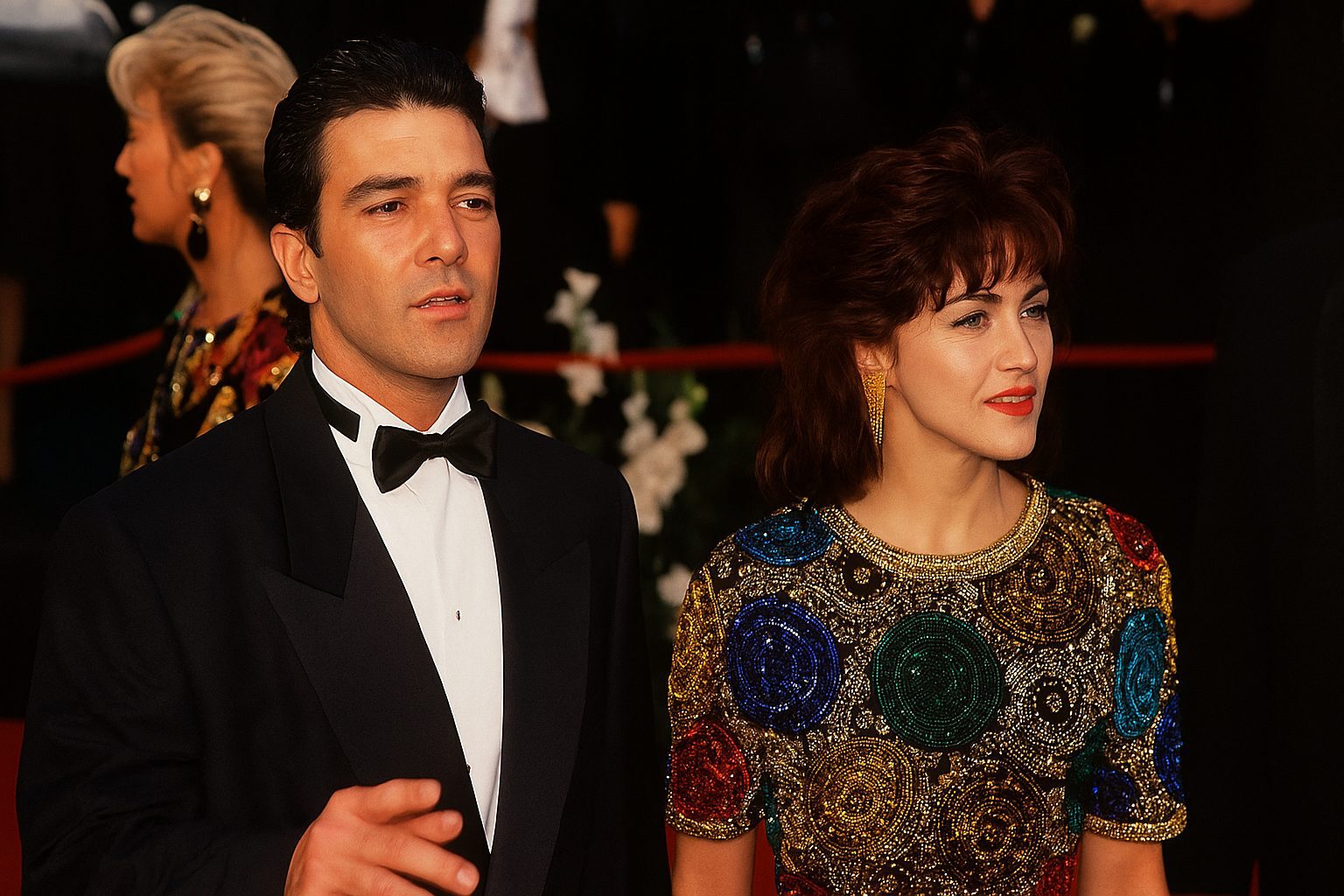
The name Ana Leza often surfaces alongside one of Spain’s most internationally recognized actors, Antonio Banderas. Yet, her own story stands independently — a talented Spanish actress who chose to step away from the glitter of fame to embrace a quieter, more private existence.
From the golden years of Spanish cinema in the 1980s to her role in helping Banderas transition into Hollywood, Leza’s life offers a unique perspective on what it means to balance artistry, love, and personal peace.
This article explores Ana Leza’s biography, her acting career, her marriage to Banderas, and her life after fame — providing a complete and factual account rooted in authentic, publicly available information.
Early Life and Background
Ana Leza was born in Madrid, Spain, in 1962 into a family with deep artistic roots. Her mother, Concha Leza, was an actress, which gave young Ana an early introduction to the world of theater and performance.
Growing up surrounded by creative energy and Spain’s thriving post-Franco cultural revival, Ana developed a love for the performing arts. During the 1970s and early 1980s, Spain’s entertainment industry was undergoing a renaissance — cinema, literature, and music were flourishing after years of censorship. This environment offered Leza the opportunity to begin her acting journey in television and film.
Acting Career: From Stage to Screen
Although Ana Leza’s filmography is relatively brief, it is part of a dynamic era in Spanish cinema. She began appearing in Spanish television dramas and films during the 1980s, a time when directors like Pedro Almodóvar were revolutionizing the country’s cultural identity through bold, expressive storytelling.
Her most recognized film appearances include:
-
“Mujeres al borde de un ataque de nervios” (Women on the Verge of a Nervous Breakdown, 1988), a celebrated black comedy directed by Almodóvar. Though Leza’s role was not leading, her involvement connected her to one of Spain’s most iconic cinematic movements.
-
“El placer de matar” (The Pleasure of Killing, 1988), an action-thriller that reflected the period’s experimentation with genre filmmaking.
-
“Of Love and Shadows” (1994), based on Isabel Allende’s novel, where she played a supporting role under the credited name Anita Lesa.
In addition to film, she appeared in Spanish television productions such as “Teresa de Jesús” and “Fragmentos de interior”, both of which showcased her dramatic abilities.
While she never pursued global stardom, Ana’s early career positioned her within a generation of Spanish performers who helped internationalize the nation’s film industry.
Meeting Antonio Banderas: A Love Story in the Spotlight
In the mid-1980s, Ana Leza met Antonio Banderas, then an emerging actor in Spain known for his work with Almodóvar. Their connection was immediate. They married in 1987 in a ceremony held in Madrid, with actress Carmen Maura — another Almodóvar collaborator — serving as madrina (godmother) of the wedding.
At the time, Banderas’s career was rapidly ascending. Leza, fluent in English, became instrumental in helping him navigate his first international roles. According to several interviews over the years, she assisted him in translating scripts and perfecting his English pronunciation, particularly when he began working on Hollywood productions in the early 1990s.
Their relationship was marked by mutual artistic support and shared ambition. As Banderas’s career took him to the United States for roles in films like The Mambo Kings (1992) and Philadelphia (1993), Ana Leza stood by him during his transition from Spanish star to global celebrity.
The End of a Marriage and Life Transition
Despite their close partnership, the couple’s relationship eventually came to an end. In 1996, Ana Leza and Antonio Banderas finalized their divorce after nearly a decade of marriage. Their separation coincided with Banderas’s rising fame in Hollywood and his growing involvement in American cinema.
For Ana, this marked not only the end of a marriage but also a significant turning point in her life. She gradually stepped away from acting and public appearances, choosing a path of introspection and personal growth. Unlike many who stay connected to the entertainment industry, Leza consciously withdrew from media attention.
The details of their separation, while widely covered in Spanish media, remain private from her perspective. What is clear is that Ana Leza preferred discretion and chose not to capitalize on her connection to one of Spain’s most famous actors — a decision that reflects a deep sense of independence and self-awareness.
A New Chapter: Love, Family, and Spiritual Life
A few years after her divorce, Ana Leza’s life took a quieter, more spiritual direction. Around 2000, she married Christopher Lee “Dharma” Villareal, reportedly in California, once again with actress Carmen Maura as the madrina. Together, they built a family and have two daughters.
Settling in the United States, Leza dedicated her time to family and personal development, largely away from the entertainment industry. Reports from reputable Spanish outlets describe her lifestyle as one grounded in spirituality, mindfulness, and meditation — a stark contrast to the fast-paced world she left behind.
Her decision to retreat from public life is consistent with her character: grounded, reflective, and uninterested in fame for fame’s sake. In a culture often driven by exposure and social media visibility, Ana Leza’s story stands out as one of intentional privacy and quiet fulfillment.
Legacy in Spanish Cinema
While Ana Leza’s filmography may not be extensive, her legacy remains tied to a unique era in Spanish film history. The 1980s and early 1990s marked a cultural explosion in Spain, with filmmakers breaking taboos and redefining what Spanish cinema could be on the international stage.
Actors like Antonio Banderas, Carmen Maura, and Penélope Cruz emerged during this time — and while Ana Leza may not have reached the same level of fame, her presence in that ecosystem makes her part of Spain’s cinematic evolution.
Her most iconic connection to the industry — Women on the Verge of a Nervous Breakdown — remains one of Spain’s most acclaimed films. The movie’s Oscar nomination for Best Foreign Language Film in 1989 helped open doors for Spanish cinema globally. By being part of this movement, Leza contributed, even modestly, to Spain’s cultural export of that period.
In retrospect, her short but meaningful career serves as a reminder that not all impactful stories are defined by quantity. Sometimes, a few carefully chosen roles can symbolize an entire artistic movement.
Public Perception and Media Coverage
Over the years, public interest in Ana Leza has primarily resurfaced in connection to Antonio Banderas. Each time Banderas reaches a new milestone — whether it’s a film release, award nomination, or personal interview — Spanish and international media occasionally revisit Ana Leza’s story.
However, her absence from public life has made her something of an enigmatic figure. Some media portray her as the woman who quietly supported one of Spain’s most famous exports during his formative years, while others respect her decision to live privately and avoid interviews.
Unlike many former spouses of celebrities, Ana Leza has never sought to monetize her story. She has given very few interviews and avoids public commentary about her past marriage. This discretion has only deepened public respect for her, especially among those who value privacy and integrity in the face of media curiosity.
What Makes Ana Leza’s Story Unique
Ana Leza’s story resonates because it defies the typical trajectory of fame. Many actors who gain visibility through high-profile relationships continue to seek relevance through public appearances, reality TV, or memoirs. Ana Leza chose the opposite.
Here are a few qualities that make her story stand out:
1. Graceful Departure from the Spotlight
Instead of chasing roles or publicity, she accepted a life of anonymity. This makes her narrative one of quiet strength rather than loss.
2. Cultural Bridge
Her fluency in English and involvement in helping Antonio Banderas transition to Hollywood show her role as a cultural bridge between Spanish and American cinema during a critical time.
3. Commitment to Privacy and Family
Her decision to relocate, remarry, and build a new life demonstrates her focus on personal growth and family over professional ambition.
4. Spiritual Centering
By all accounts, her post-acting life revolves around mindfulness and inner peace — values that stand in stark contrast to the fame-driven entertainment world she left behind.
The Broader Context: Spanish Cinema in the 1980s–1990s
To fully appreciate Ana Leza’s place in history, it’s worth understanding the landscape of Spanish cinema during her career.
The 1980s marked the rise of La Movida Madrileña, a cultural movement that celebrated artistic freedom after decades of political repression. Filmmakers like Pedro Almodóvar became international sensations for their provocative, colorful films that mixed dark humor, sexuality, and emotion.
Actors who collaborated with Almodóvar — such as Antonio Banderas, Carmen Maura, and Rossy de Palma — helped define a generation. Ana Leza, through her connections and minor roles, was part of that circle, contributing to the creative wave that reshaped Spain’s global image.
This historical backdrop gives context to her work: even if her screen time was limited, she was part of an extraordinary period of transformation in Spanish art and culture.
Life Lessons from Ana Leza’s Journey
Ana Leza’s story carries valuable lessons for both artists and ordinary readers:
1. Success Isn’t Always Public
True fulfillment doesn’t always involve being in the spotlight. Leza’s choice to live privately reflects a form of success measured in peace and authenticity.
2. Support Roles Can Be Pivotal
Though not a leading actress, her role in supporting her partner’s career transition shows the profound impact of emotional and intellectual support behind the scenes.
3. Reinvention Is Courageous
After her divorce, she could have pursued fame independently. Instead, she reinvented herself completely, choosing love, spirituality, and motherhood over public life.
4. Privacy is Power
In an era dominated by oversharing, Leza’s silence and privacy give her story dignity. Sometimes, the most powerful statement is restraint.
Where Is Ana Leza Today?
As of 2025, Ana Leza lives in the United States with her husband and daughters. She remains largely outside the public eye, appearing neither in entertainment news nor on social media. Her life is described by Spanish media as serene, family-focused, and spiritually fulfilling.
She is occasionally mentioned in retrospective articles or documentaries about Antonio Banderas’s early career, but she herself has not returned to acting or public interviews.
While her current professional activities are private, her legacy remains intact — a small but meaningful contribution to Spanish film, and a personal story that exemplifies balance, self-awareness, and integrity.
Frequently Asked Questions (FAQs)
1. Who is Ana Leza?
Ana Leza is a Spanish actress born in Madrid in 1962. She appeared in several films and TV productions during the 1980s and 1990s and was married to Antonio Banderas from 1987 to 1996.
2. What movies was Ana Leza in?
Her best-known works include Women on the Verge of a Nervous Breakdown (1988) and Of Love and Shadows (1994), along with earlier Spanish television roles.
3. When did Ana Leza and Antonio Banderas get married?
They married in Madrid in 1987, during Banderas’s early acting career.
4. When did they divorce?
Their divorce was finalized in 1996 after nearly nine years of marriage.
5. Did Ana Leza remarry?
Yes. In 2000, she married Christopher Lee “Dharma” Villareal in California, where she currently resides with her family.
6. Is Ana Leza still acting?
No, she retired from acting in the late 1990s and has lived a private life since.
7. Where does Ana Leza live now?
She is believed to live in the United States with her husband and daughters.
8. Why did Ana Leza leave acting?
After her divorce and relocation, she chose a more private, spiritual lifestyle focused on family and personal growth rather than fame.
Read Also: Phyllis Fierro: The Inspiring Life of Ralph Macchio’s Wife
Conclusion
The story of Ana Leza is one of quiet strength, artistry, and personal authenticity. Though she appeared in only a handful of films, her impact reaches beyond the screen — as a woman who valued integrity and self-determination over fame.
Her marriage to Antonio Banderas may have brought her public recognition, but her legacy lies in her ability to redefine success on her own terms. She embraced privacy, family, and spirituality in a world that often rewards exposure and spectacle.
In today’s era of constant media noise, Ana Leza’s path feels almost revolutionary — a reminder that stepping out of the spotlight can sometimes be the most graceful performance of all.