

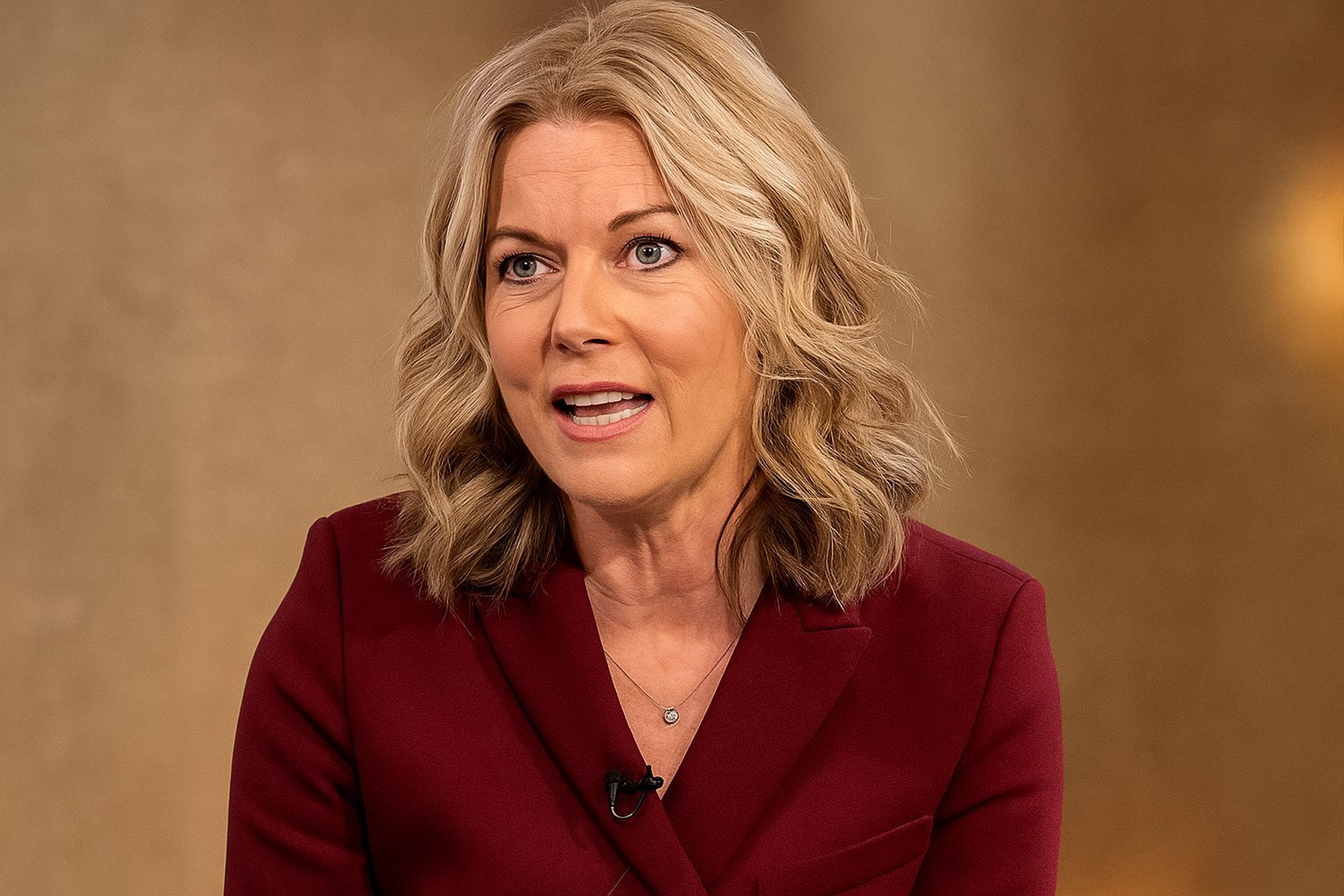
For more than two decades, Mary Nightingale has been one of the most recognizable faces on British television. As the anchor of ITV Evening News, she’s guided viewers through royal events, political shifts, and global crises with calm authority. Yet, like many long-standing broadcasters, she’s not immune to internet speculation — particularly surrounding her health.
In recent years, online searches for “Mary Nightingale illness” have spiked, fueled by rumors that she might be suffering from cancer or another serious condition. The truth, however, is quite different. As of 2025, there is no credible evidence or public statement indicating that Mary Nightingale has cancer or any major illness. She remains active in her career, continuing to appear regularly on ITV screens.
This article provides a comprehensive, factual overview of Mary Nightingale’s life, career, and the facts — not the fiction — about her health.
Early Life and Education
Mary Nightingale was born on 26 May 1963 in Scarborough, North Yorkshire, England. From a young age, she displayed a keen interest in language and storytelling, often participating in school debates and writing contests. Her family later moved to London, where she attended private schools known for their strong academic programs.
She pursued higher education at the University of London (Bedford College), where she earned a Bachelor of Arts in English. Her education sharpened her communication skills and deepened her appreciation for literature and journalism — tools that would become the foundation of her broadcasting career.
Nightingale’s early influences weren’t only literary. Growing up during a time when British journalism was transitioning into a more modern, televised format, she admired pioneering broadcasters such as Angela Rippon and Anna Ford — women who broke barriers in a male-dominated news industry. Their success inspired her to enter journalism herself.
Early Career and Breakthrough in Journalism
Mary’s professional journey began not on television, but in business journalism — a field where she honed her analytical and presentational skills. Her first major broadcasting role came with TV Tokyo, where she co-presented World Business Satellite, a global finance program. This early exposure to international reporting equipped her with a balanced perspective on world affairs.
She then joined BBC World’s World Business Report, where she developed a reputation for precision, calmness under pressure, and her ability to make complex economic topics understandable to everyday viewers. This early experience taught her one of the most important lessons in journalism — clarity is credibility.
Her talent didn’t go unnoticed. By the mid-1990s, Nightingale had joined Reuters Financial Television, covering breaking business stories and financial markets. At a time when television journalism was rapidly globalizing, her articulate, composed delivery earned her professional respect and public recognition.
Transition to Mainstream Broadcasting
Mary Nightingale’s shift from business journalism to mainstream television marked a turning point. In 1996, she joined BBC Sport to co-present the long-running program Ski Sunday, bringing her natural warmth and journalistic skill to sports coverage. Though sports journalism was a departure from her financial background, she adapted effortlessly, earning praise for her enthusiasm and on-camera charisma.
Her next move came when she joined Carlton Television as a presenter on London Tonight, a regional evening news program. It was here that she developed the authoritative yet approachable broadcasting style that would define her ITV career.
By the late 1990s, her face had become familiar to millions of viewers across the UK. Known for her sharp interviewing skills and empathetic tone, Mary was often assigned to cover stories involving human interest — something she did with integrity and sensitivity.
The ITV Evening News Era
In 2001, Mary Nightingale joined ITV News as a presenter of the ITV Evening News, succeeding Trevor McDonald in one of the most prestigious positions in British television journalism. This appointment marked the beginning of her long and steady relationship with ITV, one that continues into 2025.
Over the next two decades, Nightingale would cover some of the most significant events in modern history, including:
-
The September 11 attacks in 2001
-
The 2005 London bombings
-
The royal weddings of Prince William and Prince Harry
-
The COVID-19 pandemic and its aftermath
-
The passing of Queen Elizabeth II in 2022
Each of these moments demanded not only professionalism but emotional intelligence — a quality Mary Nightingale is known for. Her calm demeanor, steady voice, and ability to communicate complex developments in a reassuring way have made her one of the most trusted figures in British broadcasting.
In 2017, ITV made her the sole presenter of the ITV Evening News. This decision reflected both her popularity and her professional authority. When ITV expanded the show from 30 minutes to an hour in 2022, she remained at the helm — a testament to her enduring value to the network.
The Truth Behind the “Mary Nightingale Illness” Rumors
Despite her professionalism, Mary Nightingale has not escaped online rumors. Beginning around 2021, posts began circulating on social media suggesting that she might be suffering from cancer or another serious illness. These claims, however, have never been substantiated by any official source.
Why the Rumors Started
There are several possible explanations for how the “Mary Nightingale illness” rumor began:
-
Long-Term Presence on Screen
When a public figure has been on air for decades, even minor changes in appearance can spark baseless speculation. Small factors like lighting, makeup, or camera angles sometimes fuel misguided assumptions. -
Confusion with Other Presenters
In 2024, another ITV presenter, Rageh Omaar, collapsed live on air due to illness. Clips of that incident circulated widely, and some viewers mistakenly associated it with Mary Nightingale. This kind of confusion is common in the age of algorithm-driven social media. -
The Deepfake Era
In early 2024, Mary herself spoke publicly about being the victim of a deepfake video — a digitally manipulated clip falsely depicting her saying things she never said. She described feeling “violated” and “angry,” using the incident to raise awareness about online misinformation. That event may have inadvertently contributed to more rumors about her personal life and health.
The Facts (As of 2025)
As of late 2025, Mary Nightingale remains active on ITV Evening News and has not disclosed any illness publicly. ITV continues to list her as the program’s anchor, and she has appeared in recent broadcasts, interviews, and public events.
There has been no confirmation from ITV or Mary herself of any health concerns, and no credible media outlets have reported a diagnosis of cancer or other serious conditions. In short, the “Mary Nightingale illness” story is an unfounded internet rumor.
Personal Life and Interests
Mary Nightingale’s professional success is matched by a grounded personal life. She is married to Paul Fenwick, a television director and producer. Together, they have two children. Despite her demanding career, she has consistently emphasized the importance of maintaining a balance between professional and family life.
In interviews, Mary has mentioned her love of travel, reading, and outdoor sports — particularly skiing, a passion that dates back to her time on Ski Sunday. She has also supported several charitable organizations, particularly those related to children’s welfare, mental health awareness, and medical research.
Colleagues describe her as calm, witty, and fiercely professional — the type of person who arrives early, stays late, and never lets emotion override fairness in reporting.
Professional Achievements and Recognition
Throughout her career, Mary Nightingale has earned numerous accolades. She has twice been named TRIC Newscaster of the Year, and she has received nominations from broadcasting and journalism bodies recognizing her excellence in news presentation.
Her professional impact extends beyond awards. She’s often cited as a role model for young female journalists in the UK — someone who achieved top-tier success without sacrificing authenticity or warmth. Her style is direct but never harsh, informative but always human.
One of her greatest professional achievements is longevity. In an industry known for constant change, remaining the lead anchor for more than 20 years at a major national network is no small feat. It speaks to her credibility, adaptability, and the trust she has earned from both viewers and colleagues
The Importance of Credible Health Reporting
The Mary Nightingale illness rumor offers a valuable lesson about modern media literacy. In an era where misinformation spreads quickly, especially through social platforms and AI-generated posts, it’s crucial to verify health-related claims about public figures before sharing them.
Health rumors not only mislead the public but can cause unnecessary distress to the individuals involved and their families. Responsible reporting demands that journalists rely on first-hand statements or official press releases — not social speculation.
Mary Nightingale herself has exemplified ethical journalism throughout her career. The best way to honor that legacy is to treat her with the same respect she has always shown her viewers — by focusing on facts, not fabrications.
Mary Nightingale’s Enduring Legacy in British Journalism
After more than 25 years on national television, Mary Nightingale remains a symbol of trust, professionalism, and composure. Her ability to handle breaking news calmly, deliver sensitive stories with compassion, and uphold journalistic integrity has made her a cornerstone of British broadcasting.
Her career parallels the evolution of modern news — from traditional evening bulletins to the digital-first world of 2025. While many networks have experimented with AI anchors and short-form content, Mary’s continued relevance proves that authentic human storytelling still matters.
She represents the “old-school” journalist in the best possible way — grounded in truth, focused on clarity, and deeply aware of the responsibility that comes with being a public voice.
Conclusion — The Real Story About “Mary Nightingale Illness”
To summarize, the Mary Nightingale illness rumor is entirely unsubstantiated. There is no evidence she has cancer or any serious medical condition. She continues to present the ITV Evening News with her characteristic professionalism and grace.
Her career stands as a testament to resilience, integrity, and dedication — qualities often missing from the fleeting noise of modern online media. Whether reporting from the newsroom or attending public events, Mary remains as sharp, steady, and respected as ever.
For viewers who’ve grown up watching her, she’s more than a news presenter — she’s a trusted presence in British homes. And as the media landscape continues to evolve, Mary Nightingale’s example reminds us of what truly matters in journalism: truth, trust, and humanity.
FAQ
Q1: Does Mary Nightingale have cancer?
No. As of 2025, there is no credible report or statement indicating that Mary Nightingale has cancer or any major illness.
Q2: Is Mary Nightingale still working on ITV News?
Yes. She continues to present ITV Evening News and remains one of the network’s leading journalists.
Q3: Why do people think Mary Nightingale is ill?
Online misinformation, confusion with other presenters’ health incidents, and deepfake-related rumors have led to false assumptions.
Q4: How old is Mary Nightingale?
She was born on 26 May 1963, making her 62 years old in 2025.
Q5: What awards has Mary Nightingale won?
She has twice received the TRIC Newscaster of the Year award and has been nominated for several other broadcasting honors.
Also Read: Genevieve Mecher: Jen Psaki’s Daughter’s Life & Family
Final Word
Mary Nightingale’s legacy is one of integrity — both in her journalism and in how she handles public scrutiny. The rumors about her illness are unfounded, but they highlight how crucial it is to seek verified facts in the digital age.
As she continues to present the nation’s news, her calm presence serves as a reminder that truth — like good journalism — stands the test of time.

.)